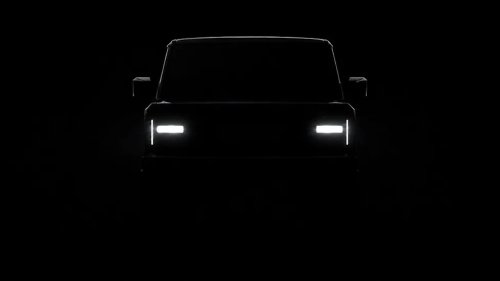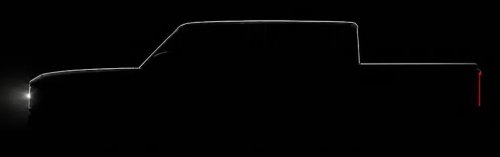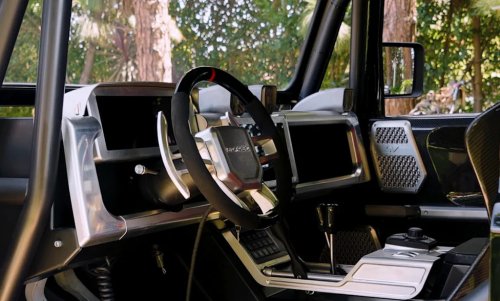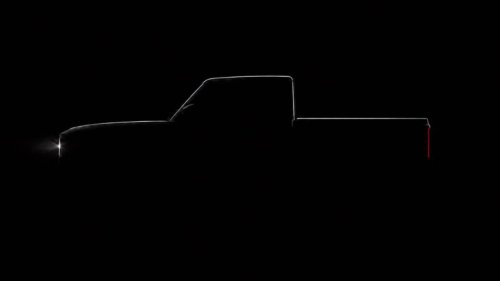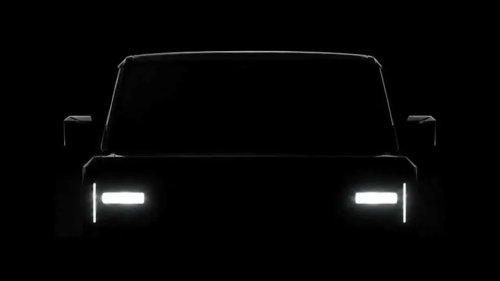
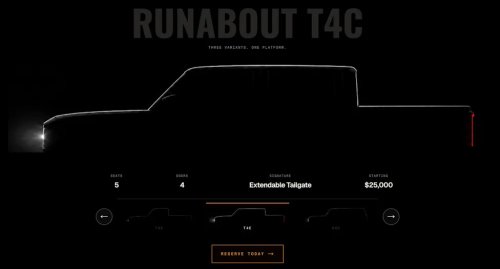
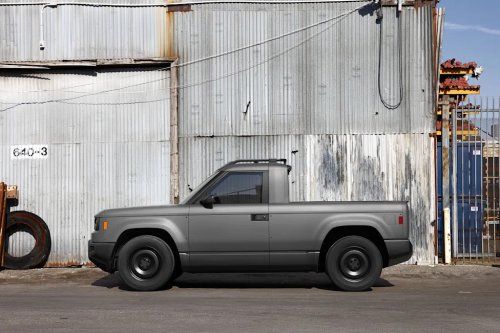
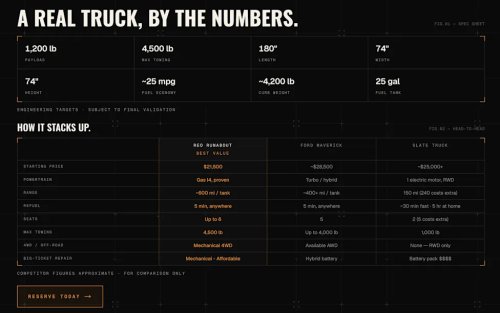



















REO Runabout teaserKey TakeawaysAffordable gas-powered truck for the masses. Texas startup REO aims to deliver a $21,500 truck called the Runabout, focusing on simplicity and reliability. High demand in a short time. REO received 5,500 reservations in just six days, highlighting strong interest in a budget-friendly, non-electric truck. Challenges and uncertainties ahead. Success depends on government policies, supplier agreements, and potential shifts in fuel economy regulations. Community-driven and repair-friendly approach. Plans for an open-source forum and emphasis on right-to-repair resonate with potential buyers. Bottom line: REO's ambitious plan for an affordable, gas-powered truck taps into a strong market demand but faces significant challenges in execution and policy dependencies. ✦AI assisted, editor reviewedAdvertisementAdvertisementIf you sat down with the stereotypical American everyman and asked what they'd like in a truck, here's what they'd tell you: It needs to be simple, easy to repair, and, oh yeah, cheap. "That's what every pickup used to be," they'd quip. "Why can't they be like that today?" It's a fair rebuttal, albeit a complicated one to answer. A new Texas-based startup named REO hopes it can solve the conundrum and sell you a small, gas-powered single cab starting at $21,500.Of course, yet another startup making big promises is enough for most people to roll their eyes and scroll on by. They're a dime a dozen in a time like ours, where goobers can raise capital from their mid-century modern without any real plan to deliver a product. But when the pitch is something this enticing to a country strapped for cash, it might be enough reason for pause. It was enough for The Drive to sit down with REO Industries Founder and CEO Zach De Bernardi for an hour, where we discussed exactly how the company might make a barebones utility rig that, importantly, does not run on electricity.It's called the Runabout, and REO's pitch hits all the key points: "The affordable American truck—gas, mechanical, body-on-frame. Engineered to run 500,000 miles. Built in Texas, sold direct." The emphasis on internal combustion is where REO differs from Slate, which is supposedly close to delivering a $24,950 electric truck."Every new car startup in America is electric, while 90% of American buyers are not," De Bernardi wrote in a letter to the public. "Those companies raised record money chasing a fraction of the market, and every American EV maker except Tesla now sits billions in the hole. We exist because of those failures, and we build for the everyday American who simply wants a vehicle that works."T4X stands for "truck, four-wheel drive, bare bones." Meanwhile, the T4C and S4C are a crew cab truck and SUV, respectively. REOAs De Bernardi explained to us over the phone, he gets his inspiration from the Toyotas of yesteryear. "I'm a huge Toyota guy," he explained. "I think every interview I've had, I've said that."AdvertisementAdvertisement"That [simplicity] is just what Americans love, and it's kind of gone," he continued. "It's not Toyota's fault, I don't think. They're so big, they can't play games; they have to play the political climate, you know. But that old energy from the '90s really existed until the fifth-gen 4Runner and the second-gen Tundra went bye-bye. But that energy is what we're looking to do, and so, in our design briefs, the whole conversation is pitched around what we call the concept of reliability by design."De Bernardi elaborated by saying this will influence every decision they make in building the Runabout. For example, he says you shouldn't have to remove the interior to replace a fuel pump underneath the floor. And if owners want a snorkel on their simple 4×4, it'd be helpful if the intake were already located in a convenient spot near the fender. Spoken like a true car guy, eh?From the sounds of it, that's what De Bernardi is. "I've built a ton of old Toyotas and different trucks, and that's just like what I like to do for fun," he said. He's never worked in the auto industry before; instead, he grew a real estate company in the Dallas-Fort Worth area. The plan is to assemble the Runabout nearby, and just maybe, REO can partner with his favorite automaker, whose North American headquarters is about 30 minutes north in Frisco, Texas.But none of those details have been locked in yet. When questioned about potential suppliers for the engine and chassis, De Bernardi replied, "All I can say is that we are aiming for all of that to be as domestic as possible. And the reason is the Trump administration doesn't really let it happen any other way right now."Slate Slate AutoIndeed, so much of what REO hopes to do is dependent on government policy. The feds' attitude toward mini trucks has been positive ever since the president visited Japan in December. With tiny kei vehicles on the mind, he ordered Transportation Secretary Sean Duffy to "immediately approve the production of those cars" in the United States. To be clear, building small cars and trucks in the U.S. has never been illegal, but it's been a tough sell under the Corporate Average Fuel Economy regulations. However, the administration (in)famously gutted those.AdvertisementAdvertisementDe Bernardi knows that REO can only do what it wants if Uncle Sam allows it. The same way that former rules were disregarded with a signature, a new set could easily be ushered in under new leadership. "There's a lot of hope," he said. "There's not much you can do if the political climate changes, but we have to try and prepare for that internally."I don't want to do this, but that may [force us] to look at a hybrid, right? Like, we might have to co-develop something at the same time, or be ready to strike on one of two options—still using gas—in order to pump the mpg up as much as possible if the CAFE changes."To explain it simply, the CAFE standards set mpg requirements according to vehicle footprint, which is why small trucks and their less aerodynamic shape always struggled to meet them."There's a ton of unknown there; that's just the problem with gas. But I think it's probably going to be [Vice President J.D.] Vance next term, and probably against [California Governor Gavin] Newsom. If Vance stays in, I think we'll be just fine, and it'll be a fantastic runway, and everything will go great. But there are certainly some risks, absolutely."AdvertisementAdvertisementI'd argue that De Bernardi is putting it lightly. There are major risks involved in marketing a product, or, at this stage, a price point that might not be deliverable, no matter how much capital you raise. Then, when you factor in all the uncertainties about potential suppliers and the assembly location, there are simply too many unknowns to say whether or not this will work.But if it does, it should be sweet. REO has plans for a brand-hosted forum where owners can interact with other owners, makers, and aftermarket manufacturers. The idea is to create an open-source-like community, far beyond what even Ford has done with the Maverick and 3D printing.De Bernardi is also incredibly passionate about right-to-repair, as he pointed to a recent example with his Audi Q7 TDI. "To remove the head unit, you have to buy two specialty knife-shaped removal tools just to get the AC vents out," he told us. "What is that?"I didn't spend much time talking through these specs as they're totally up in the air right now. Still, this is what REO hopes to deliver. REOThe prospect is exciting, to say the least. It has all the right ingredients. Whether or not they'll combine to make something great depends on a ton of outside factors that are uncertain at best for now.Got a tip or question for the author? Contact them directly: caleb@thedrive.com