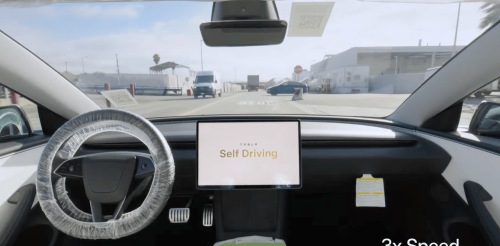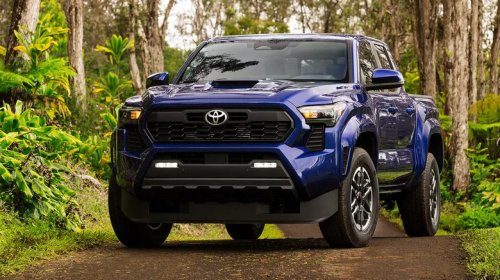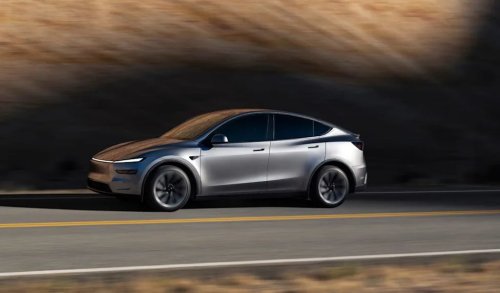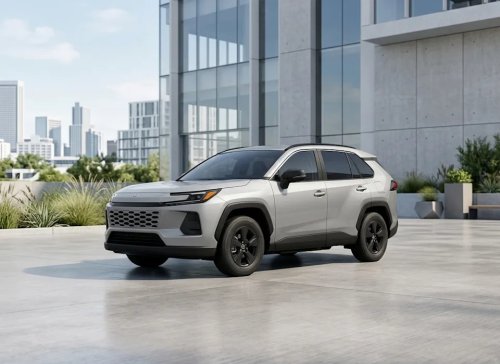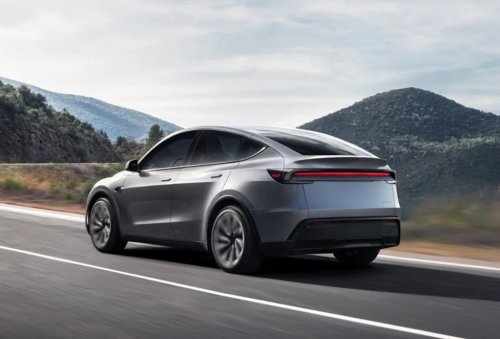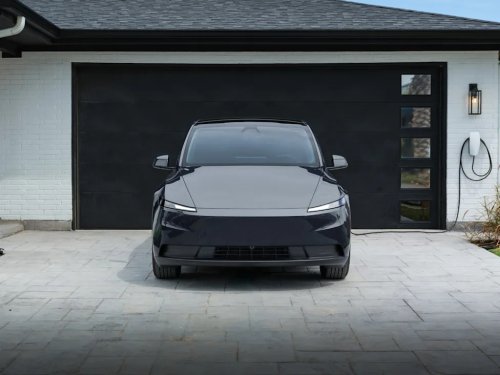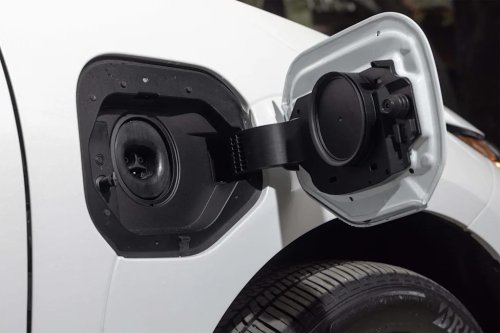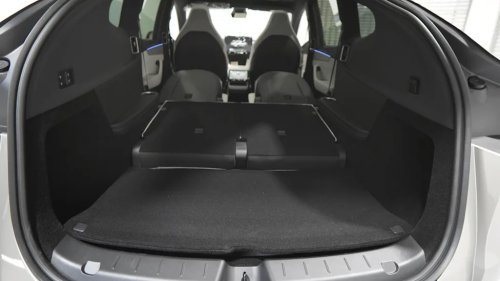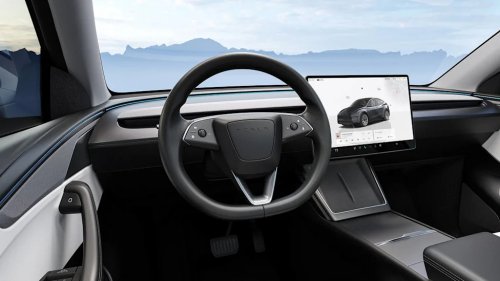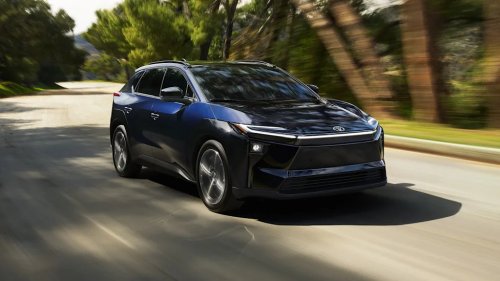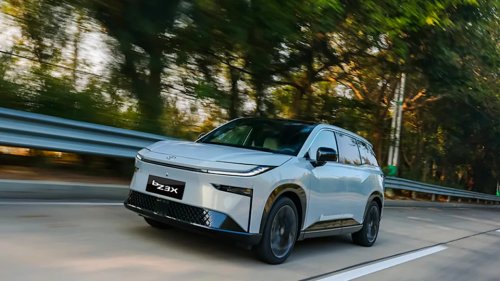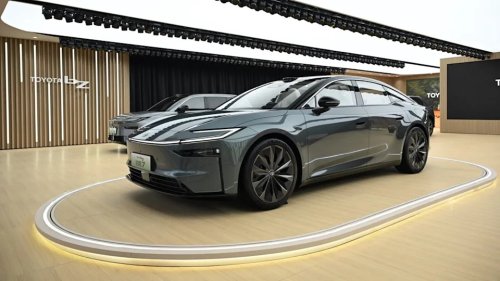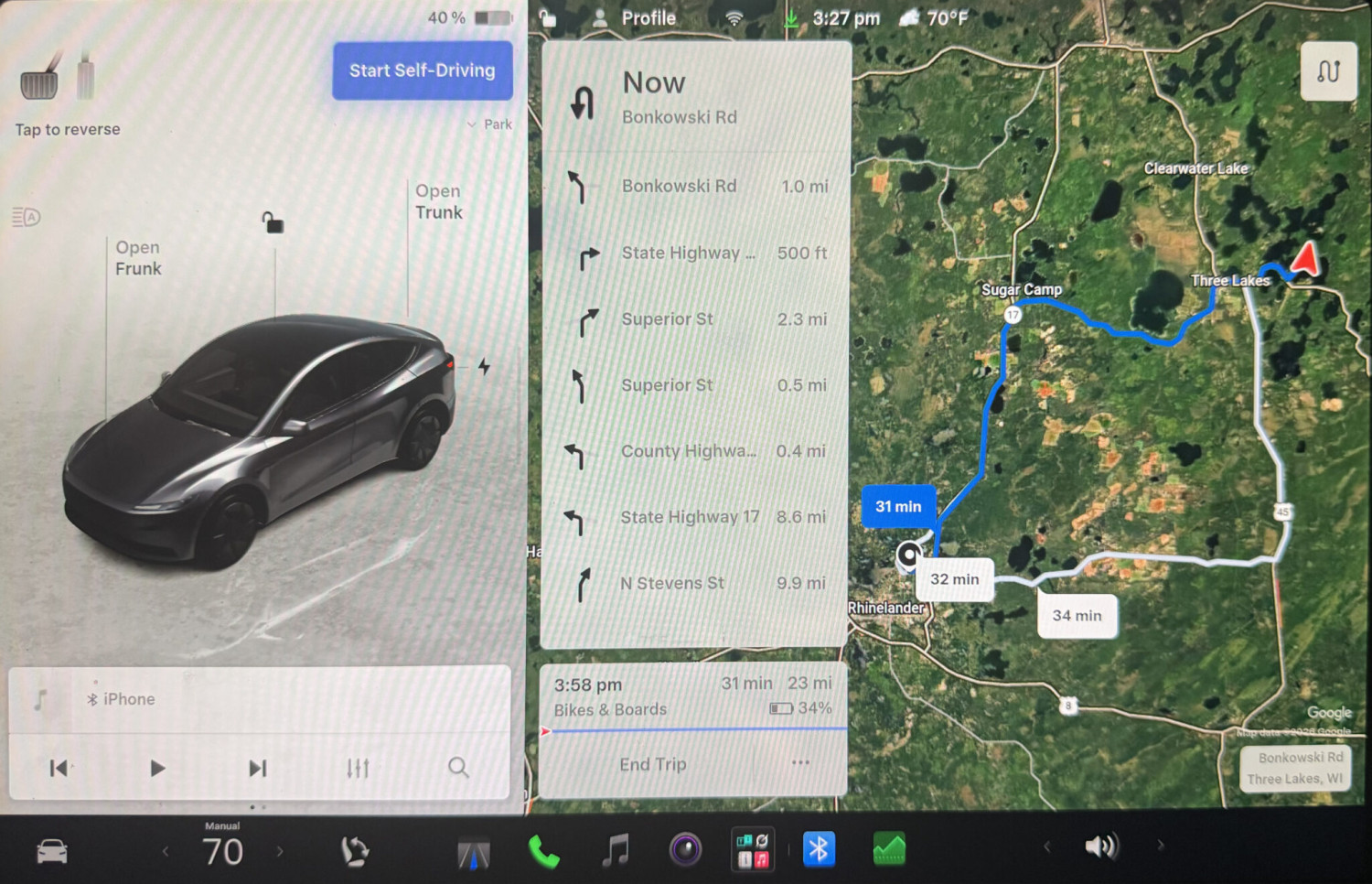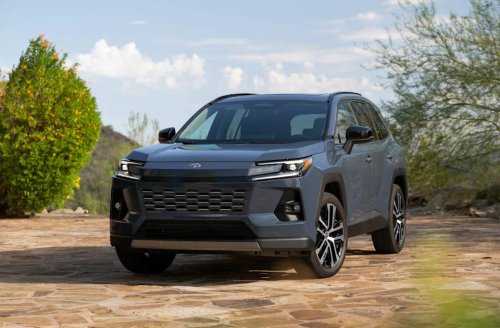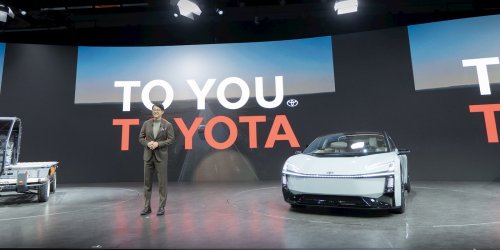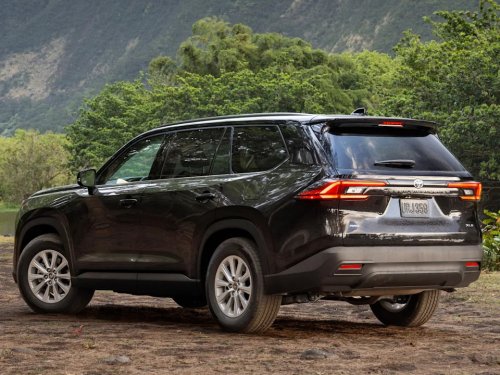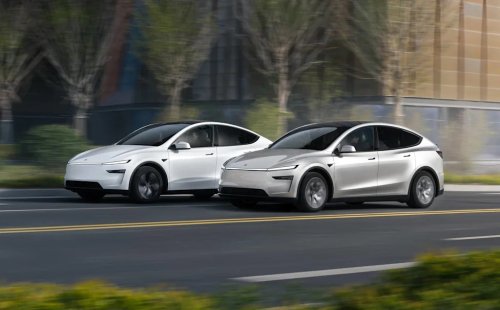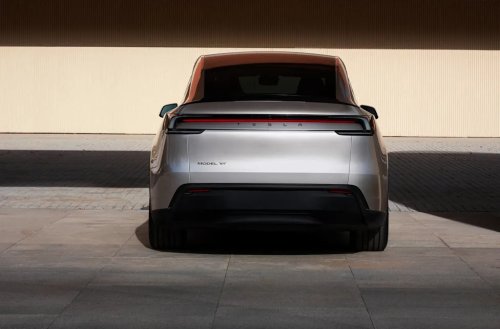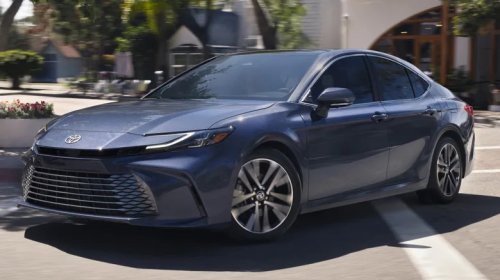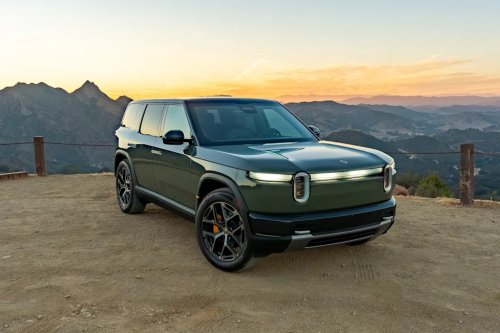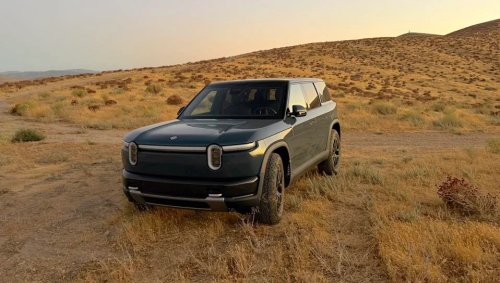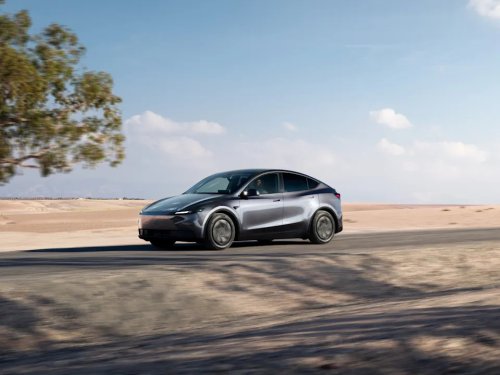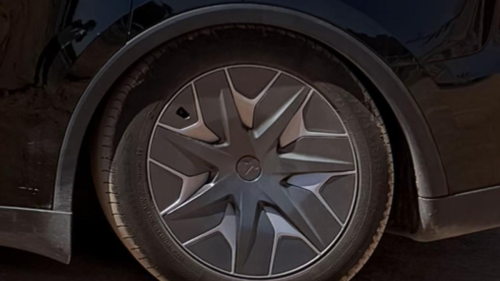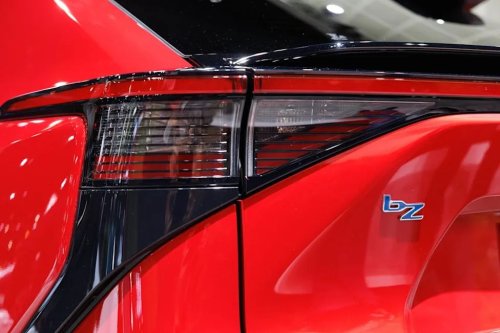
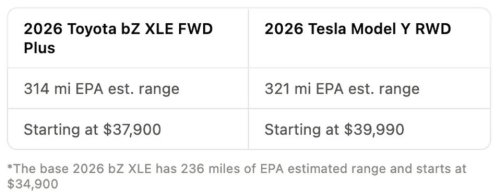
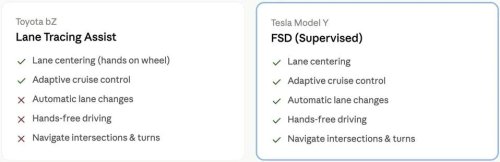
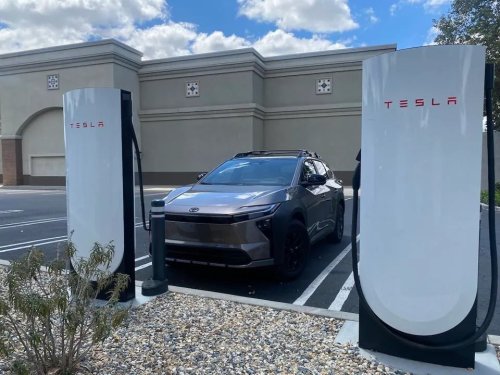
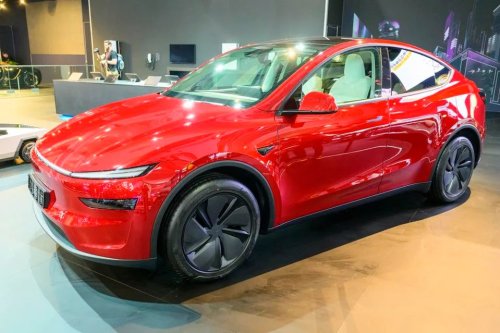











LOS ANGELES, CALIFORNIA - NOVEMBER 23: A detail of the 2026 Toyota bZ is on display during the 2025 Los Angeles Auto Show at the Los Angeles Convention Center on November 23, 2025 in Los Angeles, California. (Photo by Josh Lefkowitz/Getty Images)Getty ImagesThe refreshed 2026 Toyota bZ excels at offering all the essential EV basics but lags in driver assist technology, which will become de rigueur for EVs in the coming years.Compared to the 2025 bZ4X, the renamed 2026 bZ offers better range, better ergonomics, and now has access to Tesla's Supercharger network. And it's popular. The bZ outsold every non-Tesla EV in Q1 2026, according to Cox Automotive U.S. data.One of the biggest improvements is a jump in range; the 2025 bZ4X peaked at 252 miles of EPA-estimated range, while the refreshed 2026 bZ XLE Plus comes in at 314 miles. That's a 62-mile improvement, or roughly a 25% jump.The bZ is cheaper but doesn't offer an advanced driver-assist system.I tested the higher-end, off-road-capable 2026 bZ Woodland, which is rated at about 280 miles of range, and has an MSRP of $45,300. The larger bZ Woodland will compete with the Rivian R2, an off-road capable EV. Like all Toyota EVs, the bZ Woodland comes with Toyota's driver assist technology.Toyota bZ Vs. Tesla Model Y: Driver Assist ComparisonAdvanced Driver Assistance Systems, or ADAS, are increasingly becoming a checkbox feature for EVs. Why? Because ADAS can make driving safer and less stressful. Many of the major driver assist systems in cars today take over at least part of the driving. For example, long-distance highway and bumper-to-bumper urban traffic driving.Tesla FSD is the hands-down winner in driver assist technology, which some believe is the future of driving.Toyota bZToyota's Lane Tracing Assist technology can handle some highway and urban traffic driving. Toyota calls its ADAS Lane Tracing Assist (LTA). On the highway, it automatically positions the car in the middle of its travel lane. In other words, it steers the car if you stay in the lane and keep your hands on the steering wheel. Combined with adaptive cruise control – which handles the braking and maintaining the distance from the car in front of you – the bZ can drive the car for you on long stretches of highway.AdvertisementAdvertisementBut during a week of testing, Lane Tracing Assist was erratic, often disengaging if it couldn't read the markers (such as edge lines) on the road or believed I wasn't paying attention (that latter I call over-the-top nagging). That said, when Toyota's driver assist was working, it was very helpful at navigating Los Angeles traffic and long-distance highway driving. In heavy traffic, an ADAS can be a life saver: it takes a lot of the stress and soul-crushing monotony out of driving.2026 Toyota bZ Woodland at a Simi Valley, Calif. Tesla Supercharger location.Tesla Model YTesla's Supervised Full Self-Driving (FSD) leads the market. By a long shot. In short, Tesla FSD can essentially drive the car anywhere. The driver, in effect, becomes a passenger.In a test of FSD (v14.3.3) earlier this month, the car drove itself on Los Angeles freeways and local roads and streets for about an hour and a half. I did nothing but sit there as essentially a passenger. Yes, you have to "supervise" the drive and stay alert but that doesn't change the fact that you're rendered a passenger. Of course, you can take back control at any time by applying the brakes or jerking the steering wheel.The downside of FSD is that it can make some drivers complacent. Car insurance companies call this Automation Complacency (or Automation Bias) and "Out-of-the-Loop" (OOTL) Performance Problem. The latter describes the physical delay in a driver's reaction time when complacency takes over.AdvertisementAdvertisementThat said, my argument is that FSD, when properly used, takes safe driving to the next level. FSD never gets distracted and has full attention on the road all of the time. The same can't be said of human drivers. I would argue that the much bigger problem on U.S. highways is distracted drivers using digital devices – not FSD. (Not to mention DUI.) While it's not perfect, FSD aspires to make U.S. highways much safer. I believe it does this in practice. Again, distracted human drivers are, by far, the bigger problem on U.S. highways, as these NHTSA statistics show.ConclusionThe Toyota bZ is a solid, affordable EV and a good fit for people looking to get into their first EV. But in range and driver assistance technology, the Model Y is the better vehicle.BRUSSELS, BELGIUM - JANUARY 09: Tesla Model Y battery electric suv on display at the AutoSalon press preview on January 09, 2026 in Brussels, Belgium. The 102nd Brussels Motor Show has firmly established itself on the international calendar, featuring over 60 car brands and more than 20 motorcycle brands, and visited by over 270,000 people. (Photo by Sjoerd van der Wal/Getty Images)This article was originally published on Forbes.com