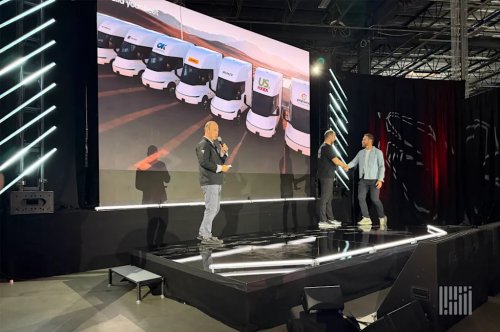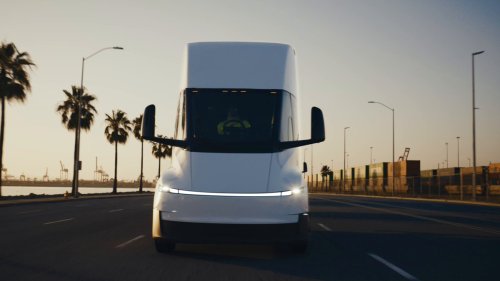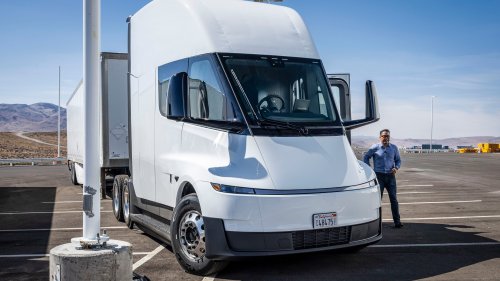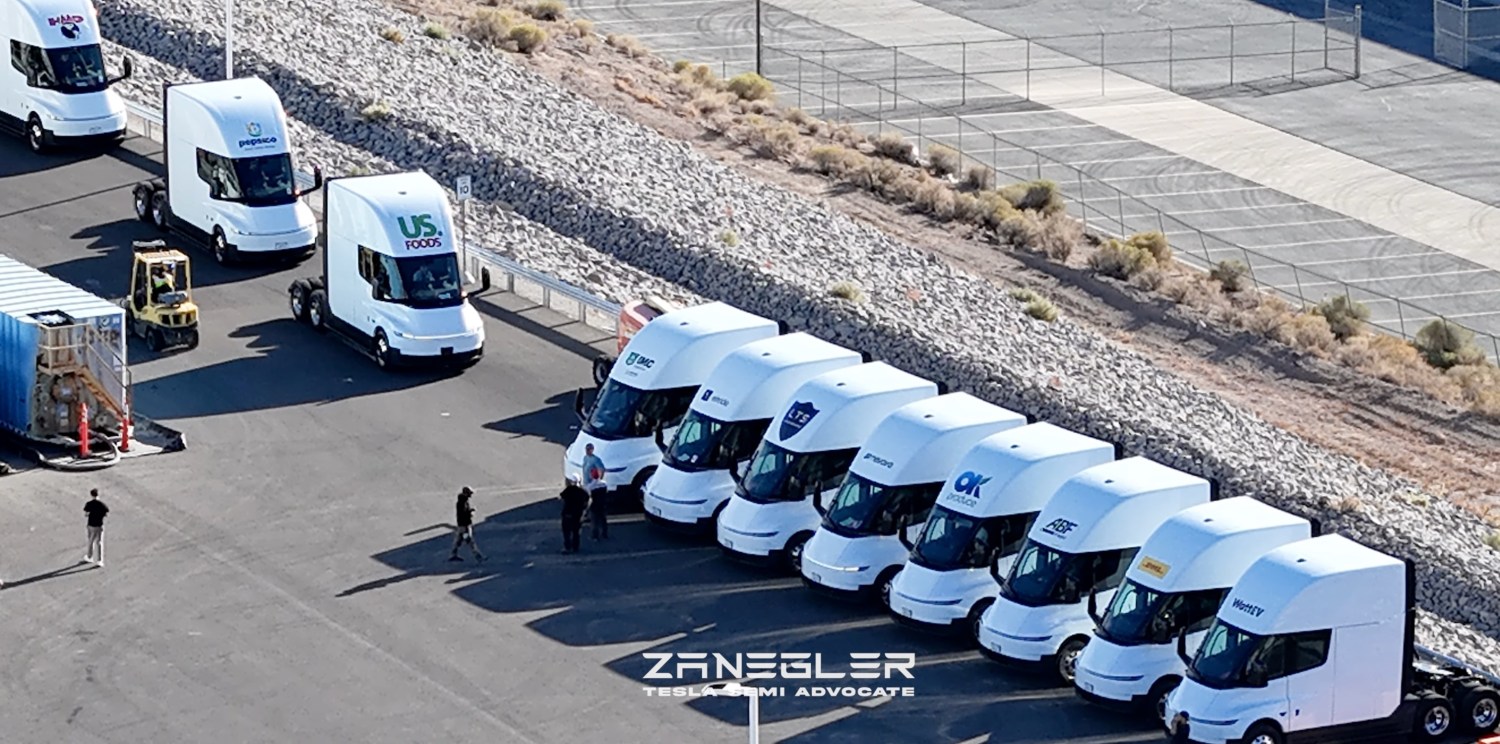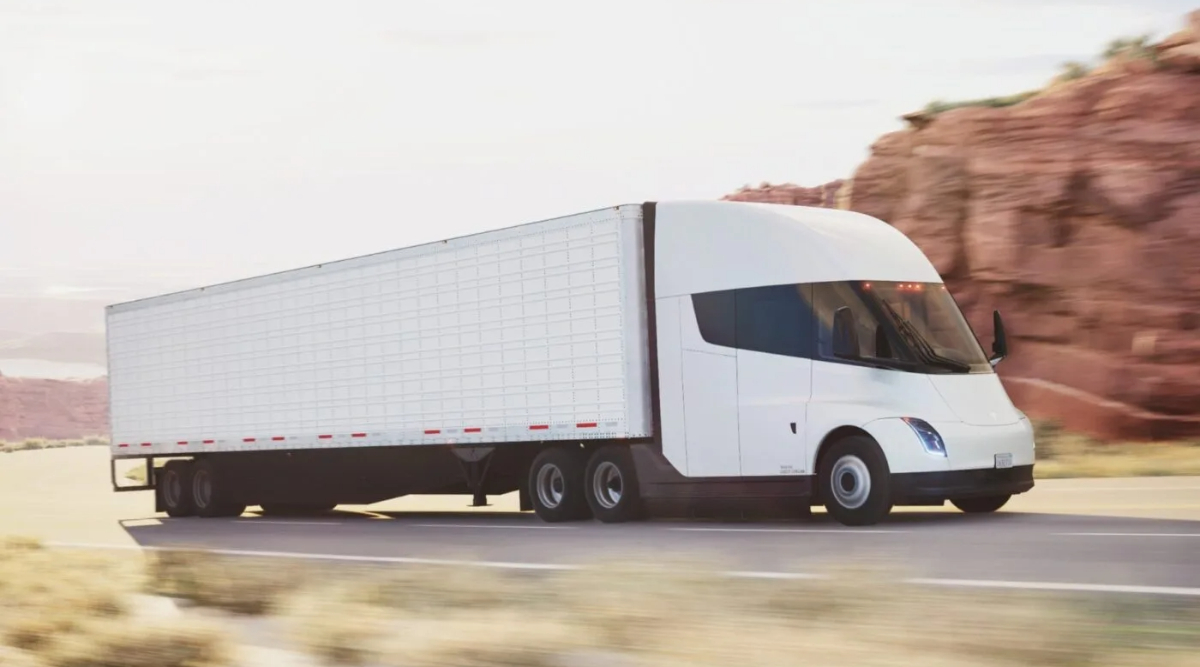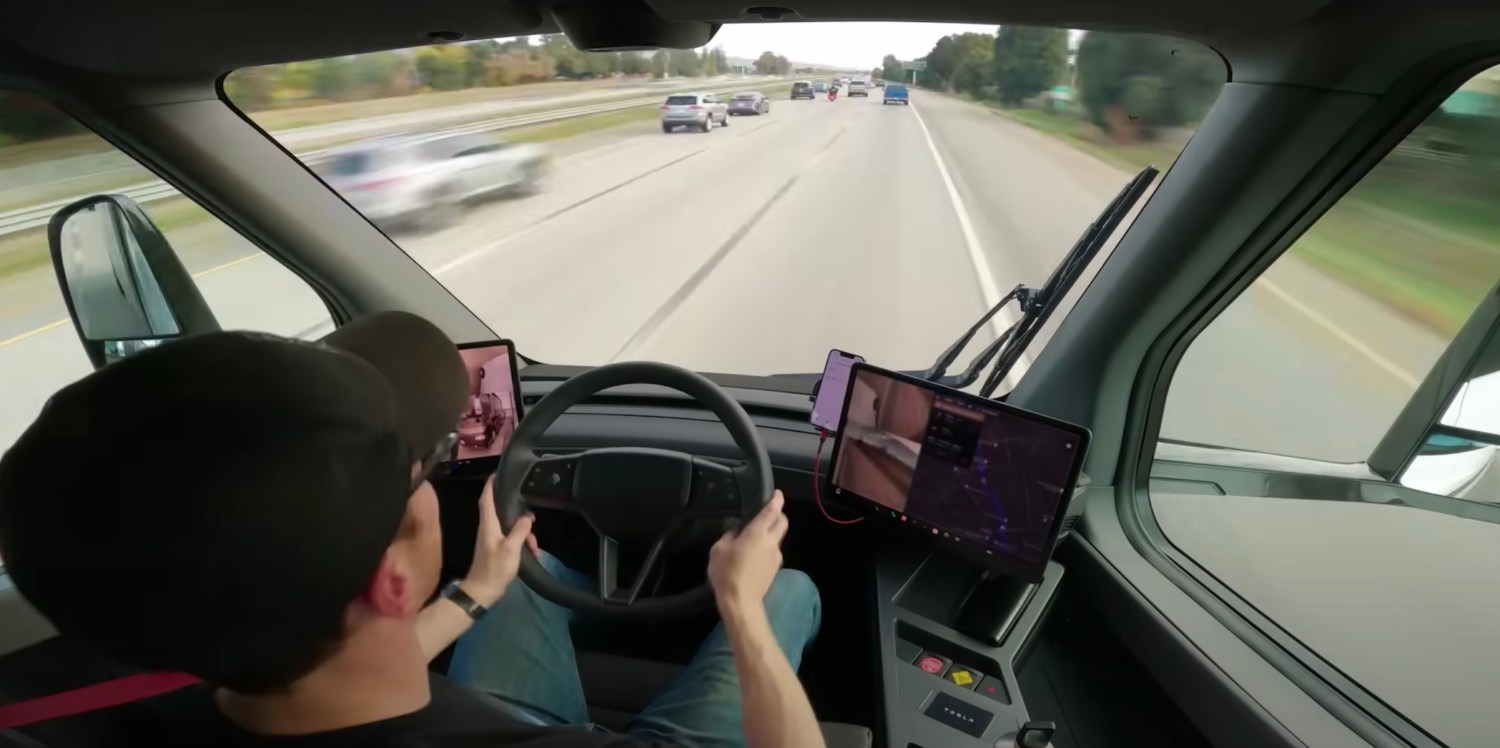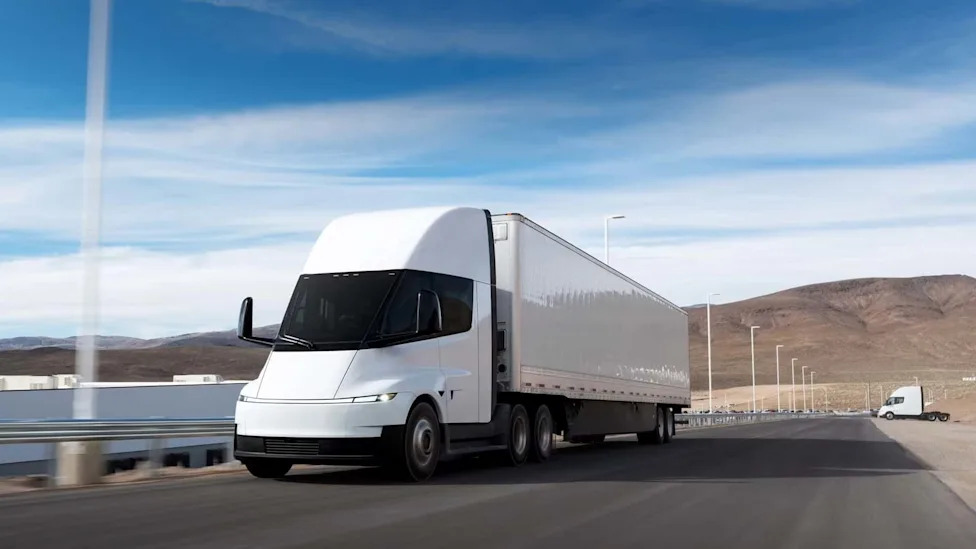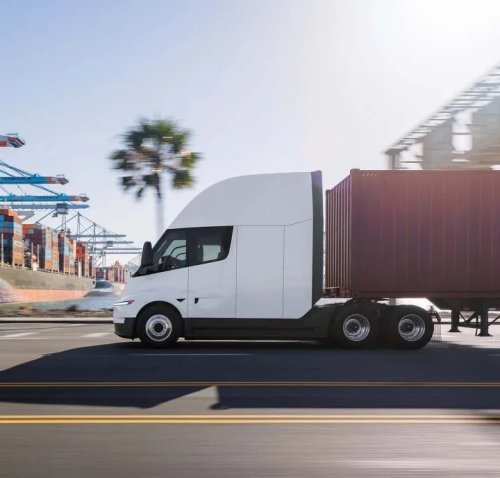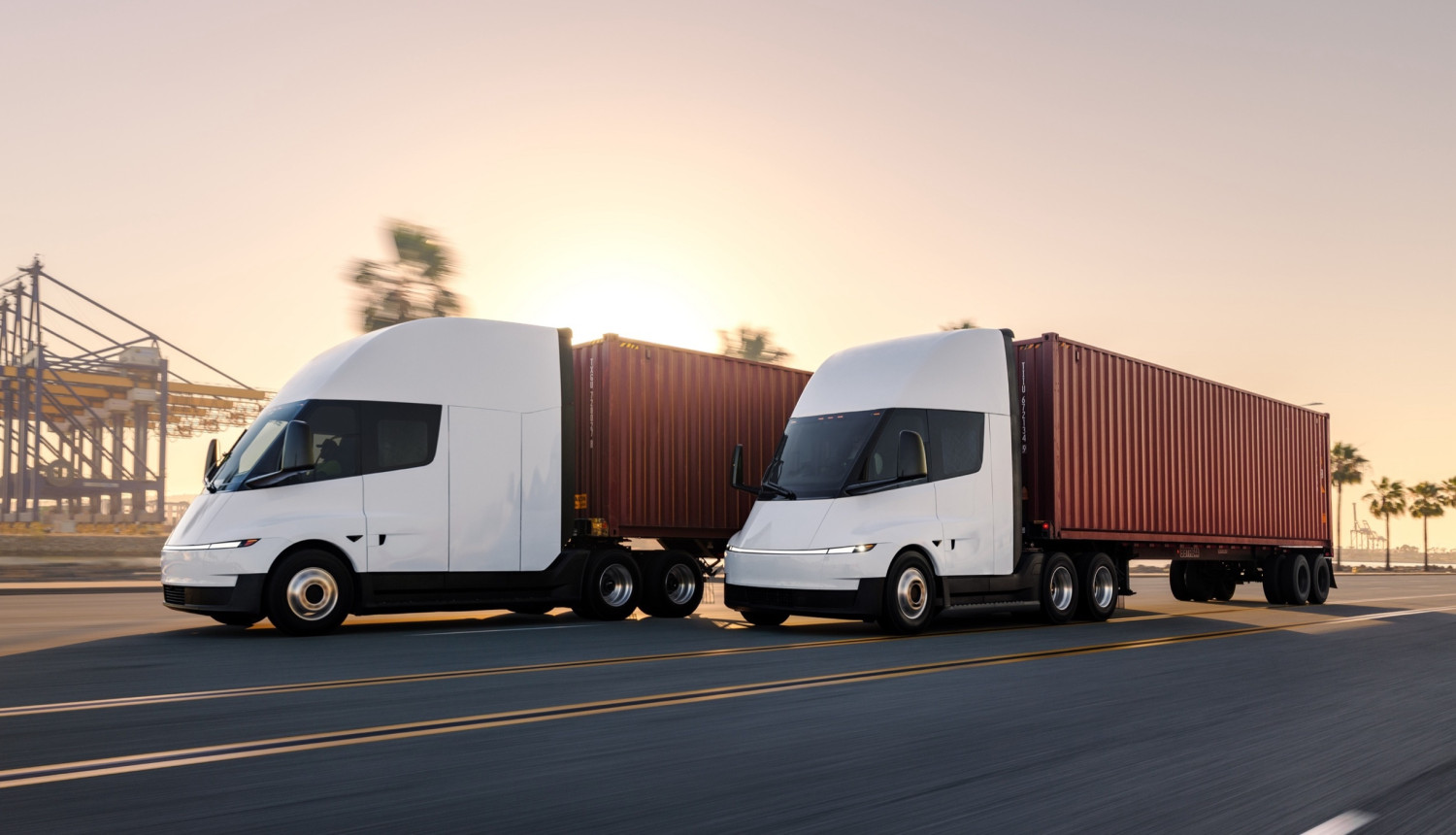
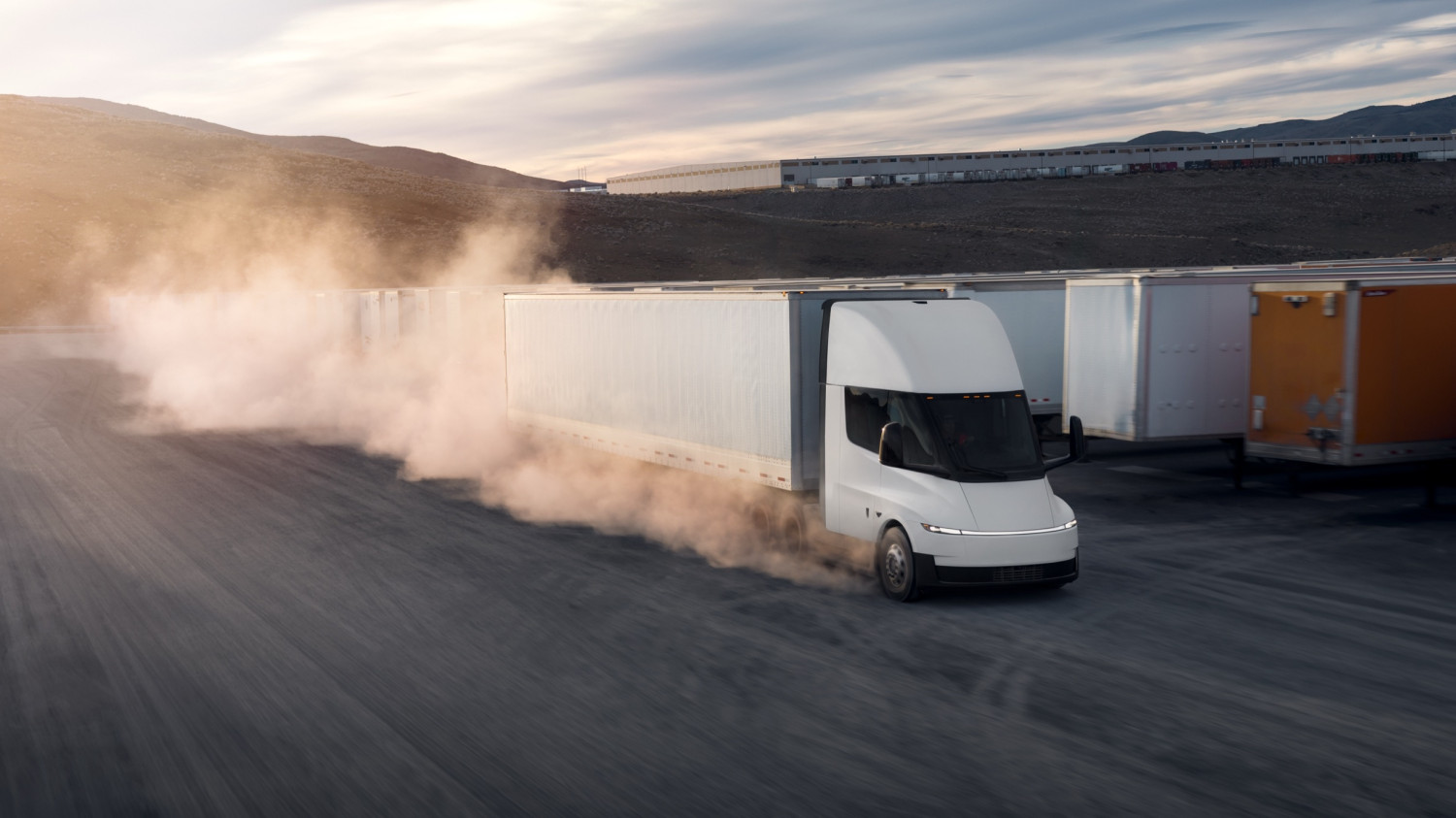



















Tesla says new Semi deliveries are beginning this week. The truck offers claimed ranges of 325 or 500 miles. Tesla didn’t disclose pricing or current production rates. Almost a decade ago, Tesla unveiled the Semi as its answer to diesel-powered trucking. PepsiCo took delivery of the first trucks in 2022, but the rollout remained limited. The first Semi didn’t roll off Tesla’s new high-volume production line until this April. Now deliveries from its dedicated Nevada factory are beginning, and the question is how many trucks it can actually put on the road. At an event Thursday night in Sparks, Nevada, Tesla presented trucks wearing the logos of PepsiCo, DHL, and US Foods. Executives said deliveries to an initial group of customers were beginning, Reuters reports. Tesla didn’t disclose a price, a current production rate, or a delivery target for the year. It reiterated that the plant is intended to build 50,000 Semis annually, but gave no date for reaching that level. More: Tesla Just Set A Date For The Semi’s European Debut It’s a real step forward, though hardly the Semi’s first delivery. PepsiCo began receiving trucks in late 2022, three years after Tesla originally expected production to start. The difference now is the dedicated factory, which is supposed to take the Semi beyond the limited rollout seen so far. Tesla said in April that the first truck had come off its high-volume line. Its July shareholder update, however, described Semi production as beginning in 2026 and dropped an earlier forecast for volume production this year. Tesla claims the loaded long-range Semi can cover 500 miles (805 km) on a charge, while a standard-range version is rated for 325 miles (523 km). Dan Priestley, Tesla’s director of Semi truck engineering, said customers had validated the 500-mile figure in use. The company’s Semi page lists energy consumption of 1.7 kWh per mile. That’s an impressive figure considering the size and weight of the vehicle. The good news for Tesla is that despite apparent delays, there’s still demand. The same report says a shipper coalition placed an order for 2,500 Semis this week, while freight technology company Einride announced plans last month to add 500 Semis to its fleet. Orders and factory capacity sound great. Deliveries will be the one figure that shows whether Tesla can finally make good on the Semi’s long-delayed rollout. Photos: Tesla