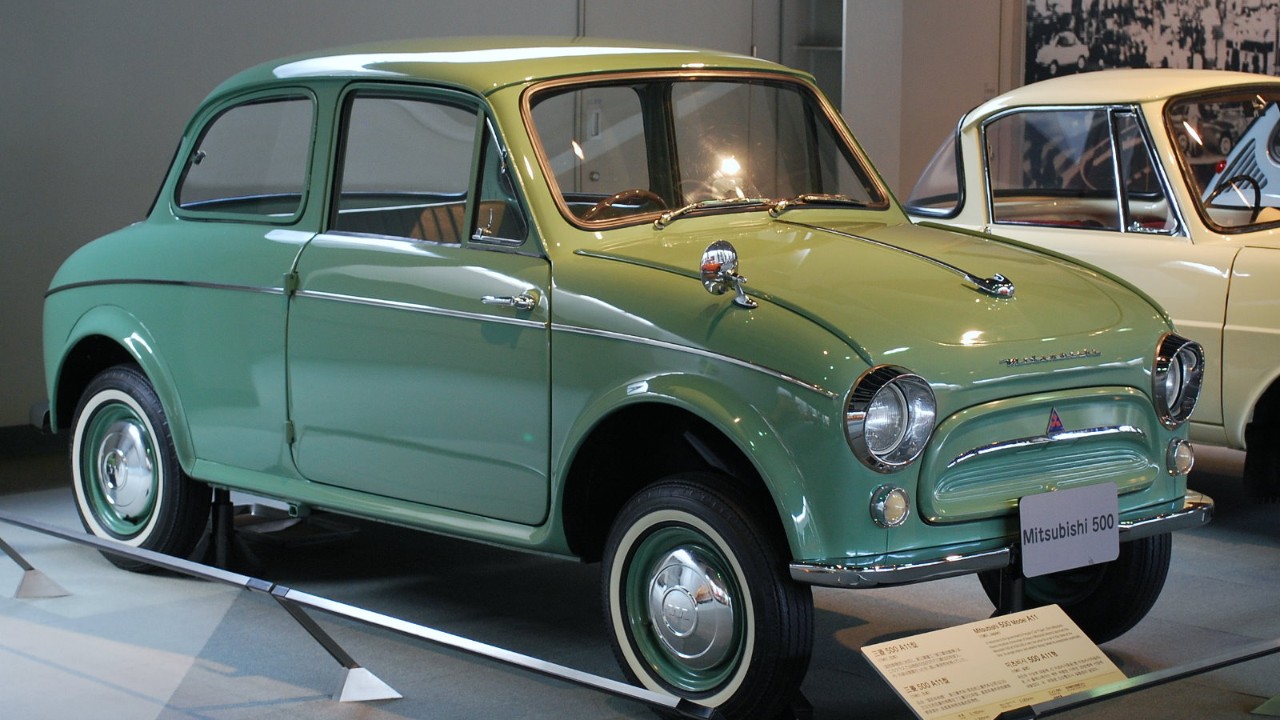
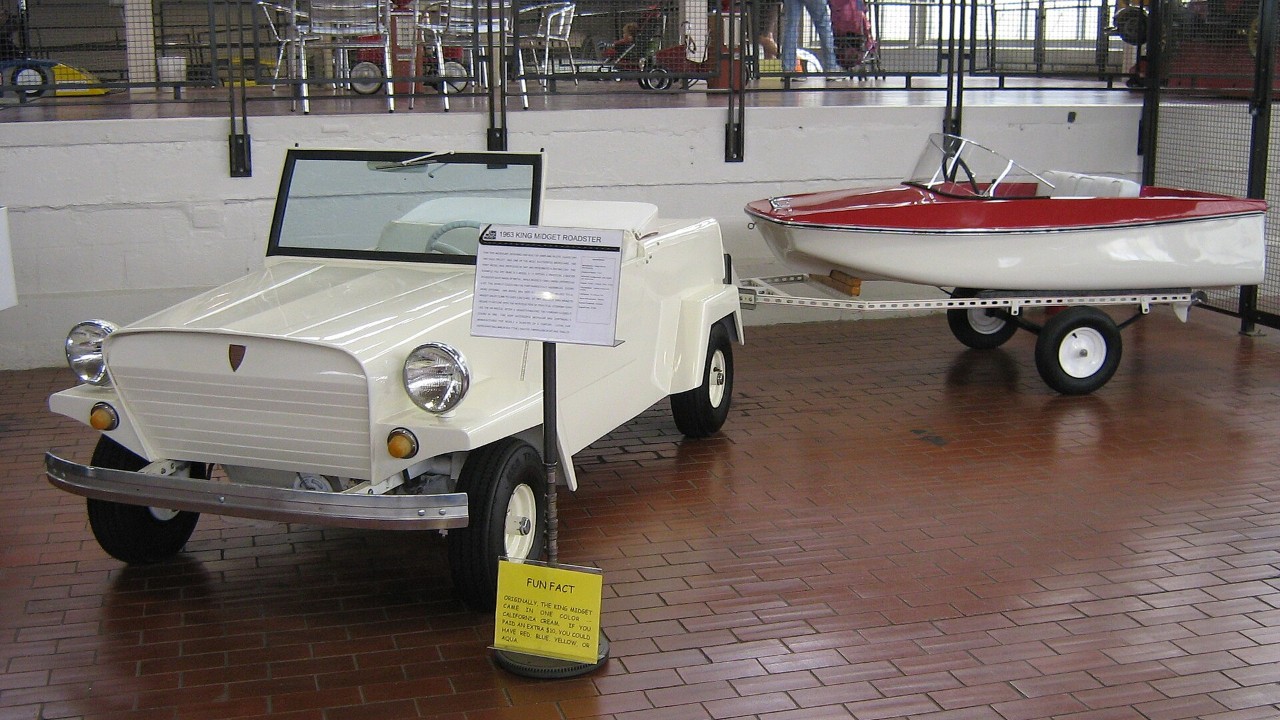
In the late 1950s, a Leeds company that built railway locomotives also sold a three-wheeled car called the Scootacar. That tells you how strange the microcar boom became. Fuel prices jumped after the 1956 Suez Crisis, and suddenly aircraft firms, motorcycle makers and scooter brands all wanted to build tiny cars. The boom did not last. By the end of the 1950s, larger cars had regained their appeal, and the 1959 Mini offered more room and performance at an affordable price. Microcar production had largely stopped by the end of the 1960s. These ten are our picks for the microcars that deserved a better fate. Some were clever, some were tough, and a few were simply charming. In our view, each one earned more attention than history gave it. 1. 1957 Brütsch Mopetta Egon Brütsch built cars in Stuttgart, and the Mopetta was his most successful design. That is a relative term, because only 14 were made between 1956 and 1958. In fact, the car was a single-seat, egg-shaped three-wheeler with a fiberglass body. Power came from a 50cc ILO two-stroke single that you started with a pull cord, much like a lawn mower. The engine then drove the rear wheel by chain through a three-speed gearbox. With a curb weight of about 89 kg, the Mopetta could reach 22 mph and return around 111 miles per imperial gallon. Brütsch also held talks with Opel about distribution, but they produced only sales brochures. Our take: the Mopetta was less a car than a powered shopping basket, and that is exactly its appeal. If you ever see one at a show, stop and look closely. With a production run that small, you may never get another chance. 2. 1957 Suzuki Suzulight Before Suzuki became a global carmaker, it built the Suzulight. The first model, the SF, won type approval on July 20, 1955. The letters stood for “Suzuki Four-wheel car,” and the design leaned heavily on Germany’s Lloyd 400. Just as in the Lloyd, a transverse two-stroke twin drove the front wheels. At launch the engine displaced about 360cc and made 16 PS, and power rose to 18 PS in April 1956. However, the passenger sedan struggled. Suzuki built only 43 sedans before withdrawing them in April 1956, and by January 1958 the range had shrunk to the light van alone. In 1957, Suzuki built 385 commercial SF models. In our view, the Suzulight deserves far more credit than it gets. It brought front-wheel drive to a tiny Japanese car in 1955, borrowing the layout straight from the Lloyd. It was also Suzuki’s first four-wheeler, just as the SF name promised. 3. 1958 Zündapp Janus The Janus was the only car the German motorcycle maker Zündapp ever built. Instead, the design came from aircraft builder Claudius Dornier. Its party trick was the seating: two passengers faced forward and two faced backward, with a door at the front and another at the rear. That layout gave the car its name, after the two-faced Roman god Janus. According to the Lane Motor Museum, a 248cc single-cylinder two-stroke sat between the seat rows, making 14 horsepower. Top speed was 50 mph, and the seats folded down to make room for two people to sleep. Zündapp built 6,902 cars before ending the project in mid-1958 and selling the factory to Bosch. Our take: the Janus was a genuinely original answer to the small-car problem. It carried four people in a tiny footprint and even doubled as a bedroom. It deserved a second generation. 4. 1959 Vespa 400 Three Grand Prix stars turned up when this little car met the press in Monaco on September 26, 1957: Juan Manuel Fangio, Jean Behra and Louis Chiron. That was quite a welcome for a car from a scooter company. Piaggio drew it, while ACMA assembled it in France. Performance was modest, so economy was the selling point. For example, a 1959 de Luxe saloon needed 23.0 seconds to reach 40 mph in a road test by The Motor. Yet the same car averaged 55.3 miles per imperial gallon. Demand also cooled quickly, because output dropped from 12,130 cars in 1958 to 8,717 in 1959. In our view, the Vespa 400 had the right recipe and arrived at the wrong moment. It was frugal, quick enough for town and backed by a famous name. Yet the shift toward bigger small cars at the end of the 1950s caught up with it. 5. Berkeley Sports 492 Berkeley’s first sports car came from designer Lawrie Bond, working with Charles Panter’s Berkeley Coachworks. The SE492 version arrived in late 1957 and turned the idea into a proper little racer. Power came from a 492cc Excelsior three-cylinder engine rated at 30 horsepower, together with a four-speed gearbox. Top speed was 80 mph, which was impressive for a car this small. In fact, a Berkeley driven by Lorenzo Bandini finished first in the 750cc GT class at the 1958 Monza 12-hour race. Chassis numbers for the SE492 ran from 1 to 666. Berkeley went into liquidation on December 12, 1960, so its plans for a larger Ford-powered car died with it. Our take: the 492 was a real sports car in miniature, and it deserved a company strong enough to keep developing it. A class win at Monza is not a bad résumé for a car with a 492cc engine. 6. 1961 Mitsubishi 500 The 500 was the first passenger car built by Shin Mitsubishi Heavy-Industries after World War II. After a debut at the 1959 Tokyo Motor Show, it went on sale in 1960 for ¥390,000. It was never a kei car, because its engine was larger than the 360cc limit of the day. A 493cc air-cooled twin sat in the rear and made 21 PS at 5,000 rpm, driving through a three-speed manual. In August 1961, the Super DeLuxe version grew to 594cc and 25 PS. Then, at the 1962 Macau Grand Prix, Mitsubishi-prepared sedans took the top four places in the under-750cc category. The 500’s engine and layout lived on in the Colt 600 that followed. In our view, the little sedan deserves a bigger place in Mitsubishi’s story. It was the car that put the company back into passenger-car production after the war. 7. 1963 King Midget Model 3 America had its own microcar, and it came from Athens, Ohio. Claud Dry and Dale Orcutt, two pilots turned car builders, started out selling the King Midget as a kit. The first Model 1 kit cost $270.00 and accepted any one-cylinder engine. The Model 3 arrived in 1957 with a welded unit body on a 76.5-inch wheelbase. It also had a 9.2-horsepower Wisconsin single-cylinder engine and four-wheel hydraulic brakes. By 1958, the price approached $900, while a Rambler American started at $1,775. In 1966, the company switched to a 12-horsepower Kohler engine and 12-volt electrics. The company changed hands in 1966, went bankrupt in 1969 and closed in 1970. Our take: the King Midget was a cheerful, honest little car for people who simply wanted to get around town. We think it deserved a place in more American driveways. 8. 1963 Trojan 200 The Trojan 200 began life as Ernst Heinkel’s German bubble car. Peter Agg bought Trojan in 1959 and then built the Heinkel under licence until 1965. The same factory also turned out Lambretta scooters. According to the Lane Motor Museum’s record of its 1963 car, the Trojan used a 198cc air-cooled, four-stroke single rated at 10 horsepower. A four-speed manual sent the power to the rear, and top speed was 55 mph. It cost £359 new, and Lane puts production of the Trojan 200 at 7,000. The 200 was the last vehicle to wear the Trojan name. In our view, a four-stroke engine was a welcome touch when so many rivals on this list relied on two-strokes. It deserved a longer run than the market allowed. 9. 1964 Bond Minicar Mark G Tourer Lawrie Bond, a former aircraft designer at Blackburn, created the Minicar. Sharp’s Commercials of Preston then built it from 1949 to 1966, making 24,482 in all. The Mark G of 1961 to 1966 was the last and most grown-up version, with wind-up windows and lockable doors. Later, the Tourer arrived in October 1964 as a two-seat economy model. It had a folding hood, plain door panels and an opening boot lid. A Villiers 35A engine rated at 11.5 horsepower came standard. The optional 4T, a 249cc twin with 14.6 horsepower, lifted top speed to just over 60 mph. Production of the Tourer ended in December 1965, and Mark G production totaled 3,253. Purchase tax changes in 1962 narrowed the price gap between three-wheelers and proper small cars. Our take: the Mark G was the best Minicar Bond ever made, and a change in tax policy cut it short. That alone feels unfair. 10. 1964 Scootacar Mk II de Luxe The Scootacar came from Scootacars Ltd, part of the Hunslet Engine Company of Leeds. Henry Brown designed it, and the story goes that a director’s wife wanted something easier to park than her Jaguar. As a result of its tall, narrow fiberglass body, people nicknamed it “the telephone booth.” The Mk II de Luxe arrived with a redesigned body and room for the driver plus two passengers. According to the Lane Motor Museum, it used a 197cc single-cylinder two-stroke and a four-speed manual. Top speed was 49 to 55 mph, and it cost £254 new. Hunslet built about 970 Scootacars of all types, and only around 200 were Mk 2s. Our take: the Scootacar is one of the most charming oddballs of the era, and it deserved a bigger audience. It also has a home today. The Lane Motor Museum keeps a 1964 MkII De Luxe, built in the Scootacar’s final year of production.

 Liked by Lucas Pelletier, Carter Smith















 Liked by Lucas Pelletier, Carter Smith