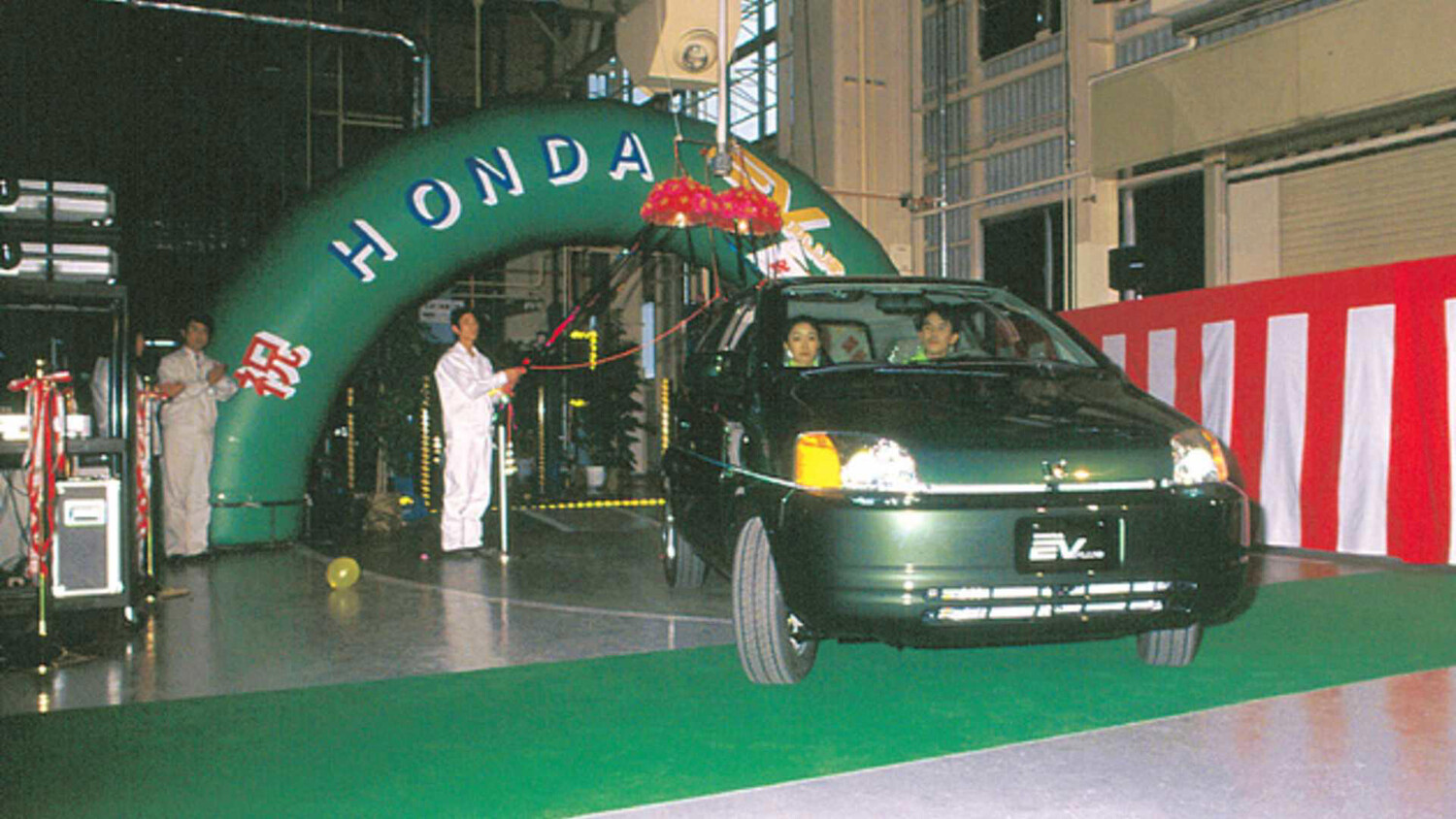
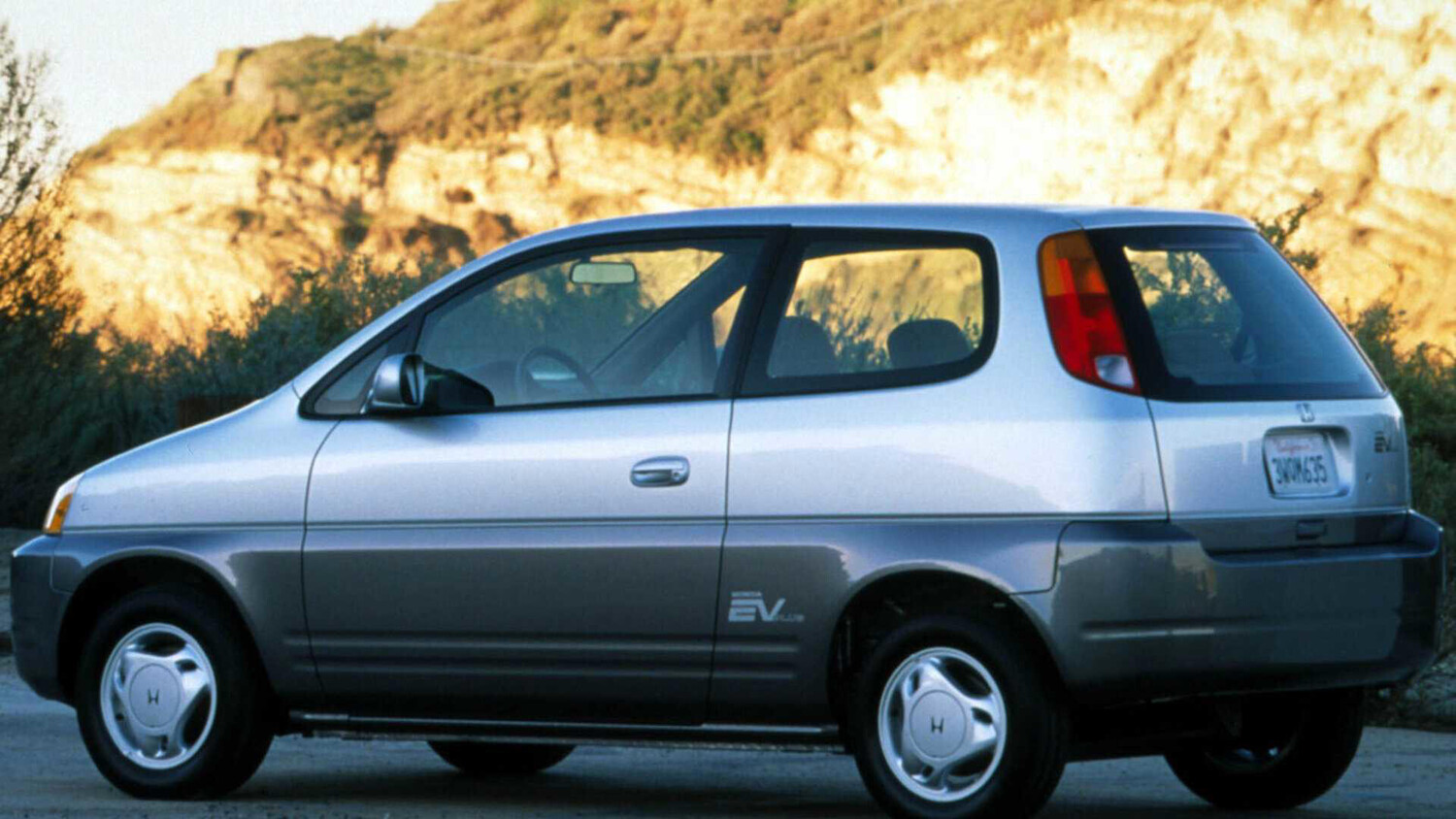
There's no doubt that Tesla jumpstarted the EV market, but the American automaker was far from the first. The earliest all-electric vehicles date back to 1828, when Hungarian inventor and engineer Ányos Jedlik developed a small vehicle powered by an electric motor. In terms of modern EVs, however, the GM EV1 is one of the most well-known early examples. Cody already covered several early EVs that predated Tesla back in June, but the automotive industry still has a few forgotten electrified gems in its history books. New York Daily News Archive / Getty Images From the 1970s to early modern EVs Tesla brought electrification into the mainstream, but the modern EV revival began nearly two decades prior. The 1990s and early 2000s saw no shortage of all-electric experiments from established manufacturers. While some were looking to improve on the vehicles that had gained popularity during the oil crises of the 1970s, others were short-lived experiments designed to meet government regulations. Vince Bucci / Getty Images After interest in EVs faded at the tail end of the 1970s, the movement was reignited as California introduced its Zero-Emission Vehicle (ZEV) mandate. While the requirements were changed later on, the original regulation required automakers to ensure a percentage of their new vehicle sales were made up of ZEVs. As a result, the industry saw several interesting models enter production in the 1990s. The GM EV1, for example, began a limited production run in 1996. Unlike some other early EVs, the EV1 was designed as an EV from ground up rather than being converted from an existing vehicle. Not long after, Honda, Ford, and a handful of others threw their hats into the ring. Kim Kulish / Getty Images 1. Ford Ranger EV There's been some debate surrounding the future of all-electric trucks, but Ford proved a small pickup was possible decades prior to the introduction of the full-size F-150 Lightning. The Ford Ranger EV hit the market for the 1998 model year, built on the Ranger XL with a regular cab and RWD. Ford originally intended for the Ranger EV to serve as a fleet vehicle for government agencies and utility companies. Ford The 1998 Ranger EV featured a 90-horsepower electric motor that powered the rear wheels via a single-speed transmission. In its first iteration, the electric pickup featured a lead-acid battery that was good for around 58 miles, although real-world driving range was closer to 50 miles. The following year, Ford swapped the Ranger EV's lead-acid battery for a nick-metal hydride battery pack. The switch brought the electric pickup's range to around 85 miles. Despite its practical design, the Ranger EV had at least one major problem: price. The 1998 Ranger EV carried a hefty $32,795 price tag, and the battery had to be replaced every 25,000 miles to the tune of $5,000. Ford ultimately discontinued the Ranger EV following the 2002 model year. Of the approximately 1,500 examples produced, many were recalled once their leases expired. Ford 2. Honda EV Plus Arguably one of the more technologically interesting EVs of the 1990s, the Honda EV Plus was built on an entirely new platform designed for electrification. Like other all-electric cars of the era, Honda's compact EV was a response to tightening emissions regulations. The Japanese automaker introduced the hatchback in 1997. Honda While other early EVs, like the Ranger EV, featured a lead-acid battery, the Honda EV Plus came equipped with a nickel-metal hydride battery pack. It offered higher energy density that made the electric hatchback more practical, with a range of around 81 miles. It came equipped with a heat-pump-style climate control system and regenerative braking. Independent testing in urban areas often proved that the EV Plus was able to travel upwards of 100 miles on a single charge. The Honda EV Plus was never intended to hit the open market, and it was only available through a restricted leasing program. While customers couldn't purchase the vehicle outright, the model carried a $53,900 price tag. In the end, Honda produced just 300 examples of the EV Plus, most of which were recalled and later destroyed. As a result, surviving examples are hard to come by. Honda 3. Coda Sedan While many established manufacturers threw their hats into the ring when it came to early modern EVs, one startup managed to bring a vehicle to market. Founded in 2009, Coda Automotive entered the fray after the Tesla Roadster and Nissan Leaf, and was largely overshadowed as a result. The Coda sedan arrived with a large battery and impressive driving range at an affordable price. KAREN BLEIER / Getty Images Originally scheduled to launch in 2010, the Coda sedan was subject to a number of delays. Rather than develop a vehicle from the ground up, Coda based the vehicle on Hafei Saibao, which shared its own roots with the Mitsubishi Lancer. The EV startup also worked with third-party engineering firms, including Porsche Engineering, to get the sedan on the road. The first examples finally made it to customers in March 2012. The 2012 Coda sedan arrived with a 31-kWh lithium iron phosphate battery that offered an EPA-estimated 88-mile range, although the automaker claimed the sedan could travel up to 125 miles. Unlike other early EVs, the Coda featured a battery thermal management system that could improve long-term performance. The 134-horsepower electric motor powered the front wheels. Notably, Coda Automotive also offered a 10-year/100,000-mile battery warranty. Bloomberg / Getty Images While the Coda, priced from $38,145, was much more affordable than the Tesla Roadster, it was subject to criticism for everything from its conventional styling to overall quality. The company also faced financial difficulties, eventually filing for bankruptcy in 2013. In all, the short-lived automaker sold approximately 117 examples of the Coda Sedan, a far cry from its 10,000-to-14,000-unit sales projection. Final thoughts benedek / Getty Images The Tesla Roadster and Nissan Leaf may have stolen the spotlight when it comes to viable EVs, but other, often forgotten, models laid the groundwork. While the Ford Ranger EV proved that conventional vehicles could be electrified, the Honda EV Plus put an electric platform and advanced battery technology on full display. Coda Automotive didn't last long, but it serves as an example of the risks a new startup takes when attempting to break into a budding automotive segment.

 Liked by Ava Lewis, Alexander Harris














 Liked by Ava Lewis, Alexander Harris