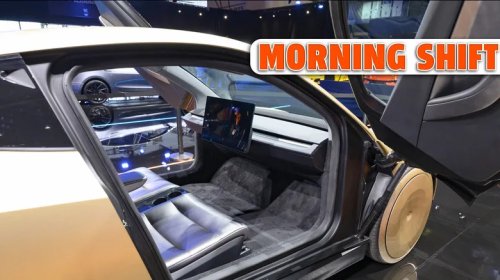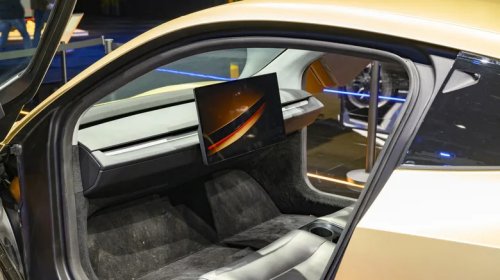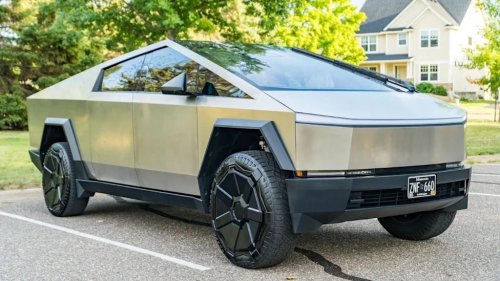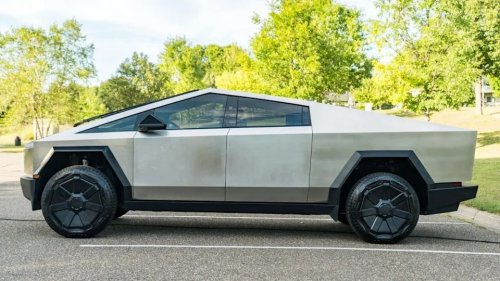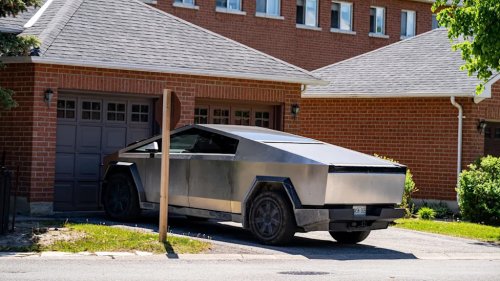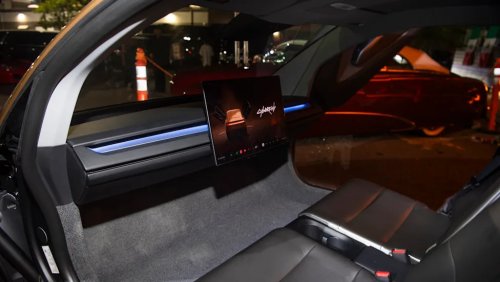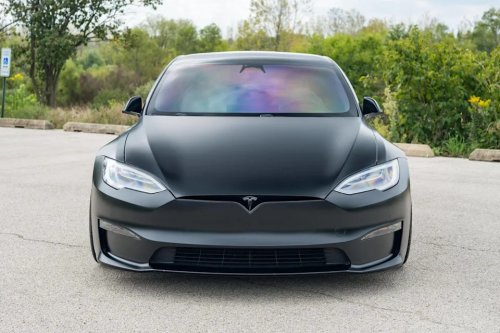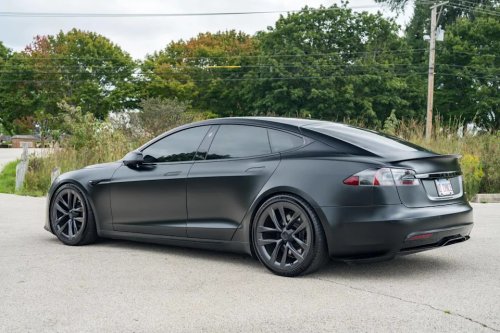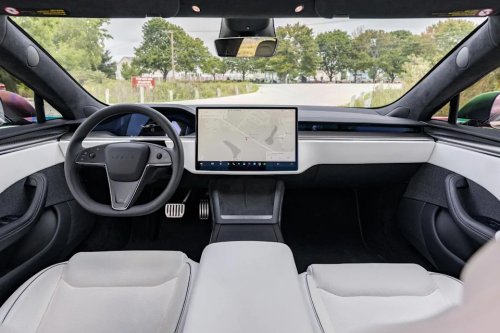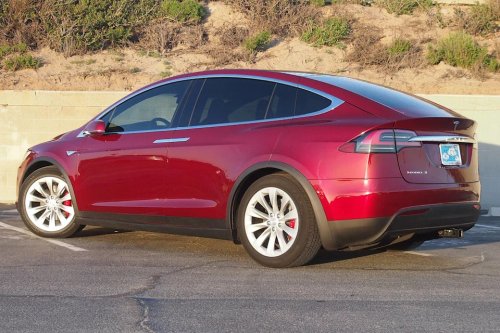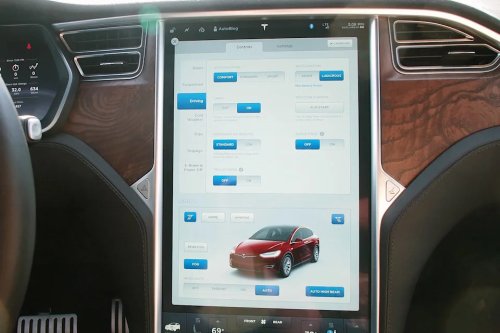
















Driving home from an appointment recently, I got caught in a thunderstorm, the kind that dumps buckets of water on the windshield and makes it hard to see the road ahead or the other cars around you. Folks in the north call it a gully washer while others call it a frog strangler. Either way, it requires windshield wipers that work properly to prevent running into things — lamp posts, other cars, people. My Tesla Model Y has the wipers set to auto by default, but did they come on automatically when I needed them? No, they did not. I had to press the button on the end of the turn signal stalk to activate them. Then they swiped twice and stopped, even though the rain was so heavy that I was driving in near white-out conditions. What to do? Should I look for the menu on the touchscreen to manually activate the wipers? That seemed unreasonably dangerous, so I pressed the voice command button on the steering world and said “Turn wipers on!” in an authoritative voice. Nothing happened for a second while I continued driving through the downpour. The wipers swiped twice at low speed and parked themselves! I was driving blind and getting more than a little upset. “Turn the damn wipers on!” I told the computer with what I thought was appropriate emphasis. That time it worked. The wipers stayed on, but alternated between high and low speed — with occasional pauses — in a herky jerky way that did not inspire confidence. It was like my car couldn’t figure out exactly what the wipers should be doing. After the rain stopped, the wipers continued to operate for about a minute, then they came on intermittently for the rest of the way home, even though the windshield was now completely dry. Later, I was chatting with Zachary Shahan, the exalted grand poohbah of CleanTechnica, who told me he has had the same problem while driving his Model 3 and that the cockamamie wipers are probably the number one complaint among Tesla owners broadly and have been for several years. Wipers Are Just One Concern So here’s my question: Why in the world would I trust my car to drive itself when it can’t operate the windshield wipers properly? Zachary said that in his opinion Elon is so fixated on Full Self Driving and robotaxis that everything else gets ignored. I know plenty of people rave about FSD, but I couldn’t help but wonder as I was driving through the downpour, if I can’t see because Niagara Falls is running down my windshield, how can a camera? I am not a software engineer, nor have I ever played one on TV, but that question continues to bother me. It seems to me the misbehaving wipers are a hazard, one that could lead to serious accidents as drivers struggle to control their wipers in an emergency instead of focusing on the road ahead. It is like another situation that I find troubling — the lack of emergency procedures to open the rear doors in the event electricity from the 12 volt battery is cut off. Both demonstrate a callous disregard for passenger safety in service to a slavish fixation on making technology work when good old fashioned human brain power has served us well for well over a century. Does that make me a Luddite? Perhaps. Or maybe it makes me practical in an age when the world is rushing to replace human cognition with machines. Deliberate Harm Musk’s inability to appreciate the consequences of his actions was brought into focus by a report in the New York Times on May 18, 2026, by Peter Goodman. He traveled with a photographer to Somalia to document the humanitarian crisis unfolding there, which has been exacerbated by the closure of the Strait of Hormuz. Here is an excerpt: For nine days, they trudged across the parched soil of southern Somalia, taking turns carrying their 3-year-old daughter on their shoulders. Abdullahi Abdi Abdirahman, his wife and their seven children sought escape from a landscape drained of life. Another drought had killed their goats and sheep, turning their life savings to dust. So they pressed on for 140 miles toward Dollow, a dusty outpost on the Ethiopian border. They were drawn by the same things that had already attracted more than 100,000 other people: International relief organizations were clustered there, offering food, water and health care. Yet when they arrived in late January at a camp on the fringes of town, they were horrified to learn that aid groups had abandoned the area. President Trump had dismantled the U.S. Agency for International Development, or USAID, eliminating Somalia’s primary source of assistance. From London to Berlin, governments had reduced funding for humanitarian aid. Relief organizations had been forced to choose where to focus their remaining money. Drought ravaged the most recent harvest. Some 6.5 million people — roughly one third of the population — were suffering hunger at levels deemed an emergency, the U.N. Food and Agriculture Organization warned in February. That included more than 1.8 million children under 5 facing acute malnutrition. Those numbers have almost certainly increased given the war. Yet the World Food Program, the largest source of aid in Somalia, has only enough funding to support 300,000 people a month through July, a fraction of the nearly 2 million people a month it was reaching in early 2025. Humanitarian relief organizations now contemplate a surreal hierarchy of suffering. “There are different categories of starvation,” said Hameed Nuru, the World Food Program’s Somalia director. “We are only able to reach those who are really on the verge of, if you don’t give them something now, they will not be there tomorrow.” In some areas, children are still getting food, but not pregnant mothers (emphasis added). “Literally, it’s who dies first,” he said, “and who dies next.” McKibben Is Furious Credit: MSNBC via YouTube Bill McKibben read that story and wrote on Substack: “Let me get my anger out of the way first. Elon Musk, in particular, shut down USAID — boasted about ‘feeding it to the woodchipper’ in the first weekend of his DOGE assault on the federal government. That is to say, the richest man in the world did this, under the auspices of our government. His cruelty and his self-regard — and his abject racism — know no bounds. “And then the most piggish and self-involved man in the world, Donald Trump, started a war in Iran, and now the price of fertilizer is through the roof, making life much harder for the people who grow food in Africa (and those who eat it). And an El Niño is now bearing down on the planet, riding on the highest temperatures in human history, which were caused mostly by us in the western world. All of it taken together is too much.” The Gospel Of Wealth Indeed, it is too much. And it illustrates the cruelty — the total absence of caring for his fellow human beings — that is the hallmark of Elon Musk. Have you heard of any charities the man supports? All his money seems to go to propping up dictators who crave an apartheid-like system of government in the US. That and making himself even richer. Can you imagine living on Mars in a society controlled by Musk? Personally, I would rather take my chances here on Earth. Andrew Carnegie, who visited any number of abuses on his employees during his lifetime, wrote The Gospel Of Wealth later in life. In it, he counselled that the wealthy should act as trustees for their excess money, administering it during their lifetimes for the public good, rather than hoarding it or leaving vast sums to heirs. When it comes to Musk, the words of Bob Dylan seem especially relevant. In his song Blowin’ In The Wind he asked, “How many ears must one man have before he can hear people cry?” Et tu, Elon? Fix the damn wipers and grow a conscience. Your fixation on self-aggrandizement — made apparent during three weeks of testimony in your lawsuit against Sam Altman and OpenAI — is wearing quite thin.