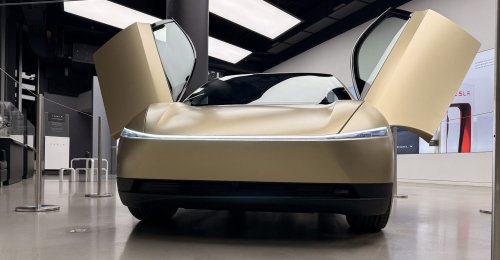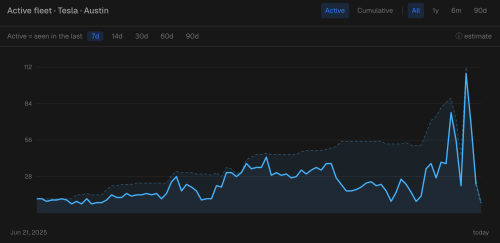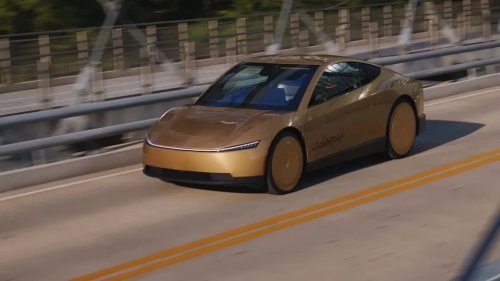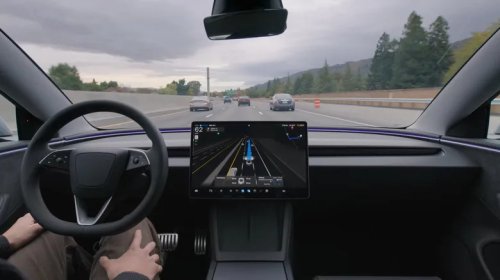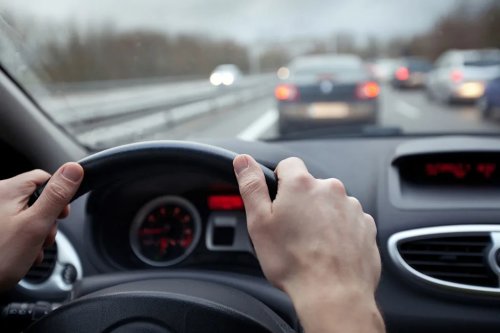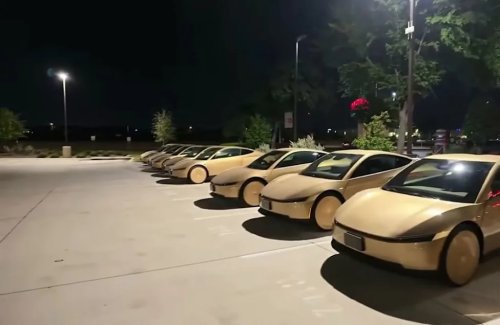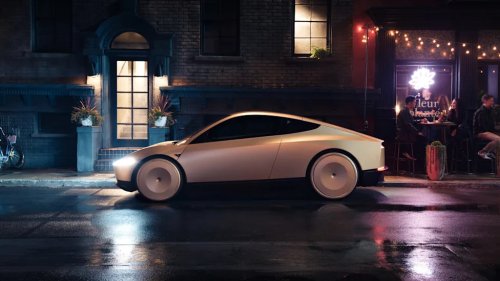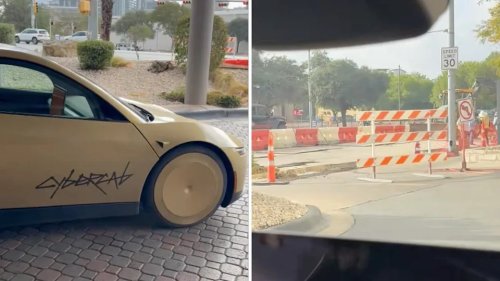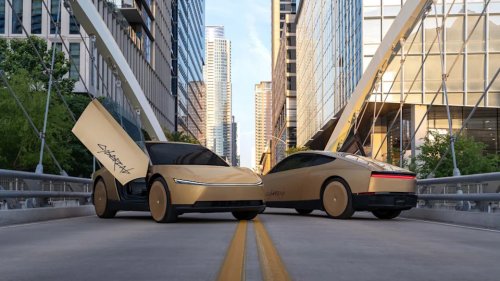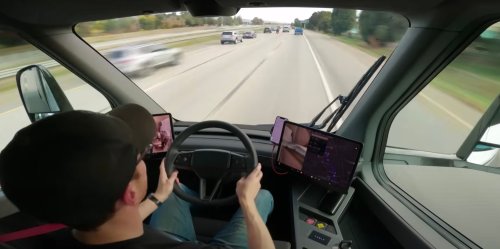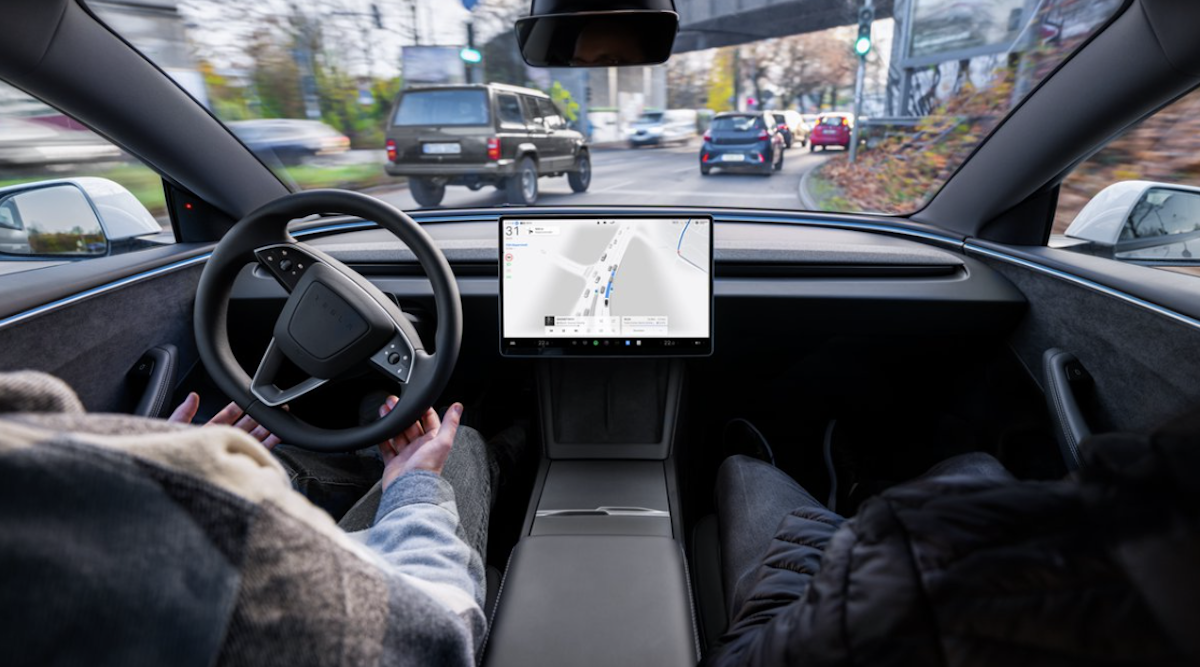





There’s no doubt about it — Tesla Full Self Driving (FSD), still “Supervised,” is much better today than it was a year or two ago. It has gotten much better over time, even if it did take several years longer than Elon Musk expected. But whether it is now “Level 4” self-driving, well, that is hotly debated every day among fans and critics. For the first time I’m aware of, though, a Wall Street analyst, Piper Sandler’s Alexander Potter, has chimed in with his opinion that Tesla FSD has “effectively achieved Level 4 autonomy (at least in most conditions).” These are some key reasons he makes this claim: Tesla is offering lower insurance premiums for customers who used FSD a lot. “You don’t cut prices on a product that you think is going to generate claims,” he said. Volume production of the Cybercab began in April. This is a capital investment of “several hundred million USD (if not $1B+)” and makes no sense if FSD isn’t ready to deploy widely, Potter argues. Tesla is now working on getting permits in locations where it wants to deploy robotaxis — for 200 parking spaces as well as 16 Supercharging stalls in Irving, Texas, for example. Tesla previously avoided sharing FSD adoption statistics, considering such important figures “noise, not signal.” However, in Q1 2026, it started sharing subscription figures and Potter thinks that means FSD is “ready for dissemination beyond early adopters.” Tesla has said that it plans to expand its robotaxi service to 7 more cities in the first half of 2026. One may note that we just have a few more weeks until the first half of 2026 is over, and Potter notes that the goal “might be unrealistic,” but he contends that the “trend is clear.” Potter also owns a Tesla with FSD and says “There’s no substitute for personal experience.” He cited a drive he took from Missoula, Montana, to Minneapolis, Minnesota, entirely using FSD in April. He highlighted that under favorable weather conditions, there are now several documented trips like this where the human didn’t have to disengage FSD at all. There are, of course, still critics and counterpoints. Here’s a list of points that one might use to counter the claim that FSD is Level 4: It doesn’t function well enough in poor weather conditions — rain, snow, blinding sun — and doesn’t have the sensors necessary to do that. It doesn’t function well enough in complicated urban driving conditions. It makes a lot fewer mistakes than it used to, but users are getting more complacent when using it as a result and are often not prepared to intervene in the edge cases where it doesn’t do the right thing. Crash data from Tesla’s robotaxi deployment in Austin, Texas, is actually not very good. Tesla still deploys a very small number of robotaxis in Austin despite launching there in late 2025. Elon Musk said Tesla robotaxis would cover about half the US population by the end of 2025 ( “I think we will probably have autonomous ride-hailing in probably half the population of the U.S. by the end of the year,” Musk said on July 23, 2025), and Tesla has still hardly expanded its service at all after seemingly forcing an Austin launch in December 2025. There’s a big difference between FSD Supervised stats and FSD Unsupervised stats, but Tesla and its fans continually use the former to imply FSD Unsupervised is great and ready. Tesla also continues to compare FSD Supervised stats to stats that it doesn’t make sense to compare to. Tesla still isn’t taking on liability in the event of a crash when drivers are using FSD. Perhaps Potter is right and the trends have FSD pointing toward a breakthrough moment and “Level 4” self-driving. Or perhaps it has gotten much better but isn’t good enough for broad “Level 4” self-driving, and a combination of complacency and hubris will lead to disastrous outcomes if Tesla does try to deploy it broadly. We will see.