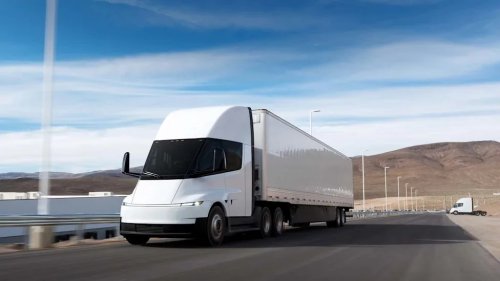
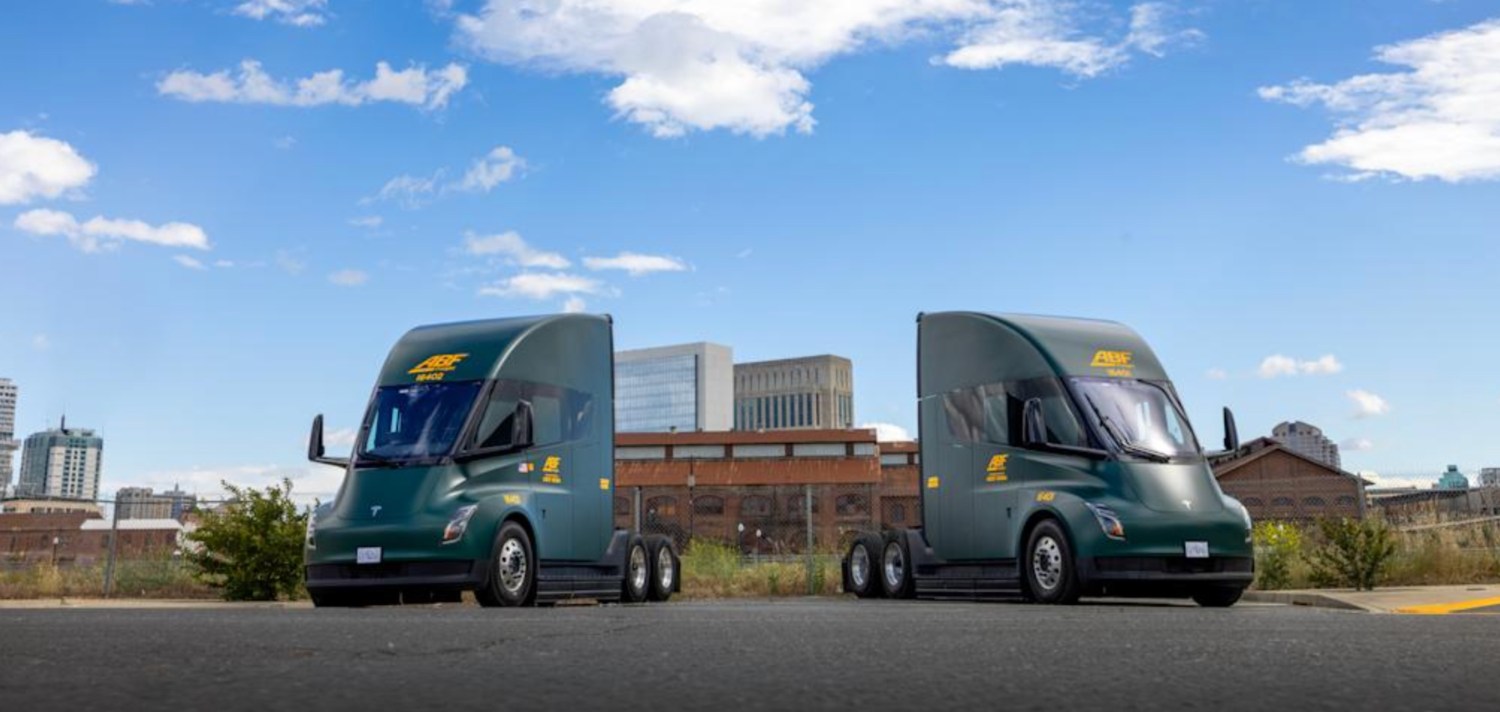
ArcBest (ARCB), the multibillion-dollar logistics company, is purchasing two Tesla Semi electric trucks for its ABF Freight fleet after a successful 2025 pilot program that averaged 1.55 kWh per mile over 4,494 miles. The purchase marks a significant step beyond piloting and into actual fleet investment for the less-than-truckload (LTL) carrier, which is now expanding its electric Class 8 testing across a broader operating footprint. From pilot to purchase We covered ABF Freight’s Tesla Semi pilot last year, which demonstrated impressive efficiency results. Over three weeks, the electric truck logged 4,494 miles averaging 321 miles per day on routes between Reno, Nevada, and Sacramento, California, including regional Bay Area runs and rail shuttle operations. The 1.55 kWh per mile result was a notable improvement over earlier Tesla Semi efficiency numbers. When Tesla unveiled its “production version” in 2022, Elon Musk claimed 1.7 kWh per mile. DHL got 1.72 kWh per mile in its own testing, and Saia got 1.73 kWh per mile. ArcBest’s 1.55 kWh per mile represents a roughly 9% improvement over those earlier figures. Advertisement - scroll for more content Now, ArcBest is putting money behind those results. The two new Tesla Semis will primarily support linehaul operations within California, with planned extension into Reno, Nevada, and potentially other locations — significantly expanding lane coverage compared to the pilot’s Reno-Sacramento corridor focus. Matt Godfrey, ABF Freight president, said: “Adding Tesla Semis to our lineup allows us to expand that across more lanes and operating conditions to evaluate whether heavy-duty electric vehicles meet the same standards for safety, reliability and performance across our existing fleet.” ABF Freight plans to benchmark the electric trucks against its diesel fleet using the same metrics for total cost of ownership, operational efficiency, safety, and employee experience that guide all fleet investments. Driver feedback and real-world performance One underreported aspect of the Tesla Semi’s commercial deployment is driver reception. ArcBest noted that operators during the 2025 pilot highlighted strong visibility, comfort, and overall performance — including reliable operation on the demanding 7,200-foot climb over Donner Pass. That tracks with feedback from other fleet operators. Covenant Logistics recently tested a Tesla Semi on the Grapevine — the notoriously steep I-5 grade in Southern California — and came away “amazed” by the truck’s performance on the grade. Initial feedback from ABF drivers during orientation on the new units has also been encouraging, with drivers noting the combination of comfort and ease of operation. Growing momentum for Tesla Semi ArcBest’s purchase comes as Tesla Semi momentum is accelerating across the freight industry. The first Tesla Semi rolled off the high-volume production line in late April at the new dedicated factory adjacent to Gigafactory Nevada, and orders have been piling up. WattEV placed a 370-truck order worth approximately $100 million — the largest single electric truck deployment in California. Two port drayage operators ordered a combined 60 Tesla Semis through Forum Mobility. DHL, CEVA Logistics, and several other major carriers have been expanding their Tesla Semi testing as well. ArcBest is no stranger to fleet electrification either. The company deployed 14 electric terminal tractors last year, signaling a broader commitment to evaluating electric equipment across its operations. The competitive landscape reinforces why fleet operators are gravitating toward the Tesla Semi. The Freightliner eCascadia tops out at around 230 miles of range with a 550 kWh battery, while the Volvo VNR Electric maxes out at about 275 miles with 564 kWh. Neither can match the Tesla Semi’s combination of range and efficiency — the Semi’s 822 kWh battery pack delivers roughly 500+ miles of range at the efficiency levels ArcBest demonstrated. Electrek’s Take ArcBest’s move from pilot to purchase is exactly the kind of signal the electric trucking industry needs. It’s one thing for a logistics company to test an electric truck in a controlled pilot — it’s another to actually buy the trucks and put them into regular operations with plans to expand. What’s particularly telling is that ABF Freight is applying the same total cost of ownership benchmarks it uses for its diesel fleet. That’s how you know the technology is maturing — when fleet operators stop treating electric trucks as science projects and start evaluating them like any other piece of equipment. We’re now seeing a clear pattern: virtually every major fleet operator that has piloted a Tesla Semi is either expanding their testing or placing orders. The 1.55 kWh per mile efficiency is a big part of why. At current electricity rates, the Tesla Semi’s energy cost per mile is dramatically lower than diesel, and the gap widens every time fuel prices spike. The real question now is whether Tesla can produce enough trucks to meet demand. The new production line is running, but ramping from a handful of trucks to thousands is a different challenge entirely. We haven’t heard much about the ramp-up since Tesla started production earlier this year. If you’re running a fleet operation, the economics of going electric extend beyond just the trucks. Locking in low energy costs with on-site solar makes the math even better. With electricity rates climbing nearly 10% last year, home solar protects you against future rate increases. And with lease and PPA options, you can go solar with zero upfront cost and start saving immediately. If you want to find the best deal, check out EnergySage. It’s a free service with hundreds of pre-vetted installers competing for your business, so you save 20 to 30% compared to going it alone. No sales calls until you pick an installer. Get your free quotes here. Stay up to date with the latest content by subscribing to Electrek on Google News. You’re reading Electrek— experts who break news about Tesla, electric vehicles, and green energy, day after day. Be sure to check out our homepage for all the latest news, and follow Electrek on Twitter, Facebook, and LinkedIn to stay in the loop. Don’t know where to start? Check out our YouTube channel for the latest reviews.



















 +19 others