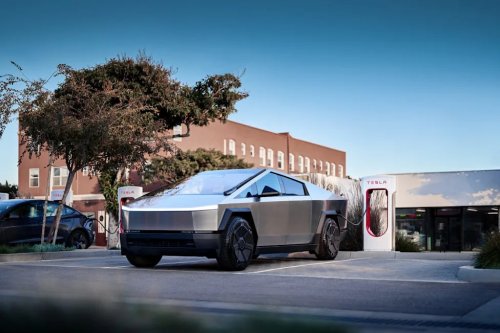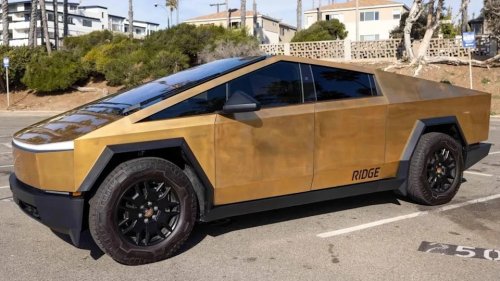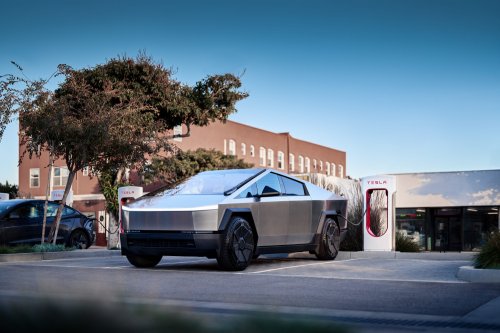
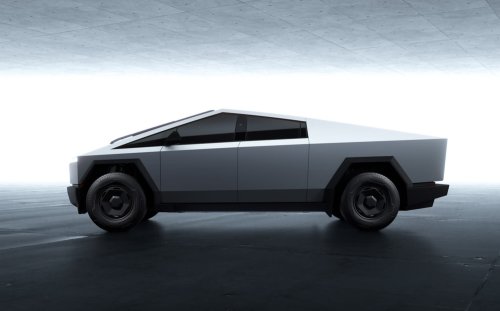

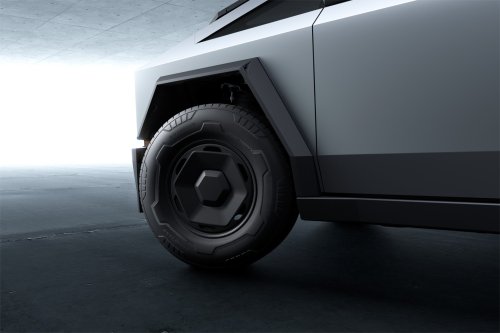
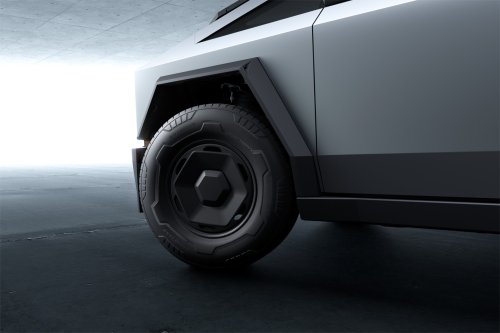
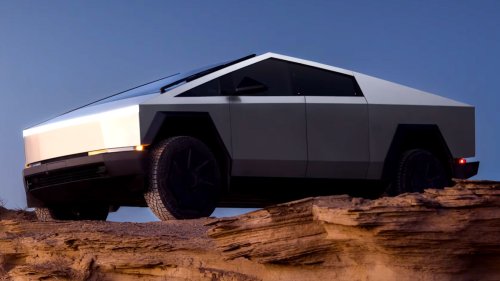



















The issue stems from cracking around brake rotor stud holes under load. Only rear-wheel-drive units with base 18-inch wheels are affected. Some serviced EVs may also carry the same potentially faulty parts. The owners of 173 Cybertruck RWDs have a new problem to worry about. Tesla has issued a recall on the short-lived budget variant after discovering the wheels can come off while driving, which ranks somewhere near the top of the list of things you definitely do not want your vehicle to do. Tesla says that on-road disturbances and cornering forces can cause cracking around the stud holes in the brake rotors. If that happens, the entire wheel stud may separate from the hub. The company is not aware of any crashes or injuries tied to the issue, though it has logged three related warranty claims. Read: His Cybertruck Made It to 100,000 Lyft Miles Before Sending A $7,200 Reminder A total of 173 models built between March 21, 2024, and November 25, 2025, are included in the recall. Only Cybertruck RWD versions with the base 18-inch wheels are affected, not those fitted with the optional 20-inch setup. Tesla first identified a potential problem in August of last year, when pre-production testing revealed some cracking in the brake rotors, even though all studs remained intact at the time. Further investigation, along with field reports, showed the issue was more serious than initially thought. Not only did Cybertruck RWD models leave the factory with the defect, but some Tesla service centers were also using the potentially faulty brake rotors, so vehicles that have had their brakes replaced may also suffer from the same issue. What’s The Fix? While the recall notice lists vehicles produced from March 21, 2024, Tesla says it only began building Cybertruck RWD models with 18-inch wheels on August 28, 2025. Production ended less than three months later, on November 5, with the company citing limited demand for the variant. Owners can expect notification from Tesla after June 20. They will be asked to bring their trucks to a service center, where technicians will replace the front and rear brake rotors, hubs, and lug nuts with updated, more durable components.