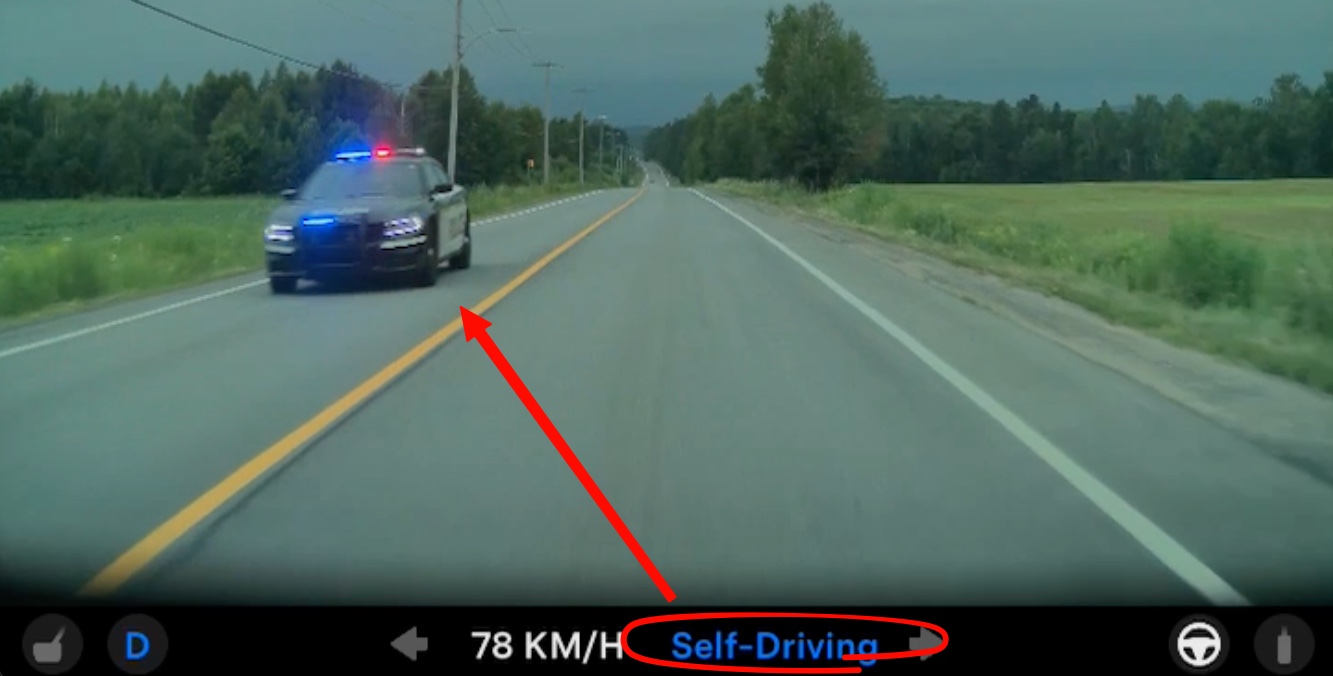
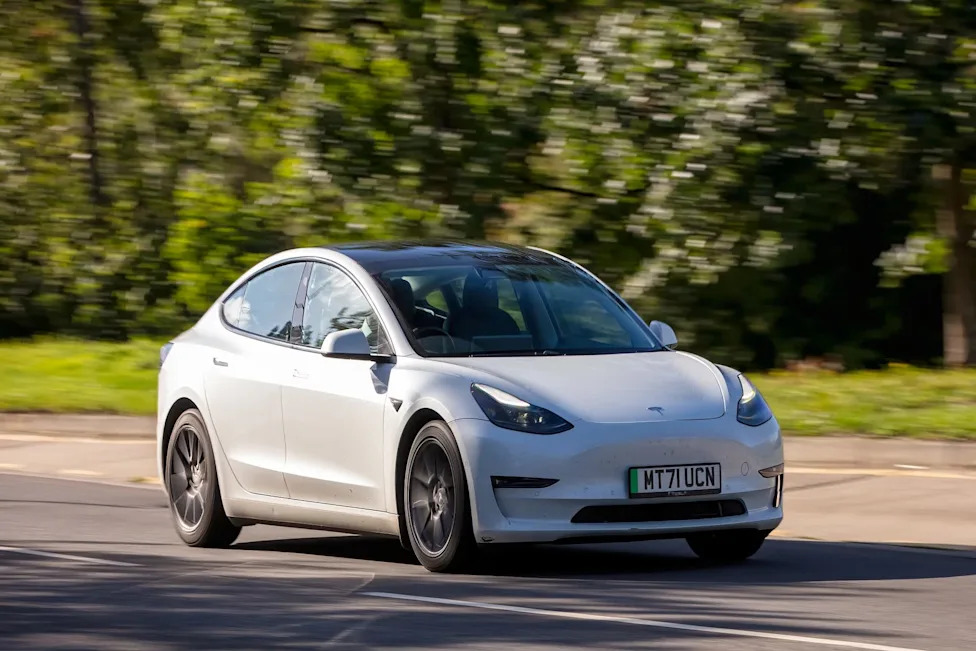
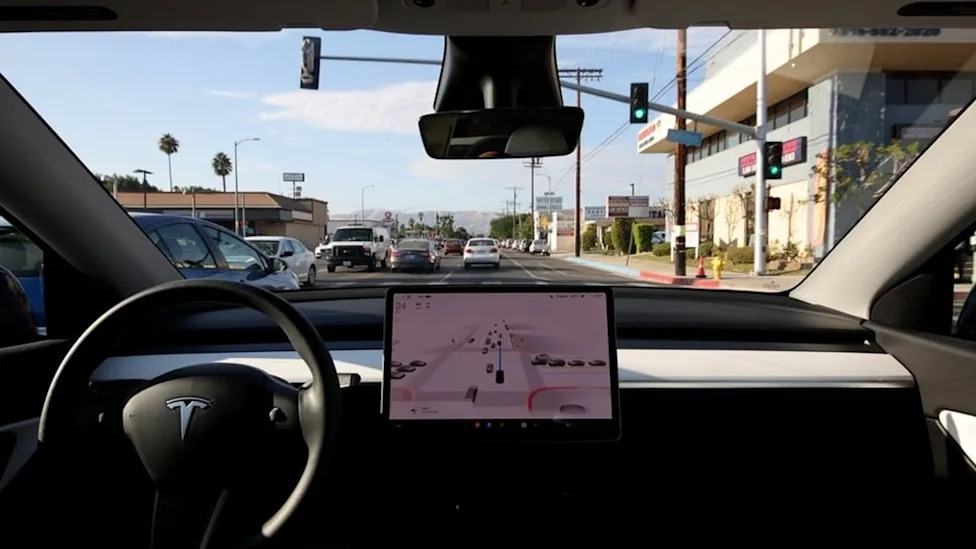
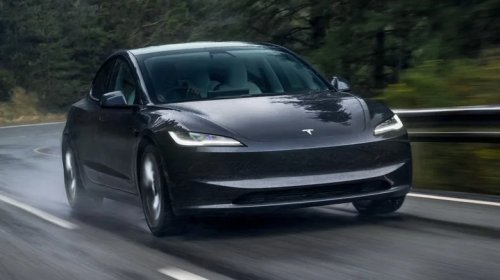
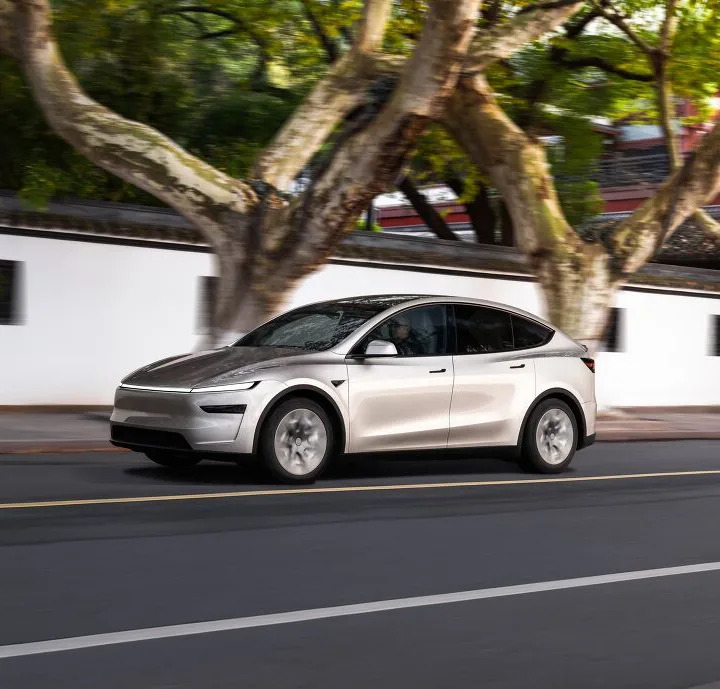
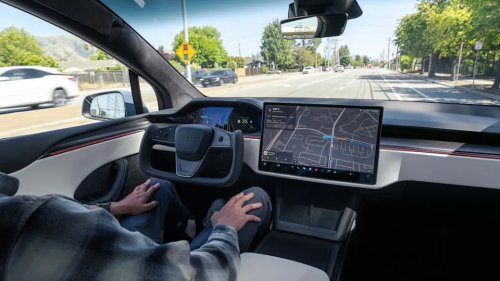
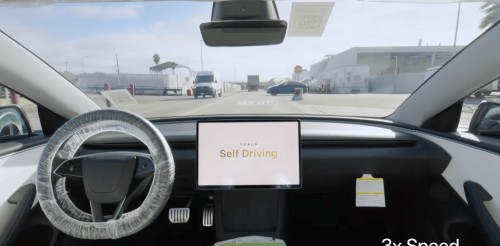
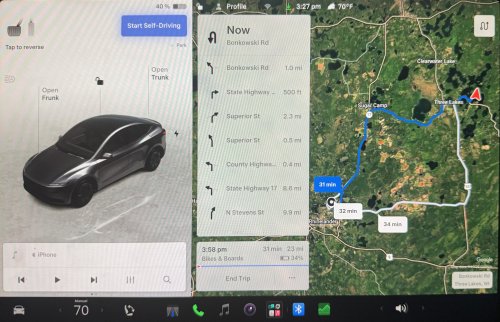
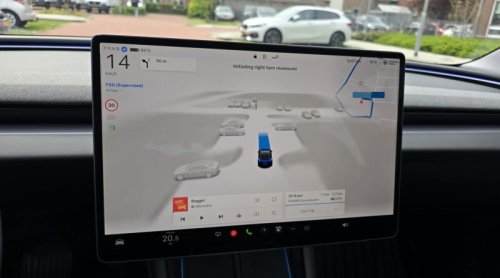
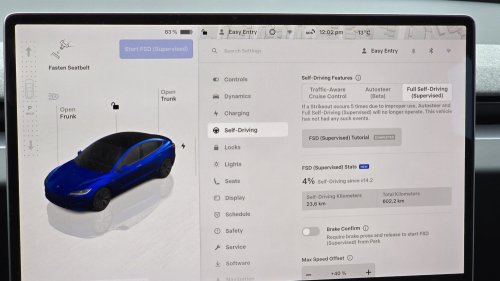
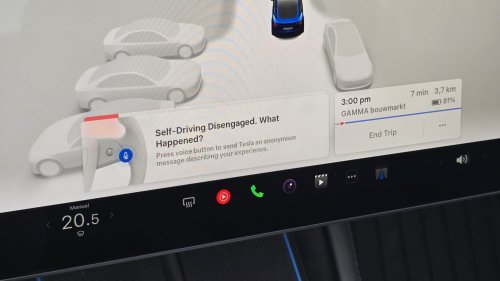
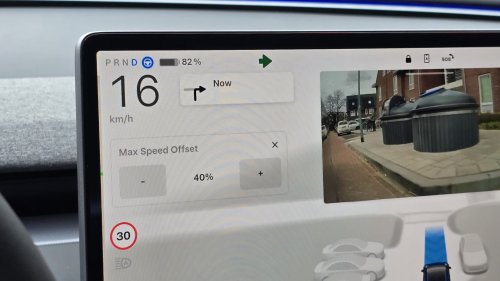
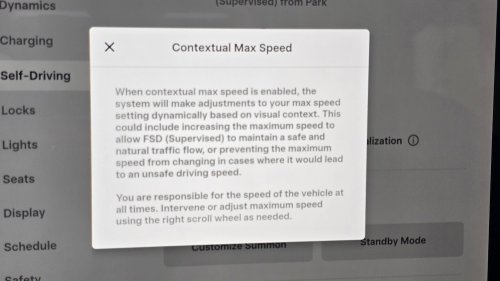
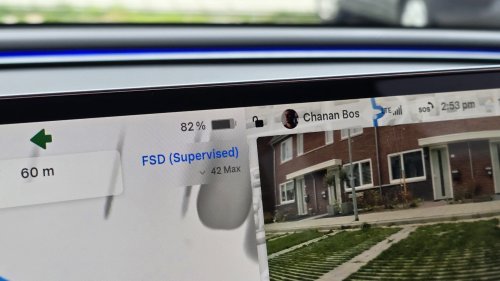
On April 10th, quite literally at the 11th hour before Tesla’s self-imposed deadline, the Dutch road authority (the RDW) posted a press release that they have finally granted Tesla approval for Full Self Driving in the Netherlands. However, no one knew when the update would start rolling out. The picture is not completely clear, but it appears that the first two people, influencers, started getting the update the following evening, along with an email informing them they were in the early access programme. Having a 2024 Model 3 SR, I went to bed a bit disappointed, only to be surprised the next morning to see that my car already downloaded 17% of the update 2026.3.6, the update that contained FSD v14.2.2.5, which according to Elon Musk on X is actually version v14.3 but with a different naming convention. According to two surveys from completely different and not overlapping circles in the Netherlands, with about 150 Tesla owners responding to each, only about 20 people total had received the update. On tracker sites like TeslaFi, the stats were even bleaker, at fewer than 10 vehicles having received or installed the update. In other words, this is a very early and fairly exclusive first impressions review. So, what is this FSD version like? Now, to be fair, I haven’t had the chance to visit the US in quite some time, so I have not had the chance to try the US version of FSD, nor try out a Waymo. All I could do was watch lots of videos to get an impression. Long story short, the initial impression of myself as well as others that have shared their impression with me was that the European version of FSD is almost flawless. Personally, I hadn’t seen the car make even a single mistake, not in suburban settings, not on regional roads, nor on a highway that was undergoing construction, which is very impressive. Autopilot really struggled with a white line that was not properly painted over in that same spot. What really stood out to me is that FSD follows Dutch driving rules to the letter. For example, when turning off of a highway, you need to turn on your indicator before going on the offramp lane and keep the indicator on in the offramp lane until you have passed the dashed crossable line and reached the solid line. FSD did that. Whereas the intelligent turn signal Tesla introduced with the Highland Model 3 at the end of 2023 never did that, it stays on as long as it needs to depending on whether you are changing lanes or making a turn and does it correctly almost all the time, with the exception of roundabouts and highway exits. However, those highway exits it simply saw as changing lanes and turned off the indicator once the change was complete and still does that today, but not FSD — like I said, it seems to follow the laws to the letter. This detail is tiny, yet it really represents how strict the RDW was with Tesla when it came to giving approval for letting FSD on the road and why it took so long. If you look at the comment section of Dutch articles about the release of FSD, you see that a lot of people in Europe have often seemingly already made up their minds about FSD because they don’t like Autopilot. However, as anyone who has tried FSD will know, it’s an entirely different beast. The difference is night and day. I’ve tried ADAS systems of most of the EVs out there on the roads of Europe. I’ve even used a handful of them extensively over the past 4 years, and I can say with a lot of confidence that while some were comparable or seemed to function better than Autopilot, none come close to FSD. This system behaves like a real person would. It gets you from parking lot A to house B, and that mere fact cannot be said about any other system out there. Also, having seen plenty of Waymo videos, I have now personally seen that FSD responds to other cars much faster — overtaking, letting a car through on a narrow street, or going first if the other one hesitates. Once it boldly overtook two bicycles at once and then merged back just in time before passing a massive truck and everyone in the car was in awe. Just completed my first three FSD drives in the Netherlands in my own Tesla Model 3, thank you so much @Tesla_AI @teslaeurope @elonmusk you persevered and delivered and it's truly something special! 1/3 pic.twitter.com/Edlsv2Xhuo — Chanan Bos (@ChananBos) April 12, 2026 I made sure to film my first three drives, two short ones and a long one. Feel free to have a look above on X, or if you are one of the people who actively avoids that place, I also placed the third longer video on YouTube here. There are still issues Now, I don’t want to give you the impression that FSD is already flawless. First and foremost, it drives like an old grandmother, often driving well under the speed limit to increase ride comfort and testing the patience of some drivers behind you, which on any other day likely could have included yours truly. One could press the acceleration pedal to make the car go a bit faster, but that could be risky, as the car could have seen, anticipated, and started responding to something the driver hadn’t, like a little child behind a car that was only visible for a second while you were looking the other way. If you have seen FSD V14 videos posted online, you might already know how superhuman the vision has become compared to V13, when it did not make use of the full resolution of the cameras. Heck, I’ve seen a video where the Tesla could clearly identify cars and a bicycle through fairly dense shrubbery that a driver would struggle to look through. Back to where we were: hitting the accelerator could stave off grandma’s driving for a bit, but you risk causing an accident. So far, I only did this once on the highway when it was absolutely crystal clear that the car was going slower for absolutely no reason whatsoever. There are also two settings in the European FSD that can stave off the granny behaviour. The first is a speed offset. You can tell the car that it is allowed to go over the speed limit and you can go over the speed limit by up to 50%. There is a button on the screen for this, or like with Autopilot before, you could use the scroll wheel. And the good thing is that you also immediately see what the current max speed. However, even at 40% over the speed limit, when it says it is ready to go 70 in a 50 zone, not once have I seen it go faster than 53. This is likely because I turned on another European FSD setting called contextual maximum speed. This setting supposedly will let the car drive above the maximum to keep up with traffic, or slower than the limit to match the traffic. However, how exactly this setting works and compares to simply increasing the maximum speed offset remains a bit unclear as of this moment. In the US, this works very differently. There, the speed controls were taken away to the dismay of many US FSD drivers (or should we call them FSD supervisors?). Instead, there are speed and behaviour profiles you can choose from. Starting with Sloth, then Chill, then Standard, then Hurry, and then at last Mad Max, the latter being critical in aggressive driving environments like Los Angeles. When I got an FSD demo drive a month earlier, the Tesla representative said that the current European FSD version is set somewhere between Chill and Standard. However, over time (and knowing the EU, it could be a lot of time), Tesla is likely to roll out updates that will increase how assertive the vehicle is allowed to be on the road. But they need to be extremely cautious for now as the European version of the software slowly matures. The parking situation, or lack thereof The other widely reported issue that I myself have also experienced is parking. Honestly, I’m even starting to doubt whether it’s even able to find a spot and park. Most of the time it seems to just start roaming about the parking lot, missing tons of great opportunities with clear lines. After going through the lot, it just decided to leave on its own and go exploring and adventuring. Once it seemed like it was going to park, but then went right in the middle of the line, went halfway, tried correcting itself twice, and then just gave up. From what I understand, parking is also still a bit finicky on V14.3 in the US. It’s sort of hit or miss, except for the Robotaxi service that gives you a few parking options and does fairly well. So, we know that parking is still coming. Interestingly enough, when I had an FSD demo test drive a month ago with a Tesla representative, it parked upon arrival right away. It was in a handicap spot, but still, it parked. Though, even the Tesla representative was a bit surprised, so it was clearly not doing that consistently. Other observed issues One last small observation I can still make from my own experience: On at least two occasions when my car was the first at the stoplight, it did not stop as close to the line as I would have wanted it to. In the Netherlands, that is an issue, as our roads have magnetic presence sensors built into the road so that a traffic light knows that someone is waiting for a green light. If you don’t roll far enough, some stoplights won’t even turn green at all. Some of the other FSD testers did still have a few interventions. Once, the car went to overtake in the left lane and then missed a turn. In one case, it went into a bus lane. In another case, at a complex intersection, it ended up in the wrong lane and failed to merge onto the highway because granny Tesla drove next to a bus at the same speed as the bus the entire onramp. There have been a few cases of not going after a green light even though the display shows the car sees it’s a green light, and one case of changing to a lane that was about to disappear due to a merger. Now, to put things into perspective, these issues are a culmination of reports from multiple people who spent a large portion of the day and/or night driving and testing FSD, and overall the impressions of everyone are all super positive. I don’t think I have seen any actual safety-critical issues, just inconveniences. If you do encounter something, you can record a little voice message for the Tesla team upon disengagement of FSD. Wider European rollout The next big question for people in the Netherlands who got the update is when it will park. But for all other Europeans, the question is when they will get FSD. For the Netherlands, the rollout is slowly proceeding in waves. This morning, more people are reporting that they are getting the update, but we are still far from a wide rollout. Tesla is known to take things slowly in a case such as this and could also end up pausing the rollout before everyone gets it to fix some bugs. As for the other EU countries, it is likely to take at least another month. It seems that on the day the RDW approved FSD, Tesla was already starting the paperwork to have Brussels approve it EU-wide via article 39. This is something that will be put to a vote, and if it passes, Tesla might start rolling out FSD in multiple other countries right after. However, there is also a chance that the EU vote will not pass, in which case Tesla will have to take it up on a case by case basis with each country. Due to the precedent in the Netherlands, it won’t take another year and a half before more countries start getting the update, but it will then take longer than a month. Small Q&A of common questions Q: What happens when you are on FSD and leave the Netherlands?A: FSD warns you that it will stop working and gives you about 15 seconds to take over. Q: I have a Tesla in another European country and I bought FSD. Will I get the update if I drive to the Netherlands?A: Not likely. For now, even most Dutch Tesla owners who bought FSD or the subscription still don’t have it. Q: Does this update include Grok for the Netherlands?A: Unfortunately not, but perhaps with the spring update? Q: Can’t you just use the old Autopark at the end of a drive?A: Yes, you can; though, that would require you to disengage FSD to do so. Q: With this update, do we now have a proper Smart Summon that works even if you are more than 6 meters away from the car like in the US?A: Nope, unfortunately not. To everyone’s dismay, Summon and ASS still work exactly as they did before, which in many cases means they don’t work since a person (you) is standing either too far away or too close to the car, with no sweet spot in between.










 +1 others