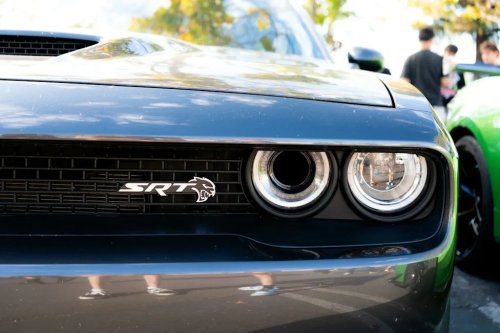
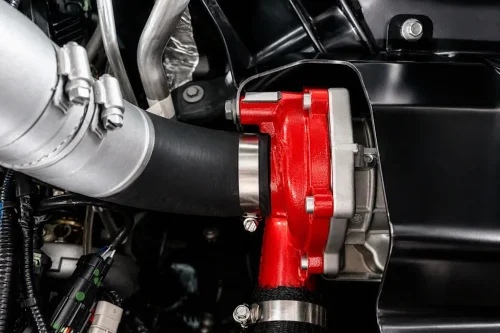
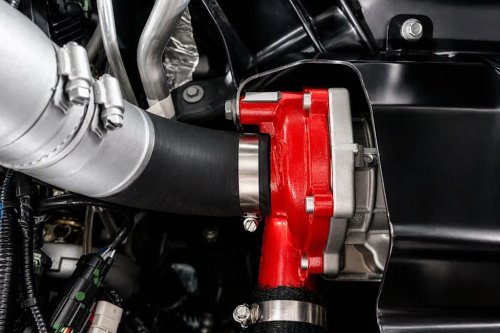
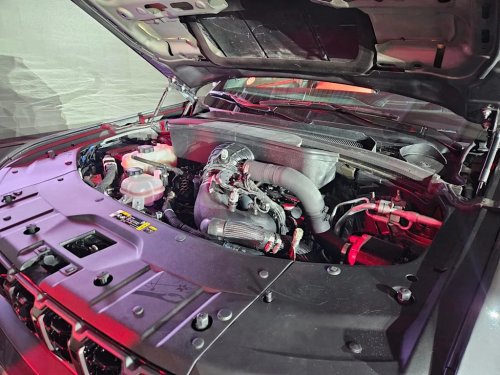
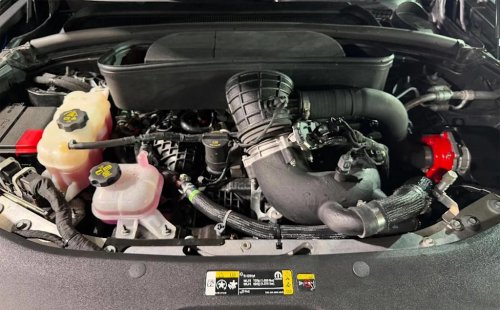
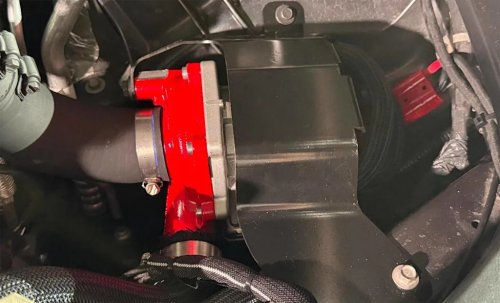
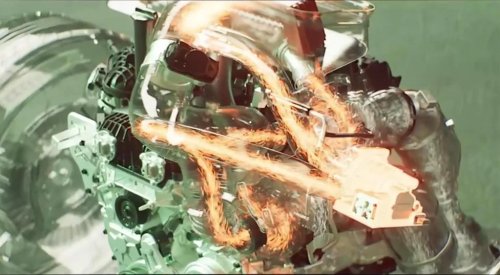
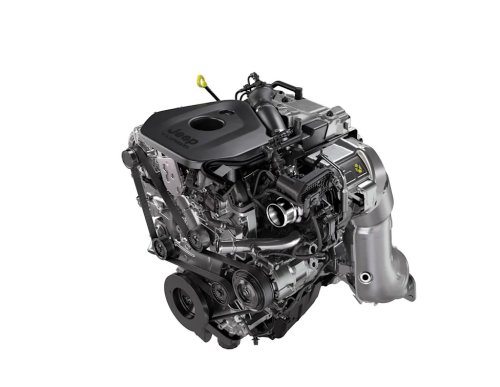
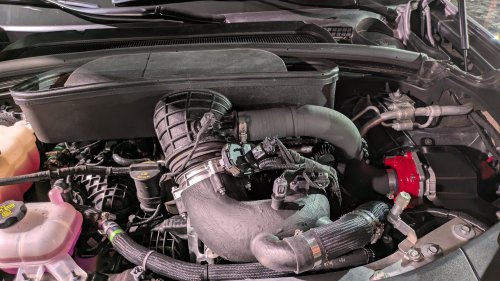
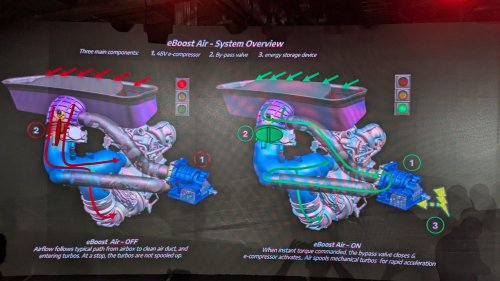
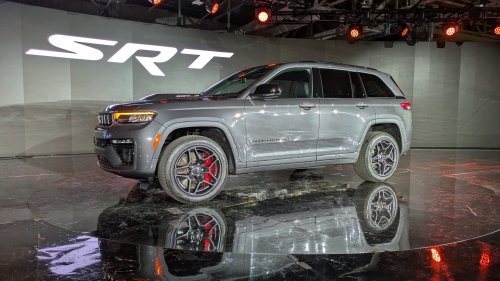
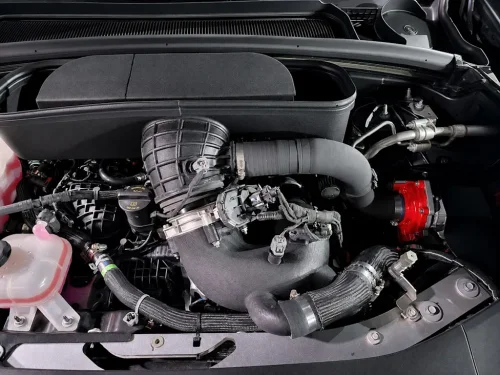
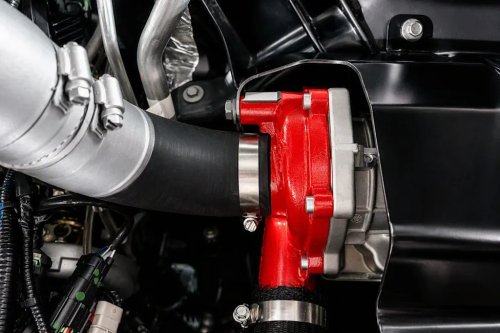
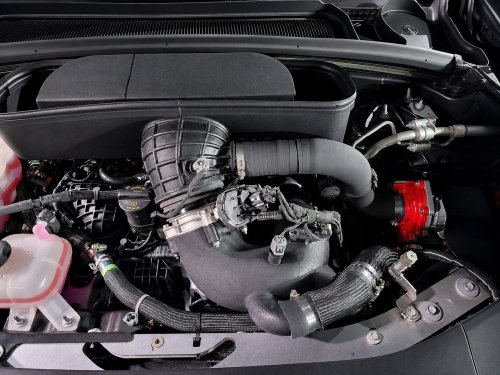
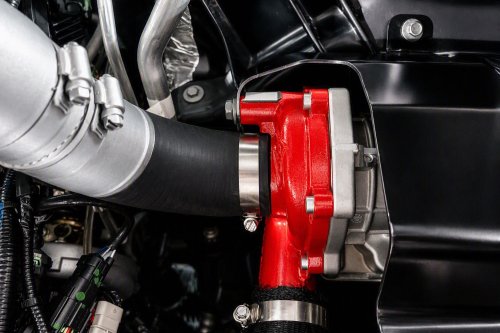
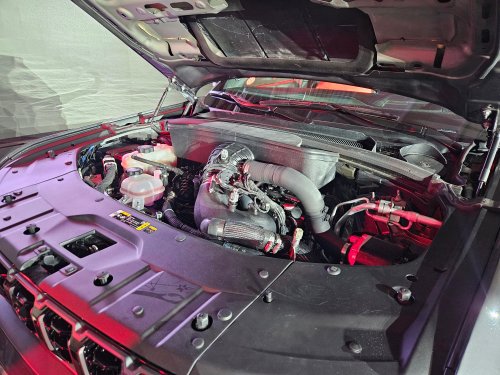
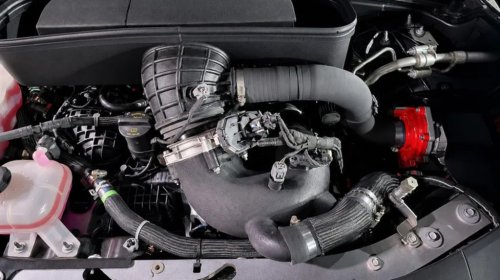
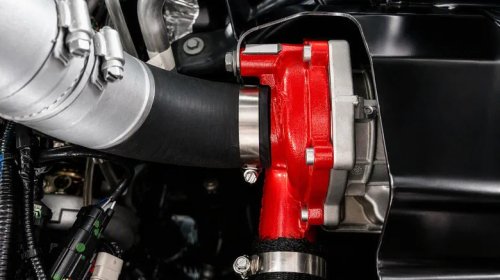
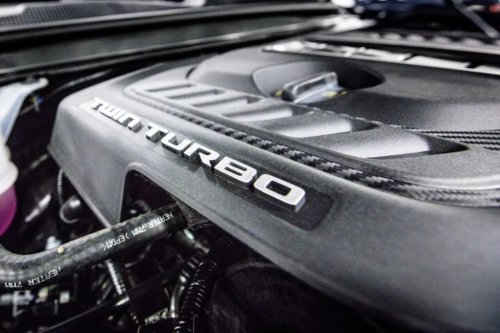
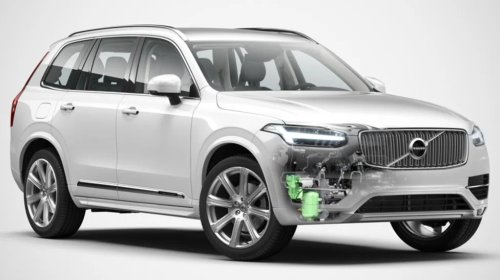
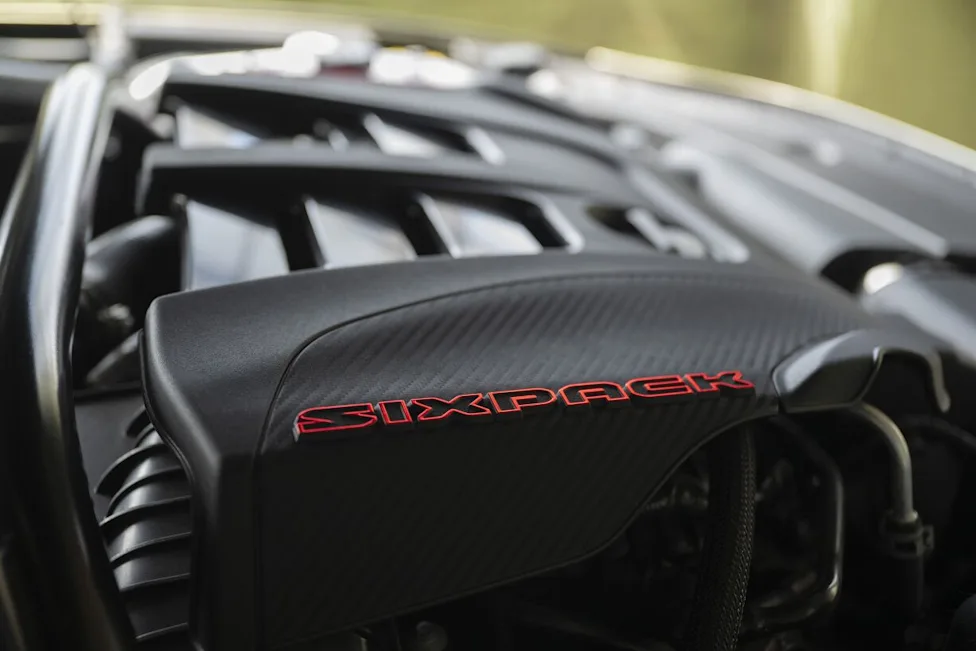
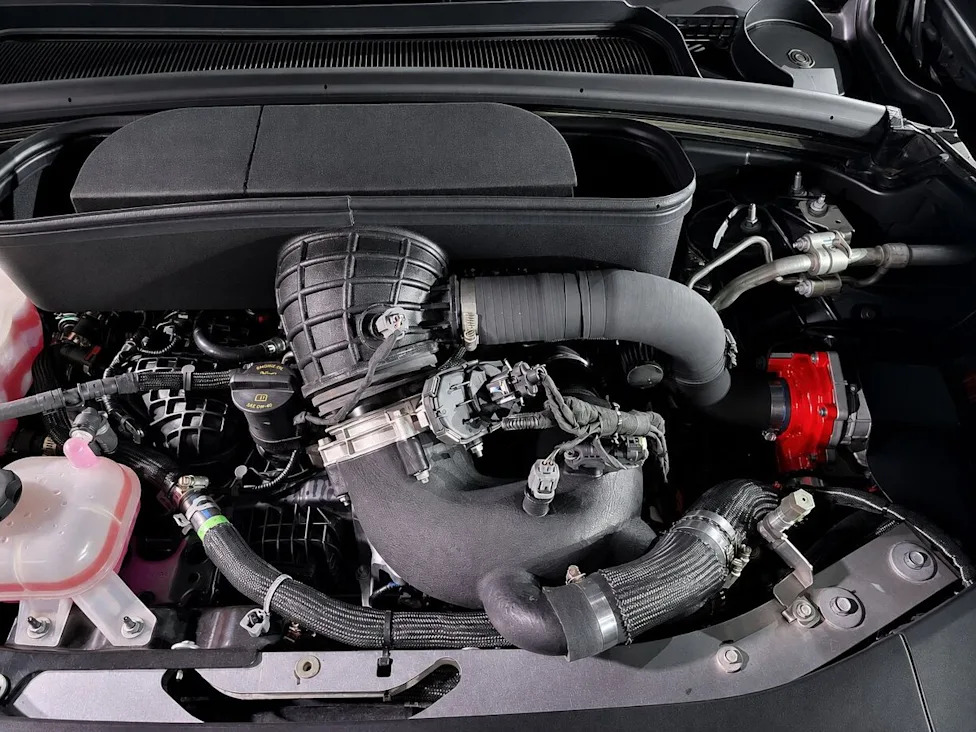
srt crew cooks up new eboost air system to eliminate turbo lagStellantis' newly resurrected Street and Racing Technology (SRT) performance division just cooked a new trick forced-induction solution designed to eliminate turbo lag. They call it "eBoost Air," and the system pairs an electric supercharger with twin turbos to deliver instant low-end throttle response, mimicking the immediate power delivery of a supercharged V8.It's a well-known fact that the problem with big turbos has always been the delayed response as the turbine waits for exhaust gas to build enough pressure to spin the compressor fast enough to jam the big lump of air down the cylinder's throat. To solve this, SRT mounted a compact electric supercharger upstream of the 3.0-liter twin-turbo Hurricane inline-six engine.Working alongside an electronically actuated bypass valve, the electric compressor engages immediately at low RPMs when the driver steps on the pedal. By feeding the positive pressure from the supercharger directly into the induction tract, it pre-spins the exhaust-driven turbochargers before natural exhaust flow takes over. Once RPM rises high enough and the main turbos can generate full boost, the bypass valve opens to dump the supercharger pressure.srt crew cooks up new eboost air system to eliminate turbo lagWhile cool, this isn't exactly groundbreaking territory. European brands like Mercedes-Benz and Volvo have used technology like this for at least a decade. In fact, the tech is so well documented that SRT was able to bring the eBoost Air to life from prototype concept to a running vehicle in just seven weeks. What were you doing seven weeks ago?AdvertisementAdvertisementTo demonstrate the hardware, engineers installed a modified 3.0-liter High Output Hurricane engine into a Jeep Grand Cherokee test bed featuring a custom carbon-fiber cowl-induction hood and enlarged airbox. SRT officials hinted at a potential 90-horsepower gain over the standard 550-horsepower H.O. Hurricane output, which sounds ambitious.Regardless, the main goal of eBoost Air is smoothing response and eliminating power delay rather than outright peak horsepower additions.SRT has not officially confirmed production timelines or specific vehicle applications for eBoost Air. However, given the functional state of the prototype, the technology will certainly land under the hood of a future high-performance Stellantis product, with the Dodge Charger the most likely host.Better question: when are we getting a new Grand Cherokee SRT?



















 +57 others