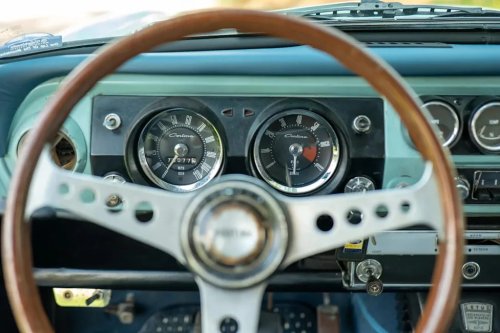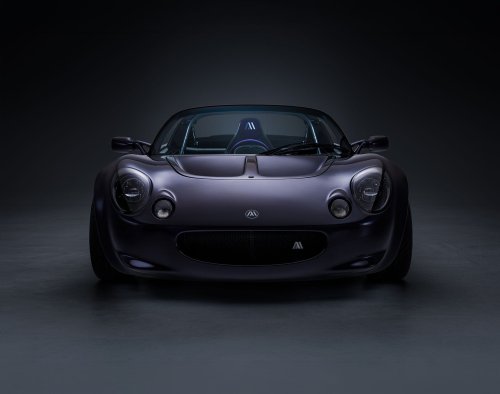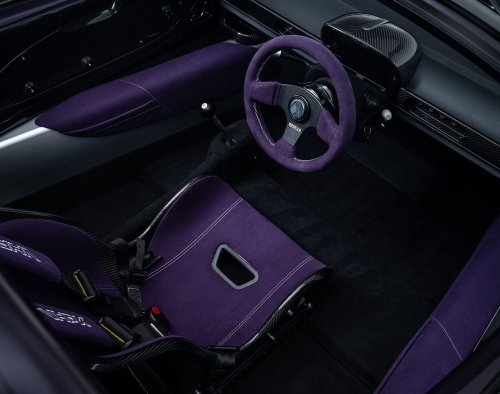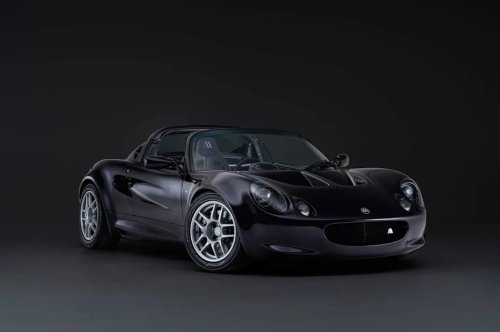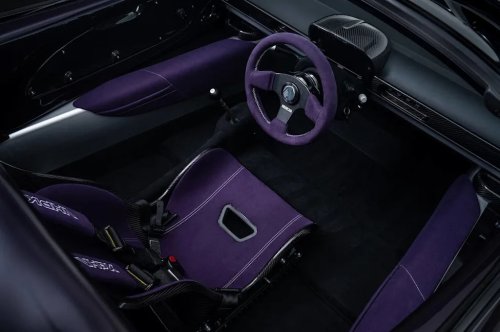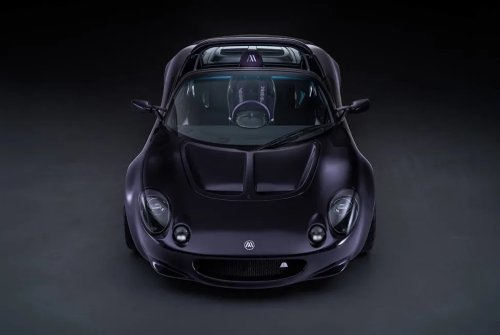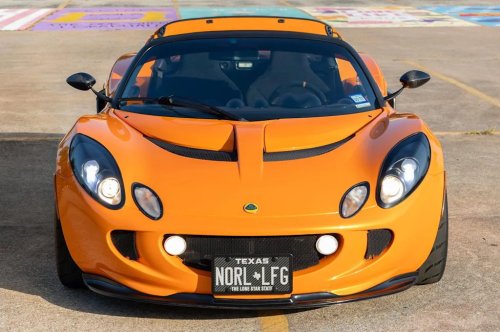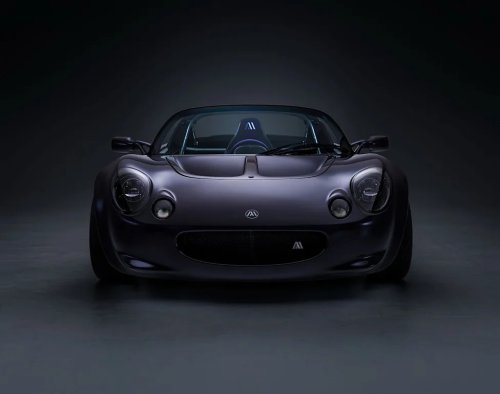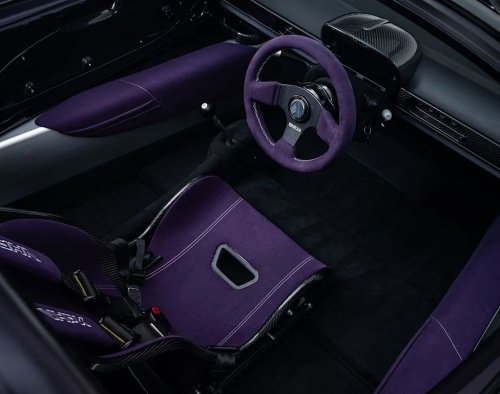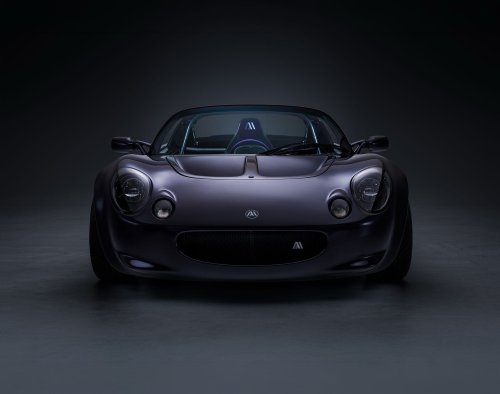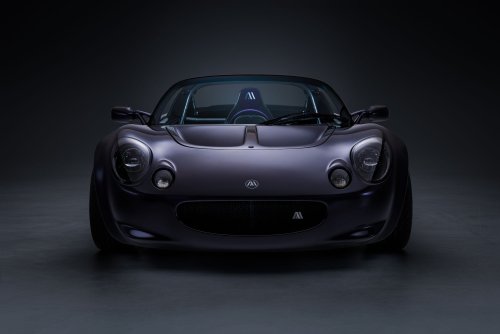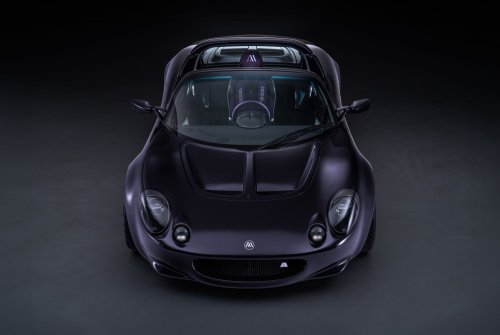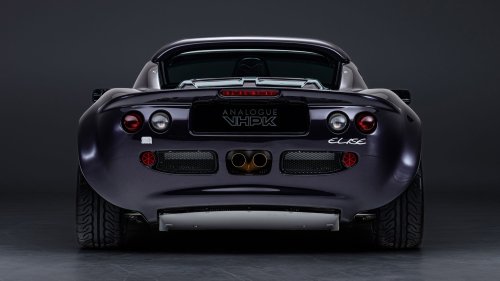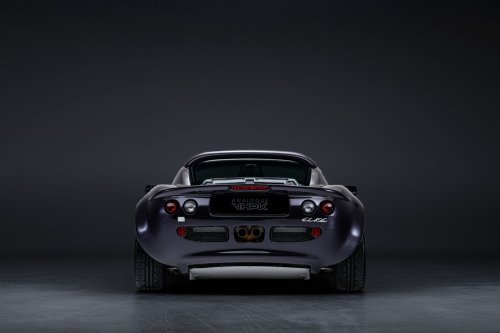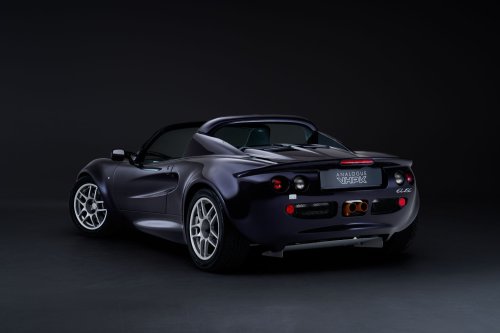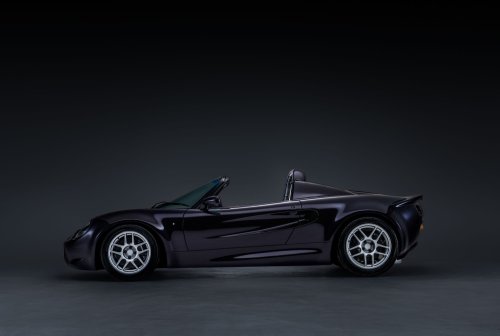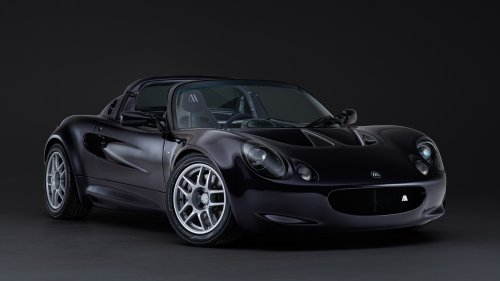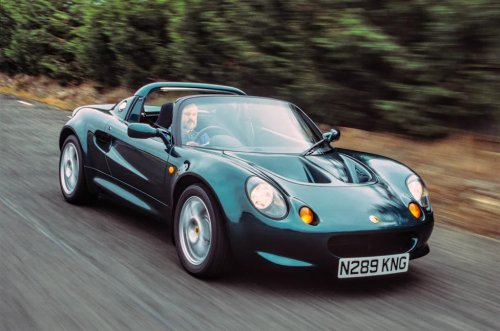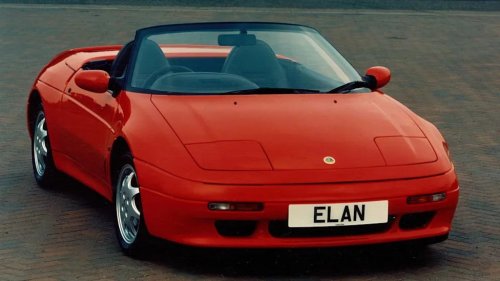

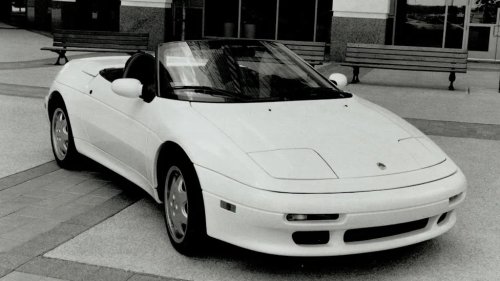
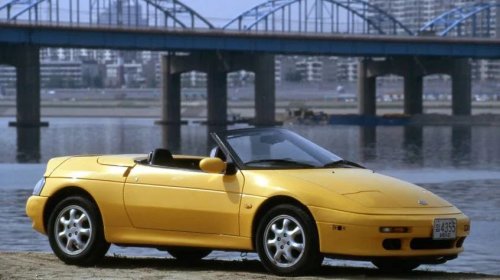
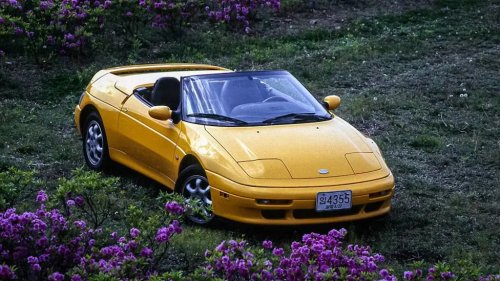



















Autoblog and Yahoo may earn commission from links in this article.This is Genesis.If you have had any look at the current state of the world's automotive industry, it is undeniable that South Korea's car industry is having a moment. The country's automotive leaders, Hyundai and Kia are winning over American buyers with its array of vehicles, including everything from small, gas-powered crossover SUVs to electric vehicles in various sizes. Hyundai is even proving itself as a performance label. In 2014, former BMW M chief engineer Albert Biermann was recruited to Hyundai's N division, overseeing the development of vehicles like the Elantra N and the Ioniq 5 and 6N. However, things weren't always like this. Before Kia introduced the Stinger, before Hyundai released the Genesis Coupe and even before the Tiburon ignited a generation of Korean car enthusiasts and quietly rewrote what people expected a Korean car to be, a little two-seat roadster rolled out of a factory in Ansan. It wore a Kia badge and carried DNA from one of England's most storied sports car companies.AdvertisementAdvertisementThe story of the Kia Elan is the kind of automotive footnote that gets buried under decades of crossover sales charts and brand refresh campaigns. But pull it out and hold it up to the light, and what you've got is genuinely strange and genuinely fascinating: a British Lotus, born under the influence of General Motors, resurrected briefly by a French supercar company, and ultimately given a second life in South Korea during the same economic boom years that would eventually collapse the Korean financial system entirely.LotusThe car Lotus wasn't supposed to makeTo understand the Kia Elan, you have to understand the Lotus Elan M100. But, in order to understand the M100, you have to understand what Lotus was in the mid-1980s: a small British sports car company that was in trouble. Following a worldwide recession in the early 1980s, the death of its founder Colin Chapman in 1982 and the British government seeking to pin Lotus for the collapse of the taxpayer-funded DeLorean Motor Company, the Lotus Group experienced financial difficulties resulting from poor sales of a tired, aging lineup of vehicles. In 1983, David Wickins was appointed chairman, who not only negotiated with the government, but also attracted a diverse set of investors.Though Lotus managed to balance its books, it still needed capital to push new cars into development and production. In 1986 General Motors acquired Lotus during a period where American automakers were taking over niche European sports car makers, which allowed for an extensive budget to explore a front-wheel-drive vehicle. The project was code-named M100, and it was conceived as an accessible everyday Lotus sports car, something that would slot under the Esprit and sell in serious numbers, particularly in the United States.LAT Images/GettyEquipped with £35 million of GM's cash, Lotus went to the drawing board to develop a hand-built, entry-level roadster. Designer Peter Stevens cooked up a shape that was undeniably the look of the early 1990s; rounded, wedgy, and blessed with the presence of pop-up headlights. Underneath, however, the Elan M11 was a traditional Lotus, as its fiberglass body sat on top of a lightweight chassis. But underneath, it deviated from everything the Lotus faithful expected. GM didn't have a small, sporty, longitudinal drivetrain anywhere across its global empire, and that reality pushed the M100 toward front-wheel drive.AdvertisementAdvertisementFor power, Lotus turned to another GM subsidiary; Japanese automaker Izuzu. Under the hood of the M100 Elan was the Isuzu 1.6-liter twin-cam engine, which came in either naturally aspirated or turbocharged SE form. Both units offered spritely performance with durability that could cover 300,000 miles between rebuilds if properly maintained. In fact, the top-line turbo SE made around 165 horsepower, which was genuinely quick for a car weighing 2,400 lbs. The result was a machine that contemporary critics at Autocar & Motor at the time heralded as "the world's only front-wheel-drive supercar," for its dynamic handling characteristics.Boris Spremo/Toronto Star via Getty ImagesView the 2 images of this gallery on the original articleA Miata-sized problemAlthough the M100 Elan was the best vehicle Lotus made at the time, it didn't exactly sell well. Upon the M100's debut in 1989, the sports car market had changed with a new hot-shot in town. Initial sales were disappointing; a thread that has been commonly attributed by automotive historians to the debut of the Mazda MX-5 Miata. Developed by Mazda engineers in both Japan and California, the Miata was Mazda's love letter to the British sports car, as it was similar in concept to the original 1960s Elan, though less sophisticated and far more accessible.The Lotus was praised in road tests, but sports car buyers were ultimately attracted to the Miata. A major problem was its price. In the United States — the market it intended to sell multitudes in, didn't buy much of them. With a base price of a whopping $39,990 ($107,556.73 in 2026 dollars), the Elan was slightly more pricey than the Chevrolet Corvette and more than double the price of the $13,995 ($37,640 in 2026) Miata. GM, which invested a lot of money into the product and expected volume returns, lost its patience. In July 1992, the plug was pulled on the Elan after just 3,855 examples had been sold.AdvertisementAdvertisementFollowing the Elan, GM wanted out of Lotus entirely. In a £30 million deal in 1993, they sold the company to A.C.B.N. Holdings S.A., a company controlled by Italian businessman Romano Artioli, the-then owner of Bugatti. The new managers discovered that there were more than 800 unused Isuzu engines sitting in storage at Lotus's Hethel factory, which led to the Elan S2, a lightly facelifted version produced in a limited series of 800.By 1995, the S2 run was finished and the M100 was officially dead. Enter KiaBy September 1995, the Elan got a second lease on life from an unlikely source. Before the Telluride and the Soul, South Korea's Kia bought the rights and tooling to produce the Elan; which it aimed to sell as a "halo car" to round out its mainstream domestic offerings. At the time, it had just broke into the U.S. market with the Sephia and the Sportage, but at the 1995 Seoul Motor Show, Kia unveiled the L96 prototype, which previewed what was about to hit the streets. In retrospect, the timing made sense. In the decades before the 1997 Asian financial crisis, mass industrialization and export market led to rapid growth of South Korea's economy, which culminated in their inclusion in the OECD (Organisation for Economic Co-operation and Development) in 1996. With wages increasing, discretionary spending increased, which ultimately led to the genesis of South Korea's (rather small) domestic sports car market. In 1990, Hyundai released the Scoupe, a two-door coupe designed to "look sporty," which made it a hit among younger buyers.KiaView the 2 images of this gallery on the original articleAdvertisementAdvertisementThe company's technology division, Kia Motech, produced the car in Ansan, South Korea from 1996 to 1999 as the Kia Elan. To comply with South Korean automotive laws, Kia forgoed the turbocharged Isuzu powertrain from the original Lotus, and went with its own 149 horsepower 1.8-liter Mazda-derived engine directly lifted from the Sephia. The swap made the Kia Elan slightly down on power compared to the Lotus SE, but it was a unit that didn't require an ongoing parts relationship with a foreign supplier.Outwardly, the Kia Elan looked almost identical to the original. The most obvious difference between it and the original Lotus model from Hethel was the Kia-designed taillights, which replaced the Renault Alpine GTA that the original used.Additionally, Kia raised the suspension to better suit the rougher Korean roads, while Kia components made its way into the cockpit.KiaWhy it Failed The Kia Elan arrived into a market that was ready for something sporty, but not exactly something like this. Like the Lotus-badged Elan, the Kia was also handmade in small quantities,which meant that it was very expensive compared to other vehicles. With a price tag of 27.5 million South Korean won (~$59,780 in 2026 dollars) at launch, it was a big ask for a domestic car purchase.It also had a rival it didn't anticipate. In April 1996, Hyundai released the Tiburon; the first sports car to be independently developed by a Korean automaker. Built on Hyundai's in-house technology, it featured sleek shark-faced styling inspired by the HCD-1 and HCD-2 concept cars and a choice of peppy four cylinders making up to 150 horsepower. Like the Elan, the Tiburon was also front-wheel drive, but with prices ranging between ₩10.27 million ($14,654 in 2026 dollars) and ₩16.03 million ($22,876 in 2026 dollars), it cost considerably less than the Elan. For a South Korean car buyer who wanted something sporty back then, the choice wasn't hard.The Tiburon is credited with opening a new era for domestic motorsports and car tuning culture, which brought together passionate owners who loved modifying and enjoying their cars.Its debut wasn't just a car launch, it was a cultural phenomenon. As one of the first cars capable of serious performance driving, it dominated racetracks and fueled a national interest in motorsports.The Elan, by contrast, was handbuilt, expensive, and strictly manual; a two-seat roadster in a market that wanted something it could actually afford to own.AdvertisementAdvertisementJust 100 units were sold globally in 1996 and a small number were exported to Japan under an entirely different name: the Vigato. Things picked up in 1997 with 461 finding buyers, but the following year, just 154 bit. The Asian financial crisis hit South Korea incredibly hard, which resulted in the country receiving a bailout from the IMF (International Monetary Fund). Kia was one of many chaebols that filed for bankruptcy, and the Elan quietly died as it entered into a partnership with Hyundai that still exists today. Total production figures vary by source, but production numbers hover at around 1,056 cars, making it significantly rarer than the Lotus version it was based on.In RetrospectThe Kia Elan sits at an interesting intersection of ambition, bad timing, and circumstances nobody could fully control. On paper, it was a failure, but it was also South Korea's first genuine sports car. Not a sporty-looking coupe, not a hot hatch; a purpose-built two-seat roadster with a proper sports car pedigree.When you trace the arc from that hand-built roadster in Ansan to cars like the Stinger GT or even the Ioniq 5 or 6N, you're looking at an industry learning how to build something that stirs the soul. The Kia Elan was the first attempt. It didn't sell. It didn't save Kia. It got swallowed by the wreckage of a financial crisis and a market that wasn't quite ready for it.But it existed, which makes it enough to make it worth knowing about.AdvertisementAdvertisementThis story was originally published by Autoblog on Jun 28, 2026, where it first appeared in the Features section. Add Autoblog as a Preferred Source by clicking here.