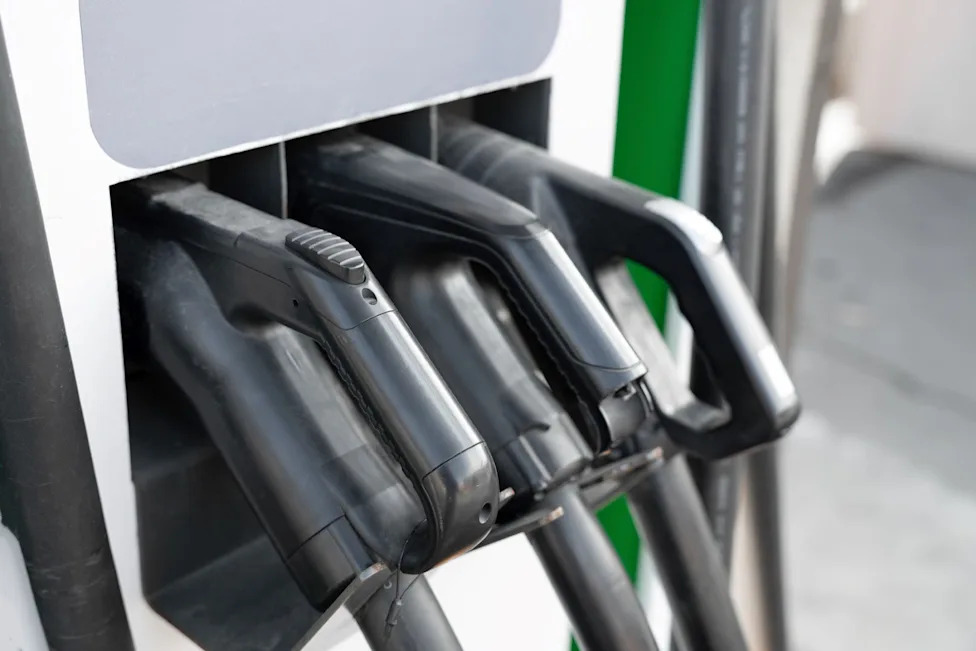
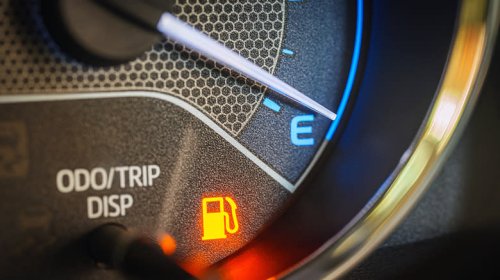
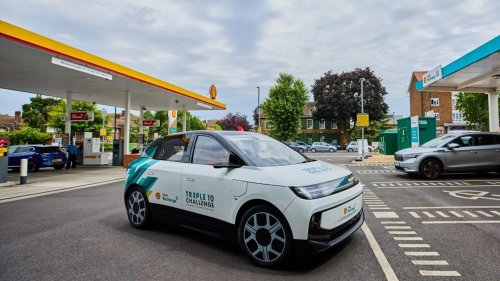
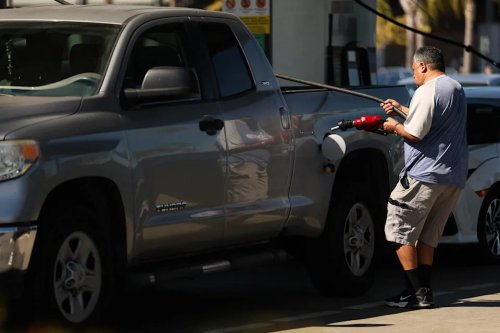
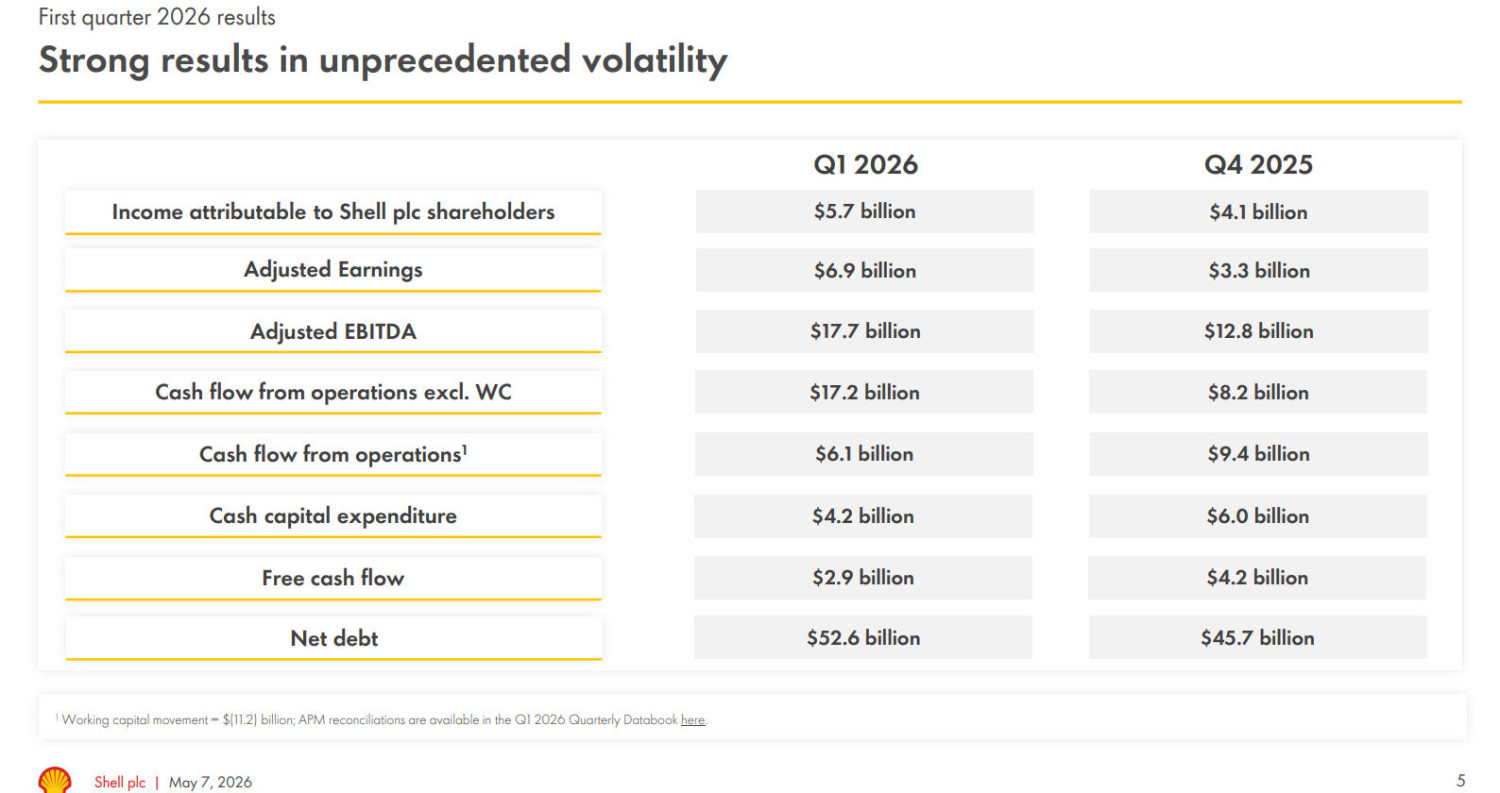
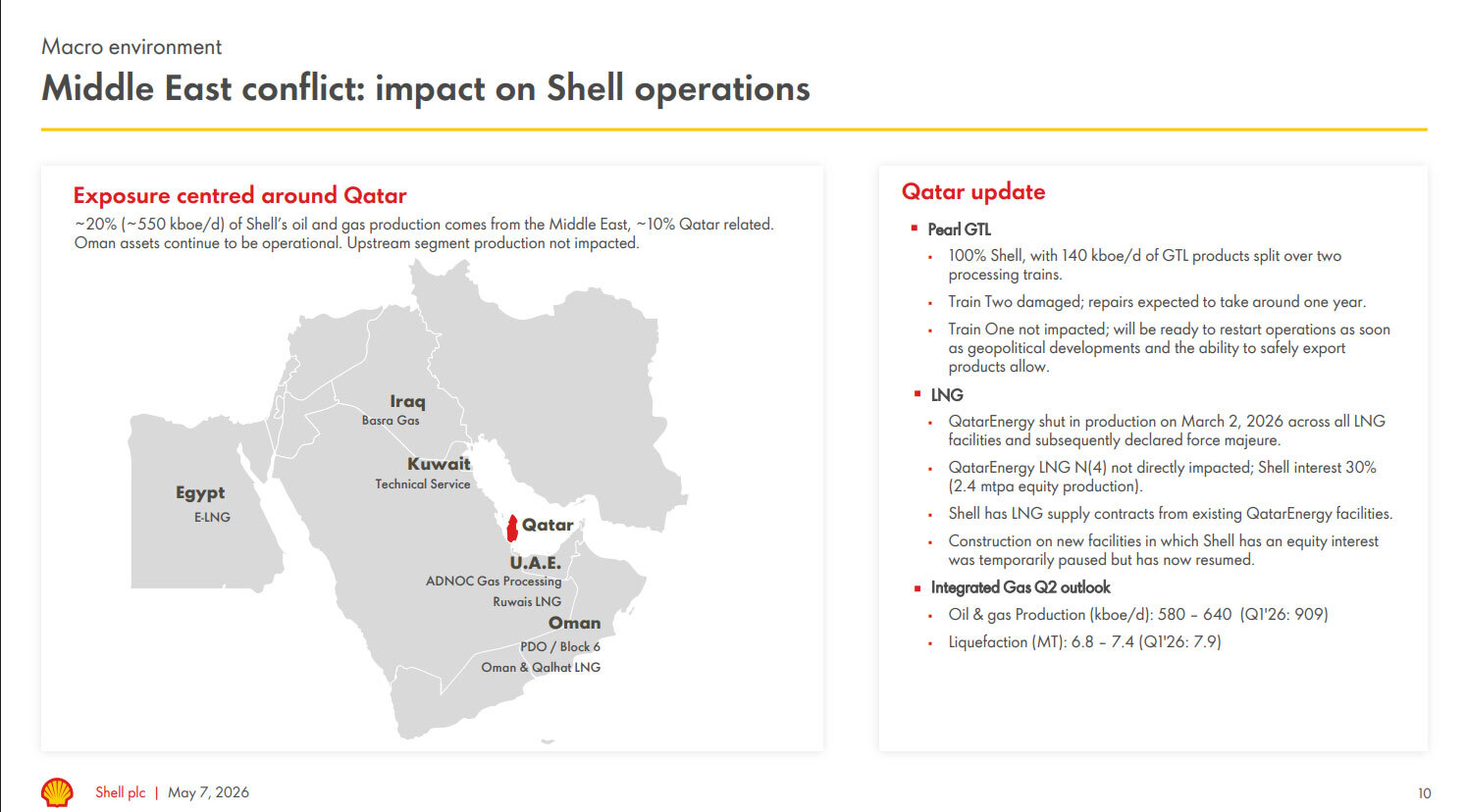
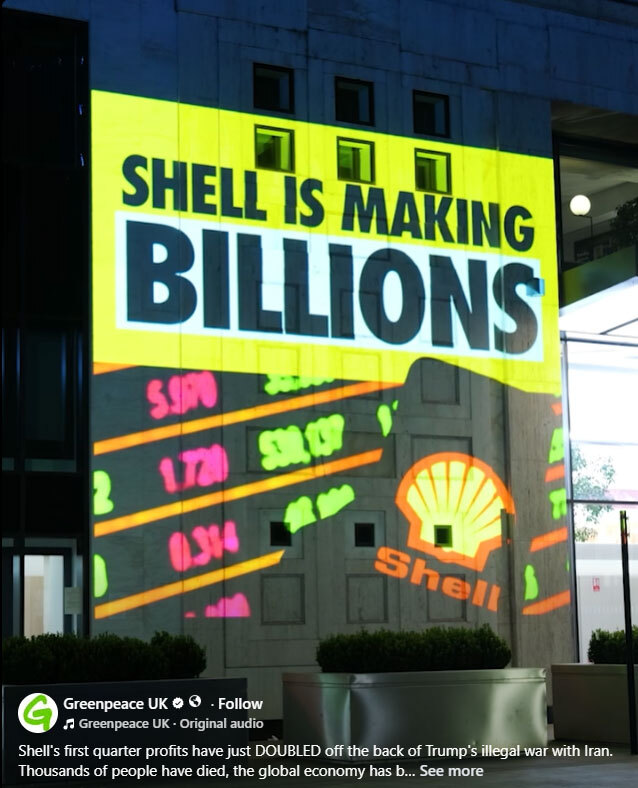
Shell made almost $7 billion in the first quarter. Company’s earnings more than doubled from Q4 2025. A number of people are upset with the huge windfall. The national average price of a gallon of gasoline has soared to $4.558 per gallon and diesel is only 14.2 cents below its all-time high of $5.816. The surge is hammering motorists as gasoline was only $3.154 per gallon a year ago. While consumers are hurting, big oil is celebrating huge profits from the war in Iran. Shell CEO Wael Sawan recently alluded to the “unprecedented disruption in global energy markets.” More: Gas Is Up 33% From A Year Ago, And Diesel Is Closing In On Its All-Time High Jumping right into the numbers, Shell had adjusted earnings of $6.9 billion in the first quarter. That’s a huge jump from the prior three months as Q4 2025 earnings only totaled $3.3 billion. Investors should like the news as Shell is embarking on a $3 billion share buyback program and increasing its dividend by 5%. This will see shareholders receive $0.3906 per share. However, Wall Street wasn’t overly impressed as the company’s stock fell 3.39% today. Despite having a lot to celebrate, Shell noted they’re being impacted by the war as around 20% of their gas and oil production occurs in the Middle East. While their assets in Oman remain operational, there are problems elsewhere in the region due to the conflict. Drivers and environmentalists were quick to vent their anger on social media and in person. Greenpeace UK took the latter route and used a projector to criticize the company on their headquarters building in London. The group said Shell’s “profits have double since Trump started his illegal war with Iran” and they’re “making billions while thousands die, a whole region is destabilized, and our energy bills skyrocket.” Greenpeace went on to call Shell and other oil giants “war profiteers.” They concluded by asking the public to support taxing Shell’s profits to “support families struggling with the cost of living crisis and impacts of climate breakdown.” That being said, it’s important to note the war in Iran didn’t start until February 28. That was relatively late in the first quarter, although oil prices spiked quickly and remain elevated.



















 +69 others