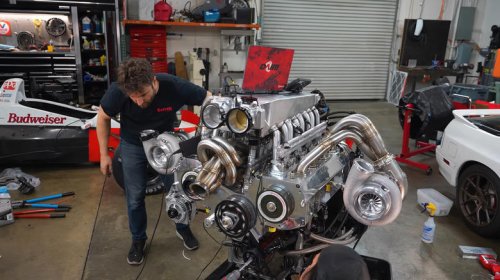
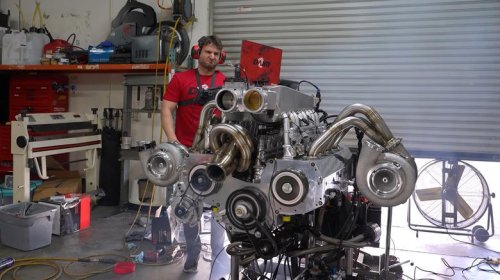
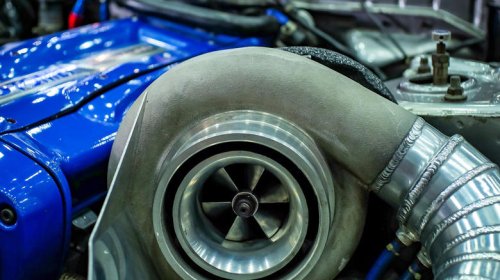
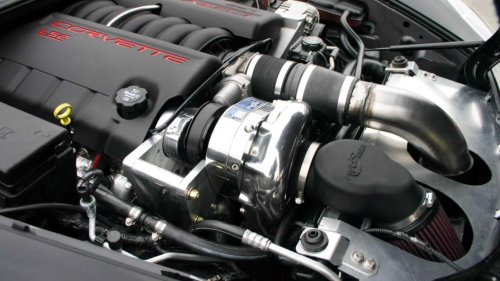
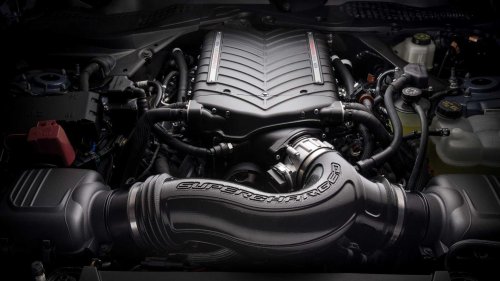
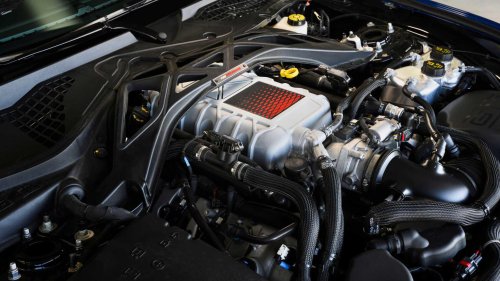
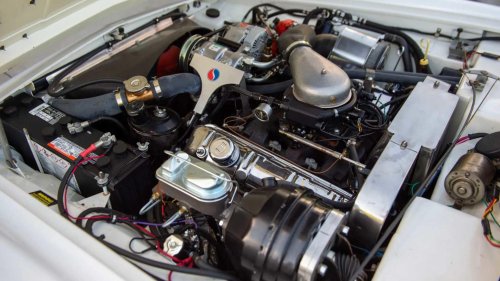
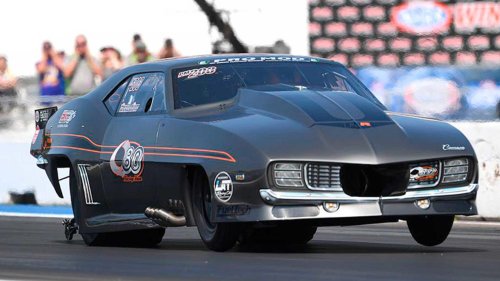
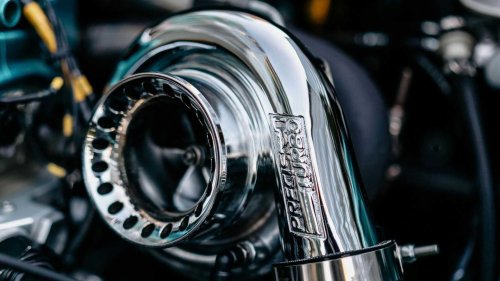
Jump LinksBrand Name vs The Generic TermThey're Older Than You ThinkRoots/Twin-screw SuperchargerCentrifugal SuperchargerChanging The Forced Induction GameTurbos Work A Bit DifferentlyAutomakers and enthusiasts alike have been searching for ways to produce more power since the dawn of the automobile. While the age-old sentiment of "there's no replacement for displacement" may have been slightly true in some cases for some time, it hasn't been that way for even more time. Forced induction changed the way we think about horsepower. Sometimes, professional racers and some automakers choose to combine big displacement engines with forced induction to make thousands of horsepower. Take the DodgeCharger Hellcat, for example, with it's 6.4-liter V8 topped by a supercharger that increased the sedan's output to 717 hp for some time before it was discontinued. That's where ProCharger comes in. In this article, we'll discuss the difference between ProCharger and a supercharger - that sentence might not make sense to those who know, but for those who don't know, here's where you'll find out.Specifications have been pulled directly from the manufacturers; other sources can be found at the bottom of the page. This article explains the difference between ProCharger (the brand), superchargers in general, the types of superchargers, and how they differ from turbochargers. ProCharger vs Supercharger: Is There A Difference? Brand Name vs The Generic Term ProCharger SuperchargersBefore we get too far into this article, let's clear the air about the supercharger vs ProCharger discussion. A supercharger is essentially a belt-driven air compressor that forces air into the engine, which is where the term "forced induction" comes from. It increases the pressure and density of the air inside the engine, which allows for a richer air/fuel ratio, and produces more power. So what is a ProCharger? ProCharger is just the name of a brand of centrifugal superchargers primarily used in racing applications. The brand makes supercharger kits that fit a wide variety of brands and models from most eras of muscle and sports cars. We'll get more into the types of superchargers, like centrifugal and twin-screw, later on in the article. There's a heap of cars from recent history with superchargers added on from the factory to increase power for performance models, but no automaker uses ProCharger superchargers on their factory cars. A Brief History Of Supercharging They're Older Than You Think FordThe first automotive supercharger wouldn't be invented until 1878, when German engineer Heinrich Krigar patented a design with two lobes and two rotors to be strapped onto the intake manifold of an engine. Soon after, in the same year, Scottish engineer Dugald Clerk designed a similar supercharger, which was successfully tested on a two-stroke engine. The supercharger wouldn't be in a mass production car until Mercedes-Benz built one for its 6/25 hp and 10/40 hp in 1923; they both had four-stroke engines with engageable Roots superchargers. The Most Common Types Of Superchargers The supercharger has come a long way since its invention before the American Civil War. Countless engineers have come up with more efficient, stronger, and more powerful designs, which brings us to today. While there are more options than we listed below, these are the two most common types of superchargers used today in both aftermarket and racing applications, and what automakers equip their cars from the factory. Roots/Twin-screw Supercharger FordOne of the earliest supercharger designs came from the Roots Blower Company, which we briefly mentioned above. Its design consisted of two rotors or "screws" that twist against one another to force air from one end out the other. It's also known as a "positive pressure" supercharger, since it actively displaces large amounts of air; this makes even more sense when you see how some superchargers are advertised with certain displacement numbers in the same way you would find engine displacement. Twin-screw superchargers are usually the most cost-effective types, they offer reasonable reliability, and have a mid-range boost to your car's horsepower. One of the most common brands of Roots-style superchargers is Whipple, which mostly makes kits and other parts for Ford models.2025 Ford Mustang GTDWe could have chosen any one of dozens of models on sale today to represent this type of supercharger, but we wanted to go with one we drove recently and that makes a huge impact. The Ford Mustang GTD is the fastest version of the car ever made - it made Ford history by setting a lap record at the Nürburgring (before it was beaten by Porsche this year). It starts at $315,000 before dealer markups, destination, options, and other fees, though."...the supercharged Predator V8 sounds like an absolute menace. The engine note from the free-breathing exhaust is flat, hard, and resonant, rising in pitch to match the super-fast spin-up to the 7,400 RPM redline. Throttle response is extremely sharp, but still easy to modulate thanks to a well-judged pedal and the huge rubber out back." Centrifugal Supercharger Bring A TrailerCentrifugal superchargers are far less common today, since they're more expensive to produce and occasionally more difficult to install on your own (depending on your car, how much room there is in the engine bay, mounting points, custom fabrication, etc.). The main reason we don't see them in production cars, though, mostly comes down to cost. This type of supercharger can be easily mistaken for a turbocharger at a glance, since they're usually a similar shape and mounted next to the engine instead of on top. Centrifugal superchargers are still belt-driven, and provide the same linear power curve as a twin-scroll. They're usually more compact and lightweight than twin-scroll superchargers, and can be mounted on either side of the engine as long as you can connect a belt to it.1963 Studebaker Avanti R2Since there aren't any new production cars with centrifugal superchargers installed in the factory today, we dove into some interesting history to find the 1963 Studebaker Avanti R2. We wrote about the Avanti's lengthy history in another article, in addition to going more in-depth to its high-speed records, and what each version of the car was powered by. The most basic Avanti was the R1, which used a naturally aspirated 280-hp 4.7L V8, but you could upgrade to the R2, which included a centrifugal Paxton supercharger to slightly boost its horsepower. ProCharger's History In A Nutshell Changing The Forced Induction Game ProCharger SuperchargersProCharger, the brand, launched in 1994 with its first centrifugal supercharger design. Since then, the company has started a revolution in supercharger design - it sells entire installation-ready kits for General Motors brands, Dodge, Ram, Chrysler, Ford, and even maritime kits. ProCharger has a rich history in drag racing, as well as other motorsports, but achieved a six-second pass in the quarter-mile between 2001 and 2003 while using one of its first supercharger designs. The NHRA banned ProCharger superchargers from racing in their sanctioned events, but the brand made a comeback in 2008-2009 when they returned to the first centrifugal championship. Since then, the company has continued to invent new designs and kits while tuning existing versions for racers to dominate at the drag strip. Procharger vs Supercharger vs Turbocharger Turbos Work A Bit Differently Pexels / Garvin St VillierWe've discussed how ProCharger is simply a brand that makes centrifugal superchargers, while superchargers in general have a far older history, but where do turbochargers fit into all of this? Turbochargers are shaped like centrifugal superchargers, but use exhaust gasses to spin a turbine, which spins a second turbine to pull air into the engine. To keep it simple, superchargers are belt-driven, but turbochargers are spooled by the car's exhaust gasses. We go into more detail about how a turbocharger works here. Summary: Long Story Short, One Is A Brand Name ProCharger has been around since 1994, with its first centrifugal supercharger design. While centrifugal superchargers were not new by that point, the brand ignited a revolution in design and power that makes cars equipped with them menaces on the drag strip. Superchargers in general have a history dating back to before the American Civil War, since they were used to force air into coal mines for ventilation before they were ever used in the automotive industry. While centrifugal superchargers can make more power and are more commonly found in race cars, essentially every new production car with a supercharger uses a twin-screw design today.



















 +4 others