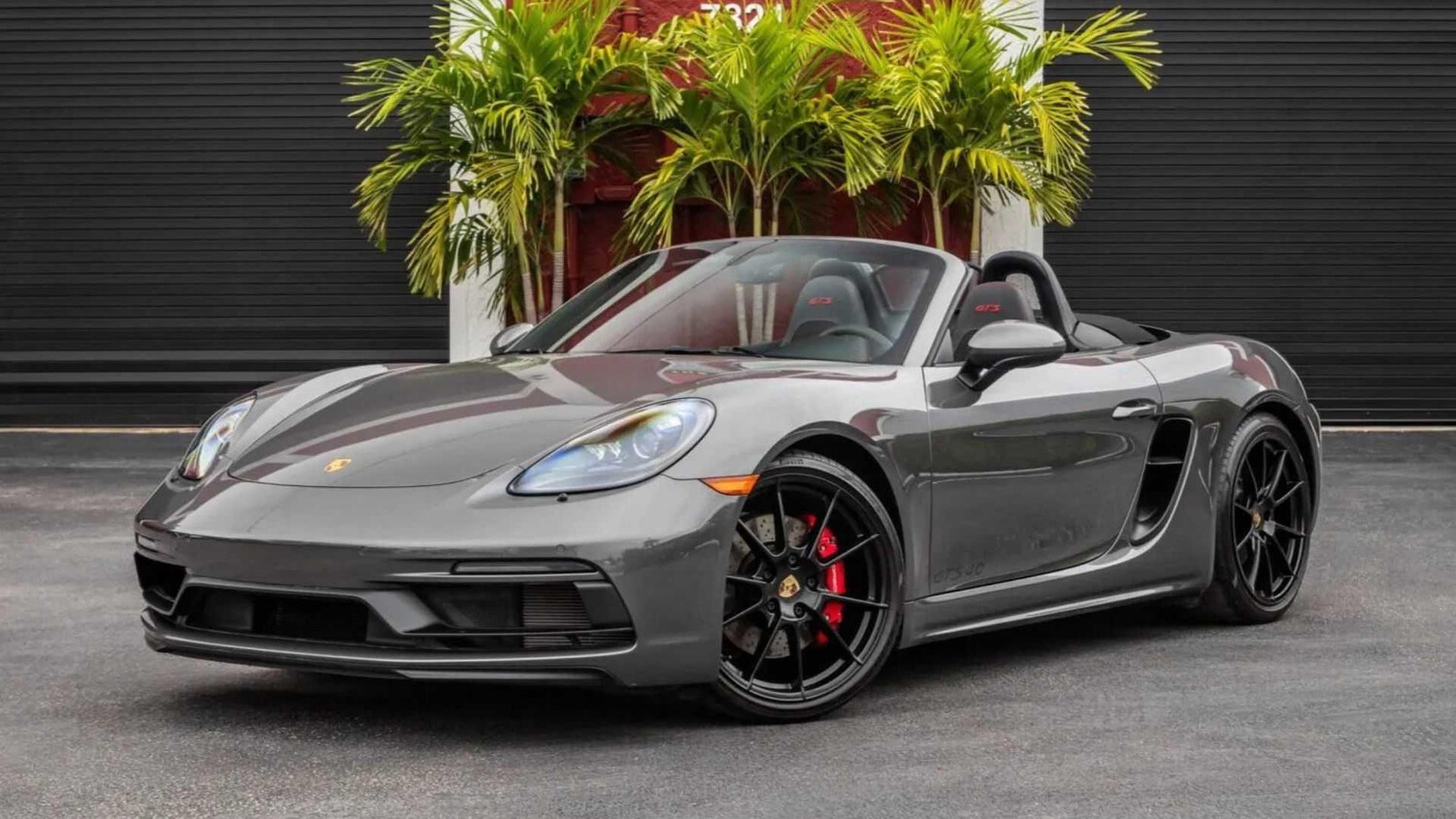
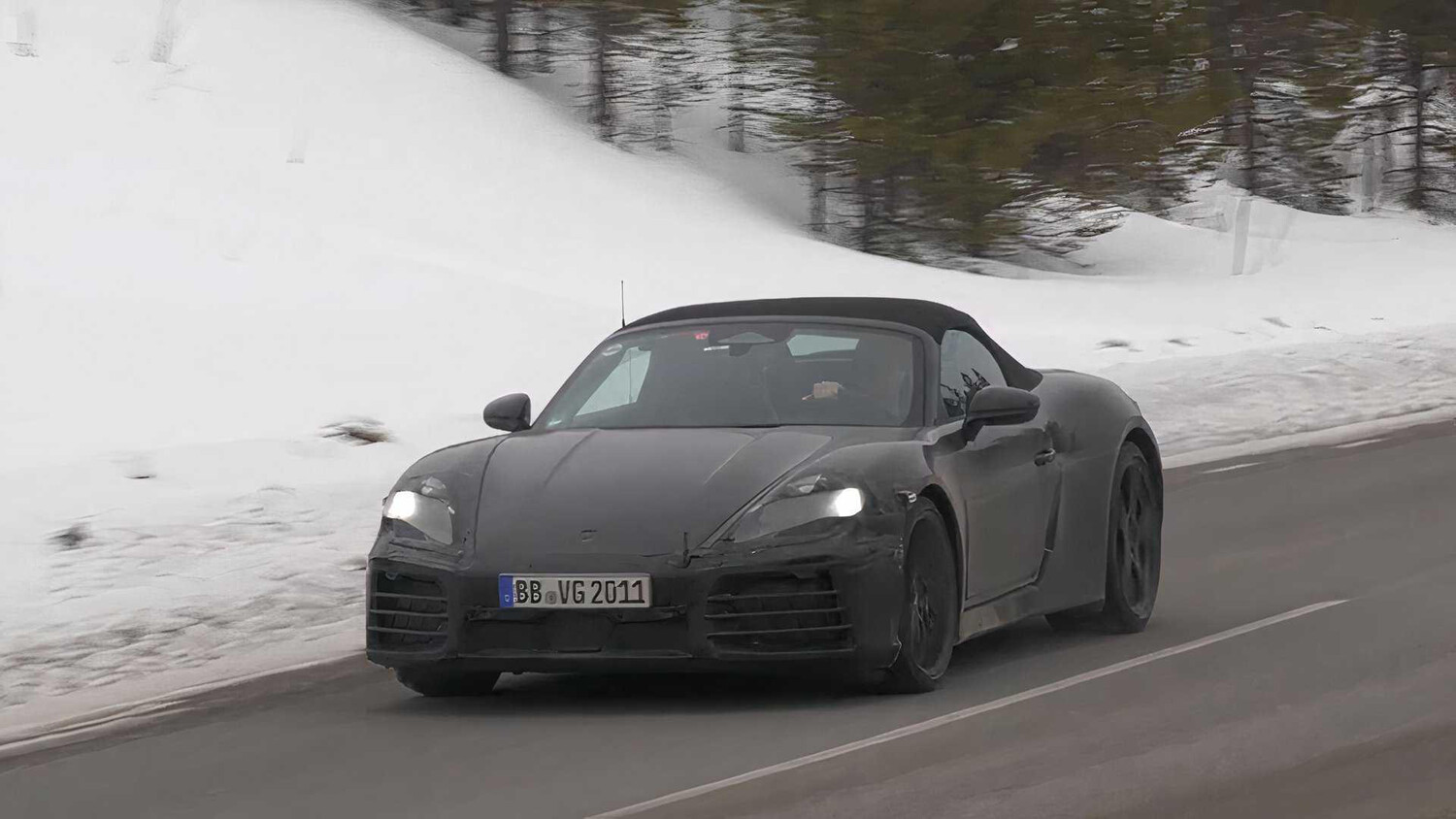
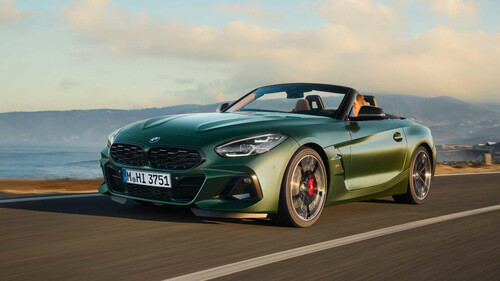
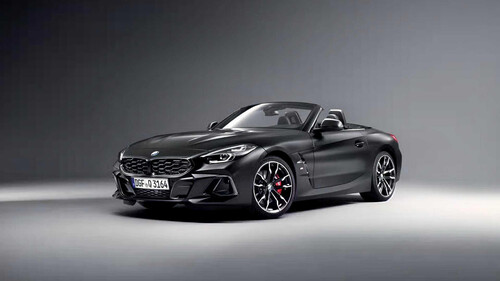
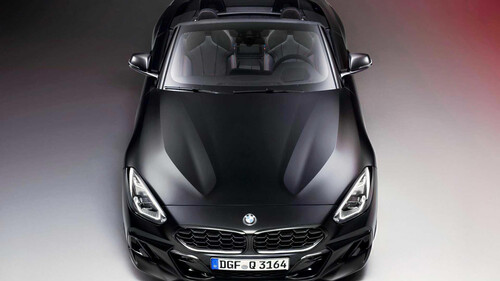
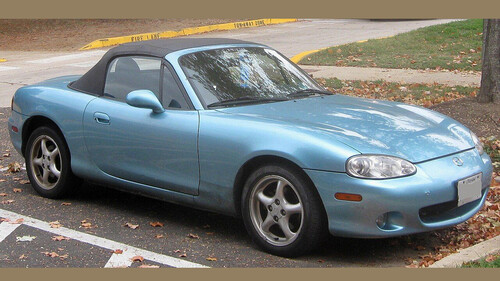
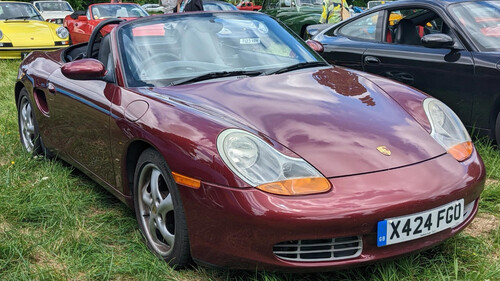
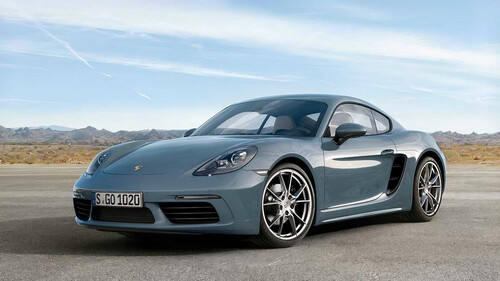
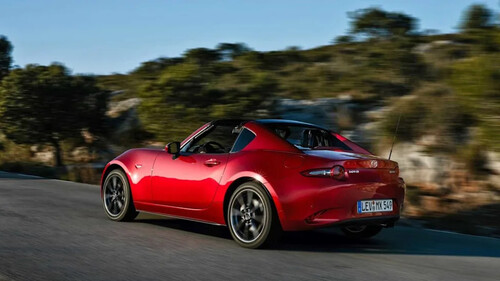
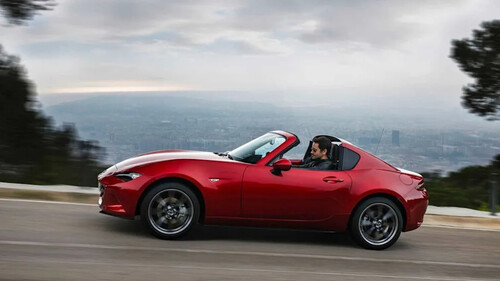
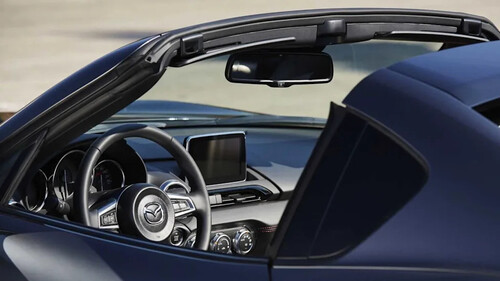
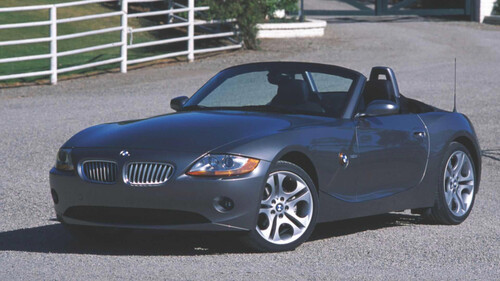
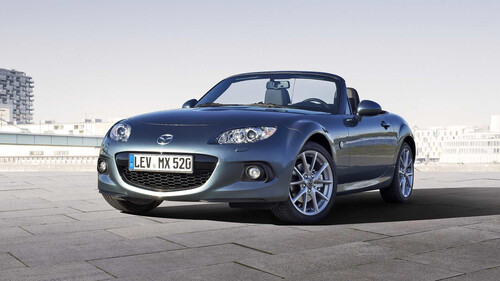
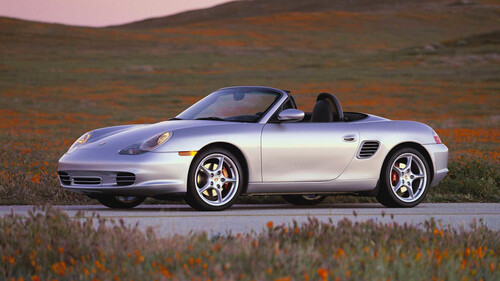
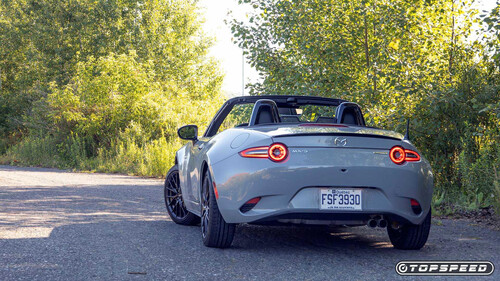
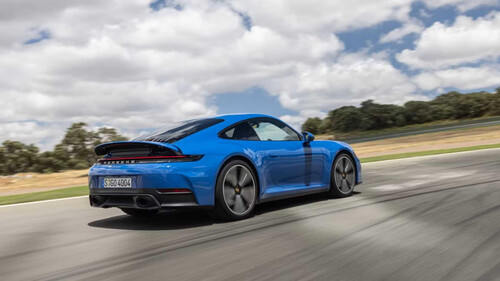
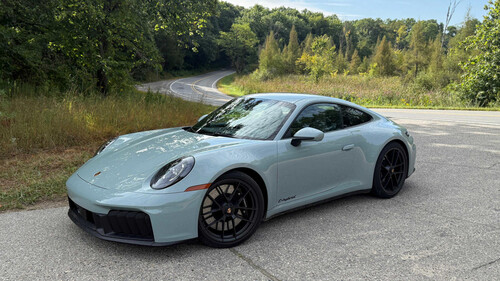
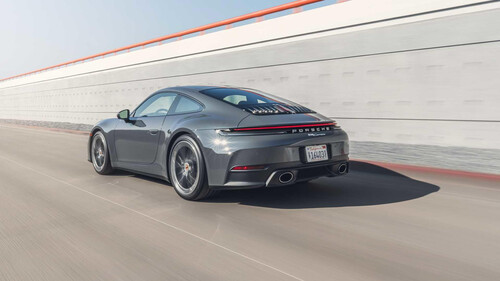
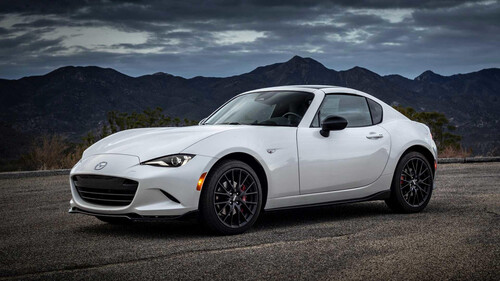
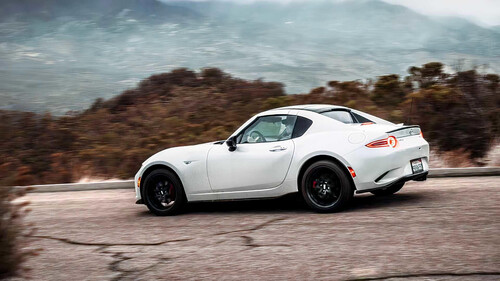
The Porsche Boxster is one of two mid-engine two-seater sports cars produced by Porsche. Porsche got the name “Boxster” from blending the “boxer” and “Speedster” names of its boxer engine and the name of the original Porsche Speedster of the 1950s, respectively. The idea for the Boxster was initiated in 1992 when Porsche brought the design teams working on the Porsche 986 and 996 together to develop new proposals for a new model. The first Boxster concept was launched in 1993, but the first generation went into production in 1996. It was a high-volume, mid-engine alternative to Porsche’s high-end offerings, which eventually saved the company from financial ruin. Since then, the Boxster has become more and more the perfect budget alternative to the more expensive, high-end elder brother, the 911, stealing a lot of styling and performance cues along the way.20 years and four generations later, Porsche changed the name to the 718 Boxster, introducing a lighter turbocharged engine inspired by the Porsche that won the 1959 and 1960 Targa Florio race. By 2025, Porsche brought an end to the production of their internal combustion Boxsters regardless of nameplate and decided to transition to an all-electric model by 2026 or later. Since 1996, the Porsche Boxster has undergone five generations, with the yet-to-be-released 2026 all-electric model included, and has given enthusiasts some of the best budget sports car performance and driving dynamics along the way. Porsche Boxster Performance & Engine Options Flat-Six vs. Turbo-Four Engines PorscheUntil the fourth generation, the Porsche Boxster was well-known for its powerful flat-six engines. The Porsche Boxster ran on six different flat-six engines, which were upgraded at different times along the way: the 2.5-liter, 2.7-liter, 2.9-liter, 3.2-liter, 3.4-liter, and 3.8-liter flat-six engines. The engines produced between 201 horsepower and 375 horsepower during the twenty years they were in service on the various Boxster trims they were used on.Enthusiasts praised these engines for their linear power delivery, perfect balance, and emotional sound. The 3.8-liter flat-six, which was mostly swapped by owners from a 911 to a Porsche Boxster S because they shared so many similarities, could produce as much as 410 horsepower on some vehicles. For the fourth generation, which started in 2016, Porsche discontinued the use of flat-six engines in favor of a turbocharged flat-four setup. These engines were known to excel in low-end torque, daily drivability, and fuel efficiency. Power, Handling & Mid-Engine Balance Porsche Unlike the flat-six engines, which generally needed you to hit a high rpm before getting the very best out of the engine, the turbocharged flat-four engines delivered the kind of punch you’d need to perform a quick overtake on the street when behind a slow truck. Along with the flat-six versions, only the Porsche Boxster S and GTS trims ever produced as much as or above 300 horsepower. On the base model of the fourth generation, the 2.0-liter turbocharged flat-four engine produced 300 horsepower. That said, the flat-six didn’t suffer the vibrations the flat-four suffered at high speeds. Its linear, progressive power kept it perfectly balanced at all rpm and speed levels.Both engine versions benefited from the 50/50 weight distribution afforded by the mid-engine layout, which greatly improved handling. However, Porsche returned to a naturally aspirated engine in 2019 and 2020 through to 2025 on the Spyder and GTS 4.0 trims, powering them with a 4.0-liter naturally aspirated flat-six engine that produced 394 and 414 horsepower. By 2024, this engine was introduced on the Spyder RS trim, producing 493 horsepower. It could achieve 0–60 mph in 3.4 seconds. Porsche Boxster Trim Levels Base Boxster vs. Boxster S Porsche The Porsche Boxster had only one trim level in the first four years of the first generation. By 2000, the high-performance top trim, the Boxster S, was introduced. The Boxster S featured a 3.2-liter flat-six engine instead of the 2.7-liter flat-six engine on the base model, and produced up to 33 horsepower more than the base model. By 2004, Porsche released a 550 Spyder. This model produced 266 horsepower and 0-60 mph times of 5.7 seconds. Only 1,953 units were produced. By the second generation, the base model engine had been upgraded to produce 12 horsepower more than the first generation could. The Porsche Boxster S also underwent an upgrade, producing 276 horsepower to the base model’s 237. The base model was upgraded in 2007 again to be able to produce 245 horsepower, while the 3.2-liter flat-six of the Boxster S was replaced entirely with a 295-horsepower 3.4-liter option.By 2009, the engine in the base model had been replaced with a 2.9-liter engine, producing 255 horsepower, while the introduction of a direct fuel injection system in the S trim’s engine bumped up its capacity to 310 horsepower. By 2012, the third generation started with the base model Porsche Boxster going back to the 2.7-liter engine, but this time, the direct fuel injection system became standard on both the base model and the S trim. This bumped up the base model’s output to 265 horsepower. By the start of the fourth generation, the 2.0-liter turbocharged flat-four engine on the base model churned out 300 horsepower, while the 2.5-liter turbocharged flat-four on the S trim produced 50-horsepower more. GTS & Spyder Variants Porsche For the 2011 model year, Porsche then released the Boxster Spyder. This trim was originally planned as a lightweight, purist driving machine. To accomplish this, Porsche fitted it with a manual "tent" soft top. It didn’t originally come fitted with air conditioning or radio, and the doors were made of aluminum. Its 3.4-liter flat-six engine produced 320 horsepower. The first Boxster GTS arrived in 2014. It featured a tuned version of the 3.4-liter naturally aspirated flat-six engine in the S trim and produced 330 horsepower.By 2016, after watching customers swap the engine of a 911 into a Boxster repeatedly, Porsche decided to borrow the larger 3.8-liter naturally aspirated flat-six from the 911 Carrera S, and detuned it for the Boxster Spyder. It produced 375 horsepower. In 2017, the Boxster GTS used an upgraded version of the Boxster S’s engine, producing 15 more horsepower. In 2019, Porsche upgraded the engine in the Spyder to the 4.0-liter naturally aspirated flat-six, producing 414 horsepower. In 2020, the lower GTS trim adopted this engine, but it was detuned to produce 394 horsepower. The 2024 Porsche 718 Boxster directly imported the 4.0-liter naturally aspirated flat-six engine in the 911 GT3 into the Spyder to produce the 493-horsepower Spyder RS. Interior, Technology & Comfort Cabin Quality & Ergonomics via Bring A Trailer Over the four generations of the Porsche Boxster, its cabin has evolved from an aesthetic regarded as utilitarian plastic to a premium, leather-wrapped cockpit. Yet, Porsche never abandoned a strict driver-centric layout. The first generation was considered the "Budget" era, with Porsche trying to appeal to a more financially conservative section of sports car buyers. The early iterations featured hard plastics. It used a mostly analog classic five-dial layout and basic switchgear. It also used "soft-touch" paint that was known to peel over time. Due to its size, it had minimal storage, but the mid-engine layout helped it pioneer the dual-trunk (frunk and trunk) layout.By the second generation, material quality had improved significantly. The Boxster featured better climate controls and offered optional full leather dashboards. Inspired by the Carrera GT, the third generation introduced the modern "rising center console", moving the gear shifter closer to the steering wheel for faster hand movement. It was in this generation that the fit and finish finally rivaled high-end luxury sedans. By the fourth generation, the Porsche 718 Boxster had gone modern with digital integration. It featured updated infotainment (PCM), and the steering wheel featured the 918 Spyder’s style with a rotary drive-mode selector. GTS and Spyder trims were fitted with Race-Tex Alcantara and carbon fiber, while to save weight, the Spyder used nylon door-pull loops instead of traditional handles. Infotainment & Convertible Top Features Via: Porsche In the first generation, the convertible top used a manual center latch at the windshield, while the rear window was plastic and prone to yellowing. And by 2003, a glass window with a defroster was introduced. The second generation’s convertible top still required a manual center latch, but this time, the mechanism could be operated at speeds up to 31 mph. From the third generation, Porsche replaced the manual latch with a fully electric top that could open or close in roughly 9 seconds, and could also be operated while driving. For weight savings, the Spyder variants use a unique "Sunshield" manual top. The driver has to come out of the car to manually clip the top into the rear decklid.Porsche Infotainment has also undergone major changes through the generations. The first two generations used cost-effective, standard-sized car stereos. Porsche now offers a Porsche Classic Communication Management (PCCM) upgrade, so customers can retroactively add Apple CarPlay to these older models. By the third generation, Porsche introduced a high-resolution touchscreen and the Jukebox. This system was more modern than the previous system, but lacked integrated smartphone technology. By the “718” generation, the latest PCM with Apple CarPlay became standard, Although Android Auto requires third-party workarounds. Porsche Boxster Pricing New 718 Boxster MSRP Bring A Trailer The Porsche 718 Boxster starts at $74,900 for the base model. This is $57,400 cheaper than a base Porsche 911. At launch, the 1996 Porsche Boxster had an MSRP of $39,900. The 718 Boxster Style Edition model is priced at $81,300. Climbing up the ladder, the 718 Boxster GTS 4.0 costs $105,500, while the range-topping 718 Spyder RS model costs $170,100. Used Boxster Price Ranges by Generation First-generation Boxsters are the cheapest Boxsters on the used market, with prices ranging from $8,000 to $18,000. Some well-maintained options could cost as much as $25,000. Prices of the basic trims of the second generation could range from $16,000 to $45,000, with Spyder trims sometimes going for as much as $65,000 to $85,000. Prices of a base model or S trim third-generation Boxster could range from $34,000 to $60,000, while low-mileage GTS trims could cost as much as $125,000. Among enthusiasts, the third-generation flat-six engine is more appealing because it was the last year to feature a naturally aspirated engine across all trims. As a result, it’s not uncommon to find used fourth-generation Boxsters that cost less than the third-generation options.Used Prices: Boxster vs. The Competition Boxster vs. Porsche Cayman via Motor1 The Cayman is the coupe iteration of the Boxster. This version doesn’t feature a convertible top and, as a result, has a hatchback design. It is considered the three-door version due to this hatchback design. This design gives it a major advantage over the Boxster: 5.3 more cubic feet of rear cargo space. The absence of the convertible top mechanism means this version is lighter and therefore, more aerodynamic than the Boxster. The presence of the hardtop over the Boxster’s soft top makes it more insulated on the inside. From the first Cayman in the 2006 model year to the fourth generation, the Porsche Cayman was the more powerful, high-end version of the lineup. With the 718 Boxster, Porsche reversed the pricing structure, making the Boxster more expensive due to its more expensive convertible top technology. Boxster vs. BMW Z4 & Mazda MX-5 Bring a Trailer The Porsche 718 Boxster’s main competition is the BMW Z4 and the Mazda MX-5. Enthusiasts consider this a battle between precision, luxury, and purity. The Boxster is the high-performance benchmark, while the Miata is the "lightweight purist", and the Z4 is the "executive tourer." Of the three, the Boxster is the only one with a mid-engine layout. This gives it the best handling of the three. The engines on the Boxster are generally more powerful across all trims than what’s offered on either the BMW or the Mazda. Although the Mazda is 600 pounds lighter than the Porsche, the Porsche is a very athletic choice. Another major advantage the Porsche has over the others is its dual-trunk layout.Comparison Table Should You Buy a Porsche Boxster? Who the Boxster Is For HotCars The Boxster is for a driver who wants the dynamics of a sports car as a daily driver, but doesn’t want to break the bank to get it. The Boxster is that sports car that feels like a part of the driver’s body while driving along a winding road. It is for the driver who wants a two-seater, but still wants to be able to carry enough load with him/her. The Boxster is for drivers who care about the emotional connection, drivers who want that open-air access to the grunt of the engine. Certified Pre-Owned vs. Private Sale When buying certified pre-owned, you get a small extension of Porsche’s warranty on the vehicle, together with the confidence of proper inspection being done on the vehicle. But it comes with the disadvantage of paying more than you’d have gotten in a private sale. But the problem with the private sale is the absence of a well-detailed inspection. You have to pay for that separately and undergo it yourself. There’s also no warranty available, meaning repairs and maintenance are your personal responsibility. If you don’t mind the premium price attached, certified pre-owned might be a better option for a used Porsche Boxster. The problem is, you may have to wait much longer for an option to be available. If you’re a car enthusiast, mechanically inclined, and running on a tight budget, a private sale may be your better option for a used Porsche Boxster.