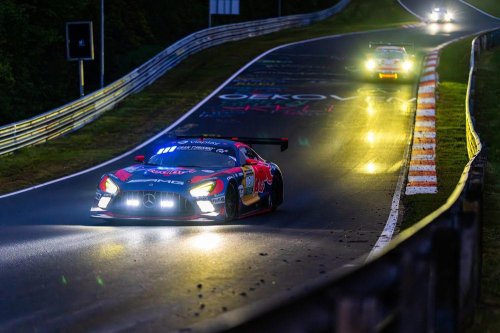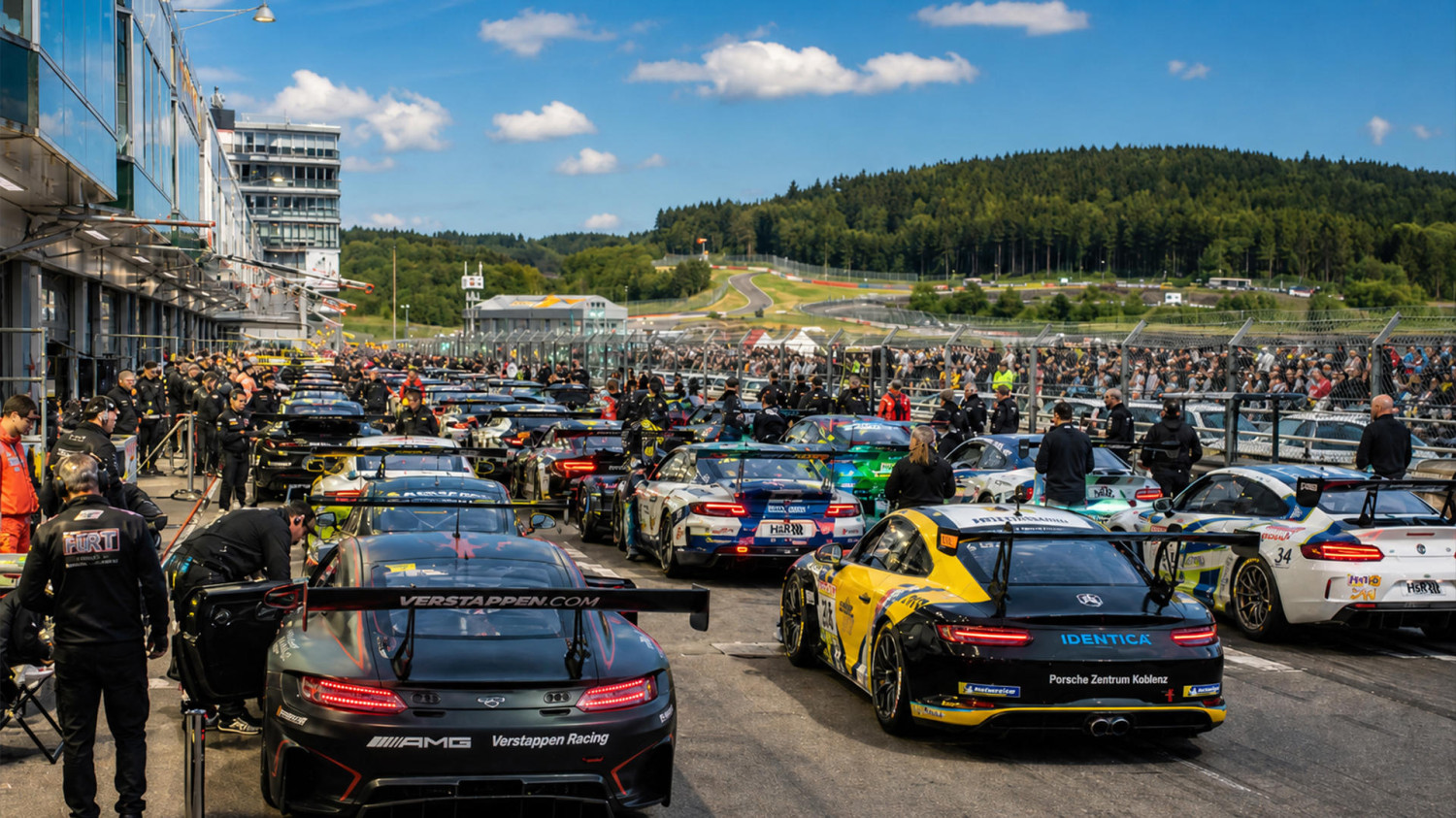



















Nurburgring 24 Hours Boasts Largest Entry List in a Decade With 161 Cars RegisteredThe Green Hell Is Filling Up AgainThe Nürburgring 24 Hours has never been just another endurance race. It is part professional GT contest, part survival test, part motorsport festival, and part rolling traffic problem spread across one of the most intimidating circuits in the world.For 2026, that identity is being pushed to a new scale.ADAC Nordrhein has published an entry list featuring 161 cars for the 2026 Nürburgring 24 Hours, making it the largest field for the event in more than a decade. Organizers say the last time the race had more teams represented was in 2014, when 165 cars took part. The 2026 field also required an adjustment to regulations, as the race had previously been limited to 150 entrants.That is not just an impressive number. At the Nordschleife, it is a statement.The Nürburgring 24 Hours has always depended on scale: fast cars, slow cars, factory drivers, amateur lineups, changing weather, night traffic, and constant risk. A 161-car field does not simply make the race bigger. It makes every part of the event more intense.Verstappen Brings Star Power, But Not the Whole StoryMax Verstappen’s presence is the obvious headline. The Formula 1 world champion is listed with Mercedes-AMG Team Verstappen Racing, sharing a Mercedes-AMG GT3 with Lucas Auer, Jules Gounon, and Daniel Juncadella. Organizers describe the lineup as one likely to set a benchmark for many competitors.That will naturally change the attention around the race.Formula 1 drivers do not usually enter the Nürburgring 24 Hours as casual attractions. The Nordschleife demands specific experience, patience, traffic management, and respect for conditions that can change dramatically from one part of the lap to another. Verstappen’s arrival gives the race a mainstream spotlight, but the challenge facing him is still the same one that faces everyone else: surviving the complexity of the place.The entry boom should not be reduced only to Verstappen, though. His participation may increase public interest, ticket demand, and media attention, but the size of the grid also points to something broader. Teams want to be part of this race because the Nürburgring 24 Hours remains one of the few major events where elite manufacturers, GT specialists, privateers, and class racers still share the same road.That mixture is increasingly rare.A Top Class Packed With GT3 FirepowerThe sharpest competition will be in SP9, the GT3 category. The 2026 entry list includes 41 SP9 cars, a major concentration of front-running machinery at a circuit where traffic and qualifying position can shape the entire race. The official participant list also shows 161 entries across all classes, with SP9 clearly the largest single performance category.The strength of the top class is not only about quantity. It is also about manufacturer variety.Aston Martin, Audi, BMW, Ferrari, Ford, Lamborghini, McLaren, Mercedes-AMG, and Porsche are all represented in the top class, giving the race a broad GT3 identity rather than a narrow duel between two or three brands.That matters because the Nürburgring is not a neutral test. Cars that look strong elsewhere can be exposed by the Nordschleife’s bumps, curbs, long straights, blind crests, and constant traffic. A GT3 car needs speed, but it also needs stability, tire life, drivability, and a setup that gives drivers confidence in darkness and changing conditions.With more than 40 GT3 cars in the field, the fight for the overall win could become as much about avoiding problems as creating pace.The Race Is Still More Than the Overall VictoryThe Nürburgring 24 Hours is unusual because the front of the race does not tell the whole story.Beyond the GT3 field, the 2026 entry includes large class battles in categories such as Cup 3, SP10, Cup 2, BMW M240i, VT2, TCR, and several smaller production-based or special classes. The official participant page lists Cup 3 with 17 entries, SP10 with 13, Cup 2 with 11, and BMW M240i with 11, alongside numerous other categories.That is where the character of the race comes from.A slower class car may be fighting for its own victory while being passed repeatedly by GT3 leaders. An amateur driver may be managing darkness, fatigue, and spray while sharing the circuit with factory professionals. A team that has no chance of overall victory may still treat a class podium as the most important result of its season.This is why the Nürburgring 24 Hours feels different from many modern endurance races. It is not only a race at the front. It is dozens of races happening at once.A Bigger Grid Also Means Bigger PressureThe increase to 161 cars is not simple from an operational standpoint.Organizers previously capped the field at 150 cars partly because the modern paddock and pit requirements have become more demanding. Where smaller teams once needed relatively modest workshop space, contemporary endurance racing increasingly involves trucks, equipment, data systems, tire operations, and more professionalized support structures. ADAC says the larger 2026 field was made possible by cooperation from teams limiting their space requirements to make room for others.That detail is important.It shows how the Nürburgring 24 Hours has evolved. The race still has the spirit of a giant motorsport gathering, but the logistics behind it are increasingly complex. More cars mean more pressure in the garages, more pressure in traffic, more pressure in qualifying, and more pressure on race control.The grid may be larger, but the space has not suddenly become easier.Ticket Demand Shows the Race Has MomentumThe larger field is also being matched by major spectator interest.Organizers have warned fans that buying tickets on race day may no longer be possible if demand continues toward a sellout. They have also cautioned about traffic delays when entering camping zones and travelling on race day. That kind of warning is not just practical information. It reflects how much attention the 2026 event is drawing.Verstappen is part of that, but the broader appeal is the race itself.The Nürburgring 24 Hours offers something that even Formula 1 cannot fully replicate: fans spread around a forest circuit, cars racing through the night, changing weather, packed campsites, and the constant contrast between professional polish and endurance-racing chaos.For many spectators, the attraction is not only seeing a famous driver. It is seeing that famous driver thrown into the same unpredictable environment as everyone else.The Real Meaning of 161 CarsThe 2026 Nürburgring 24 Hours entry list is impressive because of its size. But the number matters most because of what it represents.A field of 161 cars suggests that teams still see the Nordschleife as worth the cost, effort, and risk. Manufacturers still see value in proving themselves there. Privateers still want to measure themselves against the hardest endurance race in Germany. Fans still want to travel, camp, wait, watch, and follow a race that can change at any hour.That is the deeper story behind the entry list.The Nürburgring 24 Hours has always been difficult to control, difficult to predict, and difficult to simplify. In 2026, it is becoming bigger again, not because the race has become easier, but because its difficulty remains the attraction.At the Green Hell, a huge grid is not just a spectacle.