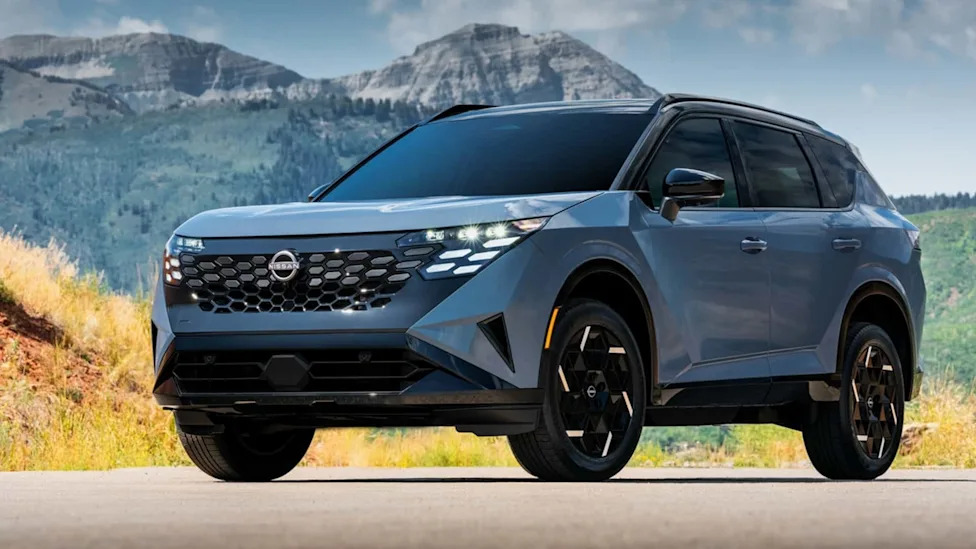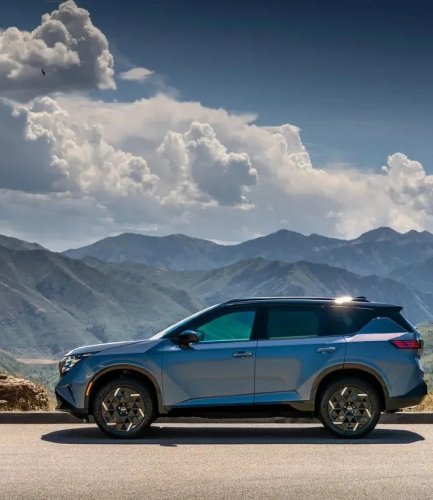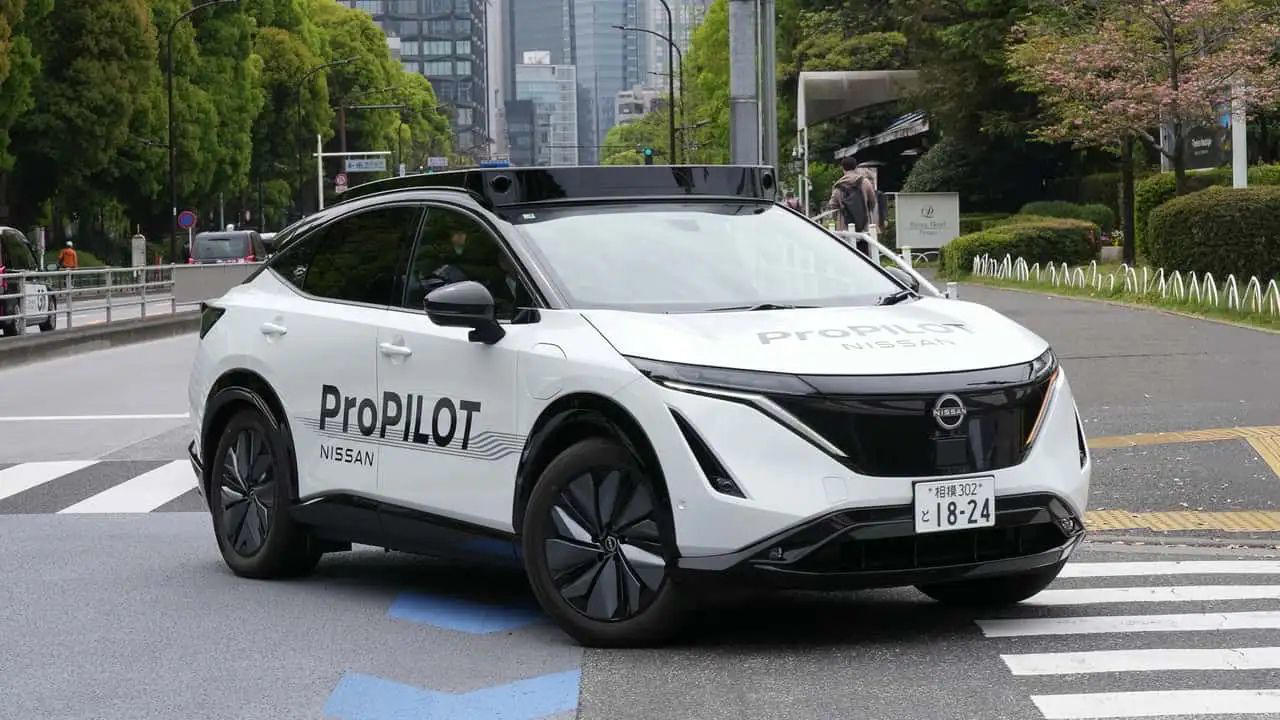



















Nissan Experiments with Hands-Free Driving in Tokyo, Eyes Autonomous FutureNissan is putting hands-free driving to the test in one of the toughest proving grounds on Earth: the dense, unpredictable streets and expressways of Tokyo. The company is running public road trials of advanced driver assistance that lets drivers take their hands off the wheel under specific conditions, while a suite of sensors and software handles most of the work. The project offers a concrete glimpse of how Nissan sees its path toward higher levels of autonomy, blending incremental upgrades in consumer models with ambitious long-term research. It also underscores how Japanese carmakers are trying to stay competitive as software-focused rivals push deeper into automated driving. What happened Nissan has begun demonstrating hands-free driving in Tokyo using a development vehicle equipped with an enhanced version of its ProPILOT driver assistance system. In these trials, the car can follow traffic, maintain lane position, and handle certain lane changes on designated roads while the human driver keeps eyes on the road but can relax their grip on the steering wheel. The tests focus on congested urban expressways and complex junctions that challenge automated systems with tight merges, frequent lane shifts, and aggressive stop-and-go traffic. The Tokyo trials build on Nissan’s broader strategy of turning ProPILOT from a basic lane-keeping and adaptive cruise system into a more capable, map-supported assistant. Earlier ProPILOT iterations already allowed hands-off operation on some Japanese highways under defined conditions, but the new experiments extend that capability to more complicated routes, including sections with intricate ramps and multiple-lane splits. Nissan engineers are using these drives to validate high-definition maps, camera and radar fusion, and the decision-making logic that determines when to accelerate, brake, or change lanes. The company’s push toward more automation is closely tied to its investment in electric platforms and software-defined vehicles. The Ariya crossover, previewed in concept form as a sleek electric family SUV in Tokyo, was designed from the outset to integrate advanced driver assistance with its EV architecture. The concept highlighted how Nissan sees future family cars as electric, connected, and increasingly automated, a direction later reflected in production models that carry expanded ProPILOT features. In that context, the Tokyo hands-free runs are less a one-off stunt and more a live testbed for the kind of capabilities Nissan wants to embed across its electric lineup. Nissan’s experiments are also taking place against a backdrop of intense competition in assisted and automated driving. Technology-focused rivals, including Tesla and several Chinese manufacturers, have turned driver assistance into a headline feature, using frequent software updates and bold autonomy claims to attract buyers. That pressure has pushed traditional automakers to speed up their own programs. Nissan’s choice to stage public, real-world trials in Tokyo signals a desire to show that it can match or exceed those rivals on technical sophistication while still emphasizing safety and regulatory compliance. The Tokyo program leverages a combination of onboard computing and detailed route data to handle tasks that go beyond simple lane centering. The car can automatically adjust speed for curves, respond to slower vehicles ahead, and prepare for upcoming exits or junctions based on map information. Human drivers remain responsible and must be ready to take over, but the goal is to reduce workload on long or stressful commutes. By logging thousands of kilometers in real traffic, Nissan is collecting the data it needs to refine algorithms, identify edge cases, and tune how assertive or conservative the system should be in different scenarios. Why it matters Nissan’s Tokyo trials matter for several reasons, starting with the competitive race to define what “hands-free” actually means for mainstream drivers. Advanced driver assistance has become a central selling point in the EV and premium segments, with rival systems promising everything from highway lane centering to city street navigation. Nissan’s decision to push hands-off operation on complex Japanese roads indicates that it wants to be seen as a leader in real-world capability, not just on paper specifications. The company is also trying to shift the narrative around its technology. For years, ProPILOT was perceived as a relatively conservative system compared with headline-grabbing rivals that marketed more aggressive automation. Recent upgrades have started to change that perception. A major software and hardware refresh for ProPILOT in Nissan’s latest models added more sophisticated lane-change assistance, improved traffic-jam support, and better integration with navigation data. Analysts have described this upgrade as a direct challenge to Tesla’s driver assistance, pointing to Nissan’s focus on predictability and driver monitoring as a way to deliver advanced features without overpromising full autonomy. Hands-free driving in Tokyo is also a statement about how Nissan sees the future of its electric products. The Ariya concept, shown as a preview of future electric family cars, combined a long-range battery platform with a cabin designed around screens, connectivity, and semi-automated driving. That concept positioned driver assistance as a core part of the EV value proposition, not an optional add-on. As Nissan transitions more of its lineup to electric and electrified powertrains, integrating advanced automation directly into those vehicles helps justify higher prices and creates a clearer technology story for buyers weighing multiple brands. The broader auto industry is moving in a similar direction. Automakers are pouring resources into high-performance computing and artificial intelligence to support automated driving features. One example is the deployment of dedicated AI supercomputers that can process vast amounts of driving data, train perception models, and simulate edge cases at scale. These systems allow companies to iterate on driver assistance software faster and validate behavior under a wide range of conditions before pushing updates to customer cars. Nissan’s Tokyo project sits within this shift toward software-driven development, where the car’s capabilities can evolve over time rather than remaining fixed at the moment of sale. There are also regulatory and safety implications. Japan has been cautiously supportive of advanced driver assistance, allowing limited hands-off operation on certain highways when strict conditions are met. By testing in Tokyo under close supervision, Nissan can show regulators how its system behaves in dense urban traffic, where pedestrians, cyclists, and complex intersections introduce additional risk. Demonstrating consistent, conservative behavior in these settings will be essential if the company hopes to expand hands-free zones or move toward higher levels of automation in the future. From a consumer perspective, hands-free driving on familiar routes could change how people think about commuting. If a car can reliably manage expressway stretches and congested jams while the driver supervises, long daily drives become less tiring and more predictable. That benefit is particularly attractive in megacities like Tokyo, where traffic density and limited space make driving stressful. Nissan’s tests are an attempt to prove that its system can deliver that relief without encouraging complacency or distraction. The Tokyo project also highlights how traditional automakers are responding to competitive pressure from software-centric companies. Tesla’s driver assistance has drawn both enthusiastic fans and sharp criticism, especially around branding that some regulators argue overstates the system’s capabilities. Nissan, by contrast, has framed its approach as incremental and safety-focused, even as it adds features that look similar on paper. The latest ProPILOT upgrade for models such as the Nissan Ariya and Nissan Leaf includes more advanced lane-keeping, smoother adaptive cruise control, and improved user interfaces, a package that some observers say has rattled Tesla by narrowing the perceived technology gap. For Nissan, getting this balance right is not just a matter of engineering pride. It affects brand perception, regulatory relationships, and the company’s ability to compete in markets where driver assistance has become a key decision factor. A misstep that leads to high-profile crashes or regulatory pushback could slow deployment and damage trust. On the other hand, demonstrating reliable, well-communicated hands-free capability in a city as demanding as Tokyo could strengthen Nissan’s reputation as a careful innovator that delivers what it promises. The financial stakes are significant. Developing and validating automated driving systems requires large investments in sensors, computing hardware, software engineering, and data infrastructure. Nissan must justify these costs by spreading them across global models and by using the technology to support premium pricing or subscription services. Hands-free driving features can be packaged as part of higher trim levels or as software options that unlock additional capability. That business model has already been tested by competitors, and Nissan’s Tokyo trials are an early step toward similar offerings that might reach customers in Japan, Europe, and North America. What to watch next The next phase for Nissan will be turning these Tokyo experiments into features that ordinary buyers can access in showrooms. That means translating prototype hardware and software into production-ready systems that meet cost, durability, and regulatory requirements. Observers will be watching to see how quickly Nissan can roll out expanded hands-free zones on Japanese expressways and whether similar functionality appears in export models, particularly in Europe and the United States where regulatory frameworks are evolving. Another key indicator will be how Nissan updates its electric lineup. The production Ariya, which traces its roots back to the Ariya concept unveiled in Tokyo, already serves as a flagship for the company’s EV ambitions. Future software updates and model-year refreshes could bring more advanced ProPILOT features, including broader hands-off operation on mapped highways and more capable traffic-jam assistance. Customers shopping for electric crossovers will compare those capabilities not only with Tesla but also with offerings from Hyundai, Kia, and European brands that are rapidly improving their own systems. There is also the question of how Nissan positions its technology relative to competitors that lean heavily on AI and high-performance computing. Some automakers are investing in dedicated AI supercomputers to accelerate development of driver assistance and autonomous driving, using these platforms to train neural networks on millions of miles of driving data. These efforts support features such as predictive lane selection, more human-like merging behavior, and better recognition of vulnerable road users. Nissan’s ability to tap into similar computing power, either in-house or through partners, will shape how quickly it can close any remaining gaps in perception and decision-making. Regulation will also play a decisive role in what comes next. Japanese authorities have taken a measured approach to automated driving, allowing gradual expansion of hands-off features under strict conditions. If Nissan’s Tokyo trials demonstrate consistent safety performance, regulators may be more comfortable approving broader deployments, including on additional expressways or in more complex urban settings. Conversely, any incident that raises questions about system behavior could slow approvals and force tighter restrictions on when and where hands-free operation is allowed. Internationally, Nissan must navigate a patchwork of rules. Europe has started to approve limited hands-off systems on certain motorways, while North American regulators are still developing clearer standards for advanced driver assistance. Nissan’s strategy will likely involve tailoring features to each region, enabling more aggressive functionality where rules permit and dialing back capabilities where oversight is stricter. Watching how the company sequences launches across markets will provide clues about where it sees the best near-term opportunity. More from Fast Lane Only Unboxing the WWII Jeep in a Crate 15 rare Chevys collectors are quietly buying 10 underrated V8s still worth hunting down Police notice this before you even roll window down