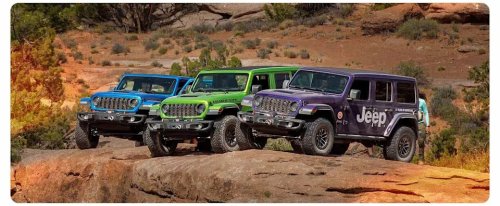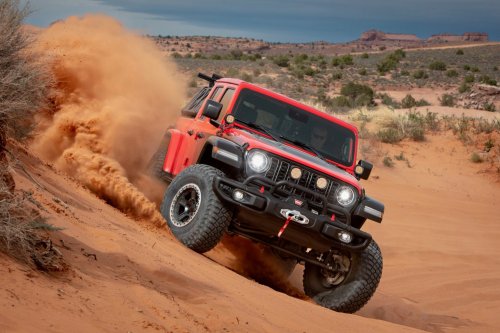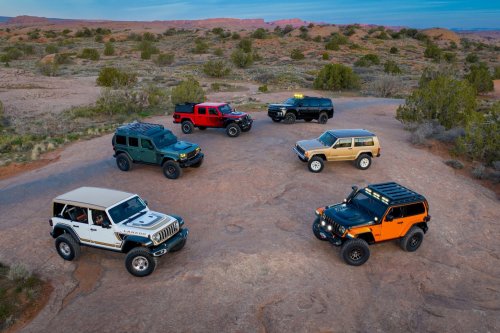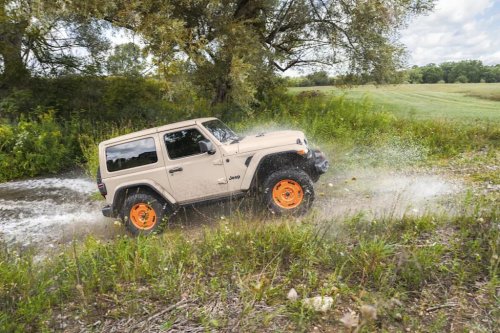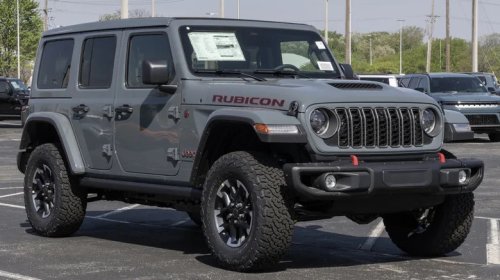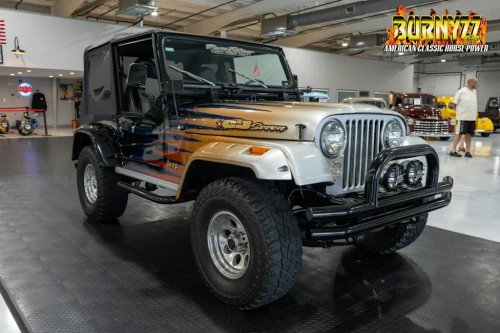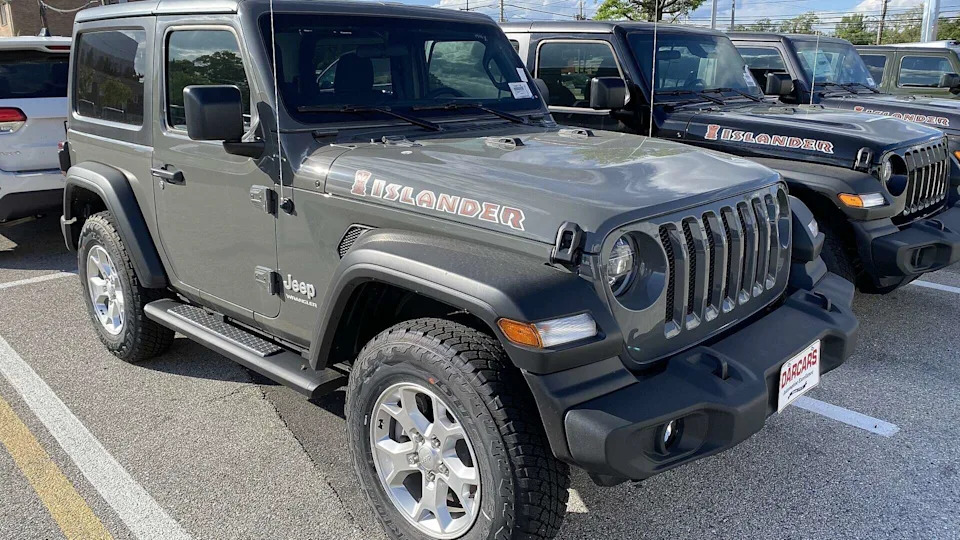
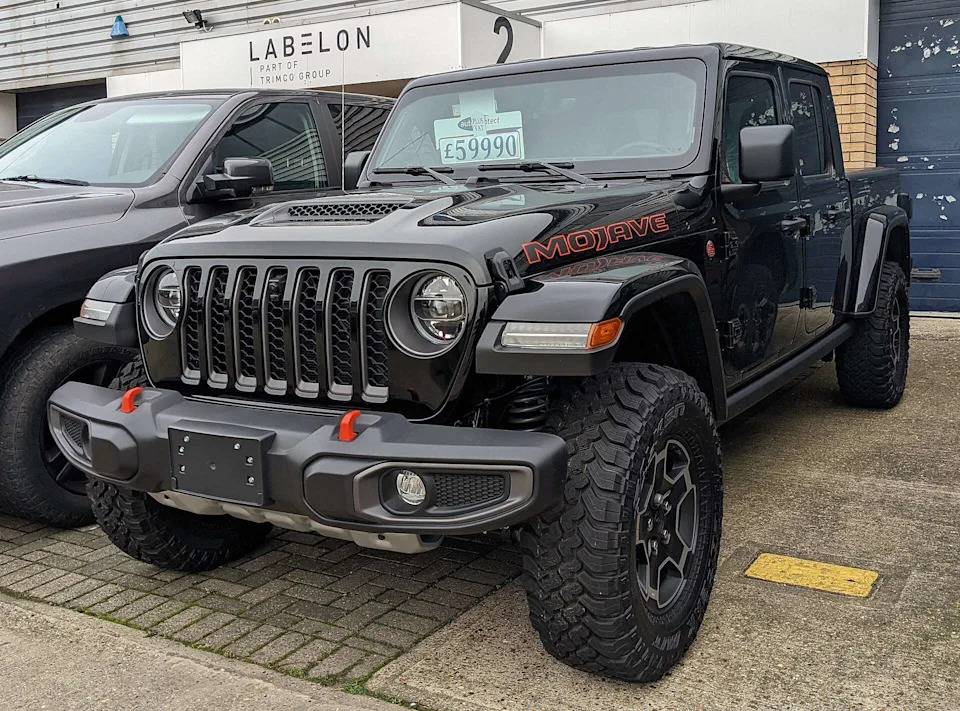














Federal safety regulators closed their investigation into underhood fires in Jeep Wranglers and Gladiators on Sept. 24. Nothing in the closing paperwork changes what owners of 1,076,999 of those vehicles have been told to do since June: park outside, away from buildings and other cars, until a dealer has checked the wiring to the power steering pump.NHTSA's Office of Defects Investigation opened Preliminary Evaluation PE24024 on Sept. 6, 2024, covering an estimated 781,459 model-year 2021-2023 Wranglers and Gladiators. Most of the reports described fires starting on the front passenger side of the engine compartment while the vehicle was turned off. The agency's closing resume says FCA's recall 26V363, filed June 4, 2026, "directly covers the vehicles and issues examined in this investigation," so ODI is closing the case without requiring anything more from the company. NHTSA kept its standard reservation: it will monitor field performance and may act again if future circumstances warrant.A preliminary evaluation that ends in a recall is the defect system working the way it was built to work. A PE is the first of two investigative stages; if it doesn't produce a recall, the next step is an engineering analysis and, after that, a formal recall request the manufacturer can fight. FCA's recall made both unnecessary. What the closure does not tell a Wrangler or Gladiator owner is whether the fix is finished, and FCA's own filing is less certain on that point than a closed federal case would suggest.FCA closed its own review in 2024 for a "low rate of occurrence"I read the chronology in FCA's Part 573 safety recall report, dated June 30, 2026. It starts more than a year before NHTSA got involved. Between May 2023 and April 2024, FCA's Technical Safety and Regulatory Compliance group investigated fires that began at the electric hydraulic power steering pump connection. The company closed that review because of the low rate of occurrence and concluded the condition did not pose an unreasonable risk to motor vehicle safety. In August 2024, after incidents increased, FCA reopened it. NHTSA opened PE24024 the following month.The engineering finding came in April and May 2025. FCA learned that the header on the pump, the socket the wiring connector plugs into, had been manufactured outside its specified tolerances, so pushing the connector in took more force than the specification allows. FCA told regulators that the extra force can spread the terminals and makes it less likely the connector ends up fully seated on the header. The company also received notice of a terminal push-out condition on the connector. All three conditions produce the same result, which is high electrical resistance at a joint that feeds an electric pump.From June through December 2025, FCA tried to reproduce the failure in bench testing and could not. Its filing lists vehicle buybacks, returned-part analysis, CT scans, X-rays and material analysis. In April 2026, FCA confirmed that a loose electrical connection will melt and could ultimately lead to a fire, and on May 28 its Vehicle Regulations Committee decided a safety defect exists. The same report says FCA was continuing vehicle testing to try to duplicate the problem and pin down root cause.A 2021 Jeep Wrangler two-door. Wranglers account for 787,887 of the U.S. vehicles in recall 26V363. Photo: Christopher Ziemnowicz (CZmarlin) / Wikimedia Commons, CC BY-SA 4.0How a bad connector turns into heatThe Wrangler and Gladiator don't use a pump turned by an engine belt. Their power steering pressure comes from an electric motor driving a hydraulic pump, which makes it one of the larger electrical loads under the hood. A connection sized for that load works only when the terminals grip each other over their full contact area. Spread a terminal, or leave the connector short of fully seated, and the current squeezes through a smaller patch of metal. Resistance rises, and the heat generated at that joint rises with it. Heat oxidizes the contact surfaces and relaxes the terminal's grip, which raises resistance further. That feedback loop is why a marginal connector can work for months and then melt, and why a problem like this shows up slowly in the field and resists a tidy bench test.Both NHTSA and FCA say the fires can happen with the ignition off. Neither the recall report nor the closing resume explains which part of the pump circuit stays energized after shutdown, and I won't guess. That is why the advice says to park away from structures: a Jeep that burns in an attached garage can take the house with it.The remedy is an inspection first, parts secondNHTSA's recall record says dealers will inspect and replace the wiring and the pump as necessary, free of charge. FCA's June 9 statement described the same job: inspect, and if necessary repair or replace, the wiring harness and/or the pump. In that statement FCA said it expected a solution no later than July. Its recall report scheduled owner letters in phases between July 9 and Aug. 3. FCA's internal number for the campaign is 21D.An inspect-and-replace-as-needed remedy means many of these Jeeps will leave the service drive with no new parts. That is a reasonable approach if a technician can see the failure coming: scorched plastic, a connector that isn't fully seated, a terminal that has backed out of its cavity. It is weaker against a connection that looks fine on the day of the inspection and loosens later, the kind of failure FCA tried and failed to reproduce on a bench from June through December 2025. That assessment is mine, not FCA's or NHTSA's, and the field data from the next year or two will settle it.Stellantis has redone recall fixes before. Its 2025 recall of 2020-2025 Wrangler 4xe and 2022-2026 Grand Cherokee 4xe plug-in hybrids for battery fires, 25V741, says vehicles previously recalled for the same issue under two earlier campaigns, 24V720 and 23V787, need the new remedy. We covered a similar pattern in September, when the company recalled Grand Cherokees for coil springs a third time.Three different incident counts, and FCA's 0.1% estimateThe fire numbers depend on who is counting and when. NHTSA's closing resume lists 67 incidents, 51 of them crashes or fires, four injury incidents with four injuries, and no deaths. FCA's recall report, current as of May 18, 2026, cites 63 customer assistance records, 72 field reports (35 of them confirmed to originate at the pump connection), 12 other service records, no crashes and one injury, across all markets. NHTSA's June 9 consumer alert said the agency knew of 51 fires and one injury likely connected to the problem.FCA also estimated, in the same report, that 0.1% of the recalled population has the defect. On 1,076,999 vehicles, that works out to about 1,077 Jeeps, The Auto Wire's math applied to the company's percentage. That is roughly 21 times the 51 fires in NHTSA's count. If FCA's estimate holds, most of the defective connections are still sitting in driveways, and the inspection is how they get found.A 2021 Jeep Gladiator Mojave. The U.S. recall covers 289,112 Gladiators built from Aug. 18, 2020, through Dec. 2, 2024. Photo: Calreyn88 / Wikimedia Commons, CC BY-SA 4.0A recall 38% larger than the probe, with gaps in the paperworkNHTSA opened its case on three model years. FCA recalled five. The U.S. population grew from 781,459 to 1,076,999, an increase of 295,540 vehicles, or about 38%. The recall covers 787,887 Wranglers built from June 24, 2020, through Dec. 2, 2024, and 289,112 Gladiators built from Aug. 18, 2020, through the same end date. FCA also said it would recall an estimated 106,258 vehicles in Canada, 23,704 in Mexico and 124,297 in markets outside North America. Added up, that is 1,331,258 Jeeps worldwide.Two details in FCA's filings go unexplained. The population ends on Dec. 2, 2024, yet the field in the recall report asking how and when the condition was corrected in production appears blank in both versions I read. And the records FCA counted have receipt dates reaching back to July 13, 2019, almost a year before the first recalled Wrangler was built. The report says similar vehicles built before or after the production range are not included, without saying why. Owners of Jeeps outside that window have no recall to act on, but they have a reason to keep an eye on whether the range changes.What Wrangler and Gladiator owners should check nowRun the VIN through NHTSA's recall lookup or FCA's recall site, and ask the dealer whether the 21D inspection has been done and what it found. NHTSA's recall database still carries the park-outside flag for 26V363, so until the work is on a repair order, the Jeep sleeps in the driveway. Owners of Wrangler 4xe models should check both campaigns: the 4xe was named in 26V363, and certain 2020-2025 Wrangler 4xe vehicles are also under 25V741, which carries its own park-outside advice and a warning not to charge until the fix is complete.Used buyers should ask for proof the inspection was done before signing. Federal law bars dealers from selling new vehicles with open recalls, but it does not cover used ones, and more than a million of these Jeeps are on the road. Our June report on the recall covers the original announcement.The next thing to watch is whether 26V363 gets amended, either with a wider production range or a remedy that replaces the connector on every vehicle instead of inspecting it. NHTSA has said it is watching field performance. If fires turn up in Jeeps that already passed the inspection, that is what would bring NHTSA back.If your Wrangler or Gladiator came back from recall 21D with a clean inspection and no new parts, do you trust the fix enough to park it in the garage again, or is it staying outside?The post NHTSA Closed Its Jeep Fire Probe. A Million Wranglers and Gladiators Still Can't Park in the Garage. appeared first on The Auto Wire.