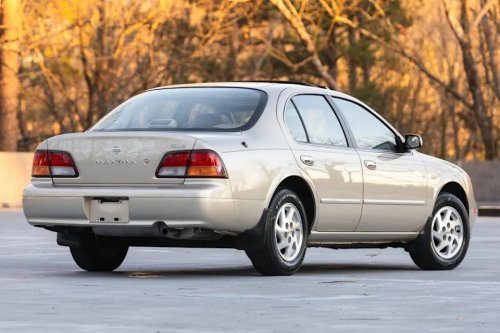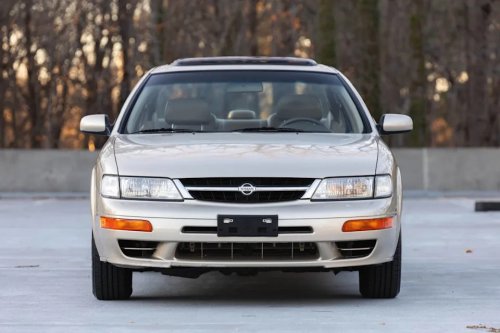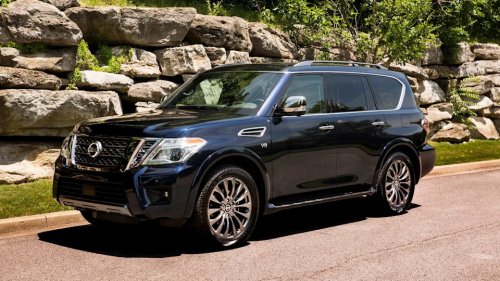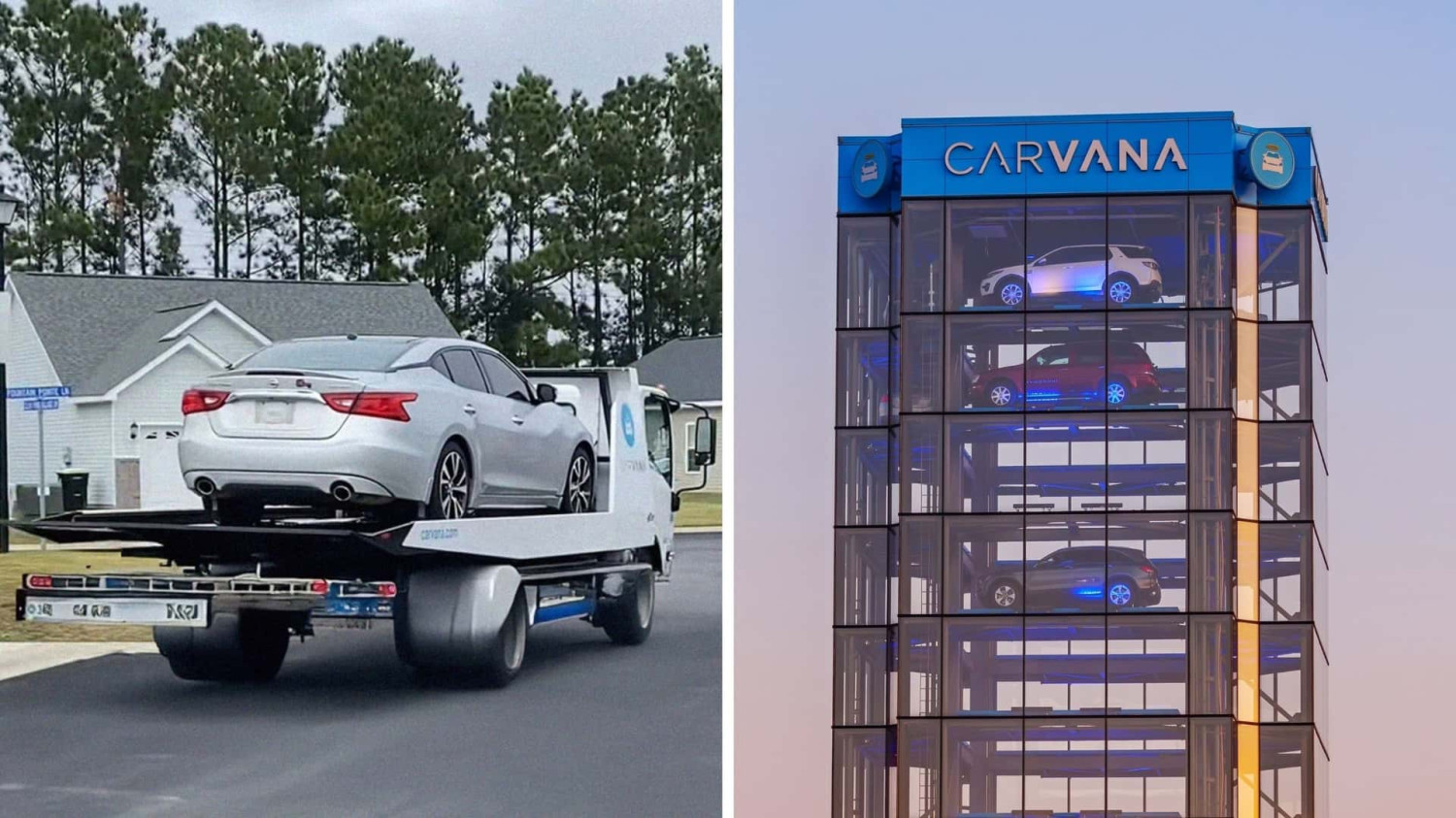


















When your 200,000-mile Nissan gives up on life, you could scrap it, or you could sell it to Carvana and watch them haul it away like nothing’s wrong. That’s exactly what one woman did, and people can’t decide whether she just outsmarted the system or exposed it. The clip from former Nissan owner Hannah (@hannahthebraider_) shows her road warrior ride being hauled away on a Carvana flatbed, presumably headed for a refresh and resale despite what she suggests are significant issues. “That time I sold my car with a blown transmission to Carvana!” reads the caption on the video that’s been viewed more than 614,000 times. “200k miles… we definitely had a time!” Right away, the comments section on the post turned into a referendum on Carvana’s business model. Some viewers said the online retailer will “buy anything,” making it a seller’s dream and a buyer’s gamble. Many shared their own purported experiences, such as one who claimed, “I sold Carvana a Honda Accord with a blown motor and they didn’t even turn the car on to check if it turned on.” Others pushed back, arguing the company inspects cars and stands behind them with a return window and warranty. The split mirrors a long-running debate over how digital car sellers balance speed, scale, and quality control. What Happens to a 200,000-Mile Trade-In? The core question is what Carvana actually does with a 200,000-mile car that supposedly can’t move under its own power. Since 2022, Carvana has owned and operated ADESA U.S., one of the country’s largest wholesale auction networks. In announcing the $2.2 billion acquisition, Carvana said it would “continue to operate ADESA U.S.’s existing wholesale auction business” under the ADESA brand. This business generated approximately $881 million in revenue from the sale of 984,000 units in 2021, according to deal materials filed with investors. That wholesale arm is a key outlet for rough or high-mileage vehicles that don’t fit Carvana’s retail lineup. Industry auction rules require specific disclosures about mileage and condition, reinforcing that many cars traded at wholesale aren’t retail-ready. ADESA’s published auction policies, for example, specify odometer and condition disclosures, including special notations for vehicles that exceed 100,000 miles. While that does not set Carvana’s retail criteria, it illustrates how the wholesale channel handles older or compromised inventory. OWNERSHIP STORIES Viral stories from across the web Our team of experts tracks what owners are saying about car-shopping, repairs, the daily driving experience and more on social media. Carvana, for its part, emphasizes convenience on the sales side. The company’s help pages say it will pick up vehicles from a customer’s home where available, part of the appeal for owners who don’t want to arrange transport when a car isn’t roadworthy. Carvana also lists baseline acceptance requirements, newer than 1992, with a working odometer and “able to safely drive the vehicle.” Hannah’s viral clip shows a flatbed pickup, indicating that in practice, some cars are towed away. The buyer experience is where the internet splits. Carvana offers a seven-day money-back window and a limited warranty administered through its partner SilverRock. Those policies are designed to provide buyers with an off-ramp if a car arrives with problems or requires early repairs, and the company outlines a repair claim process through its preferred shops. Still, commenters in the TikTok thread and across social platforms often cite experiences where cars arrived needing work or paperwork issues, resulting in delayed titles. The policy framework exists; the outcomes vary. Regulators have intervened when processes broke down. In January 2023, Illinois reached a settlement with Carvana that imposed tighter oversight and granted the state the power to summarily suspend the company’s dealer license for future violations, following complaints about title and registration delays. Similar title issues have surfaced in litigation elsewhere, reflecting operational strains in a fast-growth model. A Seller’s Dream, and a Buyer’s Gamble All of this plays out against a shifting used car market. After the pandemic’s extreme swings, wholesale prices have cooled from their peaks, but inventory remains tight by historical standards, especially at lower price points. Cox Automotive reported in October that wholesale used-vehicle prices declined month-over-month in September, while broader coverage this year has highlighted constrained supply and elevated retail prices compared to pre-2020 norms. The squeeze encourages retailers to keep acquiring vehicles across a broader condition spectrum, and to rely on wholesale outlets for cars that don’t pencil out for retail. Carvana has also been expanding its use of the ADESA footprint. Beyond running dealer-only auctions, the company is converting some sites into high-throughput “megasites” to speed reconditioning and logistics, a sign that it sees value in tightly integrating wholesale real estate with retail operations. Trade publications have likewise covered enhancements to ADESA’s digital wholesale platform, positioning it with more of a “retail feel” for dealer buyers, another nod to the blurring lines between retail and wholesale pipes. So where would Hannah’s Nissan likely end up? Carvana doesn’t publish a hard public cutoff for mileage or condition, but combining the company’s ADESA ownership, the costs of a transmission replacement, and the risk profile for high-mileage vehicles, the most probable path is arguably a wholesale auction lane rather than Carvana’s retail site. Dealers shopping those lanes may buy it to repair and resell on their own lots, or disassemble it. That outcome aligns with the more pragmatic voices in the TikTok thread, who pointed out that cars with six-figure odometers or major mechanical faults are typically wholesaled. For sellers, the incentive is clear: a quick online quote, pickup, and payment, without the need to negotiate with multiple dealers or pay for diagnostics on a car they’re ready to sell. For buyers, the calculus is different. Carvana’s seven-day return window and warranty provide a safety net, but due diligence still matters. This includes reading inspection reports closely, booking an independent pre-purchase inspection when feasible, and being prepared to utilize the return policy if the car doesn’t meet expectations. Ultimately, that’s what made Hannah’s video so shareable. The humor lands because the incentives line up: she got paid to make a problem go away; Carvana absorbed the risk, knowing it can route the car through a wholesale channel it controls. Whether that’s “outsmarting the system” or simply using it depends on which side of the tow strap you’re on. And that, more than the punchline, explains why the clip resonated: it’s a reminder that the modern used car market is as much about logistics and pipes as it is about cars. Motor1 reached out to Hannah via direct message and comment on the post and to Carvana via email. We’ll be sure to update this if they respond. We want your opinion! What would you like to see on Motor1.com? Take our 3 minute survey. - The Motor1.com Team