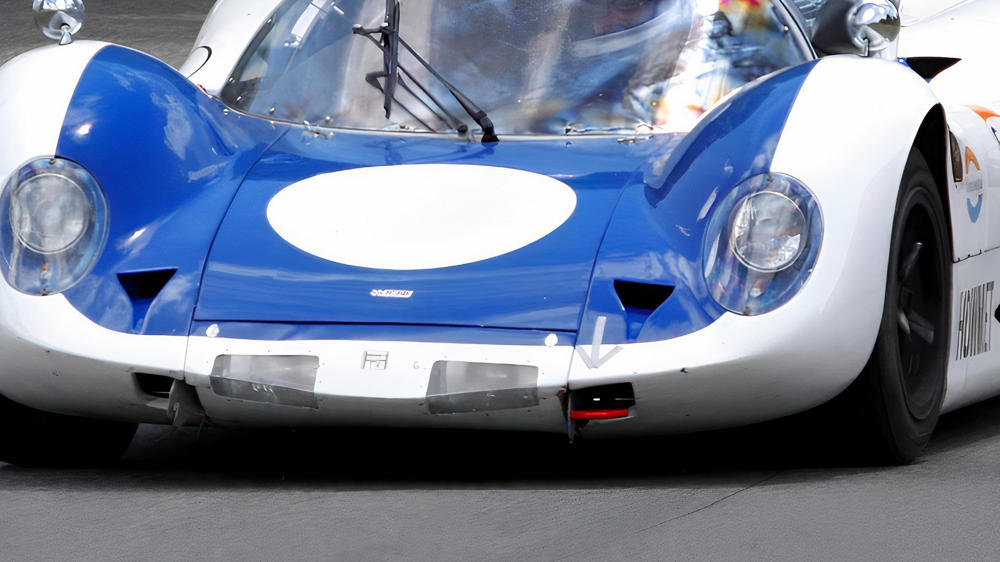
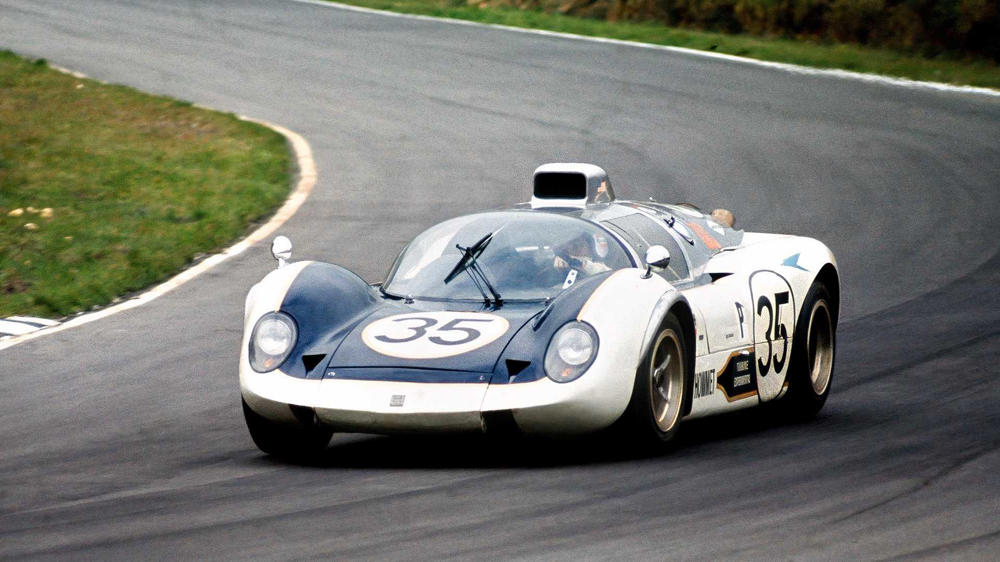
Turbine cars are one of the coolest forms a motor vehicle has ever taken. By the same token, just about every single attempt to merge a gas turbine engine, or just a jet engine in layman's terms, with an automobile has ended in failure. For one reason or another, the combination of four tires and a jet engine is either too complicated or too crazy to garner any long-term success. There is, however, at least one instance where a turbine race car found its way to glory, and it did so with a thunderous roar. The 1960s Turbine Dream Let’s paint the scene for a second. It's the 1960s, and the era of the muscle car is upon us, or about to arrive. At the same time, the aerospace sector had fully embraced gas turbine engines, be they turbofans with large fan blades and high air bypass, or turbojets with smaller fans and high exhaust thrust. The first jet engines originated before World War II, both in Britain and in Germany, and made their way to fighter jets by war's end, while the auto industry seethed with envy. Automakers were convinced this smooth and vibration-free power was the ultimate future of ground propulsion. The giants of the industry threw massive budgets at the concept, leading to high-profile projects that ultimately went nowhere. The first turbine-powered car ironically came from the team at Rover, famous for making nimble little English runabouts. Dubbed the JET1, the car made over 200 horsepower and topped 150 mph flat out. via Wikimedia Commons (Michael Barera) Sadly, the poor fuel economy and limited production prospects prompted Rover to stop turbine car development by the mid-1960s. Chrysler, meanwhile, built a fleet of bronze Turbine Cars that ultimately amounted to an incredible PR exercise but not much else. On the motorsports side, Lotus turned up at the Indy 500 with the Type 56, powered by a Pratt & Whitney turbine engine derived from the iconic PT6 that powered dozens of aircraft and helicopters, but failed to secure a win at the Brickyard. It seemed like the turbine car dream was just that, until a scrappy American aerospace casting company decided to go racing. The Genesis of Howmet Museum of American Speed The Howmet Corporation had no interest in selling passenger cars. They built high-tech cast alloys for the aerospace industry, and they needed a 200-mph billboard to prove their castings could withstand the extreme heat of turbine jet engines. Visionary driver and Pittsburgh native-turned-Philadelphia transplant Ray Heppenstall convinced Howmet to fund a purpose-built race car, partnering with respected chassis builder Bob McKee. McKee cleverly adapted a McLaren Mk6 Can-Am chassis to house the unusual powertrain, keeping the aerodynamic package incredibly light at just 1,700 pounds. The powerplant they chose was a leased 330-hp Continental TS325-1 gas turbine, an engine originally designed for the Bell UH-1 Huey rival, the Sikorsky XH-39. While 330 hp doesn't sound like much, the turbine produced massive torque when spooled up to its maximum operating speed of 44,000 rpm. Because the powerband was so vast, the car didn't even need a traditional multi-gear transmission, needing just a single-speed reduction gear instead. To tackle that ever-tricky issue of waiting for the engine to spool into the powerband, Heppenstall devised a wastegate system that kept the turbine blades spooled at near-maximum RPM while the throttle wasn't being applied in tight corners. When the driver needed to brake or coast, the wastegate dumped the thrust out of the exhaust. When the throttle was pressed again, that wastegate slammed shut, providing maximum power. It was a brilliant system, one that nearly eliminated the spool-up problem entirely. Paired with a fine chassis, the results were remarkable. Howmet TX: A Pocket Fighter Jet on Four Wheels Endurance racing proved to be a challenge for the Howmet TX (Turbine Experimental), and its early outings were marked by growing pains. The grueling 24 Hours of Daytona ended in a DNF thanks to, ironically enough, the wastegate failing in the middle of the race. Later, at the 12 Hours of Sebring, the team's run was cut short by cracked engine mounts. Only when the TX was entered in shorter sprint events, where its double-wishbone suspension and nimble wheelbase could find their rhythm, did the team find an environment where it wouldn't break. There, it finally made history. In the summer of 1968, the Howmet TX entered the Heart of Dixie SCCA race in Huntsville, Alabama, and it gave the competition all the hell they could handle. Against foes like thundering V8 Corvettes, roaring Cobras, and lightning-quick Porsches, Heppenstall's creation did the unthinkable, taking a historic victory to the bewilderment of everyone present. Just a week later, drivers Dick Thompson and Heppenstall took pole position and finished the race 11 laps in front of the second-place finisher at the Marlboro 300 in Maryland. At the 1968 running of Le Mans, the team decided it was time to take their 200-mph billboard to the ultimate global stage. But endurance racing in France required pit stops, and regulations required the engine to be shut off in the pits. Jet engines notoriously struggle to restart when hot, and packing the intakes with dry ice proved less than ideal as a cooling solution. Meanwhile,Ford’s GT40 secured its third straight Le Mans victory. A Rising Star That Burned Out Hard As advanced and capable as it was under the right circumstances, the Howmet project seemed to hit a brick wall just as it was gaining momentum. The mechanical gremlins that plagued the turbine car in France didn't just ruin a single weekend; they exposed the fatal flaw of trying to run an aerospace powerplant in a grueling 24-hour endurance environment. One TX crashed violently when its wastegate system stuck wide open, while the second car suffered an electrical failure, forcing a double-DNF. Before long, new regulations brought an end to the turbine age, relegating it to a fascinating footnote in history. Source: Hagerty

 Liked by Emily Labelle, Carter Côté












 Liked by Emily Labelle, Carter Côté