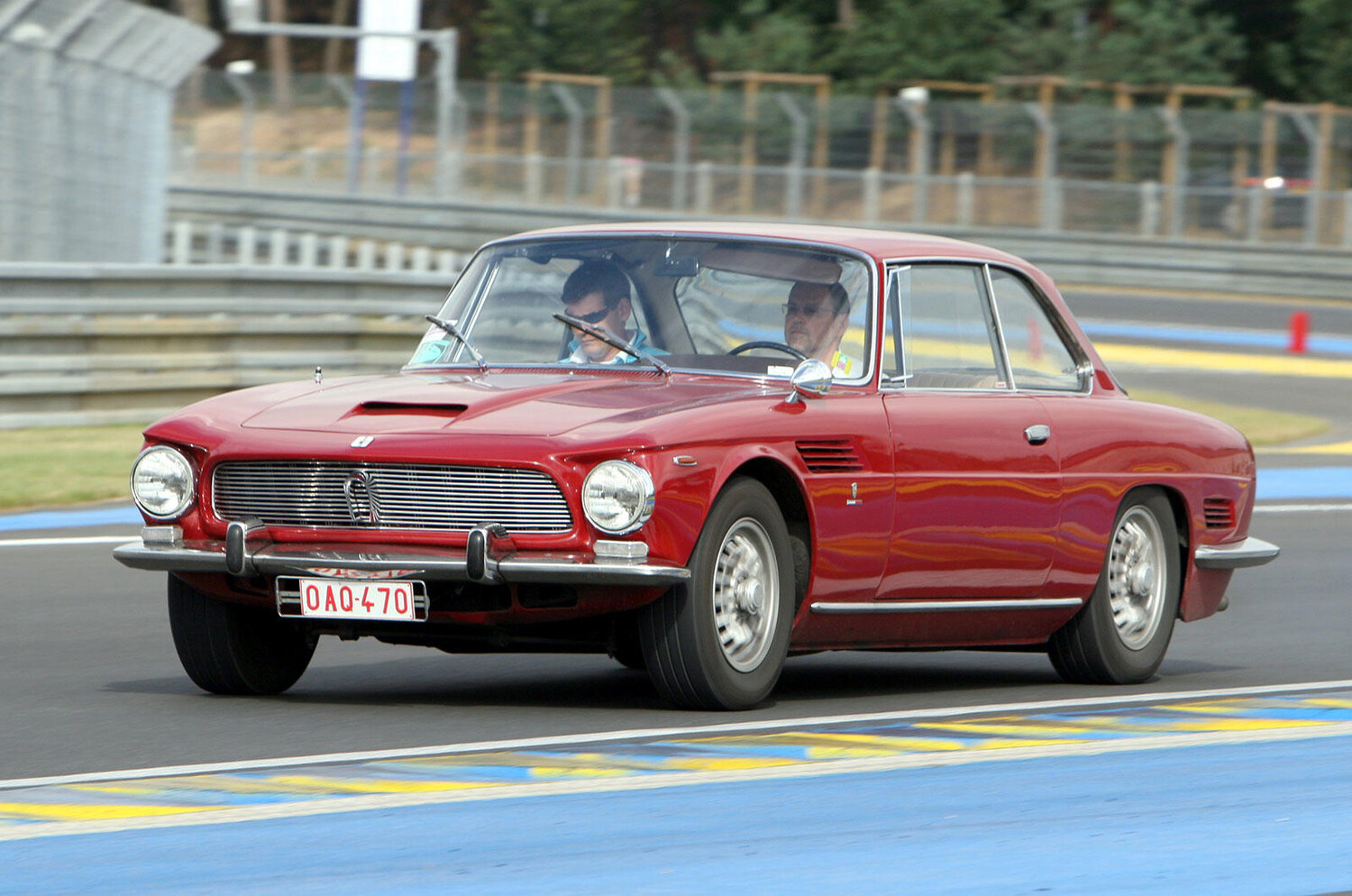
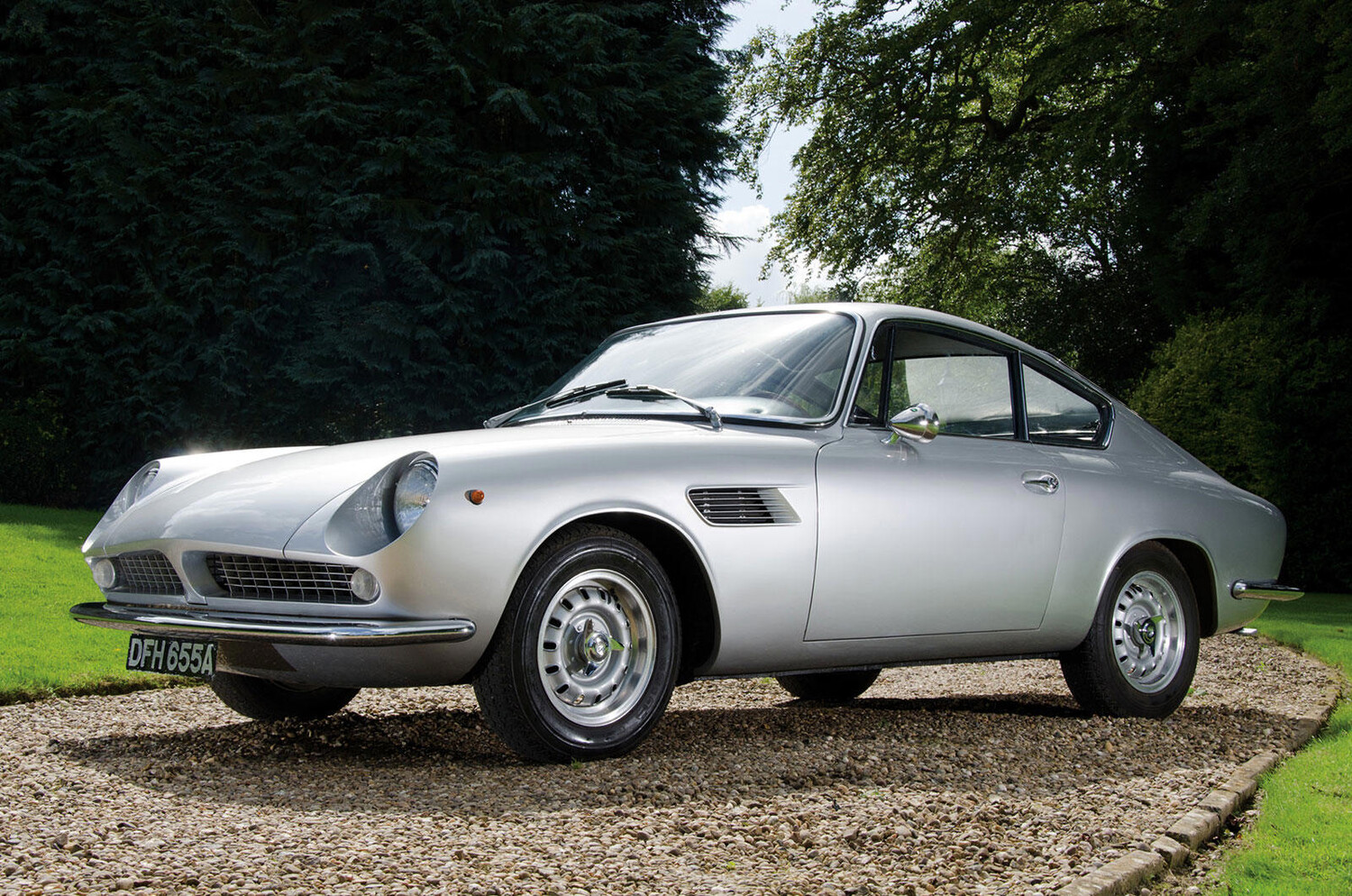
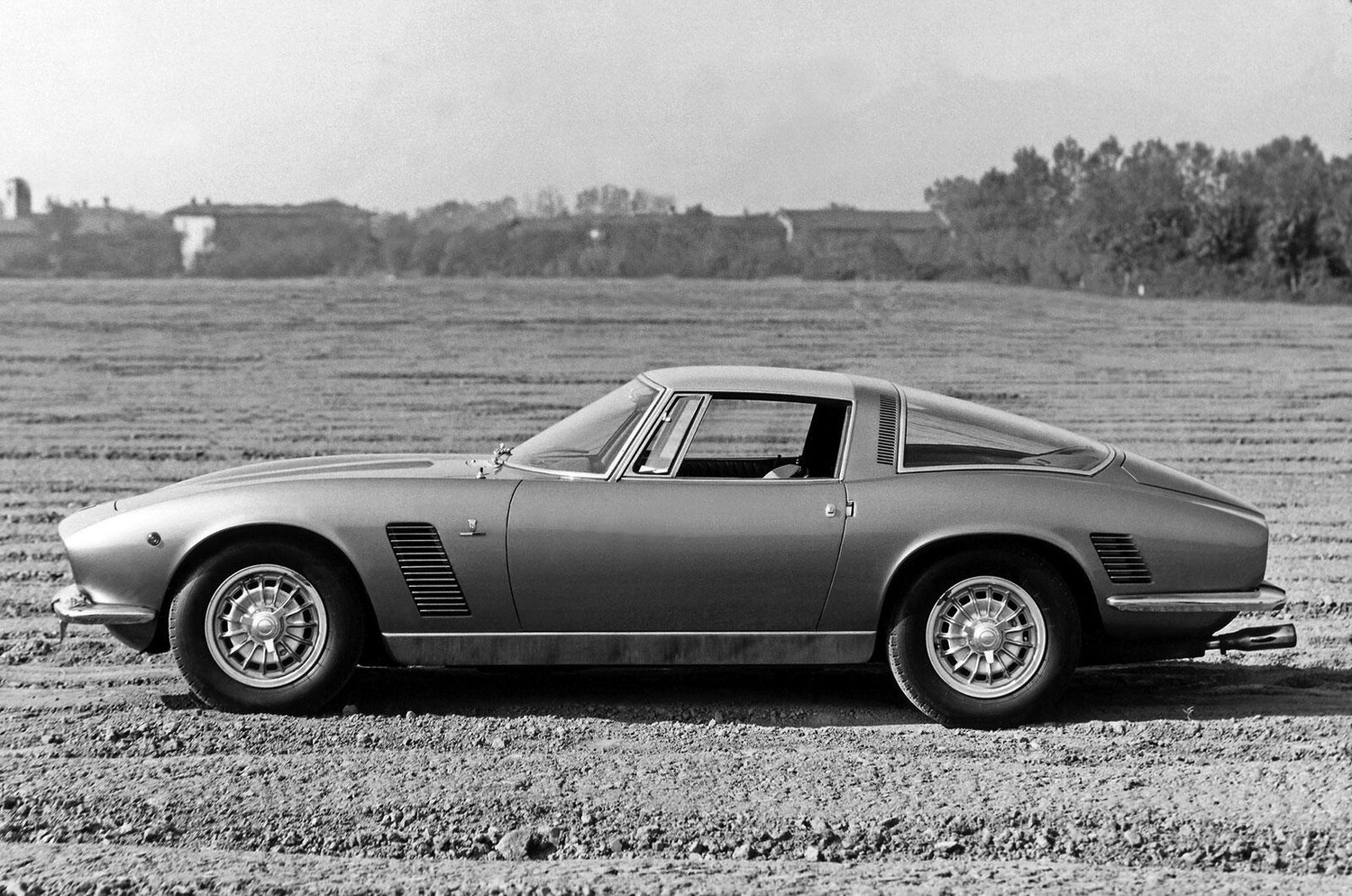
Only 12 examples of the Talbot-Lago T26 Grand Sport left the Suresnes plant in 1948, the model’s first full year. Each one left the factory as a bare chassis, so no two finished cars looked quite alike. That pattern of tiny numbers and one-off bodies runs through the cars collectors chase hardest. Most of these cars came from the 1930s to the early 1960s, when small makers and coachbuilders could sell a handful of hand-built cars. Some wore famous badges such as Alfa Romeo and Aston Martin. Others came from Spain, from a British firm with a tortoise on its nose, and from an Italian maker that put Chevrolet power under a Bertone body. These are our picks: eight rare collector cars that, in our view, are getting scarcer every year as survivors disappear into collections and museums. The production figures come from period records, club histories and specialist sources. The verdicts are our own. 1. 1948 Talbot-Lago T26 Grand Sport Saoutchik Talbot-Lago first showed the Grand Sport in October 1947 on a shortened chassis. Anthony Lago, who had bought the company out of receivership in 1936, developed its engine himself. The 4,483 cc six came from the Lago Record, but in Grand Sport tune it made 190 bhp and later 195 bhp. Buyers then sent the Talbot-Lago T26 chassis to a coachbuilder of their choice. The car in our photo wears a body by Jacques Saoutchik, the Paris coachbuilder. Meanwhile, racing gave the name extra weight, because a Talbot-Lago won the 1950 24 Hours of Le Mans with Louis Rosier and his son. Our take: the Talbot-Lago T26 Grand Sport is the definition of a car that can only get rarer. With just a dozen built in its first year and every body unique, each survivor is its own story. In short, there is no replacement for a lost one. 2. 1964 Gordon-Keeble GK1 The Gordon-Keeble mixed British chassis work, Italian styling and American muscle. A young Giorgetto Giugiaro designed the body at Bertone, and a 300-horsepower Chevrolet V8 sat under the hood. Production cars used fiberglass bodies on hand-built square-tube frames, and the firm priced them at £2,798, about £1,400 less than an Aston Martin. That price proved unrealistically low. The company failed in 1965, came back under new owners and then failed again in 1968. According to Hagerty UK’s buyer’s guide, 100 cars were built in all, and 95 were known to survive at the time of writing. The tortoise badge, an odd choice for a fast car, adds to the charm. In our view, the GK1 is a remarkable survivor story, since most of the run is accounted for. However, a total of 100 means a market of very few cars. We’d expect very few to reach the open market. 3. 1950 Alfa Romeo 6C 2500 SS Villa d’Este Alfa Romeo named this car after a winning design at the Concorso d’Eleganza on Lake Como. Carrozzeria Touring of Milan built the Superleggera berlinetta body on the 6C 2500 Super Sport chassis. Under the long hood sat a 2,443 cc straight six with triple carburetors and 110 bhp. Alfa introduced the Villa d’Este in 1949, and production ended along with the rest of the 6C 2500 range in 1952. Only 36 were built, and five of those were cabriolets. As a result, the coupe in our photo belongs to a group of barely three dozen cars. Our take: this is one of the prettiest postwar Alfas, with a shape that has aged gracefully. With so few built, we doubt many more will surface. Each one that goes into a museum is one fewer for private collectors. 4. 1939 Delahaye 135M Drophead Coupe Delahaye introduced the 135M in 1936 with a 3,557 cc straight six. Depending on whether it had one, two or three carburetors, it made 90, 105 or 115 hp. That engine soon proved itself in competition. The 135 won the 1937 Monte Carlo Rally and then the 1938 24 Hours of Le Mans. Like the Talbot-Lago T26, the Delahaye was a chassis for coachbuilders. Figoni & Falaschi, Chapron, Letourneur et Marchand and Saoutchik all clothed 135s. That variety means the drophead coupe in our photo is one of countless body styles, each built in small numbers. We’d call the 135M the sporting heart of prewar French luxury. It has racing pedigree, yet it was built to be driven and enjoyed. 5. 1952 Pegaso Z-102 Spain is not the first country you think of for exotic sports cars, and that makes the Pegaso so special. Wifredo Ricart, a former senior engineer at Alfa Romeo, designed it. He gave it an all-alloy V8 with two overhead cams per bank and a five-speed transaxle. The launch engine displaced 2.5 liters, and later versions grew to 2.8 and 3.2 liters. According to Silodrome’s history of the car, a Z-102 set four official records in 1953, including a 243.079 km/h average over the flying kilometer. Even so, the sources disagree on output: totals range from 71 to 86 cars, built from 1951 to 1958. Our take: whichever figure is right, fewer than 90 were made. Touring bodied most of them, with others by Saoutchik, Serra and the factory itself. For that reason, each Pegaso is a rolling piece of Spanish engineering history. 6. 1954 Aston Martin DB2/4 The DB2/4 took the earlier DB2 and made it more practical. Aston Martin added two small rear seats and a rear tailgate for luggage. At launch it used a 2.6-liter Lagonda straight six with 125 hp. Then a 2.9-liter version with 140 hp arrived in September 1953. Aston built 565 Mk I cars from 1953, and 102 of them were drophead coupes. The model even had a film role. A Mk I drophead appeared in Alfred Hitchcock’s 1963 thriller The Birds. In our view, the DB2/4 is the most usable Aston of its decade. However, with only 565 Mk I cars built, a tidy 1954 example like this one is a rare sight today. 7. 1933 Hispano-Suiza J12 Pourtout coach The J12 was Hispano-Suiza’s V12 luxury car of the 1930s. Its 9,425 cc V12 used pushrod valves and a seven-bearing crankshaft. Each cylinder block was machined from a single 700-pound billet, and the engine made 220 PS at just 3,000 rpm. Hispano-Suiza sold the J12 as a chassis only, so the body came from an outside coachbuilder. This 1933 car wears a coach body by Marcel Pourtout, while other buyers chose Vanvooren, Saoutchik, Kellner or Fernandez & Darrin. Production ran from 1931 until 1938, when the company stopped making cars to focus on aircraft engines. It sits well beside the prewar automobiles from the 1930s that feel elegant today. Our take: the J12 represents the peak of the coachbuilt era. Because every one carried a unique body, each surviving car is one of a kind. 8. Iso Rivolta IR 300 GT Iso first showed the Rivolta at the 1962 Turin Motor Show. Like the Gordon-Keeble, it paired a Giugiaro body from Bertone with a Chevrolet 327 V8. The 5,350 cc engine made about 300 horsepower, enough to give the elegant coupe real pace. Giotto Bizzarrini handled the mechanical development, and he gave the car a De Dion rear axle with a Watt’s linkage. You can read more about why Giotto Bizzarrini helped create several automotive legends. Iso’s later Grifo also mixed Italian design with American power. We think the Rivolta is the most underrated car here. Iso built 797 IR 300s before sales slowed and production ended in 1970, plus 167 of the stronger IR 340.

 Liked by Caleb Roy, Mason Green
 Liked by Caleb Roy, Mason Green