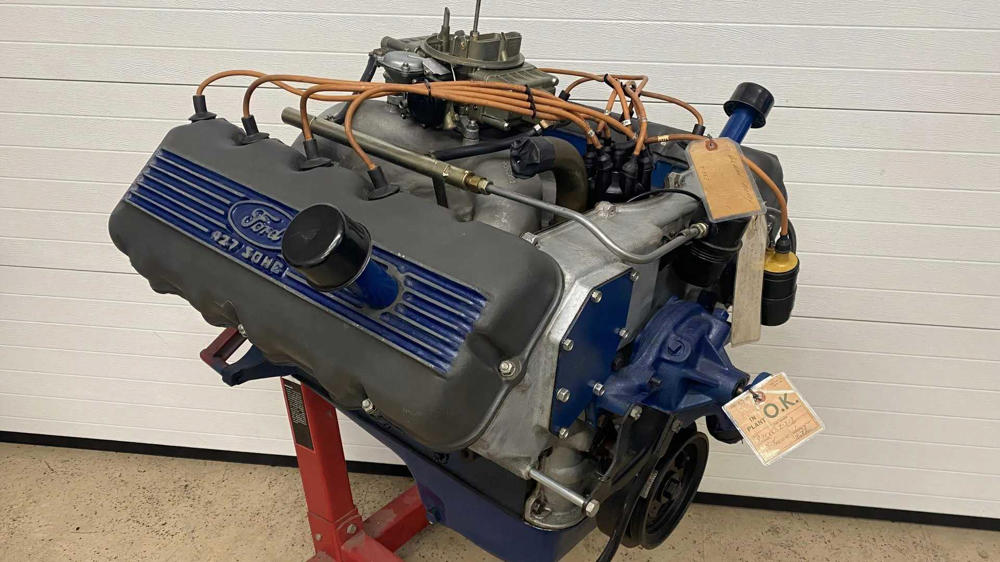
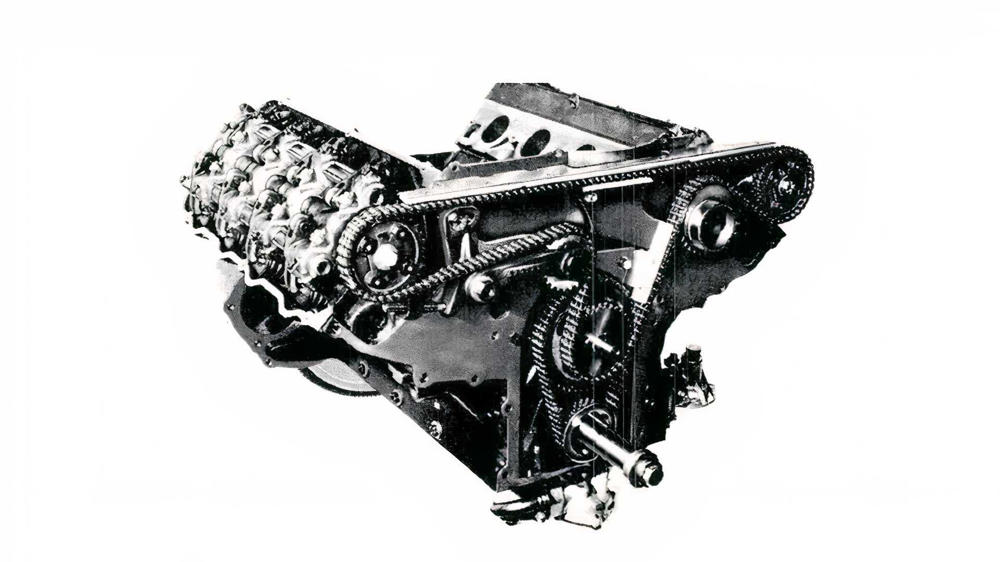
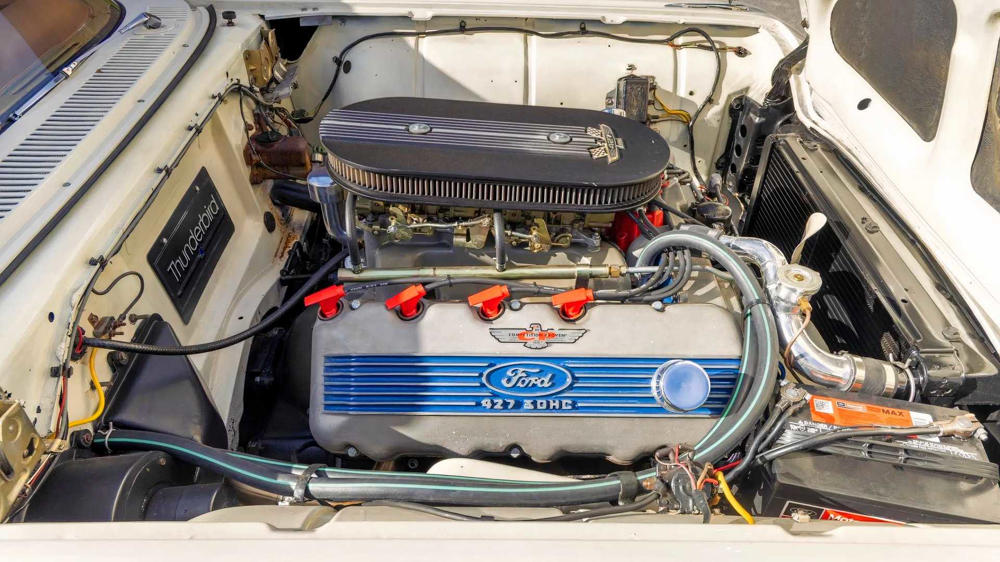
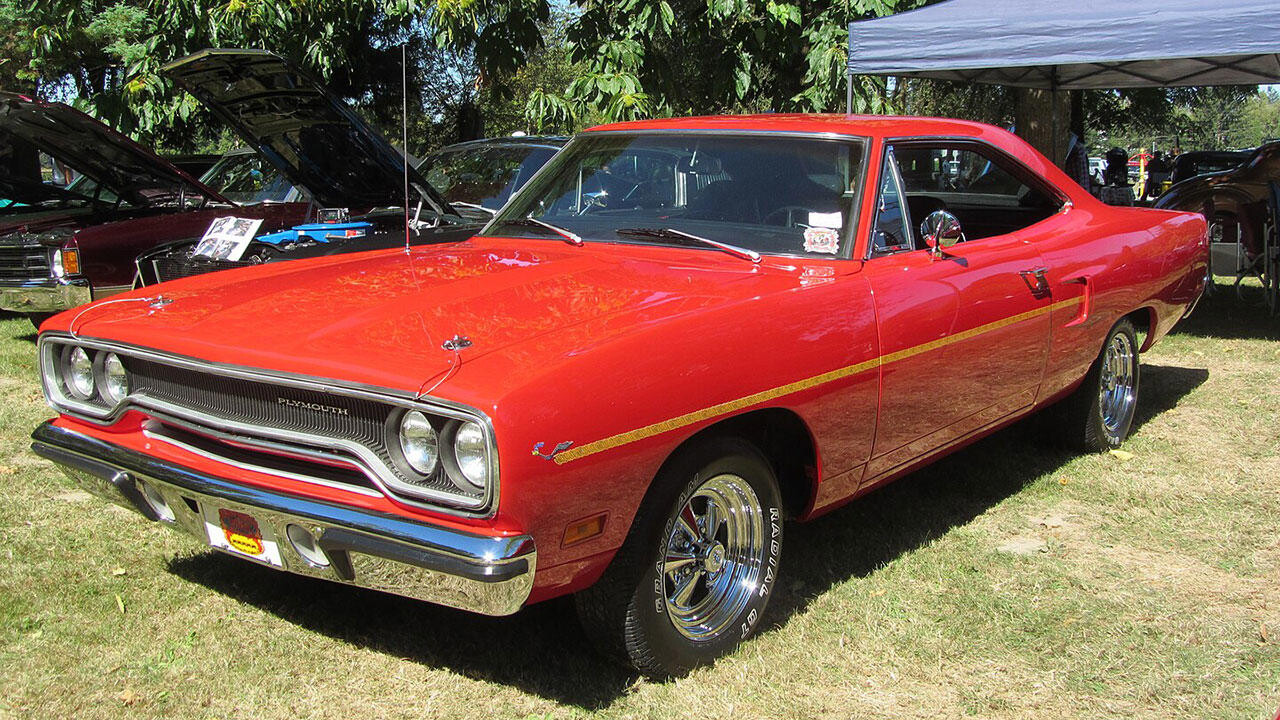
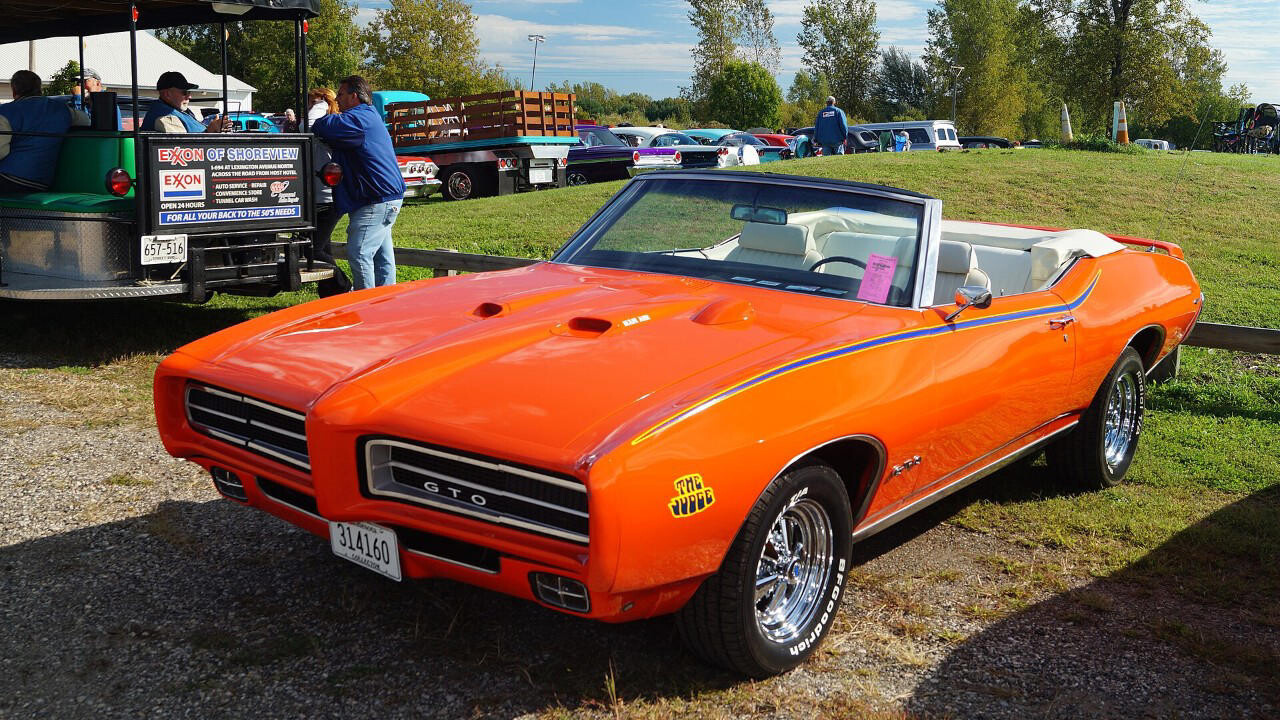
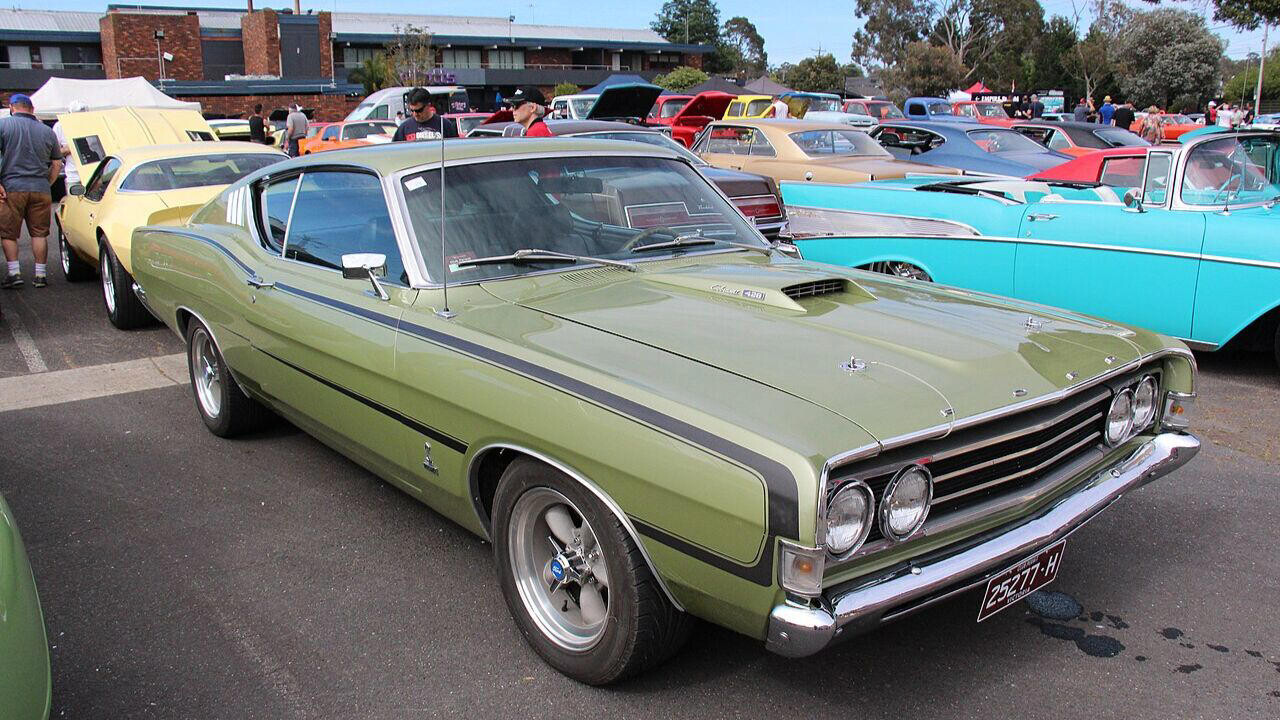
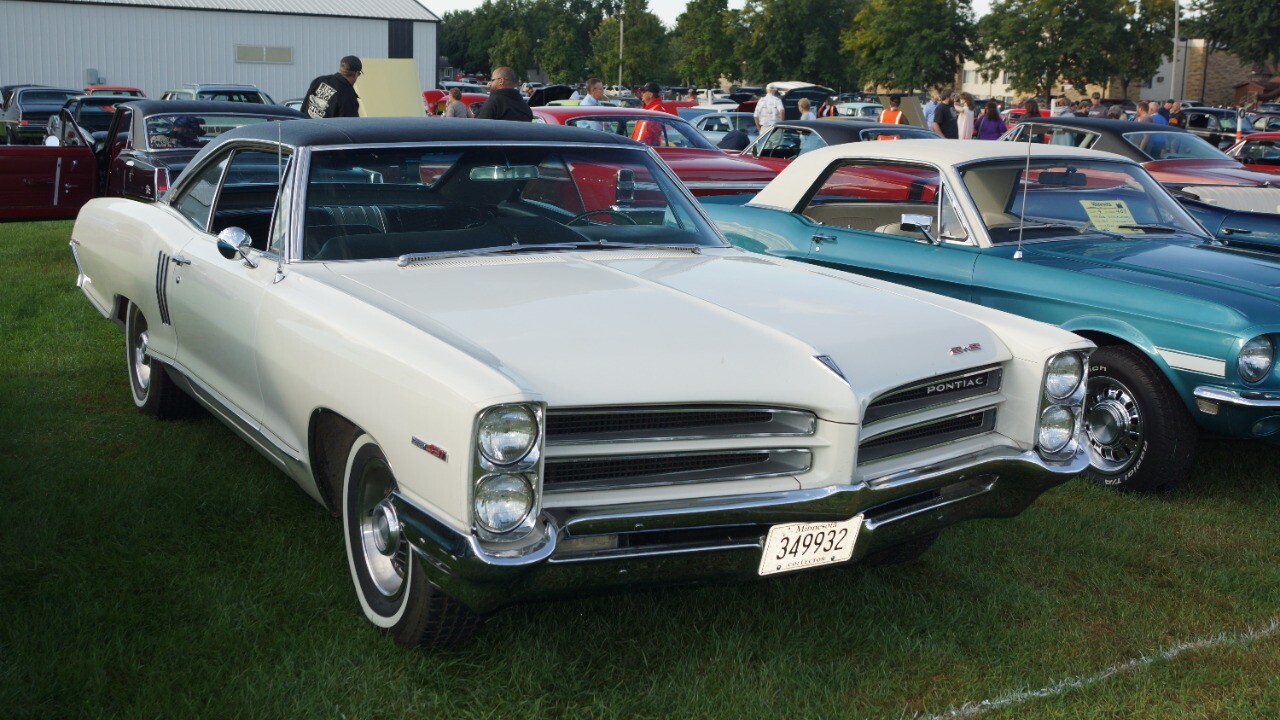
Chrysler’s 426 Hemi V8 was so dominant in 1964 that NASCAR changed its rules for the next season. Ford’s answer, a single-overhead-cam 427, never got to turn a lap in NASCAR. That tells you how close the 1960s came to legislating big-block power right out of the sport. Most of the era’s big engines escaped that fate. They went into street cars, drag cars and luxury barges, and buyers could order them from a dealer. Some carried torque figures that modern trucks would respect, and at least one was rated low on purpose. These ten are our picks for the big-block V8s that, in our view, should have been restricted. Two of them really did run into the rulebook. The rest simply made so much power that we are amazed they reached the public at all. 1. Chrysler 426 Hemi V8 The Hemi earned the nickname “elephant engine” for its size, weight and output. Hemi-powered cars took the top four places in the 1964 Daytona 500, according to SlashGear’s history of the engine. Because the race engine was not offered in showroom cars, NASCAR shut that door for 1965, and Chrysler sat out the season. The fix was the 1966 Street 426 Hemi V8. Chrysler cut compression from the race engine’s 12.5:1 to 10.25:1, switched to iron heads and tamed the cam. Even then, it carried a rating of 425 horsepower and 490 lb-ft. In total, 10,904 Hemis went into Chrysler Corporation cars through 1971, SlashGear reports. Our take: the 426 Hemi V8 is the one engine on this list that a sanctioning body actually reined in. For the full story, read how the Hemi became Chrysler’s greatest performance achievement. If you shop for one today, insist on documentation, since the option added real money even when new. 2. Chrysler 440 Six Pack V8 The 440 Six Pack was Chrysler’s way of selling Hemi-level torque without the Hemi. It used three Holley two-barrel carburetors on top of a 440 wedge. Dodge called it the 440 Six Pack, while Plymouth badged it 440 6-BBL. Chrysler rated the engine at 390 horsepower at 4,700 rpm and 490 lb-ft at 3,200 rpm. That torque figure matched the Street Hemi’s, yet the 440 delivered it lower in the rev range. As a result, the engine felt brutal off the line in street driving. It ran from 1969 through 1971, when the rating slipped to 385 horsepower. The Six Pack went into cars such as the Super Bee, Road Runner and GTX. In our view, it was the real-world hero of the Mopar lineup, because it offered Hemi-level torque from a simpler wedge engine. If you find one, check that the original three-carburetor intake is in place. 3. Chrysler 413 Super Stock V8 Before the Hemi returned, Chrysler fought on drag strips with the wedge-head 413. The RB engine first appeared for 1959, and the Chrysler 300E version with dual four-barrels made 380 horsepower. Then Chrysler built a special “Max Wedge” 413 for 1962, rated at 420 horsepower at 5,000 rpm. Chrysler aimed that engine squarely at drag racing, and it went into Plymouth and Dodge sedans for the Super Stock classes. The idea was simple: put the biggest engine in a full-size family body and go. In fact, the 413 also appeared in the Plymouth Fury line, which most buyers saw as a family cruiser. Our take: the 413 Super Stock was a factory race engine in a family-sedan body, and we think that alone made it a candidate for limits. It also paved the way for the 426 Max Wedge that followed in 1963. Today, a documented 1962 Super Stock car is one of the most interesting Mopars you could find at a show. 4. Ford 427 SOHC “Cammer” V8 Ford built the 427 SOHC to beat the Hemi in NASCAR. However, it never got the chance. Bill France rejected Ford’s request to approve the engine in February 1964, and NASCAR moved in October 1964 to ban special racing engines for 1965, as Mac’s Motor City Garage explains. By April 1966, NASCAR allowed it only in a heavy Galaxie with one small carburetor, so Ford walked away. Instead, the Cammer went drag racing. Ford rated it at 616 horsepower with one four-barrel and 657 horsepower with two. It powered A/FX Mustangs and became the base for supercharged Top Fuel dragsters. For example, Connie Kalitta’s “Bounty Hunter” took Top Fuel honors at three major winter meets in 1967. In our view, the Cammer is the clearest case of an engine that was too much for its intended series. Ford even sold complete engines in the crate, and one supplier listed them for $2,300. In the end, the supercharged Top Fuel versions show where all that power went. 5. Ford Boss 429 V8 Ford designed the Boss 429 to compete with the 426 Hemi on NASCAR superspeedways. It used a “semi-hemi” head design, aluminum heads, an aluminum intake and a stiffened block. To make it legal, Ford installed it in the 1969 Boss 429 Mustang, which ran through 1970. The plan worked on track. The engine took 26 wins in 1969, and Ford then scaled back its factory support. Meanwhile, the only street cars to carry it were the Boss 429 Mustang and the Mercury Cyclone Spoiler II. Our take: the Boss 429 was a race engine wearing a pony-car disguise. We covered why the 1969 Boss 429 existed mainly to qualify an engine for NASCAR. Because of that purpose, Ford built the car only for 1969 and 1970. If you buy one, expect parts prices that reflect a homologation special, not a regular Mustang. 6. Ford 427 FE V8 The 427 FE arrived in 1963 with a top-oiling block, and Ford switched to a side-oiler design in 1965. From 1965 to 1967, the dual-quad version carried a rating of 425 horsepower at 6,000 rpm and 480 lb-ft. The record speaks for itself. Side-oiler-powered GT40 Mk IIs finished first, second and third at Le Mans in 1966. A year later, Mario Andretti won the Daytona 500 in a Fairlane. Ford also built R-code Fairlane 500s with a high-riser dual-quad setup and 13.6:1 compression. In our view, a 427 Fairlane was about as close to a race car as a mid-size Ford ever got. That is why we think it belongs here. Today, look for a documented car with its original engine, because a factory 427 Fairlane commands a real premium. 7. Chevrolet 454 Turbo-Jet V8 Chevrolet introduced the 454 for 1970 with a 4.25-inch bore and a 4.00-inch stroke. The LS5 version made 390 horsepower and 500 lb-ft. Then came the LS6, with a single 800-cfm Holley carburetor and a rating of 450 horsepower at 5,600 rpm. That LS6 rating is famous, and it is also a little murky. Chevrolet advertised 450 horsepower briefly, and people still debate whether the figure was gross output or a marketing slip. Either way, the 454 went into the Chevelle and Monte Carlo from 1970 through 1975, so buyers could get big-block torque in a personal-luxury coupe. Our take: a 454 Monte Carlo SS is the gentleman’s way to own this engine. It looks formal, yet it hides a 7.4-liter V8 under the hood. For 1971, the LS6 dropped to 425 horsepower, which makes the 1970 cars the high-water mark. 8. Chevrolet 409 V8 The 409 was Chevrolet’s top regular-production engine from 1961 to 1965. It launched on December 17, 1960, with the Impala SS, and the first version made 360 horsepower with one carburetor. For 1962, Chevrolet raised that to 380 horsepower. Then came the dual-quad 409, rated at 409 horsepower, or about one horsepower per cubic inch. That version inspired the Beach Boys song “409.” By 1963, the hottest version reached 425 horsepower at 6,000 rpm with 11:1 compression and solid lifters. It also shared its W-series head layout with the 427 that followed. In our view, the 409 deserves a spot because it brought racing-grade output to the family Impala. It was a W-series design with its combustion chamber in the cylinder, not the head, which makes it unlike most V8s. If you buy a 409 car, confirm the engine codes before you pay a 409 premium. 9. Buick 455 Stage 1 big-block V8 Buick’s 455 made its name with torque. The regular 455 carried a rating of 510 lb-ft at just 2,800 rpm. The Stage 1 version added a hotter cam and 10.5:1 compression, according to Street Muscle’s look at the 1970 GSX. Its rating was 360 horsepower at 4,600 rpm. Buick kept that horsepower figure modest on purpose. The factory rated the Stage 1 at only ten more horsepower than the standard engine, with no added torque, for insurance reasons. Of the 678 GSX models built for 1970, 479 had the Stage 1, Street Muscle reports. The 455 also weighed about 150 pounds less than a Chevrolet 454. Our take: a big-block that was lighter than its rival and underrated on paper is exactly the kind of engine that should have raised eyebrows. Read about the Stage 1 455 and its hidden horsepower for more. GM cut compression for 1971, so the 1970 Gran Sport is the one to find. 10. Oldsmobile Rocket 455 V8 Oldsmobile created the 455 for 1968 by stretching the stroke of its 425 to 4.25 inches. The bore stayed at 4.126 inches. Because the engine sat on a tall 10.625-inch deck, it had room for that long stroke. Output ranged from 275 to 400 horsepower, depending on the car. In the 1968 to 1970 Toronado, the engine made 375 horsepower, and the Toronado GT version reached 400. Oldsmobile also put the 455 in full-size cars such as the 88, plus the 4-4-2, Cutlass and Hurst/Olds. In our view, a 400-horsepower luxury coupe was a wild idea, and the Rocket 455 made it real. The engine also outlived the muscle era. Oldsmobile ended regular production in 1976, but it kept building small numbers through 1978 for motorhomes, boats and irrigation equipment.

 Liked by Daniel Walker, Daniel White


 Liked by Daniel Walker, Daniel White