For thousands of autoworkers in Brampton, the uncertainty surrounding their jobs has stretched into another year, with no clear indication of when vehicle production might return. Now, Ontario Premier Doug Ford is refusing to commit additional taxpayer money to Stellantis unless the automaker demonstrates that thousands of jobs can be restored.
Ford’s position comes as his own economic development minister, Vic Fedeli, suggests financial support remains available to keep the facility operational. The disagreement has intensified following Stellantis’ announcement that it intends to sell the idled plant to Canadian defence manufacturer Roshel.
With Ottawa threatening legal action, union representatives demanding answers and billions of dollars in automotive funding under discussion, the dispute has become a major test of how far governments should go to protect Canadian manufacturing jobs.
Ford Declines to Promise More Money Without Guarantees on Jobs
Ontario Premier Doug Ford has made it clear that he is not prepared to immediately commit additional provincial funding to Stellantis simply to keep its Brampton assembly plant from changing hands. Speaking on November 16, Ford said he would consider financial discussions if the automaker could demonstrate that approximately 3,000 to 4,000 workers would return to employment. His comments represented a more cautious approach than the financial assistance being discussed by other government officials. Rather than offering another subsidy upfront, Ford emphasized that restoring employment must be central to any potential agreement.
However, the premier did not completely rule out further financial assistance. His position leaves room for negotiations if Stellantis presents a credible plan to bring automotive production back to Brampton. That distinction matters because the plant has remained idle since late 2023, leaving workers facing prolonged uncertainty. For Ontario taxpayers, the concern is whether additional public investment would produce meaningful employment or merely help maintain an unused facility. Ford’s remarks suggest the government wants stronger assurances before accepting additional financial exposure.
Ford’s Position Conflicts With His Own Economic Development Minister
Ford’s hesitation has highlighted a different message coming from Ontario Economic Development Minister Vic Fedeli. During question period at Queen’s Park on November 16, Fedeli argued that Stellantis should preserve the Brampton factory for future vehicle production rather than proceed with its sale. He pointed to a recently announced $2.5-billion federal-provincial automotive investment program as evidence that financial support was available. Under the two-year initiative announced in October, Ontario committed up to $1 billion, while Ottawa committed up to $1.5 billion to support automotive capital projects, including modernized production lines for connected and electrified vehicles.
Those figures, however, represent an industry-wide funding commitment rather than money specifically allocated to Stellantis. Fedeli did not identify an exact amount the company could receive or announce a finalized rescue agreement. The disagreement is therefore significant. Fedeli wants to preserve a factory that could eventually receive another vehicle production mandate, while Ford is emphasizing the need for employment guarantees before committing additional provincial money. Both positions aim to protect Canadian manufacturing, but they raise different questions about financial risk, accountability and how urgently the government should intervene.
Brampton Was Supposed to Become a Major Part of Stellantis’ Electric-Vehicle Future
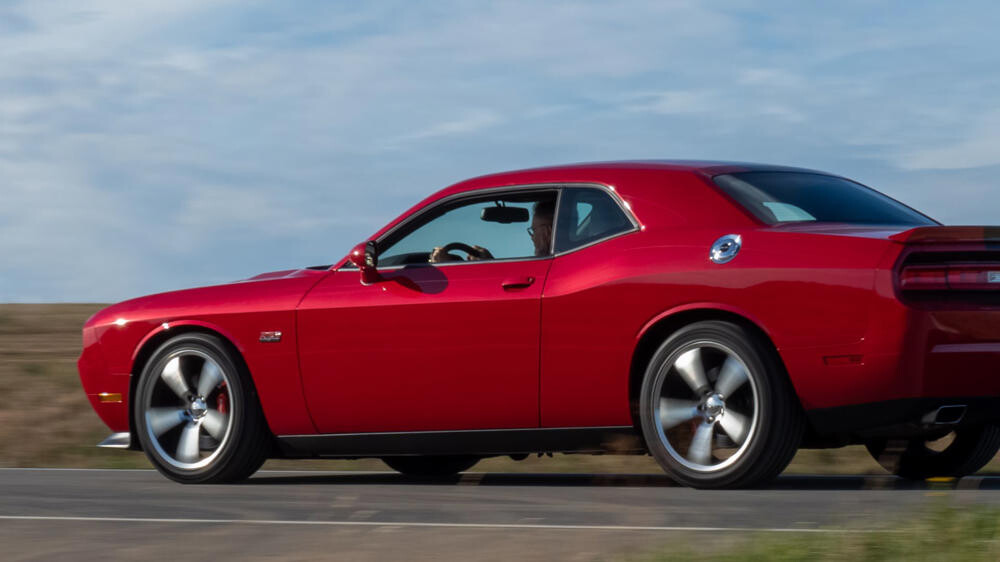
The Brampton assembly plant was once positioned as an important part of Stellantis’ electric-vehicle manufacturing strategy. In May 2022, the automaker announced a $3.6-billion investment program covering its Windsor and Brampton operations, including plans to modernize production facilities for electrified vehicles. Brampton had spent decades assembling popular Dodge and Chrysler models, including the Dodge Charger, Dodge Challenger and Chrysler 300. Production of those vehicles ended in December 2023, with workers expecting the shutdown to make way for retooling rather than permanently eliminate automotive assembly. Under its 2023 agreement with Unifor, Stellantis outlined plans for the next-generation Jeep Compass, with an estimated 2,370 secured or new jobs by 2026.
Those expectations began to unravel in February 2025, when Stellantis temporarily paused work on the new Jeep Compass program and associated factory upgrades. In October 2025, the company announced a major expansion of its American manufacturing operations, including plans to build the Jeep Compass in Belvidere, Illinois, instead of Brampton. The decision effectively removed the vehicle program around which Brampton’s reopening had been planned. What began as a temporary shutdown for modernization had become an indefinite wait for a replacement product. For workers who expected to return to a revitalized factory, the reversal was particularly difficult because their employment future had been tied to a publicly celebrated investment.
Stellantis’ Agreement to Sell the Plant to Roshel Changes the Entire Debate
The dispute intensified on November 9, 2026, when Stellantis and Canadian defence manufacturer Roshel announced an agreement to sell the Brampton assembly plant and associated equipment. The purchase price was not disclosed, and the transaction is expected to close before the end of 2026, subject to applicable conditions and regulatory requirements. Stellantis presented the agreement as an opportunity to return the idle property to productive industrial use. Roshel, which manufactures armoured vehicles, outlined plans for an advanced-manufacturing operation and potential collaboration with Stellantis in the defence industry. However, the announcement did not establish a replacement automotive production program equivalent to the plant’s former operations.
Roshel’s chief executive also indicated that the company was exploring opportunities to manufacture civilian vehicles with other automakers. While that possibility suggests the site could eventually support more than defence-related production, it does not guarantee the restoration of Stellantis’ former workforce. Roshel has said displaced employees would receive priority consideration for future hiring, but the company does not intend to assume Stellantis’ previous employment commitments. That distinction is fundamental to the controversy. A successful defence manufacturing operation could generate new jobs in Brampton without necessarily replacing the number, compensation, benefits or employment protections associated with the original automotive facility.
More Than 2,000 Laid-Off Workers Remain at the Centre of the Fight
The economic consequences of the uncertainty are especially serious for approximately 2,200 Unifor Local 1285 members who have remained on layoff since Brampton stopped assembling vehicles in December 2023. For these workers, the plant’s future is not simply a disagreement between politicians and corporate executives. It affects household budgets, retirement planning and the possibility of returning to careers built around automotive manufacturing. On November 16, Ontario NDP Leader Marit Stiles described meeting a Brampton employee who had worked on retooling the facility, highlighting how workers involved in preparing its next chapter now face an uncertain future themselves.
The dispute has also complicated collective bargaining across Stellantis’ Canadian operations. Unifor entered negotiations in September 2026 on behalf of more than 9,000 workers, but discussions reached an impasse over job security and other unresolved issues, including Brampton’s future. In October, 97.3 per cent of participating members voted to authorize strike action if necessary, although the union said it was not immediately in a legal strike position. Union leaders have maintained that preserving automotive jobs and securing fair employment protections must remain central to any settlement. For affected families, merely replacing the factory’s ownership would not necessarily deliver the security they were originally promised.
The Taxpayer Funding Dispute Is More Complicated Than the Original Promises
One of the biggest questions surrounding the Stellantis dispute is how much public money has actually reached the automaker. In 2022, Ottawa announced up to $529 million in federal support for Stellantis’ Brampton and Windsor retooling projects, while Ontario committed up to $513 million toward manufacturing and research upgrades. Of Ontario’s original commitment, up to $132 million was specifically allocated to Brampton. However, an announced funding commitment does not necessarily mean the money has been paid. Provincial officials maintain that Stellantis has received no provincial funding for the Brampton project, although approximately $55.4 million was paid toward work at its Windsor facility between 2022 and 2025.
Federal records reveal another important distinction. According to an Industry Canada briefing, approximately $222.4 million had been disbursed under the broader Brampton-Windsor agreement as of March 31, 2025, with subsequent payments suspended following the company’s decision to relocate Jeep production. Stellantis has offered to return $24 million, which it identifies as federal assistance received specifically for Brampton’s original retooling. Ottawa maintains that the company’s broader contractual obligations could involve substantially more money. These differences matter because the financial dispute involves several separate figures: promised funding, money already distributed and the amount governments believe Stellantis may be required to repay.
Ottawa Threatens Legal Action as Stellantis Faces a 30-Day Deadline
While Ford remains cautious about additional provincial subsidies, the federal government has adopted an increasingly confrontational approach toward Stellantis. On November 12, Industry Minister Mélanie Joly issued a formal notice alleging breaches of the automaker’s 2022 federal funding agreement. According to the government’s position, Stellantis failed to honour its commitments by abandoning the planned Jeep Compass program, failing to identify a replacement vehicle, maintaining no production at Brampton and moving toward closure of the facility. The company was given 30 days to demonstrate that it would address the alleged violations, with potential consequences including termination of the funding agreement and demands to repay public assistance.
Joly has indicated that Ottawa is prepared to pursue legal action if Stellantis does not meet its obligations. The federal government argues that the company’s commitments involving Brampton are connected to its wider manufacturing investments, including operations in Windsor and related battery production. As a result, Joly maintains that hundreds of millions of dollars could be at stake, substantially more than Stellantis’ $24-million repayment offer. That larger amount remains the government’s position in an unresolved contractual dispute, not a court-ordered repayment. The confrontation creates a complicated negotiating environment: Ottawa is attempting to persuade Stellantis to preserve automotive production in Brampton while simultaneously warning that abandoning its commitments could trigger significant financial consequences.
Trump’s Auto Tariffs Have Made the Brampton Dispute Even More Difficult
The uncertainty surrounding Brampton cannot be separated from the broader trade tensions affecting North America’s automotive industry. Since April 2025, U.S. tariffs have applied to the non-American content of Canadian-built vehicles that qualify under the Canada-United States-Mexico Agreement, with different treatment for vehicles that do not meet its rules. Federal government data shows that more than 90 per cent of Canadian-made vehicles are exported to the United States, leaving manufacturers highly exposed to American trade policy. Stellantis’ October 2025 announcement of a US$13-billion expansion across its American operations included more than US$600 million to reopen its Belvidere, Illinois, factory for Jeep production.
The shift demonstrates how rapidly manufacturing decisions can change when companies reassess tariffs, production costs and access to major markets. However, the commercial pressures facing Stellantis do not automatically eliminate its commitments to Canadian workers or governments. Ottawa has already reduced Stellantis’ annual tariff-remission quota by 50 per cent following the company’s decision to move Jeep Compass production away from Brampton. That measure limits a trade benefit previously available to the automaker. For Ontario, the challenge extends beyond one factory. Governments must determine whether additional incentives can genuinely protect domestic manufacturing when automakers are simultaneously responding to powerful financial and political pressures to expand production in the United States.
The Next Negotiations Could Determine Whether Brampton Builds Cars Again
Despite the increasingly public disagreement, the future of the Brampton assembly plant has not been conclusively settled. On November 13, Joly said the federal and Ontario governments, working with Unifor, had developed an aggressive package and alternative proposals intended to persuade Stellantis to reconsider the sale. Fedeli has argued that keeping the facility maintained and ready for another vehicle program could create an opportunity for production to return. Officials plan to present their proposals directly to Stellantis global CEO Antonio Filosa. However, no specific financial offer, replacement vehicle mandate or firm commitment to rehire the former workforce has been publicly established.
Time is becoming an increasingly important factor. Stellantis and Roshel expect their transaction to close by the end of 2026, subject to the agreement’s conditions, while Ottawa’s 30-day notice has introduced a separate deadline for addressing the alleged funding breaches. Any resolution must also satisfy difficult questions surrounding workers’ rights, employment guarantees and the future of automotive manufacturing in Brampton. Ford’s refusal to immediately commit additional taxpayer money does not eliminate the possibility of provincial assistance, but it makes clear that employment outcomes will be central to his government’s position. For thousands of affected workers, the real measure of success will be whether these negotiations produce secure jobs and a credible manufacturing future rather than another round of uncertain promises.