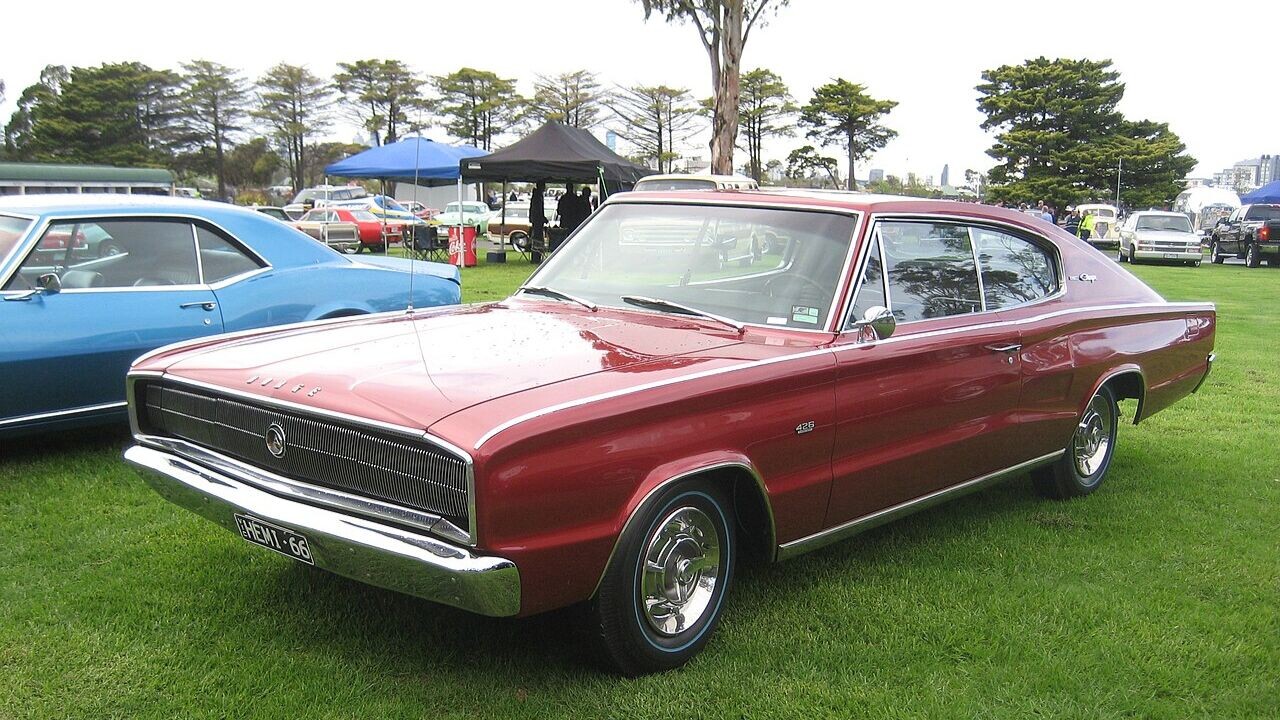
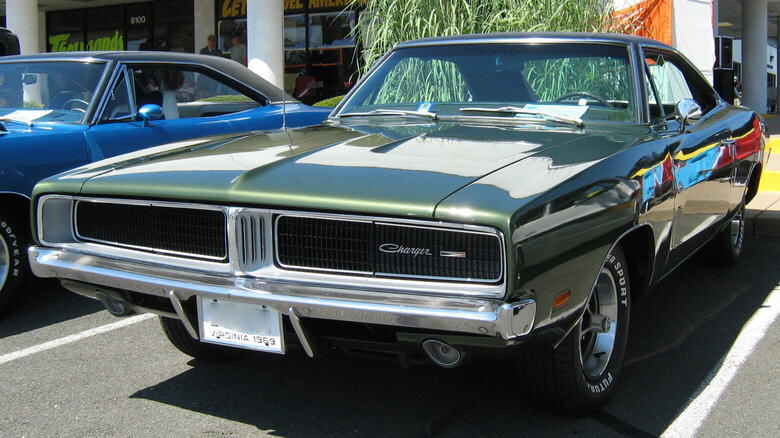
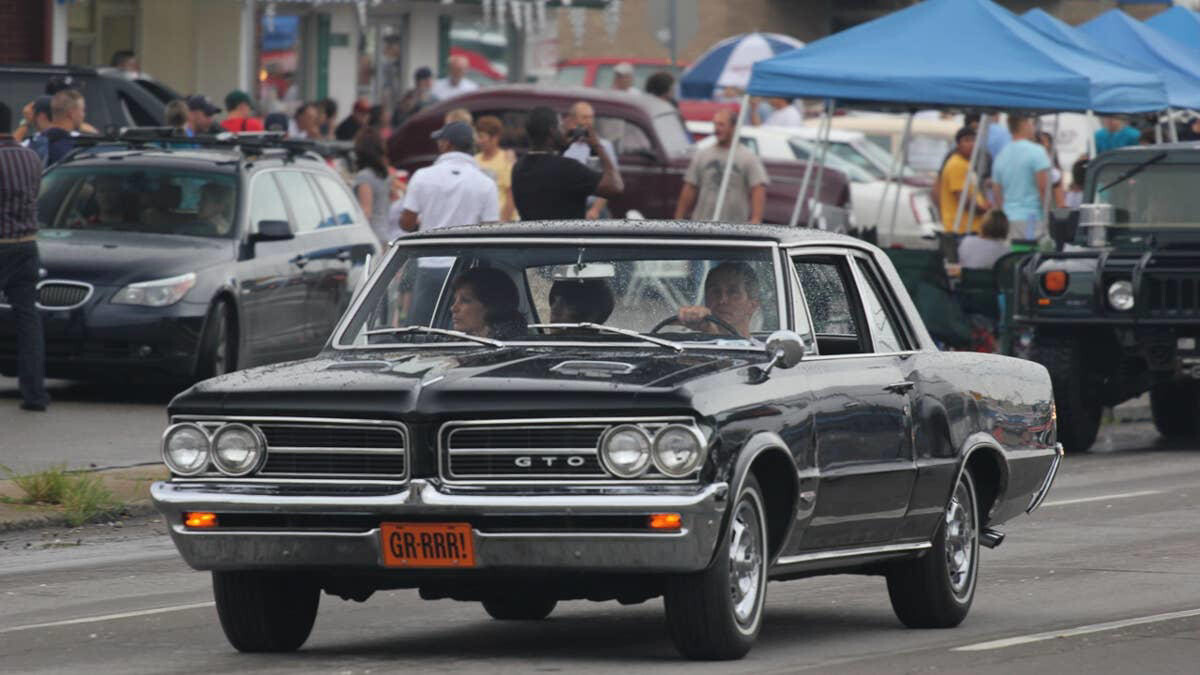
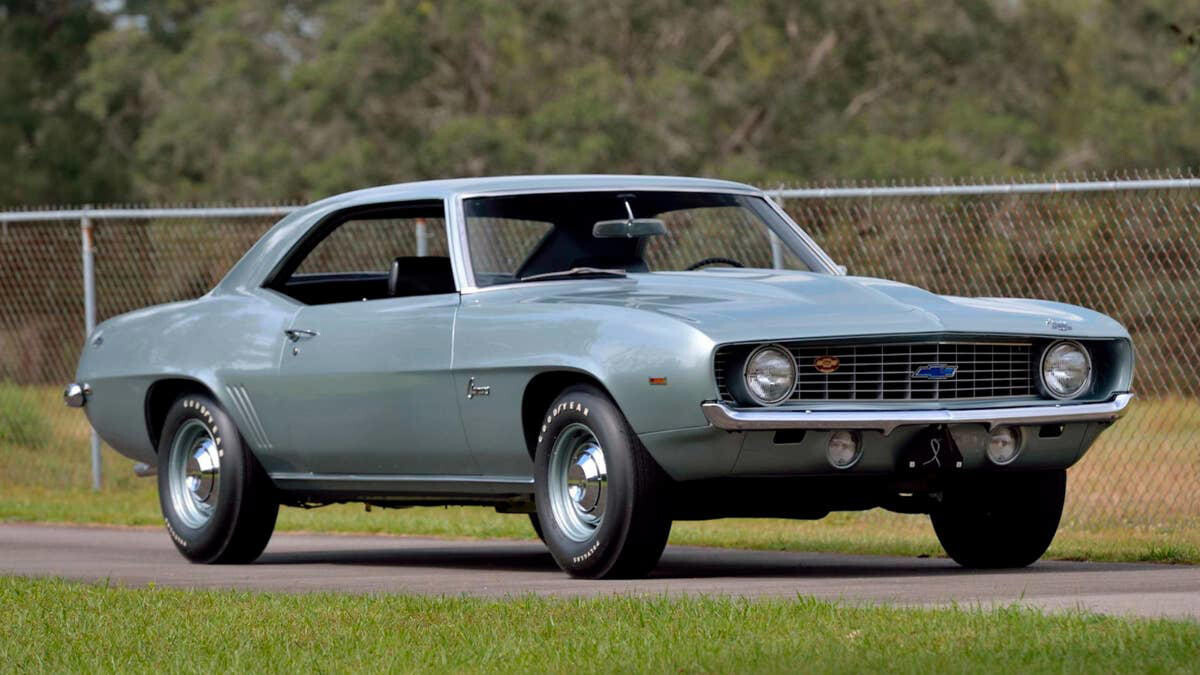
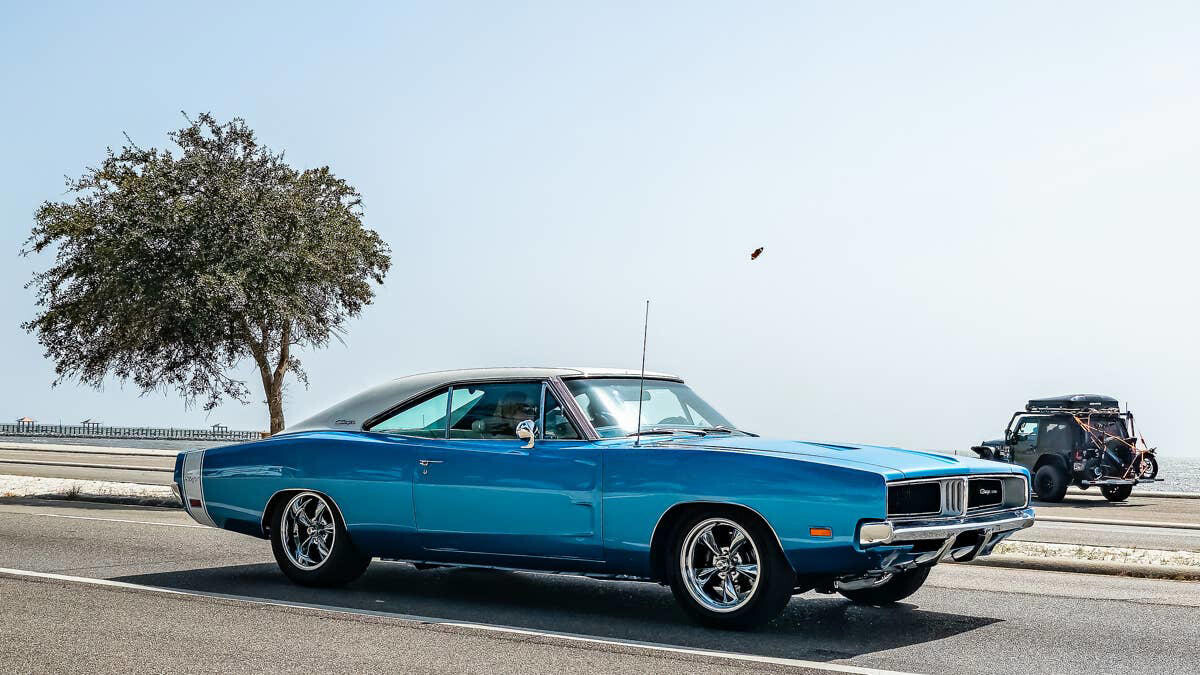
Ford rated the 428 Cobra Jet at 335 horsepower in 1968, and many people believed the real figure was higher. That modest number on paper and the brutal pull on the street sum up the late-1960s fastback. Sloping rooflines looked fast standing still, and the engines underneath often made them faster than their ratings suggested. Detroit built these cars for the street, but many of them ended up at the drag strip on weekends. Some came with drag-ready axle ratios and functional hood scoops from the factory. Others carried big-block engines in bodies that were never really meant for that much torque. These are our picks: twelve fastbacks that, in our view, felt almost too wild for the strip. The ratings and production figures come from the records, while the verdicts are our opinion. If you have ever wanted to own one, we also tell you what to look for. 1. 1969 Ford Mustang Mach 1 428 Cobra Jet The Mach 1 package arrived in August 1968 as a 1969 option, and it went straight for the top of the Mustang range. Buyers could start with a 351 Windsor, but the 428 Cobra Jet sat at the top of the list. Ford rated the Cobra Jet and Super Cobra Jet at 335 hp and 440 lb-ft of torque, with or without Ram Air. However, here is a detail many people miss. The standard Mach 1 hood scoop did nothing. If you wanted cold air going into the engine, you ordered the optional, functional “shaker” scoop. Meanwhile, buyers clearly loved the package. Ford sold about 72,458 Mach 1s for 1969, compared with only 5,396 Mustang GTs, and the GT disappeared after that year. Our take: the 1969 Mach 1 428 Cobra Jet is the one most people picture when they hear “Mach 1.” It had the looks, the stripes and a big-block that did not need a fancy rating. If you shop for one, verify the engine code first. A true Cobra Jet car carries far more value than a Mach 1 with a smaller V8. 2. 1963 Chevrolet Corvette Sting Ray Z06 The split rear window lasted only one year, 1963, and the Z06 package was even rarer. Zora Arkus-Duntov conceived it as a race-ready option, and Chevrolet built 199 original Z06 cars that year. The package cost $1,818.45 on top of the coupe price. For that money, you got the 327-cubic-inch L84 V8 with Rochester fuel injection, rated at 360 hp. The rest of the package was pure racing hardware. It added a larger front anti-roll bar, a dual master cylinder, sintered-metallic brake linings and power-assisted Al-Fin drums with front air scoops. Springs and shocks were nearly twice as stiff as standard. There was even a “Big Tank” option, which swapped the 20-gallon tank for a 36.5-gallon one built for endurance racing. Underneath, the 1963 car also introduced independent rear suspension derived from Duntov’s CERV I concept. That helped traction compared with the old live axle. In our view, the Z06 split-window is the wildest fastback Chevrolet sold that decade. Be careful as a buyer, though. With only 199 built, documentation matters more than paint. 3. 1966 Dodge Charger 426 Hemi Dodge introduced the Charger to America during the Rose Bowl broadcast on January 1, 1966. It was a fastback built on the Coronet chassis, billed as the “Leader of the Dodge Rebellion.” Inside, four individual bucket seats ran alongside a full-length console. The rear seats folded forward, so you could carry long cargo in a car that looked built for speed. The engine list topped out with the 426 Street Hemi, and only 468 Chargers got one in 1966. By comparison, Dodge built 37,344 Chargers that year in total. The dash also stood out. Electroluminescent lighting lit the gauges, needles and console shifter indicator, while electric motors rotated the headlights out of the grille. The Charger also went racing. David Pearson won the 1966 Grand National championship for Dodge, though only one of his 15 wins came in a Charger. Our take: a 1966 Hemi Charger feels like a luxury car with a race engine bolted inside. If one comes up for sale, a Mopar specialist should confirm it really left the factory with a Hemi. 4. 1968 Ford Torino GT fastback Ford added a new fastback body, called the SportsRoof, to its midsize line for 1968. The Torino GT was offered in it, and the long roof gave the car a much faster look than the regular Fairlane. That year, Torino was the upscale subseries of the Fairlane line. In fact, Ford built 172,083 Torinos for 1968. The big news arrived on April 1, 1968. That day, Ford made the 428 Cobra Jet an option. Because it arrived so late in the model year, a 1968 Torino GT with the Cobra Jet is very rare. Ford rated the engine at 335 hp, though it is generally believed to have made more. A 1968 Torino GT convertible also paced the Indianapolis 500 that year. In our view, the 1968 Torino GT SportsRoof is the most overlooked fastback on this list. It had the body for the job, and late in the year it got the engine. If you buy one, check the paperwork closely. A genuine Cobra Jet Torino and a Torino with a swapped-in 428 are very different purchases. 5. 1968 Ford Mustang Cobra Jet fastback Bob Tasca of Tasca Ford had the idea, and customer demand pushed it into production. Ford began factory-installing the 428 Cobra Jet in Mustangs in April 1968. It rated the engine at 335 hp and 440 lb-ft of torque at 3,400 rpm. However, many people believe that power figure was underreported. The Cobra Jet Mustang went racing right away. According to the Martin Auto Museum, it dominated the Super Stock class at the 1968 NHRA Winter Nationals. The museum also notes that Ford built 1,299 non-Shelby, first-year Cobra Jet Mustangs, and most came from Dearborn. Only 171 were assembled in San Jose. Our take: this is the car that turned the Mustang from a pony car into a real drag-strip weapon. Because its value is so high, if you shop for one, insist on an R-code VIN and solid documentation before you talk price. 6. 1968 Shelby Mustang GT500 KR Shelby added two letters to the GT500 in 1968. KR stood for “King of the Road,” and the name came with the new 428 Cobra Jet. Shelby left the engine stock, apart from die-cast aluminum valve covers. That year, Ford also took over building Shelby Mustangs in Ionia, Michigan, after Shelby American had built them from 1965 to 1967. Ford’s rating for the Cobra Jet stayed at 335 hp and 440 lb-ft. Still, the KR was more than a Mustang with a big engine. It brought Shelby’s styling, a sharper image and the “King of the Road” badge, which proved so strong that Ford revived it decades later. The 2008–09 GT500KR ran to 1,571 cars, matching the production of the original 1968 GT500 KR. In our view, the KR is the Shelby to have if you care more about torque than corners. It is the best-known badge on this list, and prices reflect that. Our advice: buy the car, the paperwork and the registry listing together. A KR without its history is a much harder sell. 7. 1969 Ford Torino Cobra fastback For 1969, Ford stopped making the Cobra Jet an option on its midsize Cobra. Instead, the 428-4V Cobra Jet came standard. Ford advertised it at 335 hp, and Ram Air did not change that rating. However, Ram Air cars got a functional hood scoop, which mattered at the strip. The naming is a little messy. Ford marketed the car simply as “Cobra,” with no Torino or Fairlane script on the body. Some literature calls it the Torino Cobra, while other sources call it the Fairlane Cobra because it shared a body code with the Fairlane 500. Ford never reported a separate Cobra production figure. Total 1969 Torino production came to 129,054 cars, including 81,822 GTs. Our take: the 1969 Cobra was Ford’s no-nonsense midsize muscle car. It put the big engine in as standard and skipped the frills. If you want one, check for the Ram Air scoop and matching paperwork. Also, do not confuse it with the Torino Talladega, a separate NASCAR special built in only 743 examples. 8. 1969 Mercury Cyclone CJ Mercury made the Cyclone its own nameplate in 1968. Then, for 1969, the CJ version arrived with Ford’s 428 Cobra Jet, rated at 335 hp. Mercury built only 3,261 Cyclone CJs that year, out of 9,143 Cyclones in total. The other 5,882 were base Cyclones. Also, the CJ looked the part. It had a blacked-out grille, dual exhausts, hood stripes and a chrome engine dress-up kit. Underneath, Mercury fitted a 3.50:1 rear axle and a competition handling package. The Ram Air option also added a 735-cfm Holley four-barrel carburetor, which tells you exactly where the engineers expected these cars to be driven. In our view, the Cyclone CJ is the Cobra Jet fastback for people who want to stand out from the Ford crowd. It shares the heart of the Torino Cobra but wears a different badge and a rarer production count. If you buy one, confirm the CJ equipment, because Mercury later used the CJ name only on engines. 9. 1971 Ford Mustang Mach 1 429 By 1971, the Mustang’s biggest engine had grown. The 1971 Mach 1 could be ordered with the 429 Cobra Jet, rated at 370 hp. Above it sat the 429 Super Cobra Jet with Ram Air, rated at 375 hp. Both made 450 lb-ft of torque, which was more than any Mach 1 before it. The range below was wide, too. Buyers could choose a 302 Windsor, several 351 Cleveland versions, or the big 429s. Late in 1971, Ford also added a 351 Cobra Jet with Ram Air, rated at 285 hp. That spread meant a 1971 Mach 1 could be a comfortable cruiser or a seriously heavy hitter, depending on the order form. Our take: the 1971 Mach 1 429 was the high-water mark for big-block Mustang power. That torque figure is hard to ignore. If you shop for one, verify the engine code carefully. Many 1971 Mach 1s left the factory with smaller V8s. 10. 1967 Plymouth Barracuda Formula S fastback Plymouth redesigned the Barracuda for 1967 and offered it in three body styles. Alongside a notchback coupe and a convertible, there was a fastback with a steeply raked roofline. It also had a much smaller, flush rear window than the original Barracuda. The result looked longer and leaner. The engine list started with a 225-cubic-inch slant six rated at 145 hp. Next came a 273 V8 in two- and four-barrel versions. At the top sat the 383 big-block, rated at 280 bhp, which was available only with the Formula S package. Buyers seldom ordered it, so a 383 Formula S fastback is a rare sight today. In our view, that 383 in a compact Barracuda is exactly the kind of combination this list celebrates. It was a lot of engine for a small car. If you find one, confirm the 383 is original. Then look closely at the front end for signs of hard drag-strip use. 11. 1968 AMC AMX American Motors showed the AMX to the press at Daytona International Speedway on February 15, 1968. Public sales started nine days later. The AMX was a two-seater built on the new Javelin platform, but with a shorter 97-inch wheelbase and no rear seat. The top engine was a 390-cubic-inch V8 rated at 315 hp. AMC proved its point before the car even went on sale. In January 1968, Craig Breedlove drove two specially prepared AMXs to 106 world speed and endurance records at Goodyear’s Texas test track. Meanwhile, the price was a big selling point. The AMX started at $3,245, nearly 25% below a Chevrolet Corvette. AMC built 6,725 AMXs for 1968. Our take: the AMX was the most daring fastback on this list, because American Motors aimed it squarely at the Corvette. It offered two seats and a big V8 at a much lower price than the Corvette. If you buy one, look for a 390 car with documentation, because the engine choice makes a big difference to value. 12. 1971 Ford Mustang Boss 351 The Boss 351 lasted a single model year. Its 351-cubic-inch V8 came from Ford’s Cleveland engine family and made 330 hp and 370 lb-ft of torque. Ford built only 1,806 of them. According to Jalopnik’s look at the car, Motor Trend ran the quarter mile in 13.8 seconds at 104 mph. So why did it disappear so quickly? Ford was pulling back from racing, and the Boss engines had been built for Trans Am and NASCAR. At the same time, stricter safety and emissions rules and higher insurance costs hurt muscle-car demand. Weak sales of the redesigned 1971 Mustang added to the problem. In our view, the Boss 351 was a fitting end to the Boss story, and its small production makes it a prize today. If you want one, check that the car is a genuine Boss and not a Mach 1 dressed up to look like one. With only 1,806 built, factory build records are the place to start.

 Liked by Henry Green, Ava King
 Liked by Henry Green, Ava King