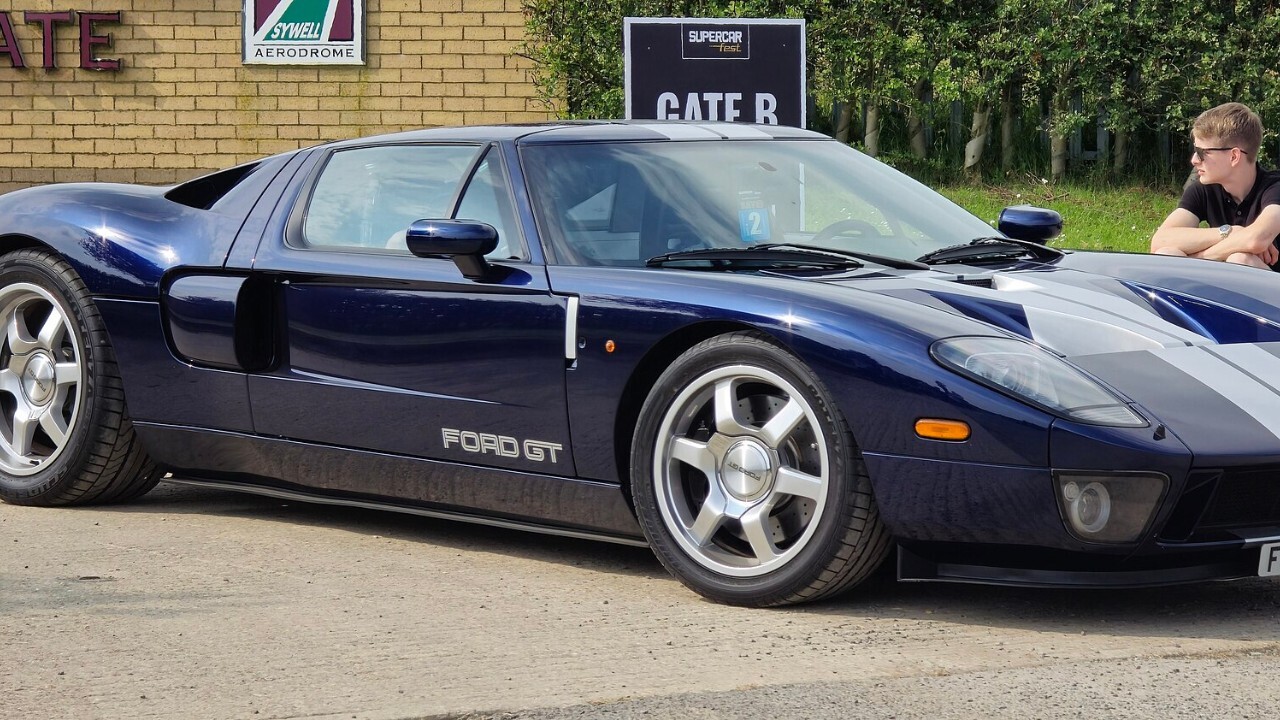
In 1963 the Ford Motor Company announced its intention of building a prototype GT sports car in order to achieve victory in the 24-Hour Le Mans endurance classic and, in the process, defeat the most dominant team, Ferrari. The senior management in Dearborn, Michigan, many of whom had never heard of Le Mans, made it clear that failure was not an option and signed off a budget designed to guarantee immediate success. As further proof of intent, it was announced that a new computer-aided design system would back-up the work of the designers and engineers, especially with regard to creating effective aerodynamic bodywork. To further short-cut the process the new race car, titled the Ford GT, was based around an existing mid-engined race car designed by Eric Broadley of Lola Cars in the UK. The project began in August 1963 and on April 1st 1964 the Ford GT was unveiled to the press who were greatly impressed by its appearance. Its sleek, modern bodywork looked capable of achieving its claimed 200mph top speed but others doubted that was possible due to the design of the front bodywork with a high-set nose that would promote front-end lift. Ford Styling Department had created three alternative nose sections but even although the team chose the lowest, it was still far too high. But Ford was determined to see the GT race at Le Mans in June so the first of two prototypes, chassis 101, was put on board an aircraft and flown to the USA to be shown to the American press and immediately flown back to England for testing. Having covered just 465 test miles it was sent to Le Mans to take part in the pre-race trials on April 18th, in company with chassis 102. Driving duties were entrusted to Jo Schlesser who immediately reported a tendency for the nose to lift at 150mph and drift across the road. After just eight laps on the wet circuit, the front end lost contact with the road and the car spun into the banking, leaving a trail of fibreglass in its wake. The photograph shows the aftermath of the accident from which Schlesser emerged, shaken but unscathed. Shortly afterwards the second GT, 102, also left the road and its driver, the experienced Roy Salvadori, was sufficiently unnerved to hand in his notice and leave the Ford GT programme immediately. The damaged GT was returned to the factory in Slough where it was stripped of parts and scrapped even though it could have been repaired but time was of the essence and it was more expedient to replace it in the test programme with chassis 103. Photocredit: McKlein Archive


 Liked by Caleb Campbell, Lucas Lavoie





 Liked by Caleb Campbell, Lucas Lavoie