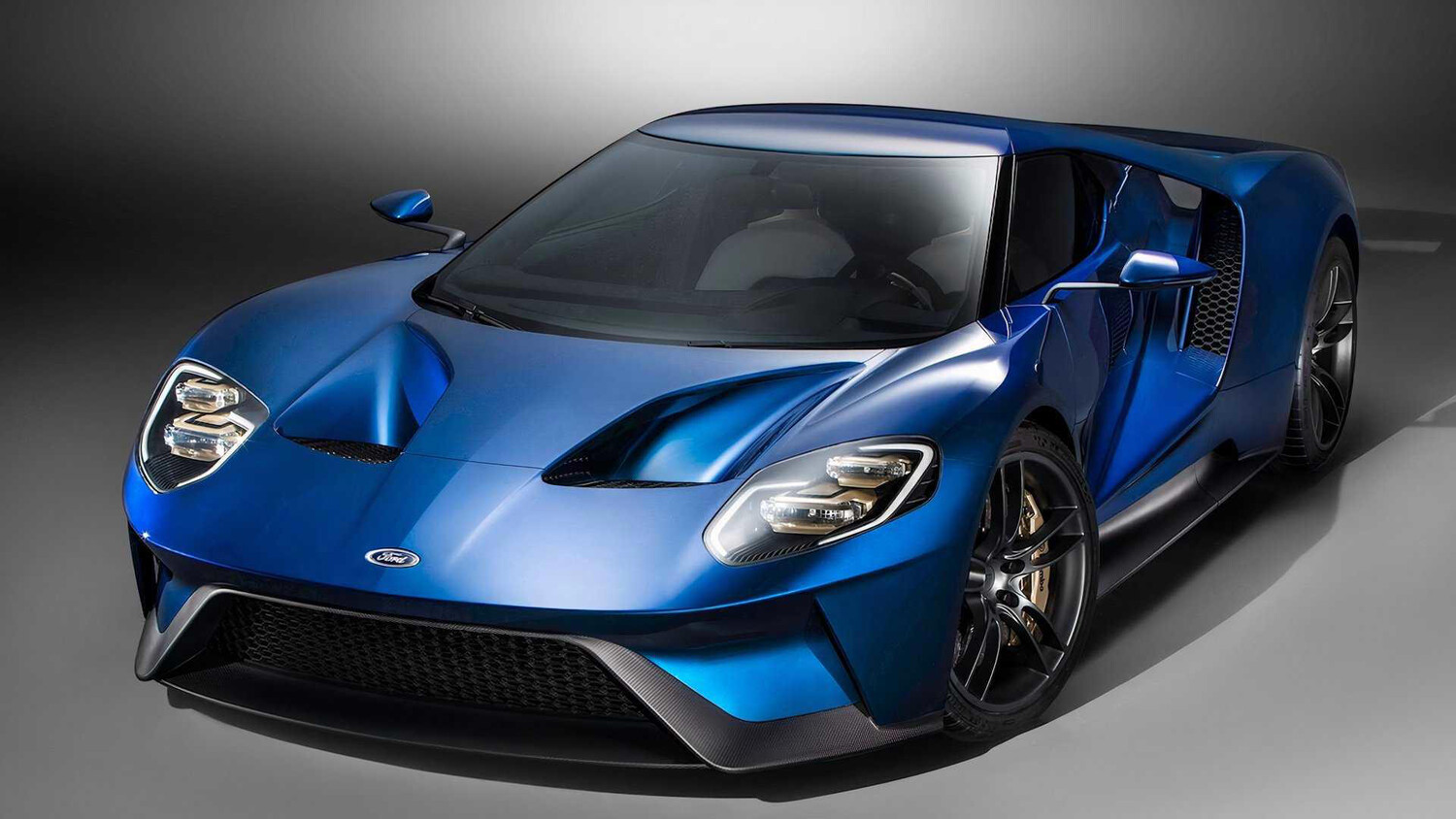
Without Ford Racing, there might not be a Ford Motor Co. That's the main message Ford wants to drive home as it tells the company's story through some of its most iconic cars — known as its heritage fleet — in Ford's history, at the new Ford Vault in Romulus. The automaker had kept much of its heritage fleet in a garage tucked away inside former World Headquarters called The Glass House on Michigan Avenue. But the company moved its World Headquarters to a new campus on Oakwood Boulevard late last year. Now, the heritage fleet has been relocated, too. It has a permanent home inside a 79,000-square-foot former Amazon warehouse. The Ford Vault houses some of the company's most historic and iconic cars that helped build Ford the company it is today. Ford is now just opening the Ford Vault to employees and select groups. "This isn't a museum. It is a Ford experience center," said Ford's Archives and Heritage Brand Manager Ted Ryan on Nov. 12. "We can do events, we can do dealer events and it's all surrounded by vehicles that tell the Ford story in a meaningful way. You can see how we've impacted America and impacted our employees. The vehicles are just part of the storytelling device, but these are pretty cool vehicles to tell that story." The building is still zoned as a warehouse, so the public cannot get inside. Ryan said Ford leaders have met with the city officials to request a rezoning of the site so that the public can enter. But until then, Ford took a handful of media inside and here are some of the highlights. History from the Glass House When you first enter the Ford Vault, you're not greeted by cars. You are in a large lobby with a kitchen banquette area in the corner that looks like it could have served as the set for a Julia Child cooking show. The cabinets are a soft green in a 1950s styling with a formica countertop. It's origin is authentically Ford. See, there were a series of apartments on the 13th floor of that Glass House, Ryan said. Whenever there was a board meeting, Henry Ford II — Ford founder Henry Ford's grandson who served as Ford CEO from 1947 to 1979 — would usher board members in through the parking garage and up to the 13th floor to their apartments where, "they would not be able to leave until the board meetings were over. He wanted them there," Ryan said. In that apartment area on the 13th floor was this small kitchen banquette "so when we began to decommission the Glass House, one of the first things we got was this banquette from 1956." The banquette comes with the original China dinnerware. Farley wanted storytelling Next, you enter through double doors into a giant warehouse. That is where the cars are and it is filled with every kind of Ford vehicle imaginable: 124 of them to be exact. The cars range from historical, to fleet vehicles, to Mustangs and Broncos, about 30 futuristic concept cars and of course, there are iconic and priceless race cars, including the actual three cars that famously crossed the finish line for Ford to win the 1966 24-hours of Le Mans race in France against Ferrari. The win inspired the 2019 movie: "Ford v. Ferrari" starring Matt Daman and Christian Bale. There are row after row of cars parked down the side walls of the building and in the center are some key classic vehicles laid out to resemble a spine. It's intentional, Ryan said, to symbolize that Ford and its cars have been the "backbone of America." The idea for the vault was CEO Jim Farley's. He wanted to have Ford's classic cars pulled together under one roof. Previously, the cars were kept scattershot all over Ford facilities across the world. Farley felt they should be together, organized and in dedicated facility. But he didn't want it to be a museum. "Jim said he wanted storytelling, so we couldn't just do it chronologically – that's kind of how The Henry Ford does it. But we decided to do it differently," Ryan said. "We did it by talking about pillars: About why was Ford the most Iconic Company. Answering the call during (World War II), during (World War I), the birth of the American Dream, the Model-T, the $5-a-day wage, shaping pop culture and when we get to the back (of the vault), racing and design." Ford topped Time's America's Most Iconic Companies list published on Jan. 8 to coincide with the country's 250th birthday. Some cars borrowed Ford owns a lot of cars in its heritage fleet, and some do remain in other facilities such as in England. But Ryan said it also borrowed a lot of cars for display at the Ford Vault. For example, a bright yellow 1934 pickup is front and center at the entrance: That's a loan from Jay Leno. Wood Brothers Racing loaned Ford a 2003 Ford Taurus NASCAR car. There is a dusty old Model A along the right wall. The 1929 car belongs to a Ford employee. "It went to a family in Oklahoma at the beginning of the Great Depression," Ryan explained. "The family brought it there just in time to experience the Dust Bowl. So this was an employee who loaned us this one and she and her husband left it unrestored just to have that story." The biggest loan by far are the three podium cars from 1966 at the far end of the vault in a special staging area. They are on loan from The Larry H. Miller Foundation, the philanthropic arm of investment firm, The Larry H. Miller Company. The cars are owned by Greg Miller. The black No. 2 car is in the center, it was driven by Bruce McLaren who took first place. The light blue No. 1 car driven by Ken Miles is to the right of McLaren's car, it took second place and the brown No. 5 car driven by Ronnie Bucknum is to the left of McLaren's car, it came in third place. "These are the famous 'Ford v Ferrari' cars, although I have to editorialize, 'Ford v Ferrari' is a great movie, great race scenes, but it's a total work of fiction," Ryan said. "But these were the three cars, and they're all owned by the same individual owner who was happy to work with us to put them on loan. They'll be here through Dec. 3, when we'll have another Ford racing event here." Ford will reveal the livery for its Hyper car during the week of Nov 15. That along with the winning car from the 1967 Le Mans race, which is on display at the Henry Ford, will come to the Ford Vault later in November. "It'll be an amazing way to bring this building to life in an authentic way," Ryan said. A Model-T in something other than black Most of the cars will be on display until Dec. 3 and then Ryan said they will switch things up a bit. But the cars in Ford's own fleet include a 1910 Model T. "That was a pack car. They flat packed the body to England and then in England they put the engine in it and sold the car," Ryan said. "Notice it's green, not black. That, 'You can have any color you want, as long as its black' was post assembly line, when they needed to speed things up." The first Ford vehicle to ever have the Blue Oval on it was a Model A, first produced in 1903 from Ford's Mack Avenue Plant in Detroit. It is one of the first cars to greet you in the vault. There is the 2022 Ford GT Heritage Edition, a beautiful low-slung cream and black colored speed demon. It is a limited run designed in the 1964 Heritage Edition to commemorate the 1964 Ford GT prototypes that led to the 1966-1969 victories at Le Mans. Ford said this prototype debuted at Monterey Car Week alongside the only surviving 1964 Ford GT prototype. The racing heritage In the center of the Ford Vault is a striking Ford GT in dark gray with orange accents. Its aerodynamic features look almost like wings, which is fitting because with a twin turbo EcoBoost 3.5-liter V6 that produces 647 horsepower and 550 pound-feet of torque, this beast can fly and it harkens back to Ford Motor's roots. Nick Terzes, Ford Racing's Heritage business manager, stands beside it and exclaims: "Without Ford Racing there might not be a Ford Motor Co." That's because in 1901, Henry Ford entered his first and only race with a vehicle called Sweepstakes. He won the race which allowed him to get investors to raise money to start Ford Motor in 1903. "So we've been racing longer than we've been a company," Terzes said. "In the 1960s Ford was going to buy Ferrari and the deal fell through and Henry Ford II wasn't really happy about it and said, 'OK, we're going to go beat Ferrari on their turf.' The Ford GT 40 is a classic car and we decided to go racing." Ford won in 1966-1969. The company decided to go back to Le Mans in 2016. "Once again Ferrari was there and once again we beat them," Terzes said. Ford won the LMGTE Pro class at the 2016 Le Mans race on the 50th anniversary of Ford's 1966 victory, but Porsche won the overall race. "This is the car that basically had to be homologated with the race car and when you homologate, there are very strict rules around the way the shape of the vehicle has to be, aspects of the wheel base … aerodynamics," Terzes said. "So we designed the race car and the road car basically the same time." The 2019 Ford GT Carbon Series is a near replica of the 2016 car that raced in Le Mans. It is both beautiful and functional. Every grille and surface was designed to manage air flow and improve aerodynamics, Terzes said, because "Le Mans is a 24-hour race with one of the longest straightaways you're going to see in racing so top speed matters." He said the seats in the car are fixed so that it allowed Ford Racing to wrap the canopy tight around the car for better aerodynamics. Ford also set the seats really low for the center of gravity, he said. "We picked a V6 engine because it was shorter and got better fuel economy, which matters in a 24-hour race," Terzes said. "It's a really amazing car. It was about winning racing." As for the actual car that raced in 2016, that remains at The Henry Ford. "It's just like it finished the race: It is covered in bugs and dirt and tire debris," Terzes said. "That's exactly how they kept it." Jamie L. LaReau is the senior autos writer at USA TODAY Co. who covers Ford Motor Co. for the Detroit Free Press. Contact Jamie at [email protected]. Follow her on Twitter @jlareauan. To sign up for our autos newsletter. Become a subscriber.

 Liked by Aiden Martin, Kaitlyn Brown







 Liked by Aiden Martin, Kaitlyn Brown