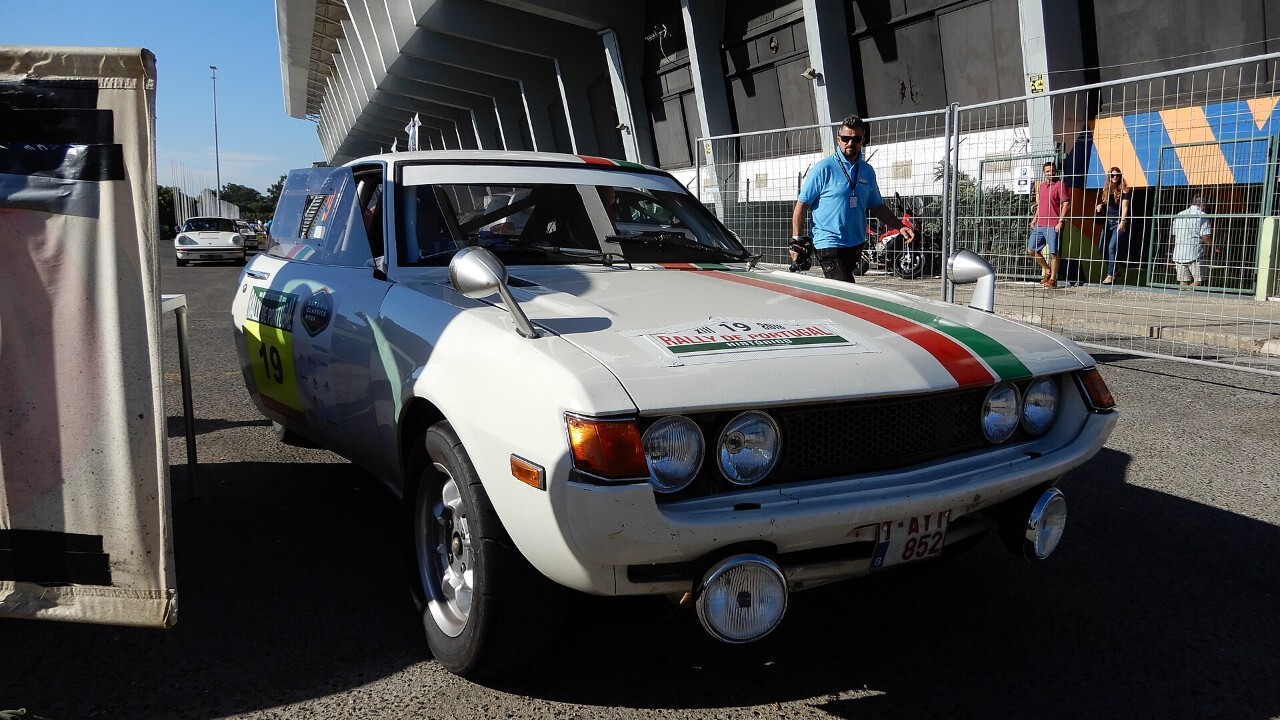
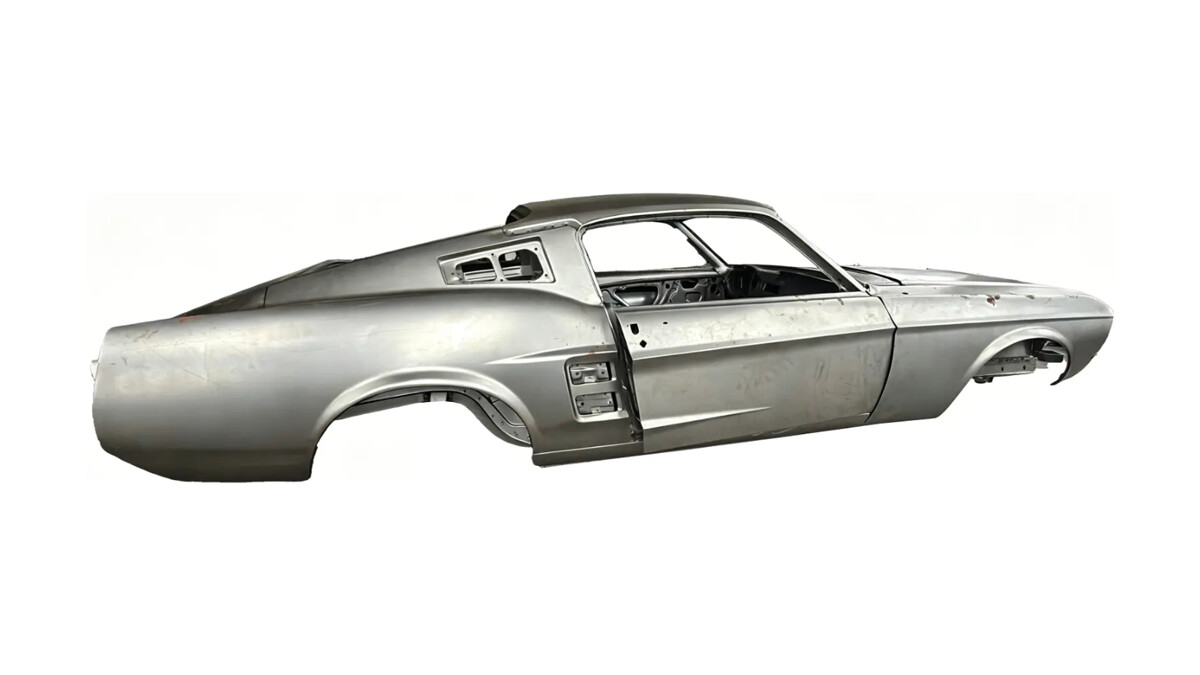
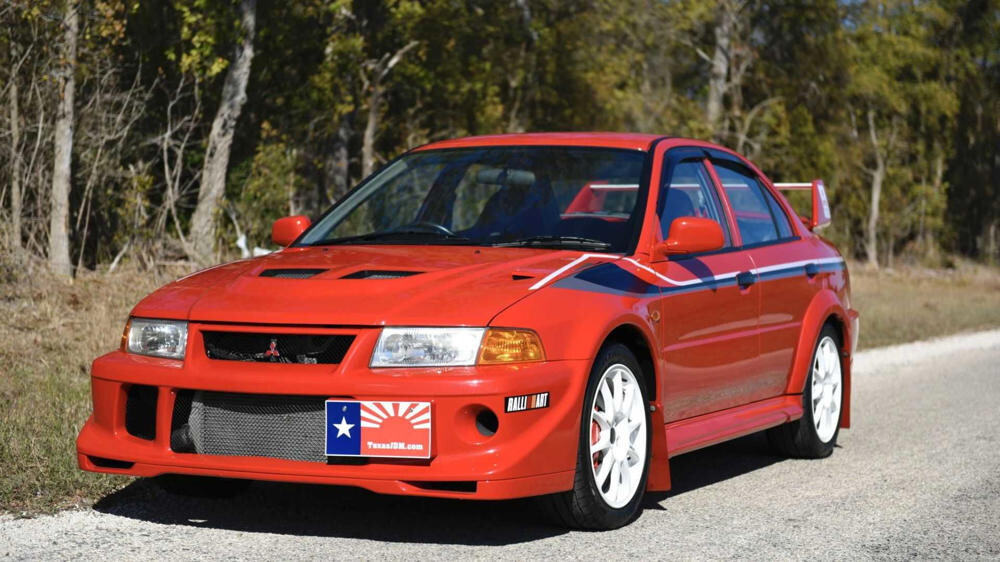
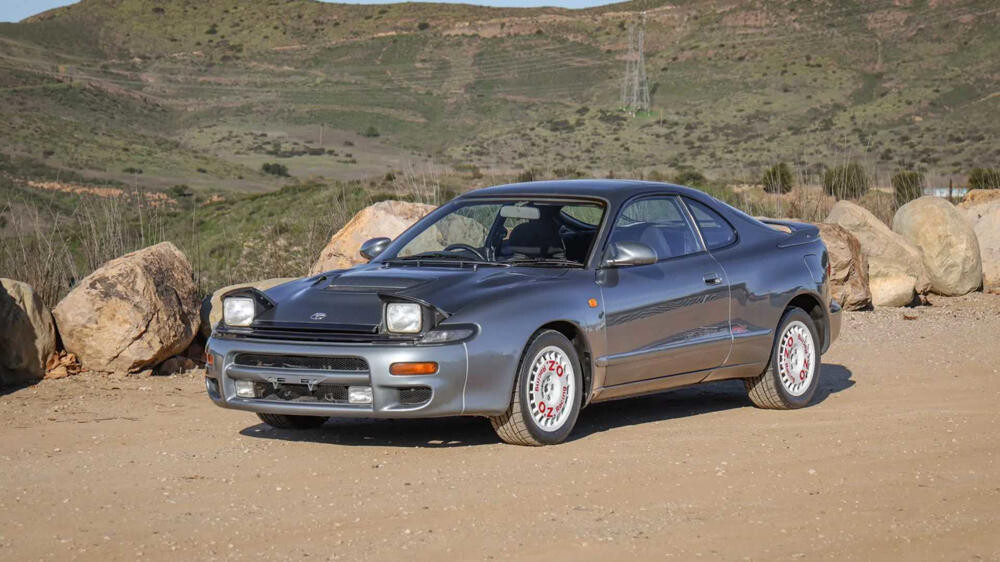
The Mercedes-Benz 280 SE Coupe sums up what collectors chase from the late 1960s: a hand-finished shape, a fuel-injected six and a production run measured in the low thousands. Yet plenty of its rivals and contemporaries from Europe and Japan get far less attention. Some sold in the hundreds of thousands, while others never left their home market. Collector money tends to pile onto the same few names. That leaves a lot of brilliant two-doors from the same years sitting in the shadows, even though they raced, rallied or pioneered an idea first. In our view, several of them deserve a bigger share of the spotlight than they get today. These are our picks: 12 coupes we think should rank as the most collectible of their era. The years, engines and production figures come from the records, while the verdicts are our own opinion. Some you can still buy for sensible money, and others already need a serious budget. 1. 1969 Mercedes-Benz 280 SE Coupe Paul Bracq drew the W111 coupe and cabriolet, and the long, low roofline has aged better than almost anything else from Stuttgart in that decade. The 280 SE version arrived in November 1967. Under the hood sat the 2,778 cc M130 straight-six with electronic fuel injection, good for 160 hp at 5,500 rpm. That was serious pace for a four-seat luxury coupe, and the injected six gave it a smoothness that carbureted rivals struggled to match on a long highway run. Mercedes then raised the stakes in August 1969 with the 280 SE 3.5 and its new V8. Because the V8 car now gets most of the headlines, the six-cylinder Mercedes-Benz 280 SE Coupe often trades in its shadow. However, Mercedes built only 3,797 of the six-cylinder 280 SE coupes, so it is hardly common. Our take: the six-cylinder Mercedes-Benz 280 SE Coupe is the smarter collectible of the pair. It has the same Bracq lines, the same wood-and-leather cabin and a simpler engine bay. If you want one, buy the best body you can afford, because panel and chrome work on these coupes costs far more than mechanical repairs. 2. 1975 Opel Manta A Opel launched the Manta A in September 1970, roughly two months before the Ascona sedan it shared its bones with. Its target was obvious. Ford had the Capri, and Opel wanted a slice of the same young, style-conscious market. As a result, the Manta got a sloping fastback roof, round tail lamps and a choice of CIH four-cylinder engines. The plan worked. Opel built 498,553 Manta A coupes before the Manta B replaced it in 1975. Then, in its final year, Opel offered the fuel-injected GT/E with the 1.9-liter engine rated at 105 PS. The Manta also won a large number of rallies in Europe and the United States. So why isn’t it more collectible already? Half a million cars sounds like plenty, but rust and heavy modification have thinned the ranks. In our view, a tidy, original 1975 Manta A is now harder to find than the production total suggests. Meanwhile, Capri prices keep climbing, and the Ford gets most of the nostalgia in Britain and Germany. That gap won’t last, so look for a solid floor pan and original trim first. 3. 1971 Toyota Celica GT Toyota introduced the first Celica in Japan in December 1970. It called the car a “specialty car” — sporty styling on the bones of the Carina sedan, aimed at buyers who wanted flair without exotic running costs. It also came as a two-plus-two, so you could fit friends in the back for short trips. That everyday usability made it an easy car to own, then and now. That formula sounds ordinary now, but it gave Toyota its first true image car for the masses. The GT version had real substance under the shape. According to Toyota’s own Celica history, the top engine was a twin-cam breathing through twin Solex carburetors, and its 115 bhp made it the most powerful unit in the Japanese range. Later, early European rallying led to the founding of Toyota Team Europe. Our take: the first Celica GT is the one serious Japanese collectors want, and Western buyers are catching on. Most early Celicas lived hard lives as daily drivers, so clean twin-cam cars take real hunting today. If you find one with its original engine, don’t haggle too long. 4. 1966 Honda S800 Coupe Honda was a motorcycle company first, and the S800 shows it in every detail. Its 791 cc four-cylinder made 70 hp at 8,000 rpm and revved to 8,500. For a small sports car in 1966, that was remarkable. In fact, the S800 became Honda’s first car capable of 100 mph. That figure mattered, because it put a tiny Japanese two-seater on the same speed map as much larger European sports cars. The coupe added a practical hatchback roof to the roadster’s body, which made it a little stiffer and a lot easier to live with. Early cars also used chain drive to the rear wheels, much like a motorcycle. Later, Honda switched to a conventional driveshaft and live rear axle. Across both body styles, Honda built 11,536 S800s between 1966 and 1970. In our view, the coupe is the sleeper of the S800 family. Roadsters get the attention at shows, yet the hardtop is the rarer sight and shares the same screaming engine. If you want one, plan to join the owners’ community for parts. Also, budget for a specialist who understands those tiny, high-revving engines. 5. 1970 Nissan Skyline 2000 GT-R KPGC10 The first Skyline GT-R began as a four-door sedan in 1969. Then, in 1970, Nissan cut it down into the KPGC10 two-door hardtop. According to the Nissan Heritage Collection, the wheelbase shrank by 70 mm, the weight fell by more than 20 kg, and the cabin got bucket seats with almost no comforts. The engine came straight from racing. Nissan’s S20 straight-six displaced 1,989 cc, used four valves per cylinder and twin overhead cams, and made 160 PS at 7,000 rpm. Nissan also drew on technology from its R380 prototype race car to develop it. By March 1972, the GT-R had scored 50 domestic touring car wins. The tally reached 52 when Nissan’s works team stopped racing in October 1972. Nissan built only 1,197 of the KPGC10 hardtops, against 832 of the earlier four-door PGC10 sedans. Our take: this is already a blue-chip Japanese collectible, and we think it deserves every bit of that status. If you are shopping, demand paperwork. Many lesser Skylines wear GT-R badges today, so a real S20 car needs proof, and a matching engine number is worth paying extra for. 6. 1966 Glas 1700 GT Hans Glas GmbH of Dingolfing started out building farm machinery and scooters. By the early 1960s, though, the company wanted a sports coupe of its own. It hired Pietro Frua’s studio in Moncalieri, near Turin, and the resulting 1300 GT appeared in 1963. Its crisp Italian lines made the little German coupe look far more expensive than it was. Later, Glas fitted some coupes and cabriolets with the bigger engine from its 1700 sedan. That gave the GT the performance its looks had always promised. However, the timing was terrible. BMW took over Glas in 1966 and saw no reason to keep the small Glas models going. The last 1700 sedan left the line in December 1967. In our view, the 1700 GT is one of the great “what ifs” of German motoring. It had Frua styling, a willing four and a tiny production run, all from a company that vanished almost overnight. If you want one, start your search in Germany. Expect to spend real time hunting for trim parts, since Glas never built enough to stock the market. 7. 1976 Renault 17 Gordini Renault built the 17 on the running gear of the humble Renault 12 sedan. Even so, it looked nothing like a family car. The wedge-shaped coupe had a big glass hatch and a sporty cabin. Then, at the 1974 Paris Motor Show, Renault renamed the fuel-injected 17 TS as the 17 Gordini, borrowing the name of its famous tuning partner. It was a clever move, because the Gordini name already meant a lot to French enthusiasts. The early Gordini used a 1,605 cc engine with fuel injection, rated at about 108 PS. It also earned its badge on the stage. Jean-Luc Thérier and co-driver Christian Delferrier won the 1974 Press-on-Regardless rally in Michigan in a 17 Gordini. Later American-market cars got a 1,647 cc engine, a five-speed manual and a sliding roof. Our take: the 17 Gordini is the French coupe nobody talks about, and that is exactly why it belongs here. Renault built 94,969 cars across the whole 17 range, and Gordinis made up only part of that. Few survive in good order. If you see a solid one, especially outside France, grab it. 8. 1970 Mitsubishi Colt Galant GTO MR Mitsubishi first showed this shape as the Galant GTX-1 at the 1969 Tokyo Motor Show. The production Colt Galant GTO followed in November 1970. Its fastback profile and ducktail spoiler borrowed openly from American pony cars, though the engineering underneath was pure Japanese. In other words, it looked like a scaled-down muscle car but drove like a light, revvy sports coupe, and that mix makes it charming today. The MR sat at the top of the range. It used the 1,597 cc 4G32 twin-cam four with two carburetors, rated at 125 PS, and a five-speed manual. Mitsubishi sold the car only in Japan. Then, in January 1973, stricter emissions rules made the MR’s engine obsolete, which cut its life short after barely two years. In our view, the GTO MR is one of the most overlooked Japanese performance coupes of the 1970s. It offered twin-cam power, pony-car styling and a very short run. If you want one, be ready to import from Japan. Also, check the engine carefully, because many GTOs lost their original twin-cam to swaps over the decades. 9. 1972 Toyota Corolla Levin TE27 Toyota took its small Corolla fastback coupe and dropped in the Celica GT’s twin-cam engine. The result, launched in March 1972, was the Corolla Levin TE27. Its 1.6-liter 2T-G breathed through twin Mikuni-Solex 40PHH carburetors and made 115 PS gross. Toyota claimed a top speed of 190 km/h and a quarter-mile time of 16.3 seconds. For a compact coupe from 1972, those were seriously quick numbers, especially on narrow mountain roads. The name means “lightning” in Middle English, and the car lived up to it. Toyota also sold a near-twin, the Sprinter Trueno, through a different dealer network in Japan. Together, they started the Levin and Trueno line that later produced the famous AE86. Both cars shared the same twin-cam heart. Our take: the AE86 gets the fame, but the TE27 started the story. It packs a race-bred twin-cam into a tiny, light body, and it remains rare outside Japan. In our view, collectors who skip it are missing the most important early Levin. If you go shopping, look for intact original wheel-arch trim and the correct 2T-G engine. 10. 1969 Mazda Luce Rotary Coupe Mazda launched the Luce Rotary Coupe in October 1969. Giorgetto Giugiaro, then at Bertone, shaped it as a long, elegant two-door. Underneath, it hid something no other Mazda rotary would have for decades. The 1.3-liter 13A engine drove the front wheels. At the time, almost every other rotary on the road, including Mazda’s own Cosmo, sent its power to the rear instead. Its styling also reminded many people of the NSU Ro 80 sedan. That made the Luce Mazda’s only front-wheel-drive rotary until the MX-30 R-EV arrived much later. Its 13A made 126 PS, and the car had front disc brakes and a quarter-mile time of 16.9 seconds. However, buyers were not ready for such an unusual luxury coupe. Mazda built fewer than 1,000 before production ended in 1972. In our view, the Luce Rotary Coupe is one of the most important Mazdas ever made. It combines a Giugiaro body, a front-drive rotary and a tiny production run. If you ever see one for sale, move fast. Parts for the unique drivetrain are scarce, though, so a complete car beats a cheap project every time. 11. 1970 Datsun Bluebird 1600 SSS Coupe Datsun launched the 510-series Bluebird in Japan in August 1967. Then, in 1969, it added the two-door KP510 coupe. That body appeared only in small numbers in right-hand-drive markets, mostly Japan. Its fastback roofline gave the boxy Bluebird a sportier look that the sedans never had. The SSS badge marked the sporty versions. In some markets, they used twin Hitachi side-draft carburetors, a smaller take on the British SU design. Those carbs fed the 1.6-liter overhead-cam four. As a result, the SSS felt livelier than the standard car, especially in the lighter two-door body. Datsun also offered the 510 in many other markets, from North America to South Africa, so the parts supply for the basic mechanicals remains reasonable today. Body panels for the coupe are another story. Our take: Americans know the 510 sedan as a giant-killer, but the Japanese-market SSS coupe is the rarer and prettier relative. We think it deserves far more attention than it gets outside Japan. If you want one, expect to import it. Also, check the rear quarters and floors closely, because rust is the big enemy on any early-1970s Datsun. 12. 1973 Fiat 124 Sport Coupe Mario Boano’s team at Fiat’s Centro Stile designed the 124 Sport Coupe, and Fiat sold it in three distinct series. The final CC series ran from 1973 to 1975 and wore the most square-cut nose of the three. Under the hood sat the twin-overhead-cam four designed by Aurelio Lampredi, a former Ferrari engineer. That pedigree gave a mass-market Fiat an engine with genuine racing credentials, and owners love how freely it revs. For the CC, Fiat used a 1,592 cc engine for Italian tax reasons, followed by a 1,756 cc engine from the Fiat 132. That bigger engine produced 118 PS. Fiat built about 75,000 CC coupes, compared with roughly 113,000 of the first series. In addition, SEAT built 23,611 more under license in Spain. In our view, the 124 Sport Coupe is the best-value Italian twin-cam you can buy. Its spider sibling grabs most of the attention, yet the coupe seats four and costs less. If you want one, buy rust-free above everything else, and favor the 1,756 cc cars. Fiat ended 124 Sport Coupe production in 1975, after three series and nine model years.

 Liked by Caleb Clark, Lucas Lee
 Liked by Caleb Clark, Lucas Lee