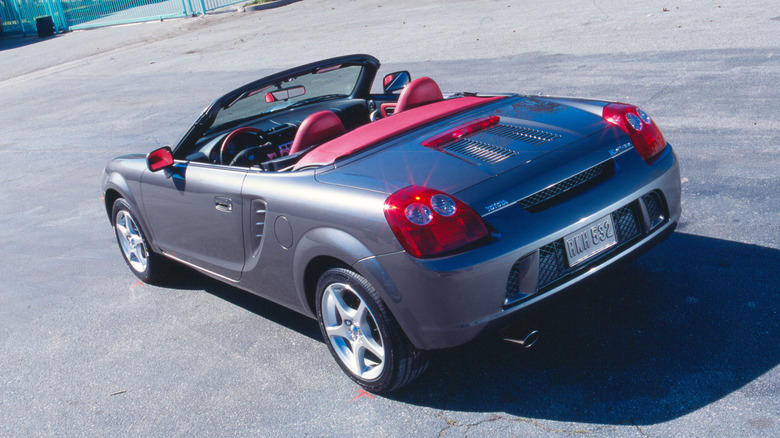
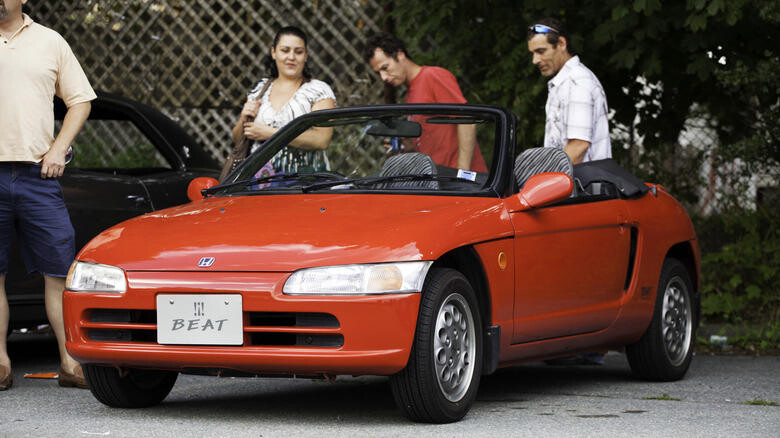
The Matra Djet went on sale in France in 1963 with its small Renault engine mounted behind the seats and ahead of the rear axle. That layout, now called mid-engine, later moved to Lamborghini, Ferrari and almost every supercar since. Long before the posters and the price tags, though, small companies used it to build light, nimble cars for people who simply loved to drive. Since then, many of those cars have slipped out of the spotlight. Some came from makers that no longer exist, others sold only in Europe or Japan, and a few were overshadowed by flashier siblings. Yet the people who know them tend to talk about them with a grin. These 12 are our picks for the forgotten mid-engine cars that driving purists hold dear. The choices and verdicts are our opinion. However, the years, engines and production figures behind them come from maker histories and reputable references, so the record holds even where the taste is ours. 1. Matra Djet The Matra Djet started life as the René Bonnet Djet, announced in June 1962. A Bonnet prototype even raced at Le Mans that year, winning its class and finishing 17th overall. Production cars left the factory in July 1963. Under the fiberglass body sat a steel chassis and a 1,108 cc Renault-derived four, mounted ahead of the rear wheels. As a result, the original car weighed just 600 kg. Bonnet built 198 of them before Matra took over the business, and its debts, in October 1964. According to Hagerty’s history of the car, Matra’s revised Jet then peaked in 1966, with 810 sold. Later versions grew more potent, and the Jet 6 used a 1,255 cc Gordini engine. Production of the Matra Djet and Jet ended in 1968. Hagerty calls it the world’s first production mid-engined sports car. Other references agree it beat the De Tomaso Vallelunga to market. Our take: the Matra Djet is the ancestor every mid-engine fan should know. It is tiny, light and clever, and a surviving Matra Djet will always draw a knowing nod from anyone who understands why it matters. If you find one, keep it light and original, because lightness is the whole point. 2. Matra 530 LX The Matra 530 replaced the Matra Djet and kept the engine in the middle. Matra built it from 1967 to 1973. Power came from Ford’s 1,699 cc Taunus V4, a compact pushrod engine rated at 70 horsepower at launch and 75 after 1969 updates. Philippe Guédon did the original design, while Jacques Nochet styled the body. The 530 LX arrived in 1970 as a Michelotti redesign, with a new glass rear hatch and front bumper. It kept the clever basics: a targa roof, hidden headlamps and 2+2 seating, which was unusual for a mid-engine car. Matra built 9,609 530s in total, and 4,731 of them were LX models. Admittedly, the looks are strange, but that is part of the charm. In other words, the 530 is a car that rewards people who look past the odd styling and focus on how it drives. Our take: it is one of the most practical mid-engine cars ever sold, thanks to that removable roof and its tiny rear seats. A V4 isn’t anyone’s idea of a sports engine, yet the balance of the chassis makes up for it. If you want one, the LX is the version to find. 3. 1972 Lotus Europa Twin Cam Special The Lotus Europa began in 1966 with a Renault engine. Then Lotus gave it a proper heart. The Twin Cam came in 1971, and the Special name arrived in 1972. That car used the 1,558 cc Lotus-Ford Twin Cam with “Big Valve” heads, rated at 126 horsepower in European form and 113 in U.S. trim. With a curb weight of 740 kg, the Special didn’t need more. In fact, that low weight did most of the work. Motor magazine timed a UK car at 6.6 seconds from 0 to 60 mph, with a top speed of 123 mph. A five-speed Renault gearbox was optional at first. Meanwhile, the first 100 Specials came in black with gold pinstripes. Each was numbered to honor Team Lotus and its 1972 Formula 1 title. Lotus built 3,130 Specials out of 4,710 Twin Cam cars. Our take: the Europa Twin Cam Special is Colin Chapman’s lightweight idea in its purest form. It is low, cramped and wonderful, with a chassis that rewards a careful driver. The black-and-gold cars draw the most attention. Still, any Big Valve car with the five-speed delivers the full experience. 4. 1973 Porsche 914 1.7 The Porsche 914 was a joint effort with Volkswagen, and that is why many people forgot it. In Europe, four-cylinder cars wore Volkswagen-Porsche badges and sold through VW dealers. In North America, by contrast, every version was simply a Porsche. The 914 1.7 used a fuel-injected 1.7-liter Volkswagen Type 4 flat-four, rated at about 80 bhp. It powered the car from 1970 until 1973, when a 1.8-liter engine replaced it. Karmann built the rolling chassis, and the targa-top two-seater weighed as little as 940 kg. Motor Trend named it Import Car of the Year for 1970. Altogether, the factories built 118,978 914s. Clearly, that big number means the 914 is far from rare. Even so, in our view, its reputation spent decades in the shadow of the 911. Our take: the 914 1.7 is a sweet, balanced roadster with the engine exactly where purists want it. It isn’t fast, but it feels light and honest, and it rewards smooth driving. If you shop for one, buy the most solid, original body you can find, because the rest is simple to sort. 5. 1978 Ferrari Dino 308 GT4 The 308 GT4 is the Ferrari many fans skip, and that is a mistake. Marcello Gandini drew it at Bertone, making it the only production Ferrari with Bertone bodywork. It debuted at the Paris Motor Show in October 1973 as a 2+2 coupe. The engine sat crosswise behind the cabin. It was a 2,927 cc V8 rated at 255 horsepower in Europe and 240 in the United States. At first, the car wore Dino badges, but Ferrari badges replaced them in May 1976. So a 1978 car carries the prancing horse. Ferrari built 2,826 308 GT4s, plus 840 of the smaller 208 GT4, a 2.0-liter version built mainly for the Italian market’s tax rules. Unfortunately for its early sales, Gandini’s wedge shape looked nothing like the curvy Ferraris before it. As a result, some buyers never warmed to it. Our take: the GT4 is a genuine mid-engine V8 Ferrari with rear seats and a famous designer, and it drives like the thoroughbred it is. If you want a classic Ferrari that stands apart from the crowd, this is the one we would choose. 6. 1981 Lancia Montecarlo Spider The Montecarlo started as a Fiat project. Under the X1/8 plan, it was supposed to get a 3.0-liter V6. Then the 1973 oil crisis changed the brief to a 2.0-liter four. After Fiat dropped the project in 1974, Lancia took it over, and Pininfarina’s design reached the road in 1975. Power came from a 1,995 cc Lampredi twin-cam rated at 120 PS. According to CarAdvice’s look back at the car, it reached 100 km/h in just over nine seconds and claimed a top speed of 190 km/h. The Spider used a manually rolled canvas roof between the A and B pillars. For the Series 2 cars of 1980 and 1981, Lancia removed the brake servo to cure front-wheel lockup. It also added a new grille, glazed rear buttresses and 14-inch alloys. In the end, Lancia built just 7,798 Montecarlos in total. Its center section later formed the basis of the Lancia 037 rally car. Our take: the Series 2 Spider is the one to own, with the brake fix and an open roof. It is a Pininfarina-designed mid-engine car that most people at a show can’t name. 7. Honda Beat The Honda Beat is a tiny roadster with a big story. It was the last car approved by company founder Soichiro Honda before he died in August 1991. Honda built it from May 1991 to February 1996 as a kei car, Japan’s class of very small vehicles. Like every car here, it carried its engine behind the seats, and it drove the rear wheels. It was a 656 cc three-cylinder with four valves per cylinder and a separate throttle body for each cylinder. As Supercar Nostalgia’s history explains, it made 63 bhp at 8,100 rpm and came only with a five-speed manual. The car weighed 760 kg, with 43% of that weight on the front wheels and 57% on the rear. Honda commissioned Pininfarina for the design, and the studio passed the styling to freelance designer Pavel Hušek. Honda built 33,635 Beats, all with right-hand drive, and roughly two-thirds came in the first 18 months. Our take: the Beat is proof that fun has little to do with horsepower. It is a high-revving, mid-engine go-kart for the road, and owners who drive one never seem to forget it. For that reason, it earns its place among the most joyful cars on this list. 8. Talbot-Matra Murena The Murena is a three-seat sports car, and it is every bit as odd as that sounds. Its three separate seats sit side by side in one row. The middle one folds down into an armrest. Matra also galvanized the entire chassis to stop the rust that had plagued its earlier Bagheera. Meanwhile, the Murena ran from 1980 to 1983 with a choice of engines. The 1.6-liter made 92 PS, while the 2.2-liter made 118 PS. Then the Murena S pushed the 2.2 to 142 PS. In addition, Matra built a 16-valve 4S prototype with 178 PS, although it never reached production. Overall, the factory built 10,680 Murenas. Unfortunately, the car’s end came abruptly. In July 1983, the Matra factory switched over to building the first Renault Espace minivan. Our take: the Murena is one of the cleverest mid-engine cars ever made, and that galvanized chassis was a smart answer to a real problem. A Murena S is the prize, but even a 1.6 offers that three-abreast party trick. We would find one with the 2.2 and enjoy the puzzled looks, especially when two passengers climb in beside the driver. 9. 1985 MG Metro 6R4 The 6R4 looks like a Metro hatchback that spent a year in the gym. Underneath, it was nothing like the family car. Williams Grand Prix Engineering developed it as a mid-engine rally car with permanent four-wheel drive. Power came from a 3.0-liter V6 with twin cams and four valves per cylinder, and it had no turbocharger. First, MG showed the car in May 1985. The road-going Clubman version made about 250 bhp. Meanwhile, the International rally version made more than 410 bhp, and MG built 20 of those. Around 200 Clubman homologation cars went to the public at £40,000 each. In November 1985, Tony Pond drove one to third place at the Lombard RAC Rally, behind two Lancia Delta S4s. The ordinary Metro sold from 1980 to 1997, with MG versions from 1982, so plenty of people know the shape. Yet few realize what this version hid under the skin. Our take: a 6R4 is a rally car you can register for the road, with a naturally aspirated V6 that sounds wonderful. It is the wildest Metro ever built, and we would never let one go. 10. 1990 Toyota MR2 SW20 G-Limited The second-generation MR2, known as the SW20, ran from 1989 to 1999. In Japan, the naturally aspirated 2.0-liter 3S-GE made 165 PS at launch, while the GT-S turbo made 221 PS. The G-Limited used the non-turbo engine and added electric folding mirrors, power steering, fog lamps and a rear spoiler over the base G. However, the early cars earned a reputation. Journalists reported that the SW20 was prone to snap oversteer. So, in January 1992, Toyota changed the suspension geometry, tire sizes and power steering. Toyota said it made the changes for drivers whose “reflexes were not those of Formula One drivers.” Some owners, by contrast, felt the updates dulled the car’s sharper edge. A 1990 car, therefore, comes from before those revisions. That history makes the early SW20 a car for people who enjoy a lively chassis. Our take: the G-Limited is the comfortable, well-equipped way into one of the best-looking mid-engine cars of the 1990s. Pick a manual if you can, since the automatic was standard on this trim. Then learn the car gently, and it will reward you. After all, a lively chassis is the reason to choose a mid-engine car in the first place. 11. 1996 MG F 1.8 The MG F brought the octagon back to the sports-car world. MG unveiled it on March 8, 1995, and it went on sale that September. It was the first new model designed as an MG since the MGB, and it put the engine in the middle. At launch, the standard car used a 1.8-liter K-Series four with 16 valves, rated at 118 horsepower. A VVC version with variable valve control made 143 horsepower. Instead of steel springs, the MG F used Hydragas suspension, with interconnected fluid and gas units. In our view, that gives it a supple ride for a small roadster. MG built 77,269 MG Fs, plus 799 Limited versions, before the updated TF took over in 2002. The MG F topped Britain’s affordable sports-car charts. Outside Europe, however, few drivers know it. Our take: the MG F is an affordable, cheerful mid-engine roadster with a clever ride. It isn’t the fastest car here, but it is one of the most usable. If you buy one, ask for a full service history, since a well-kept example makes all the difference. Also, the VVC version is the one to choose for the extra power. 12. 2002 Renault Clio V6 The Clio V6 is the most unlikely car on this list. Renault took its small hatchback, removed the rear seats and put a 2,946 cc V6 where they used to be. That engine made 230 PS and 300 Nm of torque, driving the rear wheels. Tom Walkinshaw Racing built the first-phase cars in Uddevalla, Sweden. Naturally, the conversion added weight. At 1,355 kg, the Clio V6 weighed about 300 kg more than the Clio 172 Cup. Even so, it reached 60 mph in 6.2 seconds and topped out at 146 mph. The turning circle grew to 13 meters, which makes parking a workout. Renault built 1,631 Phase 1 cars in 2001 and 2002, and 1,309 Phase 2 cars followed from 2003 to 2005. Our take: the Clio V6 is a hot hatch that became a mid-engine sports car, and drivers who master it never forget it. It demands respect at the limit, because all that weight sits behind the driver. Even so, that is exactly why enthusiasts seek one out. With only 1,631 first-phase cars built, a Phase 1 Clio V6 is a rare sight on any road.

 Liked by Noah Turner, William Green














 Liked by Noah Turner, William Green