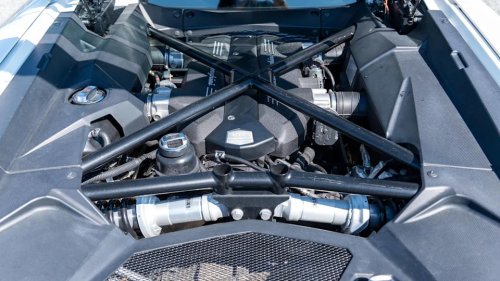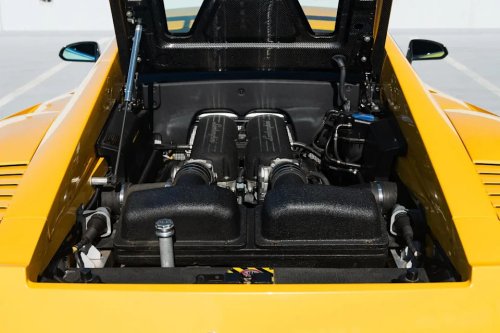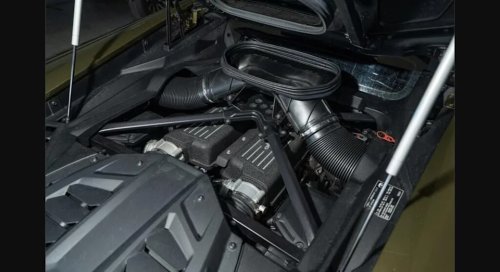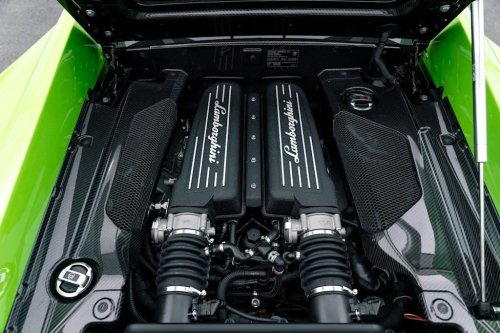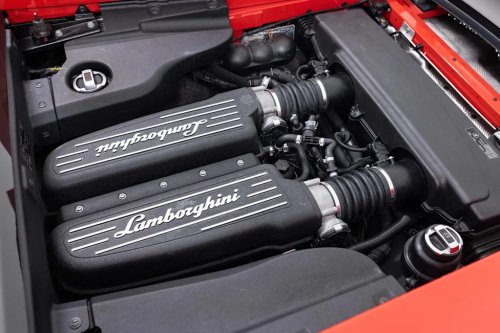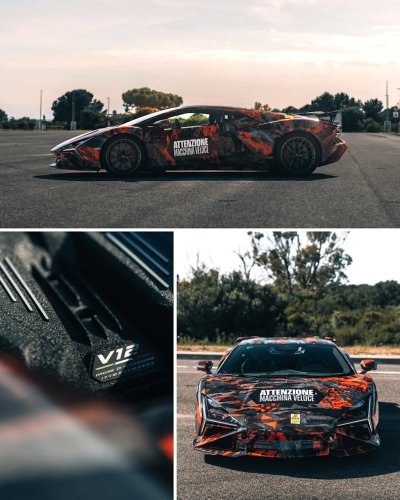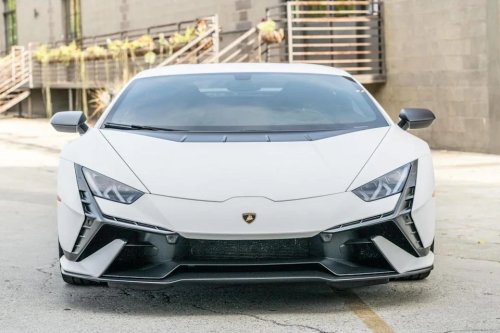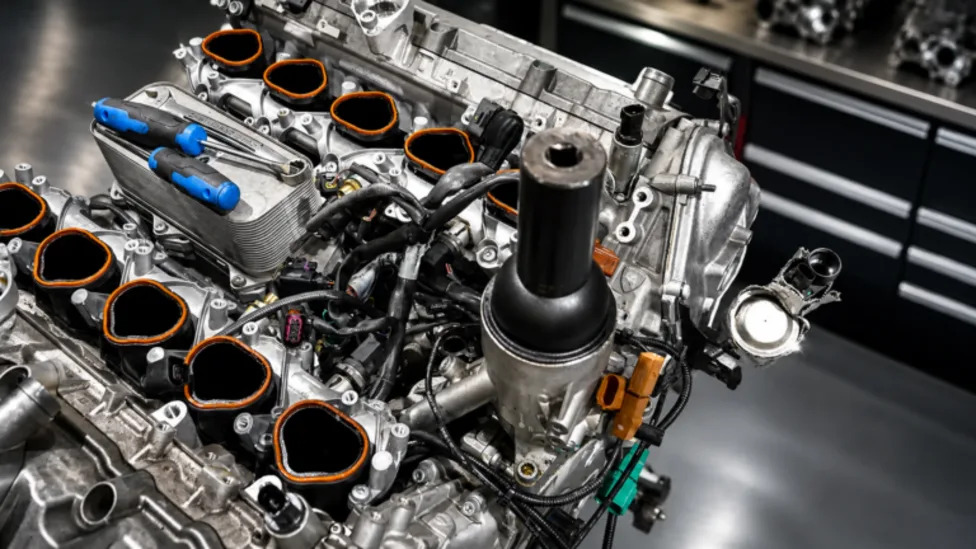



















Lamborghini Huracan Performante’s V10 Grenaded Before 20,000 Miles — And Mechanics Don’t Understand WhyThe Lamborghini Huracán Performante's 5.2-liter V10 stands among the finest naturally aspirated supercar engines still in production. The naturally aspirated V10 routinely exceeds 8,000 RPM, produces 631 horsepower, and has built a reputation for reliability that makes total engine failures an uncommon occurrence. The engine in this story did not hold up. It came apart at roughly 7,000 RPM, under 20,000 miles from new, and what was left when YouTube channel I Do Cars finished tearing it down raised more questions than it answered.Eric, the host of I Do Cars, called it "the most exotic or wild engine that we've ever had on the channel and the wildest one that I personally have ever torn down." He also paid more for this engine core than any other in his channel's history – a detail that tells you something about what a wrecked Performante V10 costs even as scrap.What the Teardown Actually FoundThe warning signs started before Eric pulled a single bolt. Debris had traveled as far as the intake system, one of the spark plugs on a cylinder bank was seized in place, and a mixture of oil and coolant was leaking from the area around the timing components. None of that is a good sign on any engine. On something with fewer miles than most people put on a Camry in a year, it's genuinely alarming.AdvertisementAdvertisementInside, the damage split across two separate disaster zones. Three valves out of four in a single combustion chamber on the right cylinder head were completely gone, with the leading explanation being that the exhaust valves blew out through their own ports while the engine was running – something Eric said he would never have thought could happen until he witnessed the damage himself. The piston below had been destroyed by the fallen valve and resulting fragments driving through it."I have not seen a combustion chamber beat up this bad," he said during the teardown. "I can't remember when one has looked this bad."The second failure zone was the rotating assembly. The failure was severe enough that a minimum of two connecting rods broke apart and tore straight through the dry sump oil pump housing from within. Debris spread through virtually every cylinder, leaving impact marks across most of the pistons. The rod bearings, notably, were still at serviceable thickness – ruling out the classic worn-bearing scenario where the engine slowly starves itself. This engine, per Eric's assessment, came apart with normal oil pressure. It just came apart anyway.According to information relayed by the engine's supplier, the leading theory is that one or two fuel injectors failed in the open position, flooding the cylinders and causing a hydrolock at high RPM. The Performante uses both direct and port injection – a first for a production V10 – which means larger injectors capable of moving more fuel than a standard setup. A hydrolock event at 7,000 RPM under full load would plausibly explain the destroyed connecting rods. What it doesn't explain is the valve failures on the opposite bank, which look unrelated. Eric's own summary: "Every theory I can come up with has more holes in it than the engine we just tore down."AdvertisementAdvertisementAn over-rev is the other candidate, though the Performante's seven-speed dual-clutch transmission makes a severe over-rev difficult to engineer accidentally. The gearbox is designed to protect the engine from exactly that.The timing system, for what it's worth, was spotless. Four chains, multiple tensioners, and what Eric described as one of the most intricate cam drives he's encountered – all of it intact and properly lubricated. The camshafts showed some wear and metal transfer, but nothing that pointed toward the source of the carnage further down in the block.Replacement costs for a Huracán V10 run somewhere between $40,000 and $80,000 according to owner community estimates, which gives some scale to how expensive a mystery this actually is. The engine that came apart was a legitimate, low-mileage example of one of the most celebrated naturally aspirated units in recent memory, and it destroyed itself in a way that a channel dedicated to dissecting broken engines couldn't fully explain. That's either a freak event or a reminder that complexity and performance, pushed hard enough, eventually find a way to fail in new and creative directions.