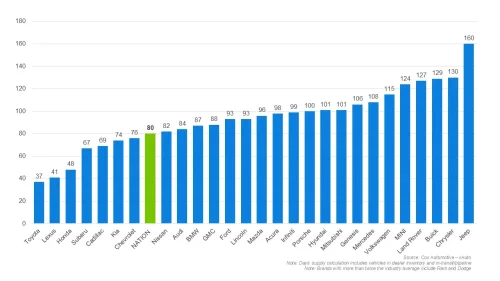
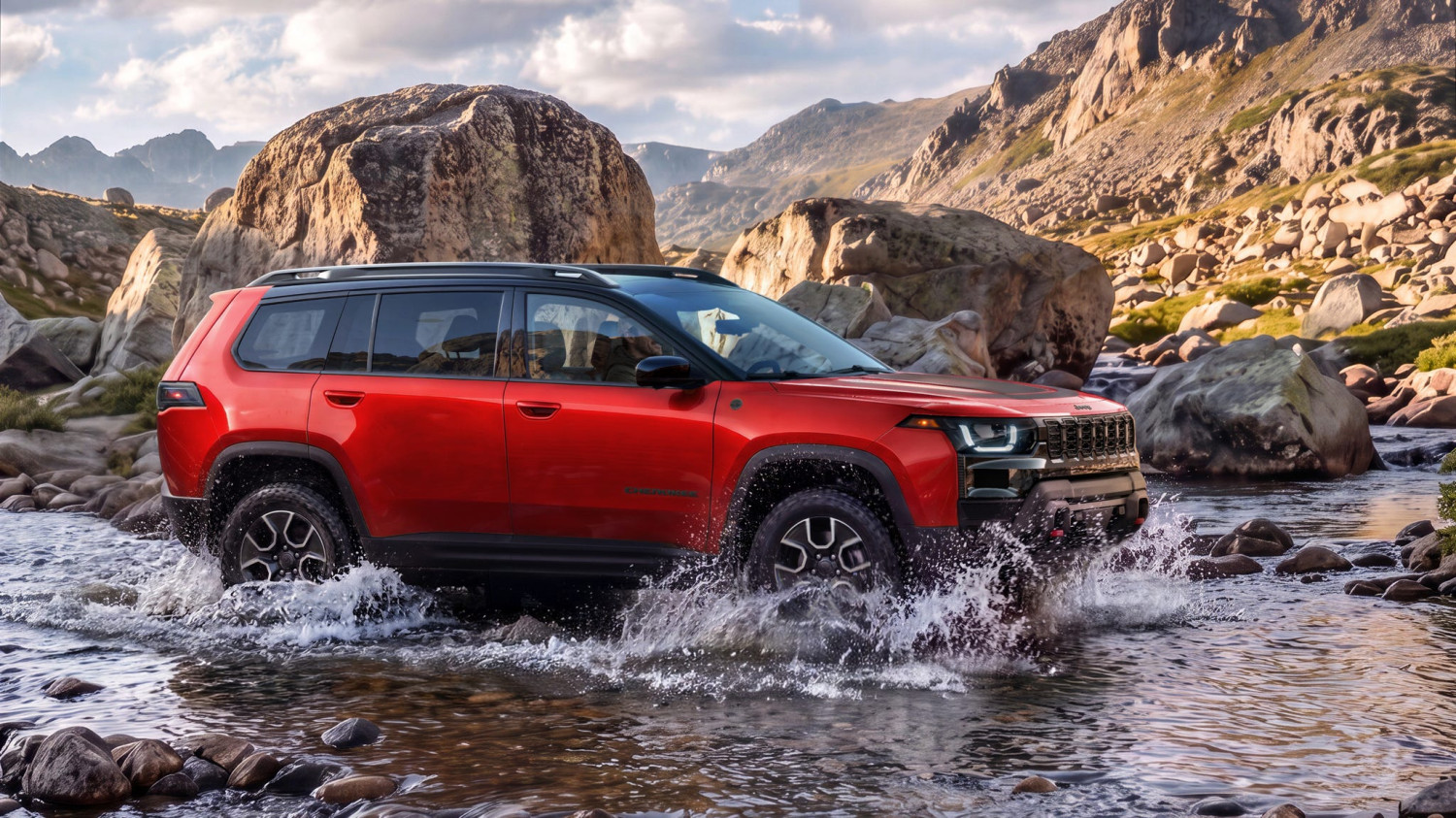
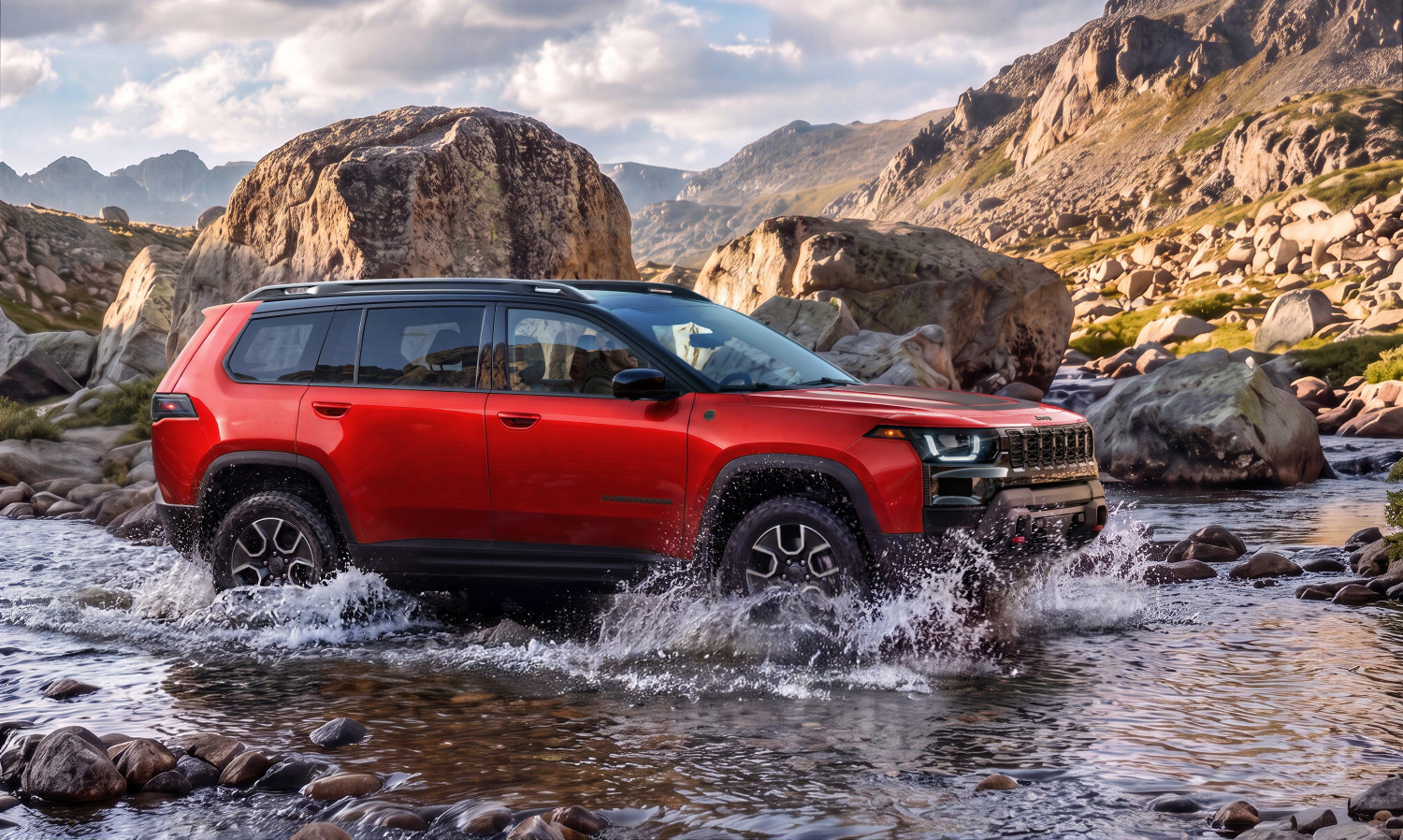
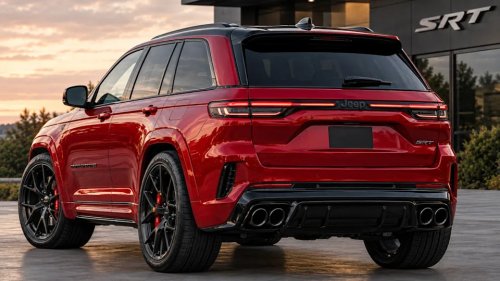
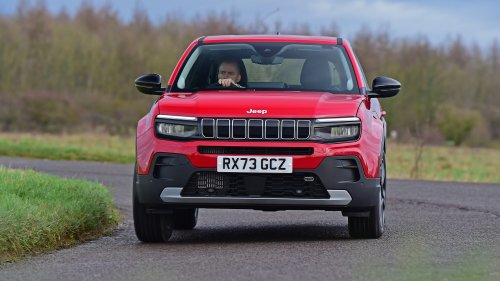
One-third of new vehicle inventory is priced below $40,000. Toyota has the tightest supply of any brand in the US. Jeep’s stock runs at double the industry days’ supply figure. There’s no getting around the reality that new-car buyers face. The average price of a new car in America is consistently hovering around $50,000. That’s becoming much, much harder to manage for the average American. That said, there’s still some good news in the latest inventory data. A quarter of most dealer lots feature cars that are $35,000 or less, and a third of the lot is $40,000 or less. Read: America’s Average New Car Hit $51,456 While China Sells 200 EVs Under Half That According to Cox Automotive’s latest Auto Live Market View report, dealers ended June with 2.82 million new vehicles in stock. Inventory was down 2.4 percent from May but was largely unchanged from a year earlier. The average listing price increased to $49,336, up 1.4 percent from June 2025 and 0.3 percent from the revised-lower May figure. On its face, that’s another reminder of how expensive new vehicles have become. But averages can be deceptive, especially in a market where six-figure luxury SUVs, heavy-duty pickups, and premium EVs can skew the numbers upward. The more telling statistic is where inventory is actually concentrated. The Sub-$40,000 Cars Are Still Out There Nearly one-quarter of all new vehicles available in June, more than 688,000 units, were priced between $30,000 and $40,000. Within that group, the average listing price was $35,377, and those vehicles carried a 70-day supply, well below the industry average. That bracket also accounted for 28 percent of June sales, meaning it moved at a faster pace than it was stocked. Expand the range slightly, and roughly 34 percent of all new vehicles on dealer lots were priced below $40,000. June Days’ Supply of Inventory by Brand Source: Cox Automotive That suggests the oft-repeated “$50,000 average new car” doesn’t accurately describe what many shoppers will find when they walk onto a dealer lot. Instead, it reflects how the industry’s growing mix of premium trucks, luxury SUVs, and high-end EVs continues to pull the average upward. Inventory also remains highly uneven depending on the badge. Toyota Sells Out While Stellantis Piles Up Toyota went into July with the tightest supply of any brand at 37 days, with Lexus at 41 and Honda at 48 right behind. Subaru (67) and Cadillac (69) also sat under the 80-day national average, along with Kia at 74 and Chevrolet at 76. Stellantis occupies the other end of the chart, where Jeep, Ram, and Dodge all carry more than twice the industry figure. Jeep is the extreme case at 160 days, the worst on the board. Brands buried that deep usually start writing checks to dig out, but Jeep’s incentives came in at 6.7 percent of ATP in June, under the 7 percent industry average. Essentially, the brand with the most unsold metal in the country is discounting less than rivals with a fraction of the problem. Walk into a Jeep dealership expecting to name your price and you’ll probably leave disappointed. Despite persistent concerns over affordability, inflation, and geopolitical uncertainty, the broader new-car market has remained remarkably steady this year. Inventories have stayed balanced, sales continue at a healthy pace, and while the average transaction price may be flirting with $50,000, the data suggests there’s still a real supply of new vehicles available for buyers shopping much closer to the mid-$30,000 range. Monthly New Vehicle Data USA MonthInventory VolumeDays’ SupplySalesAvg. Listing Price25-Jun2,816,717841,012,492$48,67325-Jul2,707,559771,094,241$48,49625-Aug2,730,357751,133,566$48,56625-Sep2,855,66887990,819$49,05725-Oct3,005,43389.61,039,591$49,19325-Nov3,053,128901,017,139$49,45425-Dec2,967,54385.51,076,180$50,35126-Jan2,741,17394904,431$49,59126-Feb2,854,72196.3829,864$48,85626-Mar2,890,42380.61,112,070$48,59826-Apr2,857,90380.21,069,065$48,92326-May2,893,41478.31,146,011$49,17626-Jun2,822,805801,054,012$49,336 SWIPE Source: Cox Automotive