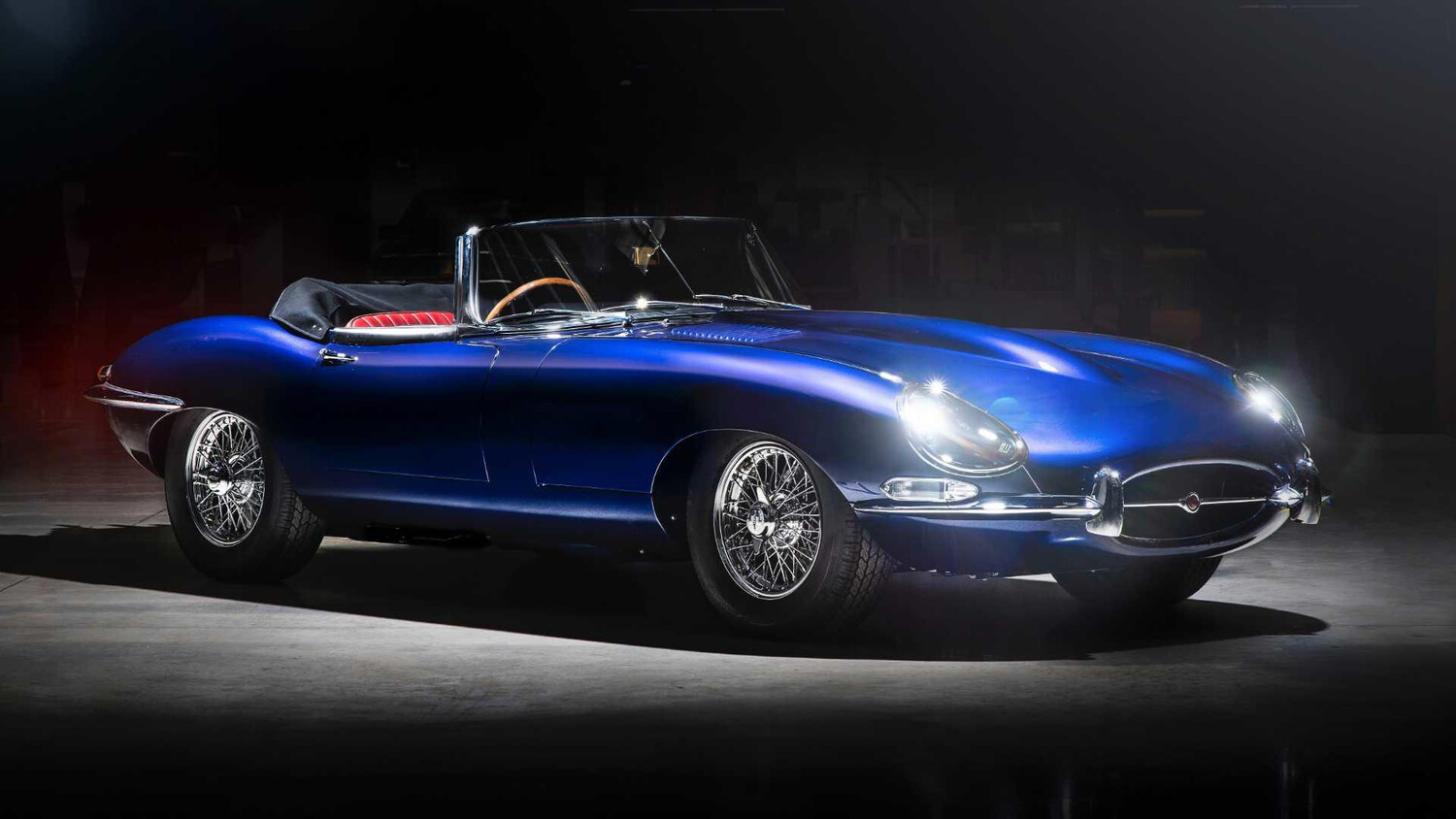
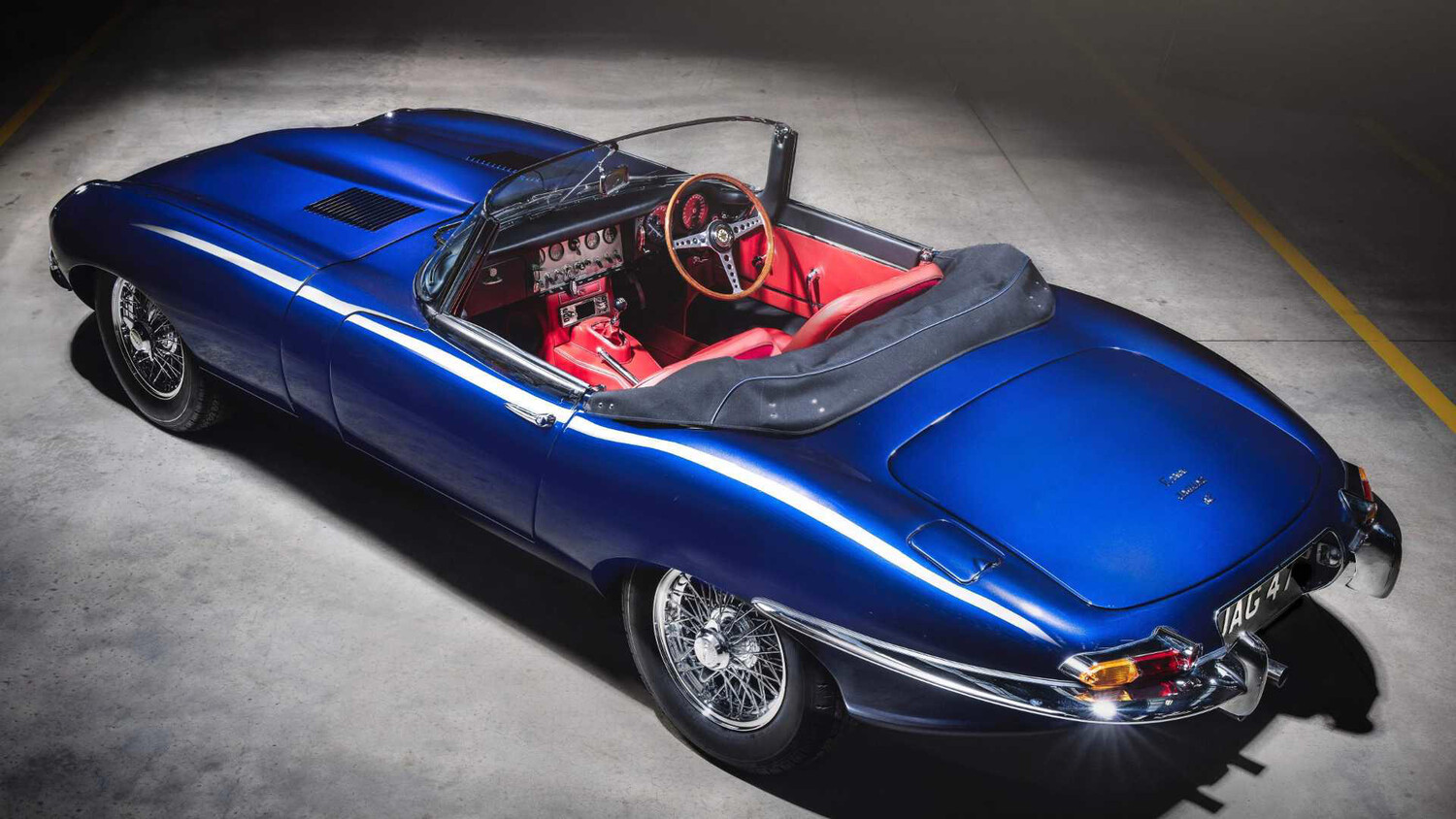
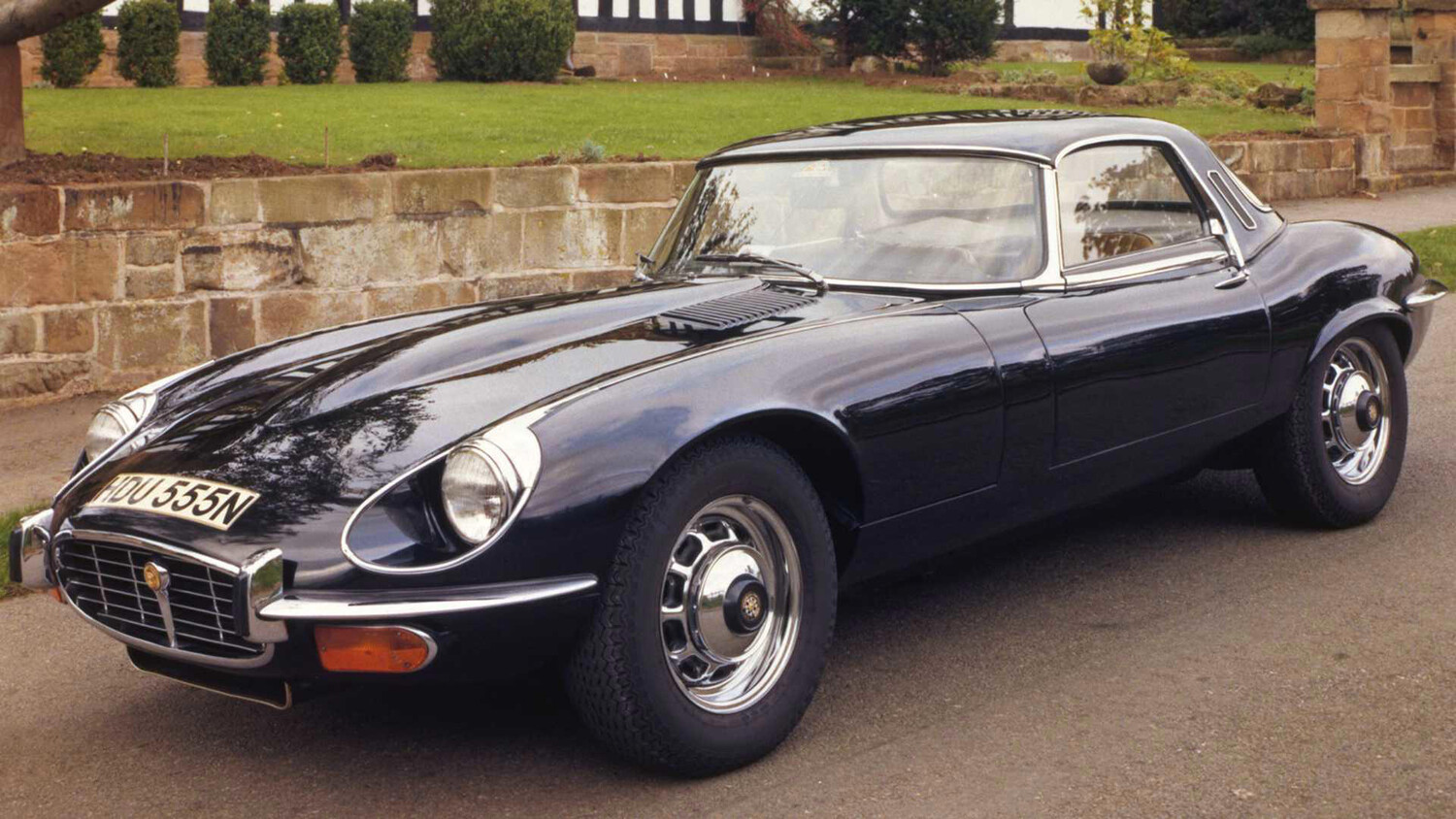
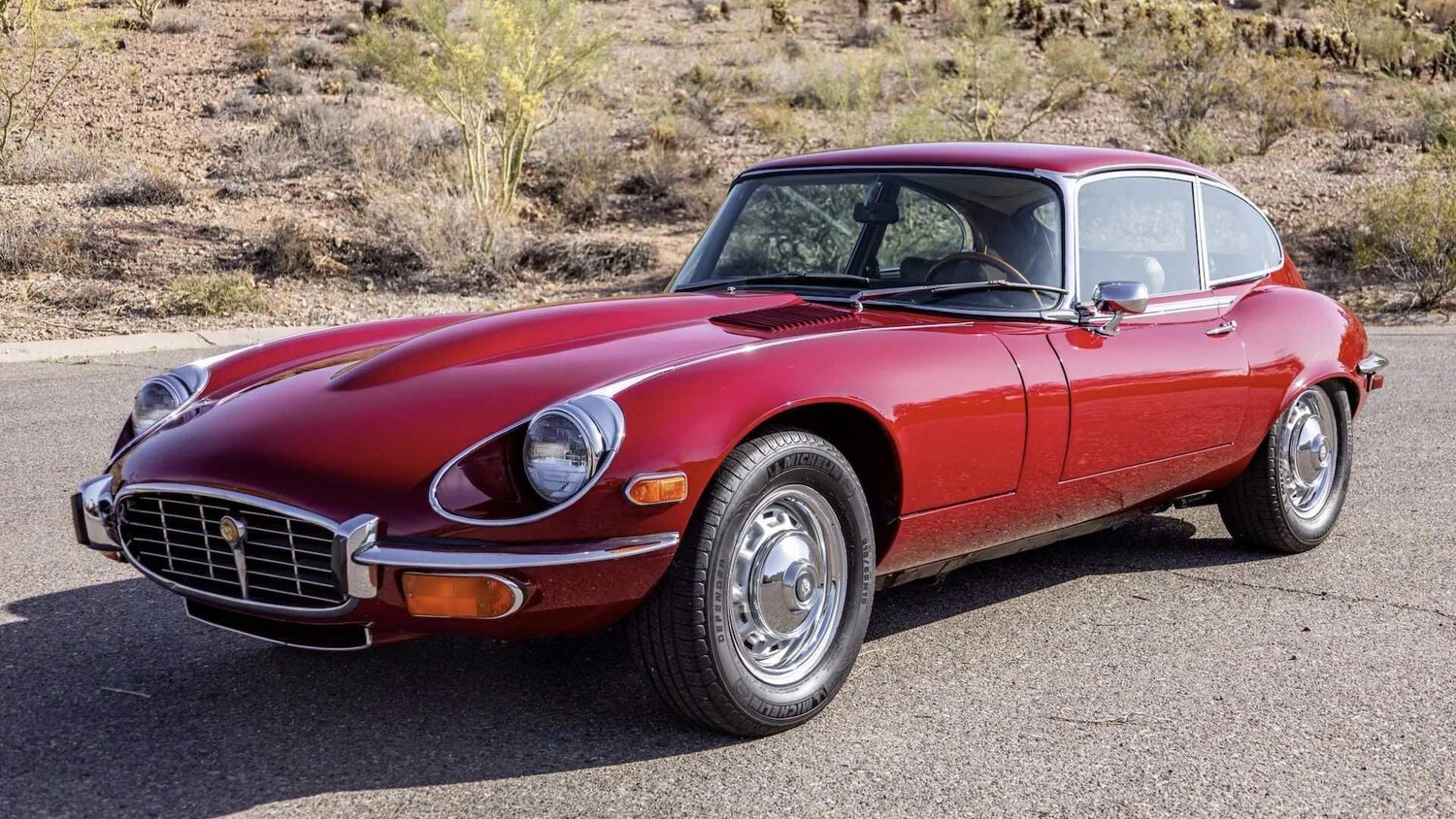
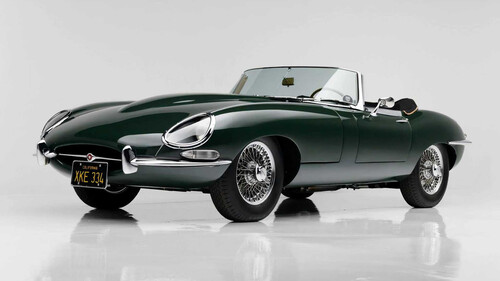
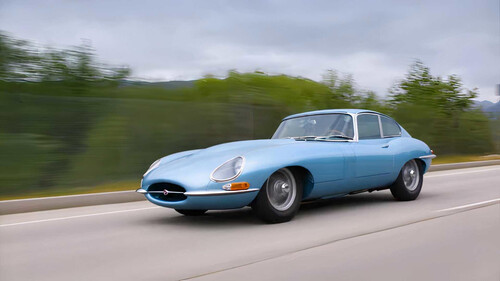
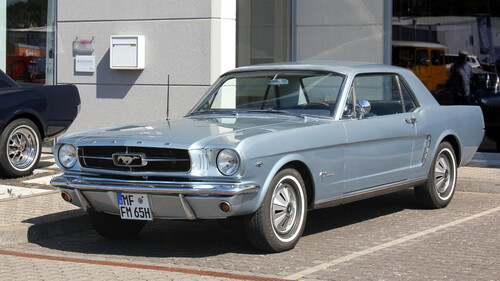
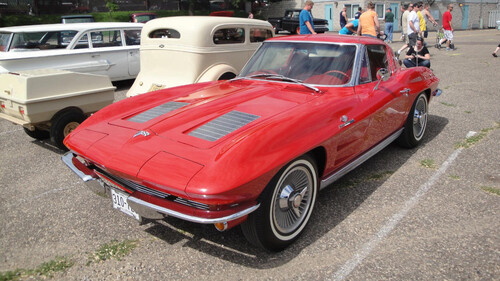
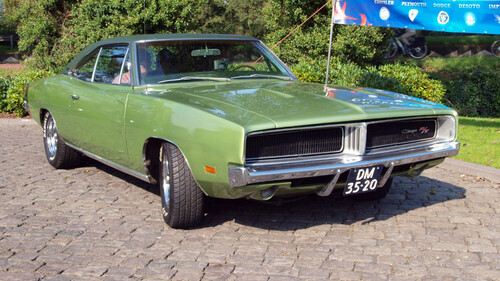
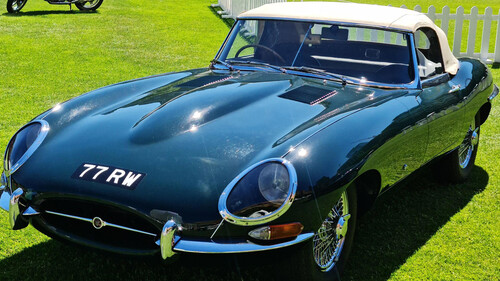
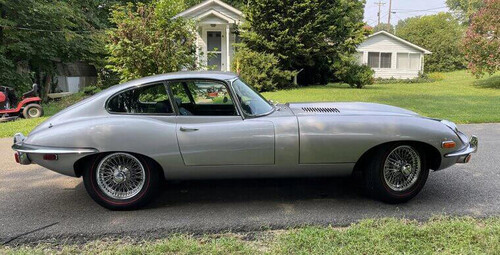
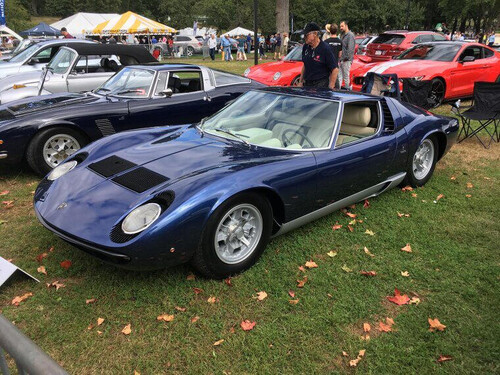
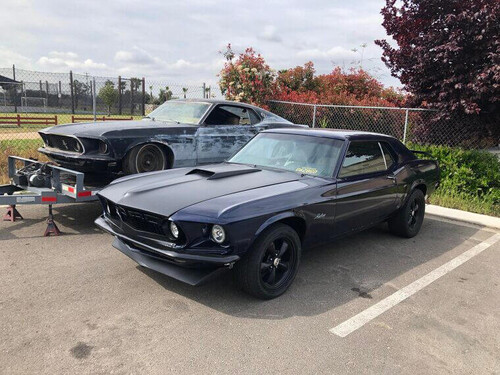
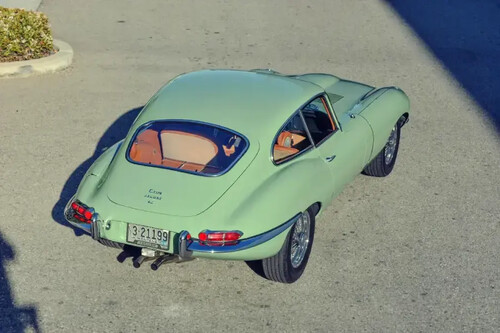
Sometimes, an automaker ends up building a car that raises the bar. Think of models like the Lamborghini Miura. It was first produced in 1966, and ended up being regarded as the first-ever supercar, sparking a rush from other automakers to build their own to compete. Other groundbreaking models, like the Ford Mustang and the Pontiac GTO, were responsible for introducing the pony car and the classic American muscle car, respectively.Jaguar, one of England's most famous marques, also created its own stop-and-look model that changed the face of the world's sports car market. It's called the E-Type, and most of you reading this will be familiar with the storied model. Upon its debut in the early 1960s, Enzo Ferrari himself, the founder of Ferrari, may have admitted that it was the prettiest car he'd ever seen. It's easy to surmise, based on the E-Type's gorgeous curves, that loads of folks agree with Mr Ferrari's statement. The E-Type's Popularity Took A Multi-Faceted Approach Jaguar The Jaguar E-Type first hit the market in 1961. It was a direct descendant of the Jaguar D-Type, a fabled race car that managed to secure three consecutive victories at the 24 Hours of Le Mans between 1955 and 1957. The E-Type wasn't just a race car in road car clothes, though. Underneath its curvaceous skin lay several modern components that were rarely seen in road-legal cars produced around the same time.Jaguar In total, the E-Type was produced for 13 years across three generations, referred to as "Series". Despite its sports car look, it's technically considered a grand tourer, even though it was capable of tearing up a track in its day. It's said to be such a pivotal and influential model that several automotive publications have placed it near, or even at, the top of several "best of" lists. For context, a 2004 issue of Sports Car International placed the E-Type as the number one-most influential sports car of the 1960s. Developing The E-Type JaguarBefore the famous lines of the E-Type were penned, the Jaguar D-Type was busy dominating the racetrack. It boasted numerous innovative features, like a monocoque chassis and an aerodynamically inclined body shell. In addition, the racing version of the D-Type employed the use of a vertical stabilizer, an idea gleaned from aircraft. The D-Type raced from 1955 to 1960, after which the model's downsized 3.0-liter engine was deemed obsolete in the face of more modern engines.However, Jaguar learned a lot from the D-Type, and decided to employ the knowledge it had gathered in the E-Type. Work on its design began in the late 1950s, with Jag's then-chief aerodynamic engineer Malcolm Sayer, under the watchful eye of William Lyons' direction. The very first prototype was sketched in 1957, and given the internal codename "E1A". This preliminary model was never shown to the public and was, reportedly, only used for suspension and monocoque chassis road testing.Jaguar The second prototype, called the E2A, was completed in 1960 and immediately entered into the 1960 24 Hours of Le Mans, wherein it didn't finish. It was then shipped to America for a brief period before returning to the UK in 1961 for use as a test vehicle. However, by this time, the production version of the E-Type was nearly ready to be released. Come March 1961, the Series I E-Type officially entered production for the export market only. E-Types destined for the UK market began production in July that same year. What Set The E-Type Apart JaguarOne of the hallmarks of the E-Type's "one step above" mindset was its use of a racing-derived, monocoque chassis. Because of its use of the novel underpinnings, the E-Type was lighter than most of its competitors. In addition, it also employed the use of a full set of disc brakes, with the pair mounted at the back being located inboard, right next to the differential. The E-Type was also partially hand-built throughout its entire 13-year model run, unlike most other mid-range grand tourers produced at the time.Alongside its use of disc brakes and monocoque construction, the E-Type also took advantage of a subframe-mounted engine. The advantage to doing it this way was a reduction in overall vibration and driving feel. In addition, repairs that require removing the engine itself are, generally, easier to execute. Its suspension is also fully independent at a time when most sports cars used a live rear axle supported by leaf springs, a big advantage for handling.Jaguar However, the most compelling aspect of the E-Type's stand-out nature was its pricing structure. Upon its introduction, the E-Type was positioned to compete against models like the Maserati 3500 GT, Aston Martin DB4, and the Ferrari 250 GTB. As for those models, prices began at $11,400, approximately $13,000, and $11,250 in 1961, respectively. The E-Type? Just $5,670 – roughly $61,464 in today's money – for the 1961 model year, and it packed more punch and tech than all of those aforementioned models. Notable Changes Through The Years E-Type UK/Pistonheads Series I (1961–1968) Upon initial introduction, the Series I E-Type came standard with a 3.8-liter straight-six belonging to Jaguar's famous XK engine family. The mill was capable of producing 265 hp and 283 lb-ft of torque. Early models also sported external hood latches and a semi-synchronized transmission, with the first-to-second shift requiring a double clutch sequence to execute properly.Come 1964, the gearbox became fully synchronized, and the 3.8-liter six was replaced by a 4.2-liter mill, upping torque output in the process while horsepower remained the same. In 1966, an all-new 2+2 coupe version of the E-Type was introduced, adding a pair of back seats and stretching its wheelbase slightly. 2+2 models also offered an automatic transmission. Series II (1968–1971) Wikimedia Commons: DeFacto Thanks to the nagging of the National Highway Safety Bureau (NHSB), the Series II E-Type needed to adopt some new design features in order to comply. For instance, the old glass headlight covers were removed, and an all-new collapsible steering column was introduced. It also lost its metal toggle switches in its interior for plastic ones. Head restraints were also required by the US, meaning the E-Type's seats had to be redesigned, as well. The 4.2-liter six remained the same, although US-bound E-Types made do with a reduction in power to meet emissions regulations. Series III (1971–1974) JaguarThe third and final iteration of the E-Type debuted in late 1971. Its design suffered further from the grip of the NHSB, reformed as the NHTSA by this point, with five mile-per-hour rubber bumper stops becoming compulsory in 1973, along with front fender-mounted turn signals. In addition, it also lost its short-wheelbase version, leaving only the convertible model and 2+2 hardtop.However, the Series III E-Type did introduce one of Jaguar's most famous engines to the nameplate: the 5.3-liter V12. Only a handful of straight-six-equipped Series IIIs were produced very early on in its production run. As always, US-based emissions regulations choked out the V12 for USDM-bound E-Types. The E-Type's Legacy Bring A TrailerThese days, the E-Type is still alive and well in terms of cultural knowledge. There are numerous companies dedicated to the restoration and preservation of the E-Type, with some even producing kits to convert them into electric vehicles. Blasphemous as that may seem, it's still an effort to keep the old girls going. And, after all, you can always swap the electric motor out for a Jag six at some point down the line, as well.