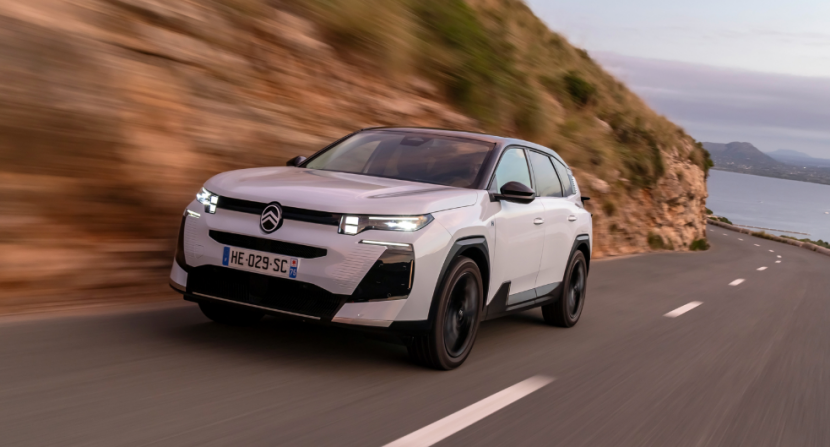






















Gasgoo Munich-On May 19, Stellantis Group unveiled the "E-Car" project, a push into compact, affordable electric vehicles. The first models are slated to roll off the line at the Pomigliano plant in Italy by 2028, debuting across multiple brands within the group.The "E" in E-Car stands for European, Emotion, Electric, and Environmental friendliness.Officially, the initiative is designed to counter the "unprecedented contraction" of Europe's compact economy car market in recent years.Yet, the timing of this decision warrants a closer look.The first vehicles won't hit the line for another three years, and in Europe, the affordable small car segment is vanishing rapidly.Stellantis' move is a tentative bet on the direction of EU policy, as well as a strategic counterattack forced by the pincer movement of financial crisis and Chinese brands.A "Vanishing" MarketThe decline of Europe's small economy car market isn't a gradual trend—it's a precipitous collapse.The data paints a stark picture. Stellantis Chairman John Elkann has noted that in 2019, Europe offered 49 models priced below 15,000 euros, with annual sales of around 1 million units. By 2025, that price bracket is expected to shrink to just one model, with sales falling short of 100,000.Further figures show that small cars held a 10% share of the European market in 2010, but that figure had slumped to just 3.8% in the first half of 2025. In the first five months of 2025, sales of entry-level vehicles plunged 24% year-on-year to 204,384 units—nearly two-thirds lower than the 1.1 million units sold in 2014.The Ford Focus ceased production in November 2025, following the discontinuation of the Fiesta in 2023, and the list of casualties keeps growing.Driving this disappearance is a pincer movement of profit-seeking and regulatory pressure.Automakers have voluntarily shifted their lineups toward higher-margin large SUVs and premium EVs, effectively abandoning the "low-margin segment" of cheap small cars. At the same time, intensifying EU safety regulations—mandating features like driver fatigue detection systems and SOS emergency call buttons—offer no exemptions for short-distance runabouts, driving up production costs disproportionately.Elkann stated bluntly, revealing that over 25% of Stellantis' engineers are dedicated solely to regulatory compliance—a task that generates "no actual added value."Under this logic, the near-extinction of small cars priced under 15,000 euros was inevitable.Strategic Positioning Driven by AnxietyThe E-Car project is billed as an "innovative and affordable" battery-electric vehicle. But viewed through the lens of the group's broader predicament, the move carries strategic weight far beyond a simple product launch.First comes the competitive pressure from Chinese brands.According to the European Automobile Manufacturers Association's (ACEA) 2025 Economic and Market Report, the market share of Chinese-made vehicles in the EU has risen to 7% from 5% in 2022. Over the same period, EU car imports from China surged 30.7% to 1,006,188 units, crossing the million-unit mark for the first time in history.Separately, Europe's EV market is expanding rapidly, centered on small, low-cost models. As of February this year, cumulative EV sales reached 379,604 units, a 14.8% year-on-year increase. In this context, local giants like Volkswagen and Renault are accelerating their small-car offerings. Volkswagen plans to launch the small electric SUV "ID.Cross" and the compact hatchback "ID.Polo" in Europe in the second half of this year.While traditional European automakers focused their efforts on moving upmarket, Chinese brands quietly established a presence in the affordable EV sector.Meanwhile, the EU implemented new CO₂ emission regulations on January 1, 2025, requiring the average carbon emissions of new passenger cars to drop to 95 grams per kilometer (WLTP standard). A full ban on internal combustion engine sales is set for 2035, allowing only zero-emission vehicles.This tightening regulatory constraint is forcing European automakers to accelerate the rollout of mass-market affordable EVs.For Stellantis, there is an even more pressing financial imperative behind the E-Car launch.Citroën C5 Aircross; Image source: StellantisIn 2025, Stellantis reported full-year net revenue of 153.508 billion euros, down 2% year-on-year, and a staggering net loss of 22.3 billion euros. Facing these massive losses, the group's CEO was forced to admit the company "overestimated the pace of the energy transition." Reports also suggest the group plans to expand its partnership with Leapmotor to access more advanced battery and electric drive system technologies.Against this backdrop, industry observers speculate that while the E-Car project is positioned as European-designed and European-built, it will likely rely heavily on technological support from Chinese partners like Leapmotor.Objectively speaking, the timing for the E-Car project is far from ideal. Given the speed of market contraction and the intensity of competition, a 2028 rollout seems delayed; by then, Chinese brands will likely have scaled their European market share and production capacity to new heights.Yet for Stellantis, this may be the optimal solution available between regulatory cracks and cost constraints: buying time for policy leeway while using Chinese technology reserves to patch up its own electrification shortcomings.Whether E-Car can trigger a revival for European small cars is a question that likely won't be answered on the production line in Pomigliano, but at the policy negotiating table in Brussels.