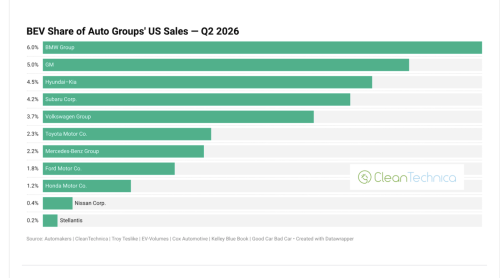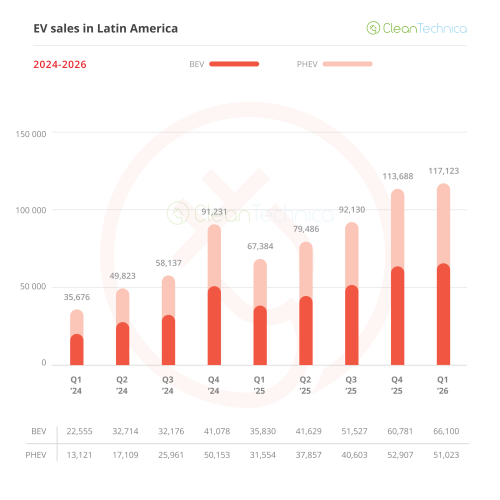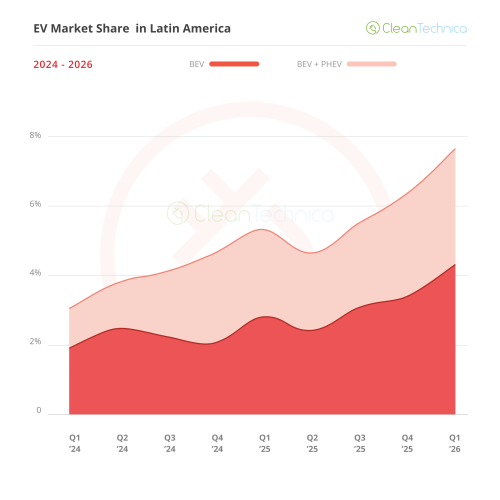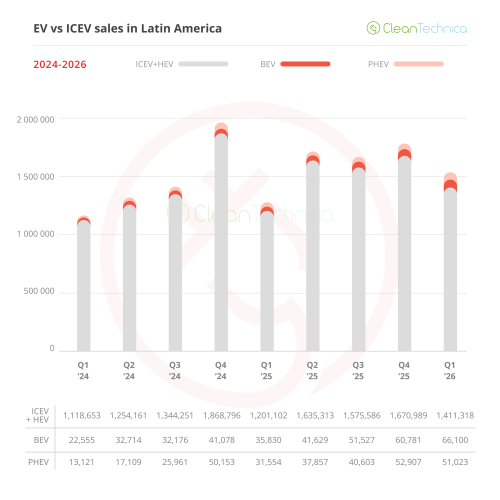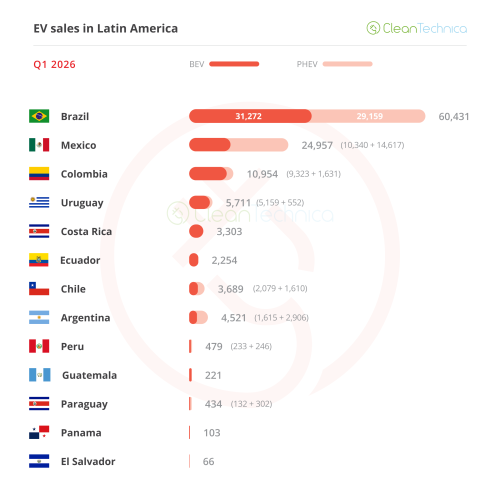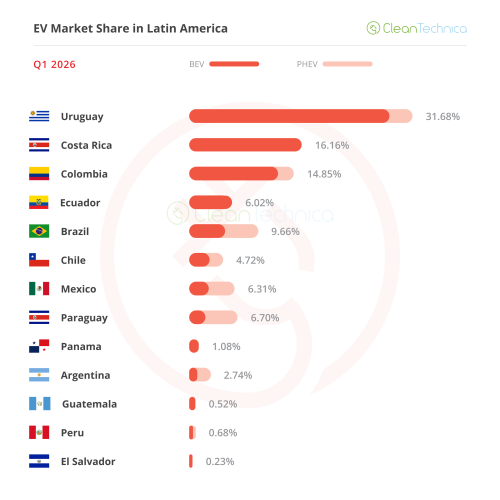
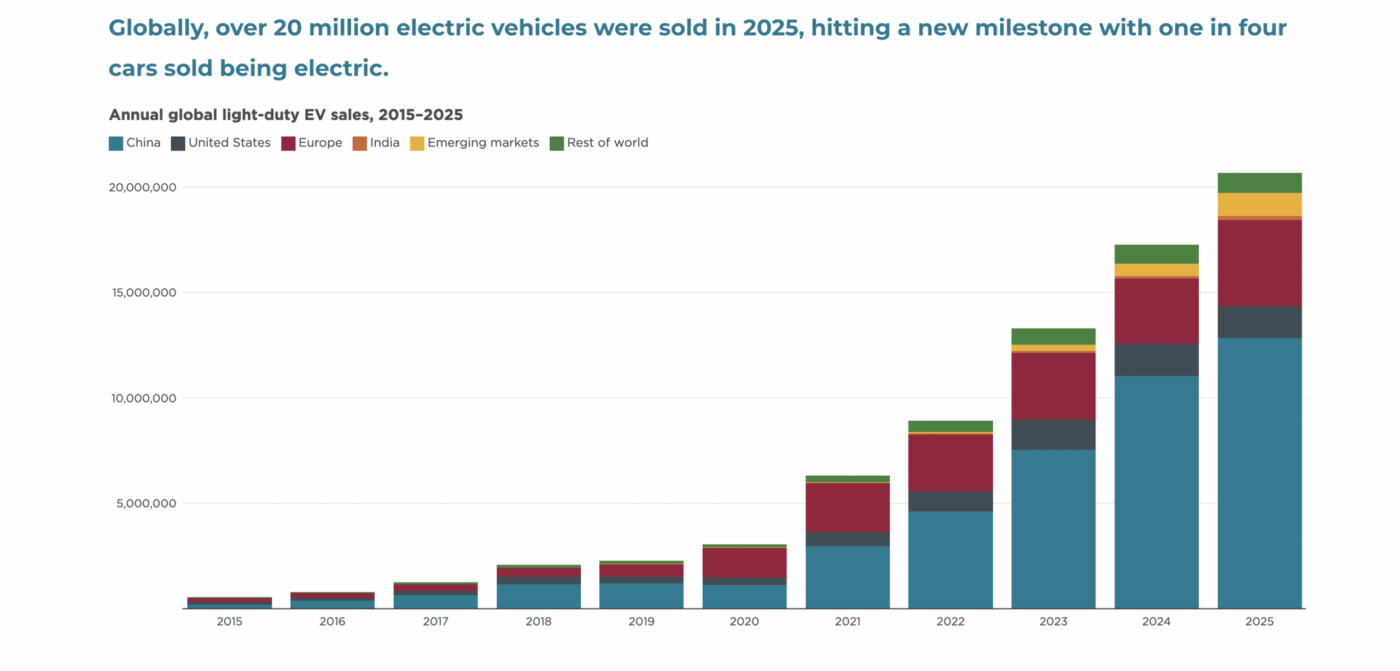
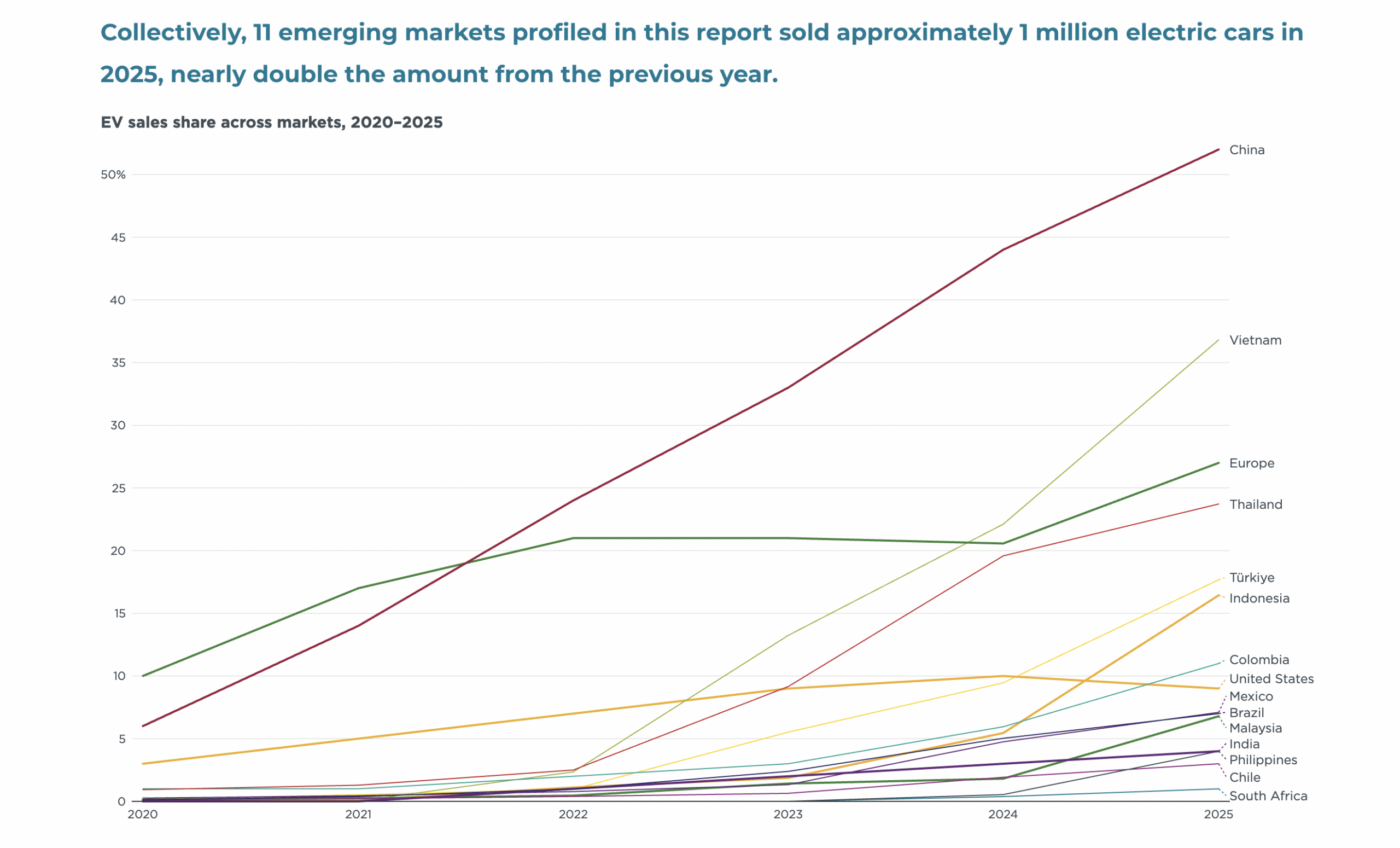



















Image: ToyotaThe International Council on Clean Transportation (ICCT) highlights that in 2025, roughly one in four new cars worldwide was a battery-electric vehicle or plug-in hybrid. The majority of the approximately 20 million new BEVs and PHEVs registered last year were in China, Europe, the USA, and India. However, this strong growth is not limited to these key markets alone. Electric vehicles are also gaining traction in less prominent countries, as shown in the latest edition of the ICCT’s ‘Global Market Monitor for Light-duty Vehicles.’ The 36-page report compiles and analyses sales figures in the four aforementioned automotive markets, as well as in eleven emerging economies.Key findings: China remained the world’s leading EV market in 2025. “China remained the world’s leading EV market, representing 62% of all global light-duty electric sales and capturing 71% of global production,” the report notes. The ICCT refers to ‘Light-Duty Vehicles (LDVs)’ and includes passenger cars and light commercial vehicles such as vans, pickups, and transporters. Additionally, while the ICCT uses the term ‘electric vehicles,’ it defines these in a footnote as battery-electric vehicles and plug-in hybrid vehicles.In Europe, approximately 4.1 million electric vehicles were sold last year, according to the ICCT’s counting method, representing a 33% increase compared to 2024. BEVs accounted for roughly twice the share of plug-in hybrids in the market—specifically, they made up 18% and 9% of the total drivetrain mix, respectively.In India, around 202,000 electric vehicles were sold in 2025—99% of which were battery-electric vehicles. According to the analysts, this marks a significant increase compared to the 125,000 units sold in 2024. The market share of electric vehicles in India thus reached 4.1% in 2025. Tata Motors, India’s second-largest automotive manufacturer, secured the top position with around 64,000 BEVs sold. Grafik: ICCTThere is much to suggest that this momentum in India will continue: “National and state policies supported growth in the electric LDV market in India in 2025, alongside the continued development of domestic EV manufacturing capacity. Key contributing factors included incentives for local EV investment and reductions of the Goods and Services Tax for EVs,” the study’s authors state.The USA, meanwhile, was the only major market to experience a decline in sales figures: in 2025, around 9% of passenger cars and light commercial vehicles sold in the United States were plug-in vehicles—a decrease of one percentage point compared to 2024. The USA’s share of global EV production also fell from seven to five per cent in 2025. This ‘was driven in part by automakers’ investment pullbacks and a shift away from EVs in response to the changing policy landscape,” the authors explain. Interestingly, on this shrinking market, manufacturers based in Europe led sales, including Volvo (31%, predominantly PHEVs), BMW (18%), Mercedes-Benz (14%), and the Volkswagen Group (14%).The ICCT’s report also dedicates significant attention to eleven emerging economies, which together accounted for around one million BEVs and PHEVs in 2025—nearly double the previous year’s figure. Vietnam achieved an EV share of 37%, followed by Thailand (24%), Turkey (18%), Indonesia (16%), and Colombia (11%).Emerging economies exhibited highly varied compositions of BEVs and PHEVs, influenced by a range of manufacturers and evolving policy measures, the authors clarify. In Vietnam (99%), Indonesia (96%), and Malaysia (90%), BEVs made up almost the entire sales volume of electrified vehicles, whereas PHEVs continued to gain importance in Latin America, South Africa, and the Philippines. Grafik: ICCTThe ICCT identifies the growing diversity of models as a key driver of increasing electrification. “As in 2024, European manufacturers continued to lead sales in the U.S. market, including BMW (18%), Volkswagen Group (14%), and Mercedes-Benz (14%). Automakers with higher EV sales shares also tended to offer more models, selling between 10 and 13 models in 2025.” In emerging markets, however, established automotive manufacturers continue to lag behind Chinese competitors. BYD, for instance, expanded its presence in new markets while maintaining its strong market position in plug-in vehicles in Brazil (63% market share of the country’s total BEV and PHEV sales), Indonesia (49%), and Colombia (48%).“Rapid growth in these emerging markets is attributable to an increase in domestic manufacturing (particularly VinFast in Vietnam and Togg in Türkiye), growing access to affordable models, and consistent policy support. Indonesia, Malaysia, and the Philippines all more than doubled their sales year-over-year,” the ICCT concludes.theicct.org