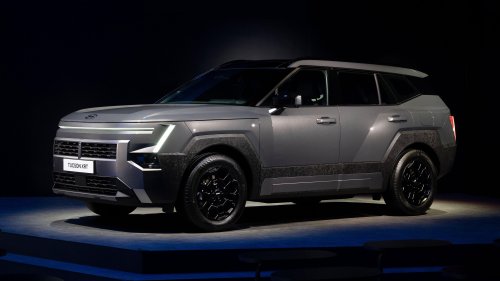
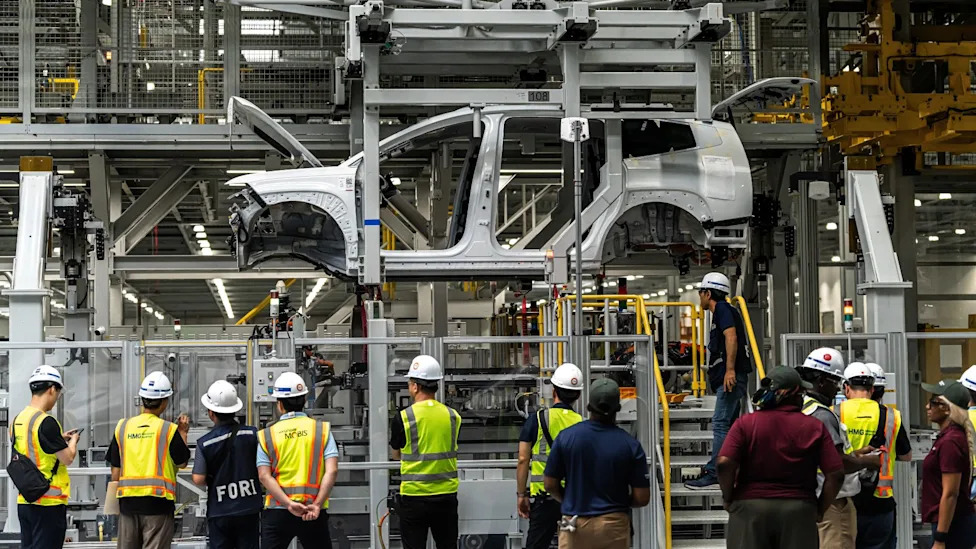
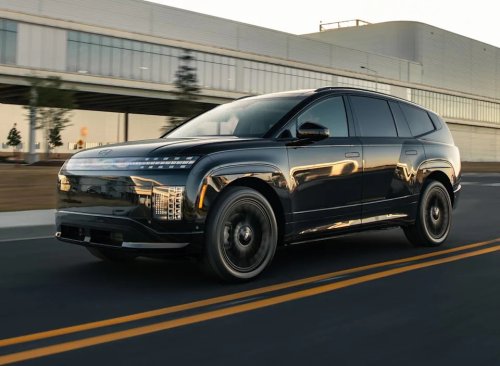
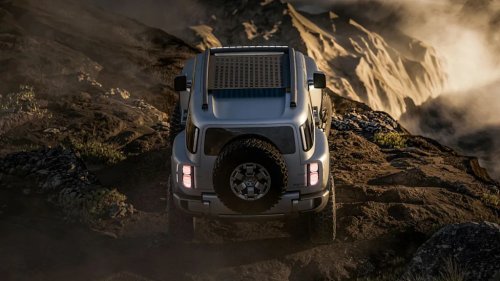
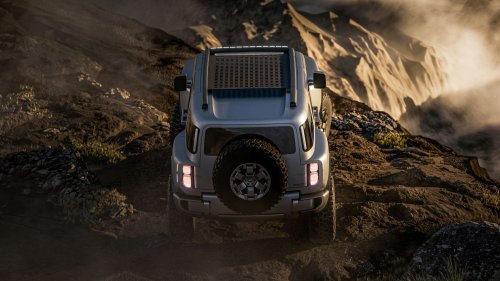
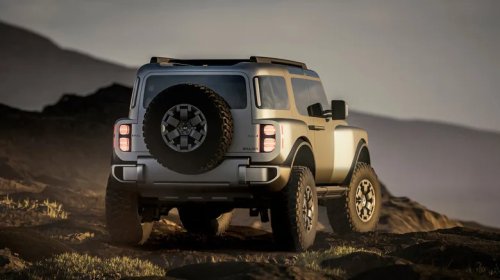
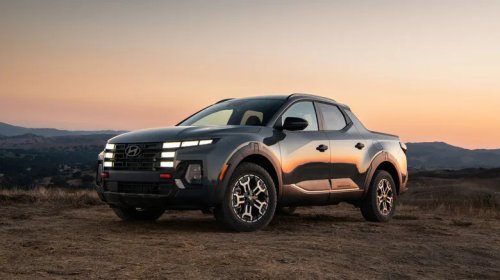
Hyundai's American-Built Global Pickup Has One Big Problem: Nobody Knows Where It's Actually Being BuiltHyundai just told the world it wants to build a real pickup truck in America and ship it to the rest of the planet. Every outlet covering the story named the same probable birthplace: Hyundai Motor Group Metaplant America, the electrified-vehicle complex in Ellabell, Georgia. There's a problem with that assumption, and it came from Hyundai's own CEO.Speaking with Automotive News on August 26, Hyundai CEO Jose Munoz confirmed the company is targeting 2029 to launch its first body-on-frame midsize pickup for North America, a genuine ladder-frame truck built to fight the Toyota Tacoma rather than a crossover wearing a bed. Munoz said the U.S. is under consideration as the primary production hub, with the resulting truck potentially serving export markets as well as American buyers.The Detail Everyone SkippedSix days earlier, in an interview with CNBC, Munoz said something that got buried once the Tacoma-fighter headline took over. Hyundai, he said, is evaluating a separate pool of investment, outside the Georgia Metaplant, specifically for body-on-frame vehicles like trucks and SUVs. He would not say where, and he would not say how much. That is a meaningfully different plan than the truck simply coming out of Georgia, and it contradicts the detail nearly every recap of the Automotive News interview treated as settled.AdvertisementAdvertisementThat is not a technicality. It is the difference between adding a line and building a plant. Metaplant's three products so far, the Ioniq 5, the Ioniq 9 and the Kia Sportage Hybrid, all share unibody platforms running through one continuous body shop and paint line built for electrified crossovers. A body-on-frame truck needs an entirely different process: a dedicated frame line where the ladder chassis gets built and painted on its own, followed by a body drop, where the cab and bed are lowered onto the finished frame and mated to the powertrain and axles. Toyota, Ford and Stellantis run separate truck plants for exactly this reason. You cannot bolt a frame line onto an EV crossover paint shop without a fresh, expensive build.This Part Was Never OptionalNone of that changes why Hyundai is doing any of this, and that part is settled. "Tariffs are helping accelerate our localization plan. That's very, very simple", Munoz told CNBC. Hyundai is targeting at least 80 percent of the vehicles it sells in the U.S. to be domestically built by the end of the decade, up from roughly 40 percent in 2024, backed by a $26 billion U.S. investment plan running through 2028, a push already detailed in Hyundai's own 2030 product plan.Here's what almost nobody explains about that number. Hyundai never had a real work truck in America, not because it did not want one, but because importing a competitive body-on-frame pickup into the U.S. has been a losing proposition since January 1964. That is when a 25 percent tariff on imported light trucks, nicknamed the chicken tax ever since, took effect as retaliation in a trade fight that, improbably, started over poultry. Every serious truck sold in America already gets built in North America because of that tariff: the Tacoma, the Ranger, the Frontier, even Mercedes vans that get partially disassembled and reassembled stateside to dodge it. Hyundai's first attempt at a truck, the Santa Cruz, sidestepped the fight entirely by staying a unibody crossover rather than a legal light truck, and it still lost the sales race to the mechanically similar Ford Maverick. If Hyundai wanted a real, competitive truck in this market at all, building it in America was never optional. Trump's additional 15 percent tariff on South Korean imports just piled a second reason on top of a sixty-year-old first one.The Twist Nobody's Pricing InWhat is optional, and far more interesting, is the export ambition. For sixty years the chicken tax has functioned as a one-way valve, keeping foreign trucks out without ever being built to help American-made trucks get anywhere else. Korean automakers, historically, ship vehicles into the United States, not out of it. Munoz is describing the reverse flow: using a tariff-protected American factory as a launchpad to sell trucks into markets Hyundai doesn't currently reach with anything remotely similar. That is a genuinely new use for an old law. It is also the part of the plan with zero specifics attached. No target markets. No volume. No confirmed factory.AdvertisementAdvertisementMunoz has also floated an SUV built on the same architecture to rival the Toyota 4Runner, and some reporting has paired that comparison with the Nissan Xterra. That is a trickier target than it sounds. Nissan confirmed in April that the Xterra is returning as a U.S.-produced, body-on-frame SUV, arriving in 2028, a year ahead of Hyundai's own 2029 truck target. Hyundai is not walking into an empty room. It is walking into one a rival is already remodeling.Who Actually WinsGeorgia's megasite is already the largest state-recruited economic development project in the state's history, and any additional truck investment, wherever it lands, means more jobs stacked on top of the roughly 8,500 already on-site and 6,900 more at supplier plants. That's good news if you're job hunting near Savannah. It's less simple than it sounds, because the same site has already shown how fast adding jobs runs into the question of who's actually available to fill them.A crossover with a bed is a marketing decision. A ladder frame is a capital expenditure. Hyundai's own CEO has now said, in two interviews six days apart, that he hasn't decided where to spend it. Every outlet covering this story confidently named the factory. The man who runs the company hasn't.Join our Newsletter, follow our Instagram page, and connect with us on Facebook.



















































![Hyundai, Hyundai Ioniq, Hyundai Ioniq 6, Hyundai's IONIQ 6 N looks ready for its US launch [Image]](https://cdn.topcarnews.net/thumb/id/aHR0cHM6Ly9pMC53cC5jb20vZWxlY3Ry-ZWsuY28vd3AtY29udGVudC91cGxvYWRz-L3NpdGVzLzMvMjAyNi8wOS9IeXVuZGFp-LUlPTklRLTYtTi1VUy1sYXVuY2gtMS5q-cGVnP3c9MTUwMCZhbXA7cXVhbGl0eT04-MiZhbXA7c3RyaXA9YWxsJmFtcDtzc2w9-MQ/e25ca12388b88f2eff0fe729e5bf28a1.jpeg?t=20260922&post_id=61807)
![Hyundai, Hyundai Ioniq, Hyundai Ioniq 6, Hyundai's IONIQ 6 N looks ready for its US launch [Image]](https://cdn.topcarnews.net/thumb/id/aHR0cHM6Ly9lbGVjdHJlay5jby93cC1j-b250ZW50L3VwbG9hZHMvc2l0ZXMvMy8y-MDI1LzExL0h5dW5kYWktSU9OSVEtNi1O-LUVWLWludGVyaW9yLVVTLmpwZWc/8b4d28a7c9fe71755e893ae7655465a8.jpeg?t=20260922&post_id=61807)
![Hyundai, Hyundai Ioniq, Hyundai Ioniq 6, Hyundai's IONIQ 6 N looks ready for its US launch [Image]](https://cdn.topcarnews.net/thumb/id/aHR0cHM6Ly9lbGVjdHJlay5jby93cC1j-b250ZW50L3VwbG9hZHMvc2l0ZXMvMy8y-MDI1LzExL0h5dW5kYWktSU9OSVEtNi1O-LUVWLXNwb3J0cy1jYXIuanBlZw/834ae2c25a7978c0eb29933e6899e9d9.jpeg?t=20260922&post_id=61807)
![Hyundai, Hyundai Ioniq, Hyundai Ioniq 6, Hyundai's IONIQ 6 N looks ready for its US launch [Image]](https://cdn.topcarnews.net/thumb/id/aHR0cHM6Ly9lbGVjdHJlay5jby93cC1j-b250ZW50L3VwbG9hZHMvc2l0ZXMvMy8y-MDI1LzExL0h5dW5kYWktSU9OSVEtNi1O-LUVWLTUuanBlZw/2c8908ffa1da556176e2ba3758ab0497.jpeg?t=20260922&post_id=61807)