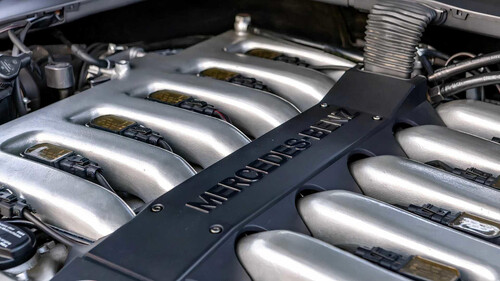
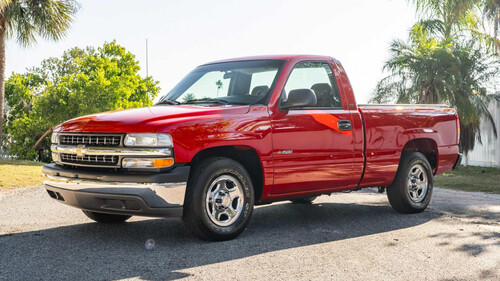
Emma Walker · 4 months ago@emmawalker10How to Maintain Your Truck for Maximum Performance and Longevity Liked byPost commentRelated Posts5 legendary Toyota models known for extreme longevity 45 · Emma Girard · 7 months agoToyota's Supercar, Mustang Longevity, Best Lexus: AutoGuide Show Ep 98 40 · Sarah White · 10 months agoTop Toyota models for longevity: 250,000+ mileage achieved 77 · Parker Lavoie · 7 months agoThis Toyota nails the rare balance between longevity and efficiency 94 · Mia Wilson · 8 months agoMercedes-Benz M120 V-12: Engineering excellence and longevity 70 · Mia Lee · 8 months agoChevrolet's LS V8: America's true forever engine | Longevity & durability 18 · Logan Martin · 9 months agoToyota's most reliable engines: A longevity ranking 65 · Annabelle Hall · 9 months agoIs The C8 Corvette Cheaper Or More Expensive To Maintain Than Previous Generations?Samuel Macdonald · 22 days ago9 Classic Cars That Can Be Costly to Own and MaintainSamuel Girard · 24 days agoEuropean Businesses in the Transport Sector Call for EU to Maintain Stability & Ambition on Decarbonising Heavy-Duty Vehicles (HDVs)Ava Anderson · 25 days agoBosch First-Half 2026 Sales Reach 46.4 Billion Euros, Maintains Full-Year Forecast 33 · Amélie Gagnon · 1 months agoThis Car Brand Costs The Most To Maintain Over 10 Years, According To Consumer Reports 42 · Matthew Poirier · 1 months agoOne Of The Cheapest Luxury Cars To Maintain Is A Compact SUV From 2016 79 · Alexander Mitchell · 1 months agoHorizon Robotics 2026 Interim Report: Gross Margin Maintains High of 66% 66 · Caleb King · 1 months agoAvatr Vice President Yong Jun: Partnership with Huawei Not a "Requisite", Brand Must Maintain Differentiation Capabilities 28 · Amélie Roy · 2 months agoHow Long Could A Well-Maintained Toyota Prius Actually Last? 17 · Adam Pelletier · 2 months agoCould You Maintain This 1990 Ferrari Testarossa As Well As the Current Owner Has? 79 · Lauren Girard · 3 months agoObsessively Maintained 1990 Ferrari Testarossa For Sale on BaT 63 · Justin Moreau · 3 months agoPower Battery Industry Maintains Rapid Growth; June Installations Up Over 30% Year-on-Year 40 · Grace Lewis · 3 months agoToyota Corolla Vs. Honda Civic: Which One Is Cheaper To Maintain? 42 · Emma Morgan · 3 months ago