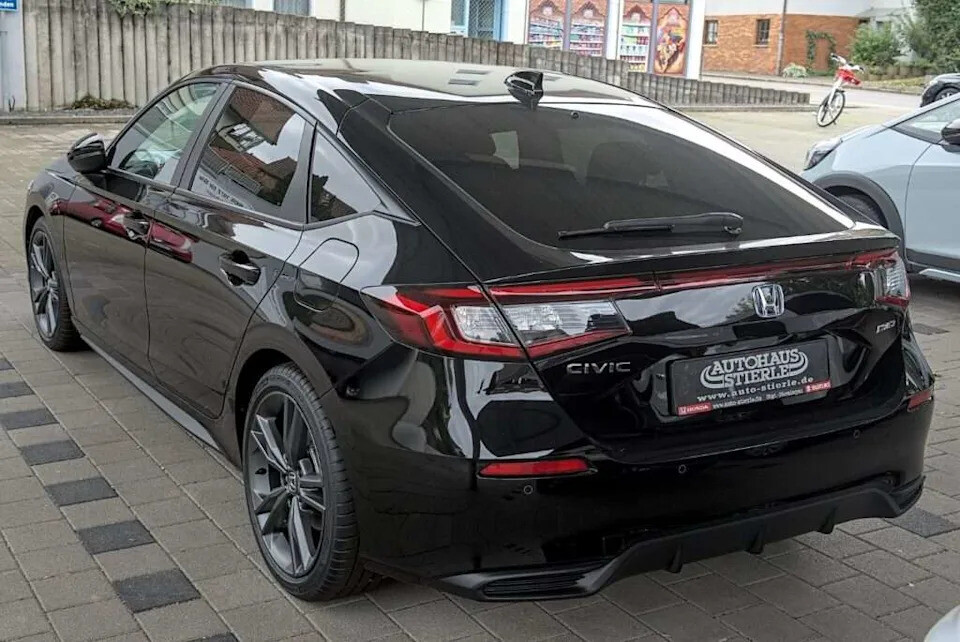
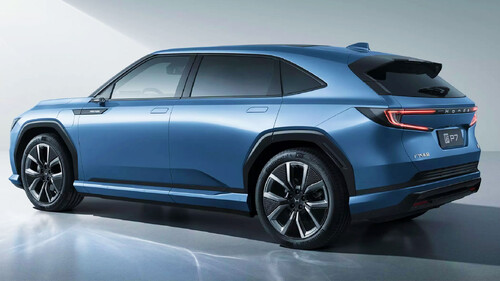
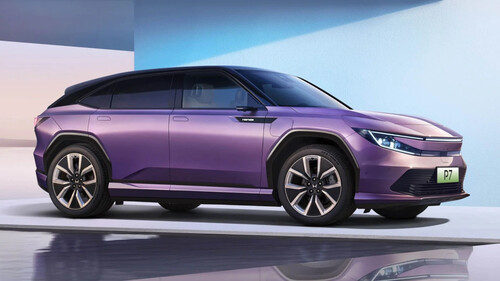
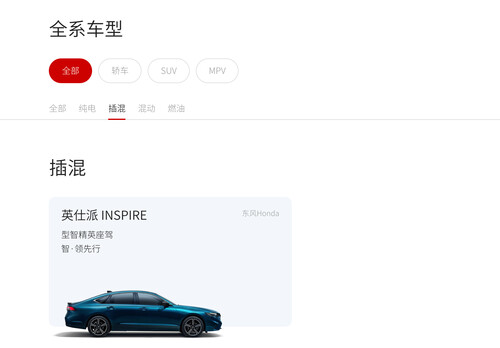
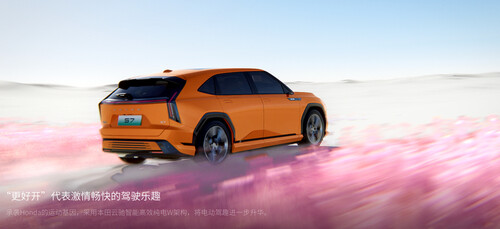
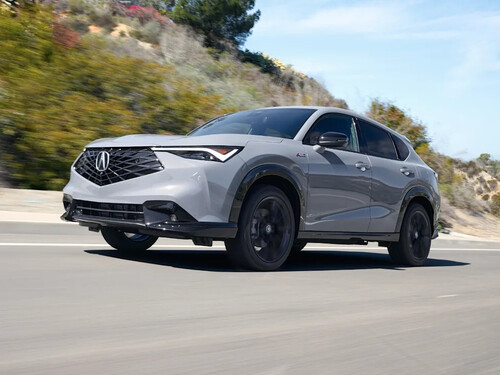
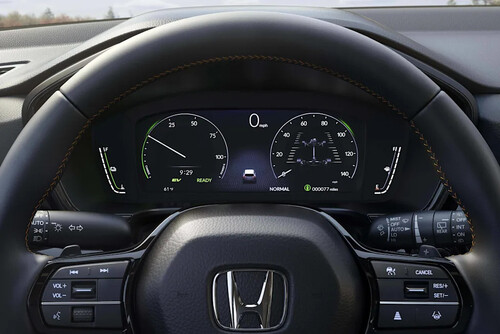
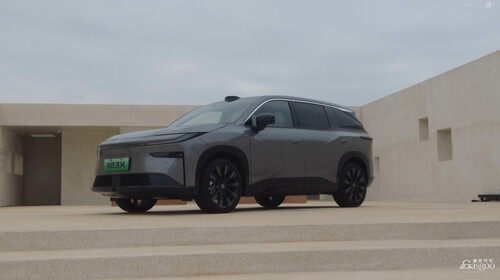
Gasgoo Munich- On April 8, 2026, Honda China released its latest sales figures: March sales stood at 36,201 units, a 34.34% year-on-year drop. First-quarter cumulative sales reached 122,470 units, down 22.4%. Meanwhile, cumulative sales in China surpassed the 20 million mark.In a market where new-energy vehicle penetration has climbed to 52.9%, joint venture brands are seeing their share shrink. In the first quarter of 2026, cumulative sales for joint ventures hit 1.053 million units, capturing just 24.9% of the market—a significant fall from 45.6% in 2021. The combined market share of the Japanese "Big Three" has slumped from a peak of 23.1% to under 9% in 2025.This macro backdrop provides a necessary reference point for understanding Honda’s current sales performance.Divergent Fortunes of Joint VenturesUnder the pressure of overall declining sales, Honda’s two joint ventures in China are showing a clear split in performance.GAC Honda has seen the steepest decline. According to GAC Group’s production and sales report released on April 2, GAC Honda sold 26,283 units in March, a 45.16% year-on-year plunge. First-quarter sales totaled just 40,061 units, a 56.80% drop from 92,729 units a year earlier. Among GAC Group’s four major brands, GAC Honda was the only one to record a sales decline.On a month-on-month basis, however, GAC Honda’s March sales surged 185.07% from February’s 9,220 units, signaling signs of a rebound—yet the year-on-year drop remains close to 50%.Image Source: GAC HondaLooking at the model mix, GAC Honda’s sales are heavily concentrated in a few nameplates. The Accord sold 10,639 units in March, while the Breeze sold 9,465 units; together, these two models accounted for 76.4% of the brand’s total sales. Meanwhile, former best-sellers like the Fit and Vezel continue to languish, with monthly sales falling below 2,000 units.Multiple factors are behind GAC Honda’s slump. Internal combustion engine vehicles have long made up over 95% of sales, creating a severe misalignment with the market’s rapid shift toward new energy. Core models rely on price cuts to maintain volume amid intense competition from domestic new-energy rivals, eroding brand premium. Additionally, production suspensions in early 2026 due to chip shortages exacerbated short-term supply pressure.Dongfeng Honda, for its part, posted positive year-on-year growth in the first quarter with cumulative sales of 71,432 units (including exports). January sales hit 31,377 units, up 4.4%; February reached 17,583 units, a 10.1% gain, despite the Lunar New Year holiday and broader industry adjustments.Image Source: Dongfeng HondaBy model, the CR-V sold 40,771 units in Q1, up 4.7%, with monthly sales exceeding 10,000 units for three consecutive months. The Inspire sold 9,787 units, up 19.2%, while the HR-V sold 6,517 units, surging 234.7%. However, Civic sales have fallen to around 2,000 units per month, well below peak levels.It is important to note that Dongfeng Honda’s growth comes after five years of sharp declines. Annual sales stood at 820,400 units in 2020 but fell to 325,800 units in 2025, meaning the current recovery is a localized improvement off a low base. In early 2026, Dongfeng Honda launched a new HR-V, bringing mid-to-high-end joint venture technology down to the 100,000-CNY mainstream market. It implemented a price stabilization strategy, which supported its counter-trend growth in the first quarter.In the new-energy sector, Honda has yet to build a product with significant market influence. The e:NS1, launched in 2022, has consistently sold under 100 units per month. The all-electric S7, launched in 2025, has accumulated fewer than 500 sales in its first three months. Early products relied on converted internal combustion platforms, and their intelligent features lag noticeably behind domestic rivals at similar price points, limiting market acceptance. Moreover, Dongfeng Honda’s product development cycle remains 4 to 5 years—far longer than the 18 to 24-month iteration speed of domestic brands—indicating insufficient localized responsiveness.Strategic Shifts in NEV Transformation and Market PositioningThe sales pressure Honda faces in China reflects the broader challenge for joint ventures in the new-energy era. Its own financial strain and strategic adjustments reveal the underlying reasons for this structural challenge.In March 2026, Honda projected its first annual net loss since going public 69 years ago. The loss is expected to reach 420 billion to 690 billion yen (approximately 18.2 billion to 29.9 billion yuan), driven primarily by a stalled electrification strategy. Writedowns and losses from re-evaluating this strategy could total up to 2.5 trillion yen, highlighting the immense financial strain of the transition.Strategically, Honda is undergoing a profound adjustment. In February 2026, it announced it would pause several pure electric vehicle projects to instead strengthen its hybrid technology path, abandoning its previous pure-electric-centric development route. Additionally, Honda has terminated its electric vehicle partnership with General Motors. A previously stated goal of selling 2 million pure EVs annually by 2030 has been formally shelved, with new targets set at 700,000 to 750,000 EVs and 2.2 million hybrids.Image Source: Dongfeng HondaA notable development is Honda’s attempt to export China-made electric vehicles back to the Japanese market. Dongfeng Honda’s e:NS2 is confirmed for export to Japan. It will be sold as the Insight there starting in spring 2026, with an initial limited run of 3,000 units. This marks the first time a Japanese automaker has sold its own brand’s "Made in China" electric vehicles in the domestic market. The move signifies headquarters’ recognition of its Chinese joint venture factories’ manufacturing capabilities. Shipping e:N series models from China back to Japan not only keeps idle capacity running but also fills gaps in the local pure EV lineup.Furthermore, Honda continues to advance its hybrid technology roadmap, planning to lift hybrid sales to 2.2 million units. The 2026 global product plan still includes models like the new CR-V, e:Ny1, and the 0 Series, while the Chinese market remains focused on upgrading both electrification and hybrid technologies.In summary, Honda China’s current sales profile is characterized by "support from a few leading models, insufficient new-energy product competitiveness, and divergent performance between joint ventures." This highlights its structural challenges during this market transition. The milestone of 20 million cumulative sales serves as a reminder to the market of the changes this brand is undergoing. It has deep roots in China spanning 26 years. From a global perspective, Honda’s transformation path is, to some extent, a challenge shared by all joint ventures in the new-energy era.