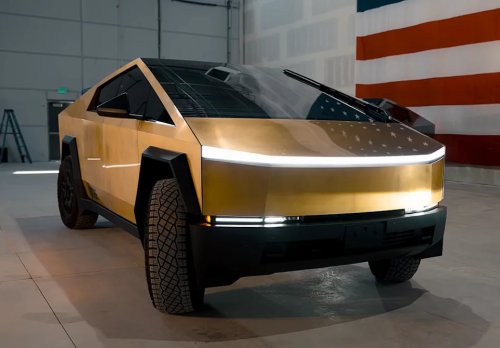
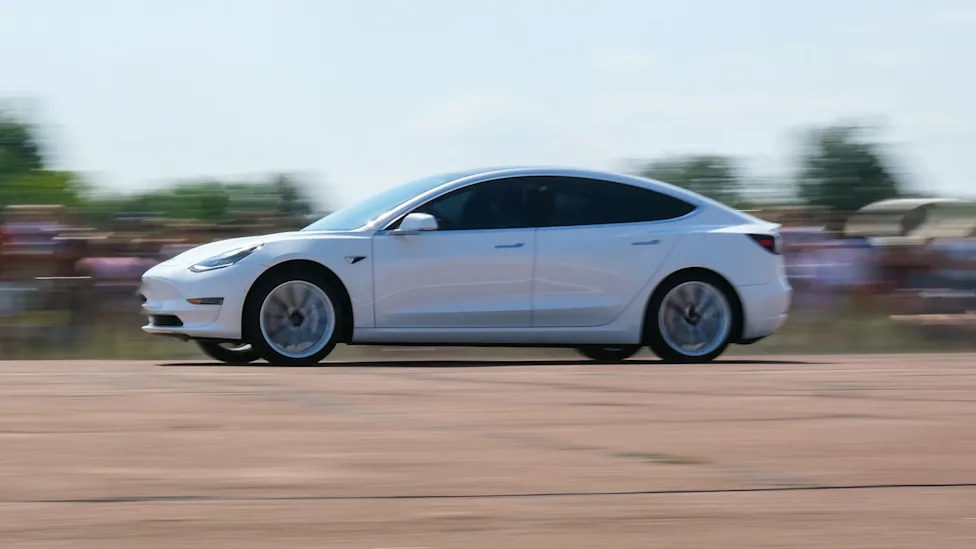
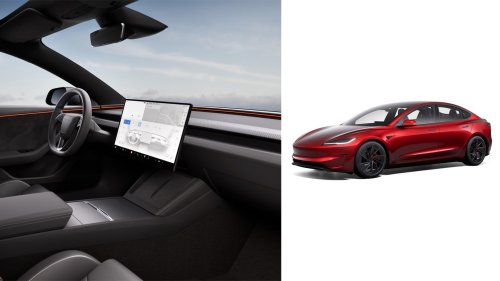
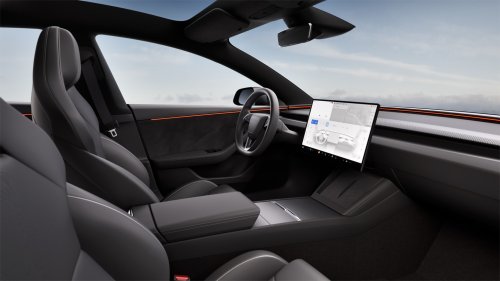
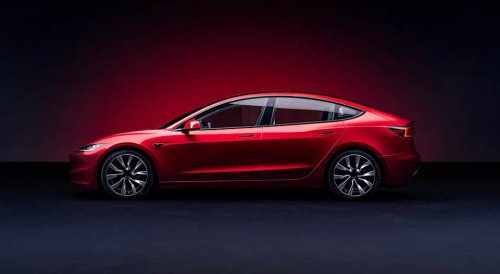
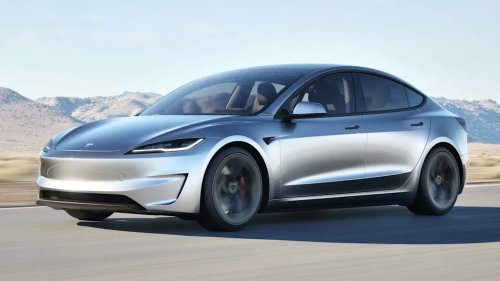
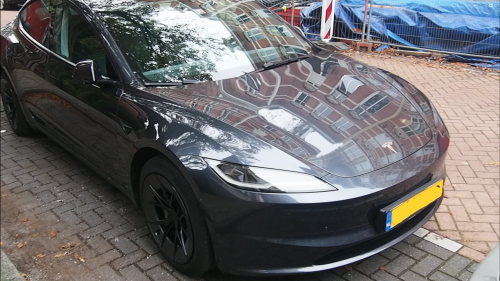
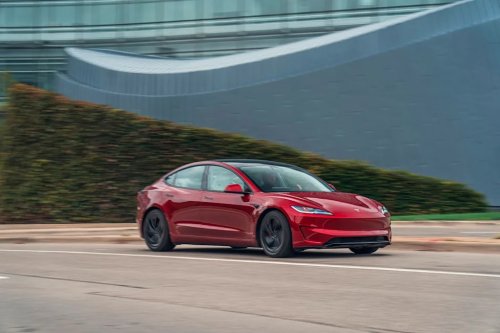
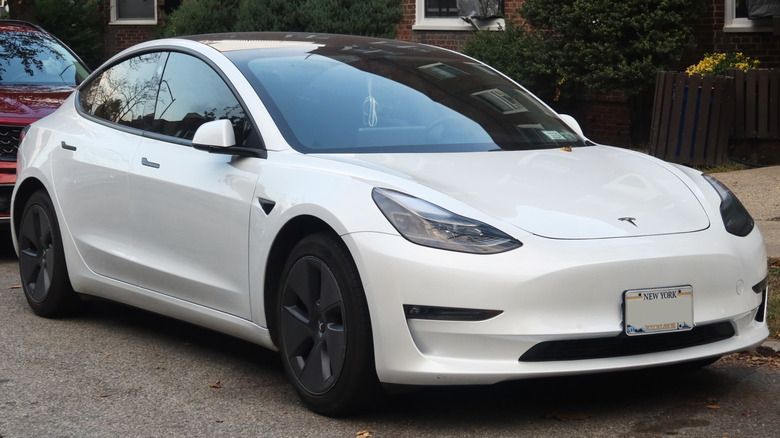
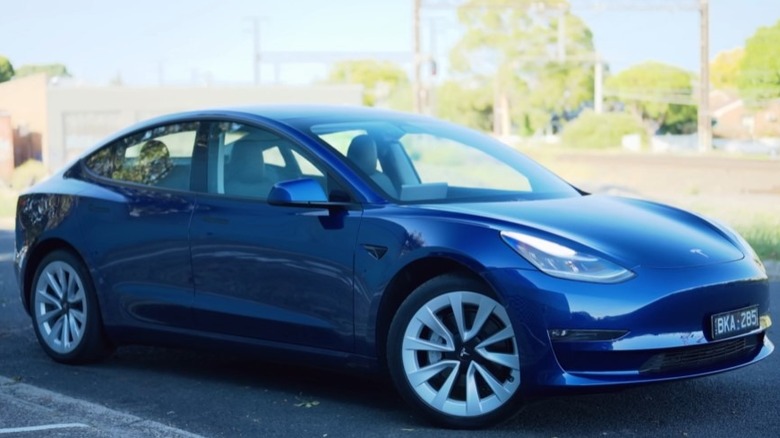
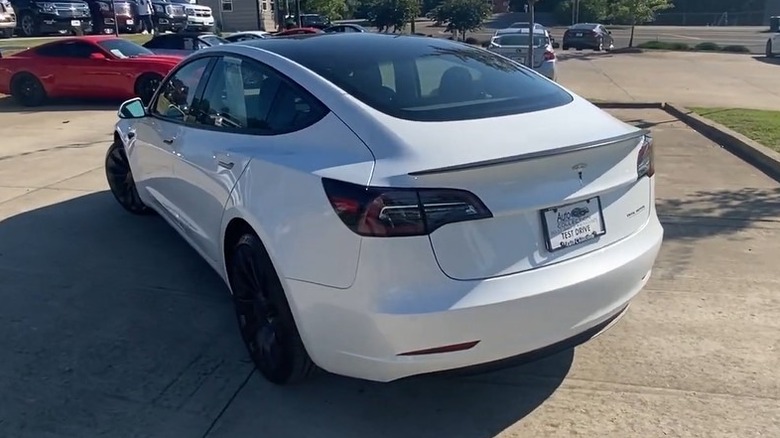
Wikimedia Commons/Kevauto With well over one million units sold since its 2016 debut, there's no denying that the Tesla Model 3 is a hugely popular electric sedan. Not that its success is a surprise. It's quiet, comfortable, and exceptionally fast. It charges quickly and achieves more than 300 miles of driving range between charges. But how does it perform in terms of depreciation? Not very well, sadly. Generally speaking, the projected Tesla Model 3 depreciation after five years is a staggering 61%, according to CarEdge. On paper, that means the new $38,380 Tesla Model 3 Standard, could be worth just $14,968 five years down the line, leaving owners with a massive loss of $23,412 in half a decade. Even so, the Model 3 depreciates less dramatically than many of its Tesla siblings, save for the Cybertruck, which has seen a dramatic drop in sales of late, despite its previous popularity and its more upmarket image. Moving on to the 2021 Tesla Model 3, the very same CarEdge data shows its value will have dropped by 59% after five years. This assumes that the car is in good condition, had an original price of $51,380, and covered 13,500 miles in each of the first five years. But then again, depreciation is not an exact science, and we did find some notable gulf between CarEdge's quoted depreciation and the Kelley Blue Book (KBB) figures, which puts the 2021 Tesla Model 3 depreciation rate at 51% at the time of writing. This is based on the entry-level Model 3's purchase price of $39,190 and current resale value of $19,150. Depreciation rates for the various 2021 Tesla Model 3 trims YouTube/CarSauce Tesla offered the Model 3 in three trim levels, with the Standard Range Plus being the starting point. It bundled heated front seats, simulated leather upholstery, and wireless smartphone charging with 263 miles of range, a 7.6-kW onboard charger, and 170 kW max Supercharging. According to KBB, this version depreciates the least out of the three 2021 Tesla Model 3 grades, at 51%. The mid-market Long Range trim, meanwhile, adds extra features such as standard all-wheel drive (the base trim is rear-wheel-drive), heated rear seats, and a 15-speaker premium sound system. It also provides 353 miles of range and a bigger 11.5-kW onboard charger, with the car configured to charge at up to 250kW when you plug in and charge on Tesla's Supercharger network. The 2021 Long Range is deemed to have lost around 55% of its value over the past five years, given it cost $48,190 and has a current resale value of $21,600. However, the worst-performing trim overall is the range-topping Model 3 Performance. It has suffered a significant 57% loss in its value in the last five years, going from being worth $56,190 when new to now having a resale value of $24,100. How does the Model 3 compare to its rivals in terms of depreciation? YouTube/Nothin' But Car Reviews Due to factors such as battery health concerns on used EVs and the constant influx of newer models with better range and charging, electric cars tend to experience higher initial depreciation compared to fuel-powered models. So you'll find the Tesla Model 3 isn't alone in dealing with steep depreciation. In fact the Model 3 outperforms numerous EVs when it comes to depreciation, and looking specifically at its biggest rivals for the 2021 model year, the Polestar 2 is one of the worst offenders, losing a whopping 72% of its original price tag of $61,200 after the first five years. That works out at $19,000 or 28% resale value. This figure is lower than even the retained value of the Tesla Model S, despite the latter's reputation for being one of the worst-depreciating Tesla models out there. Based on its starting price of $70,620 and KBB's estimate that a base-spec 2021 Model S would have a resale value of $32,400 right now, the Model S' five-year depreciation stands at 54%. One luxury electric car that seems to be doing even better is the 2021 Porsche Taycan. Rather than depreciate, it is seeing a massive boom in value so far in 2026, gaining over $5,000 in the past few months alone. As a result, KBB's data says that your entry-level 2021 Porsche Taycan now has a resale value of $45,100, up from the $39,494 estimate at the end of 2025. Given those figures are compared against the original $81,250 price, the Taycan retains 56% of its value after five years.



















 +34 others