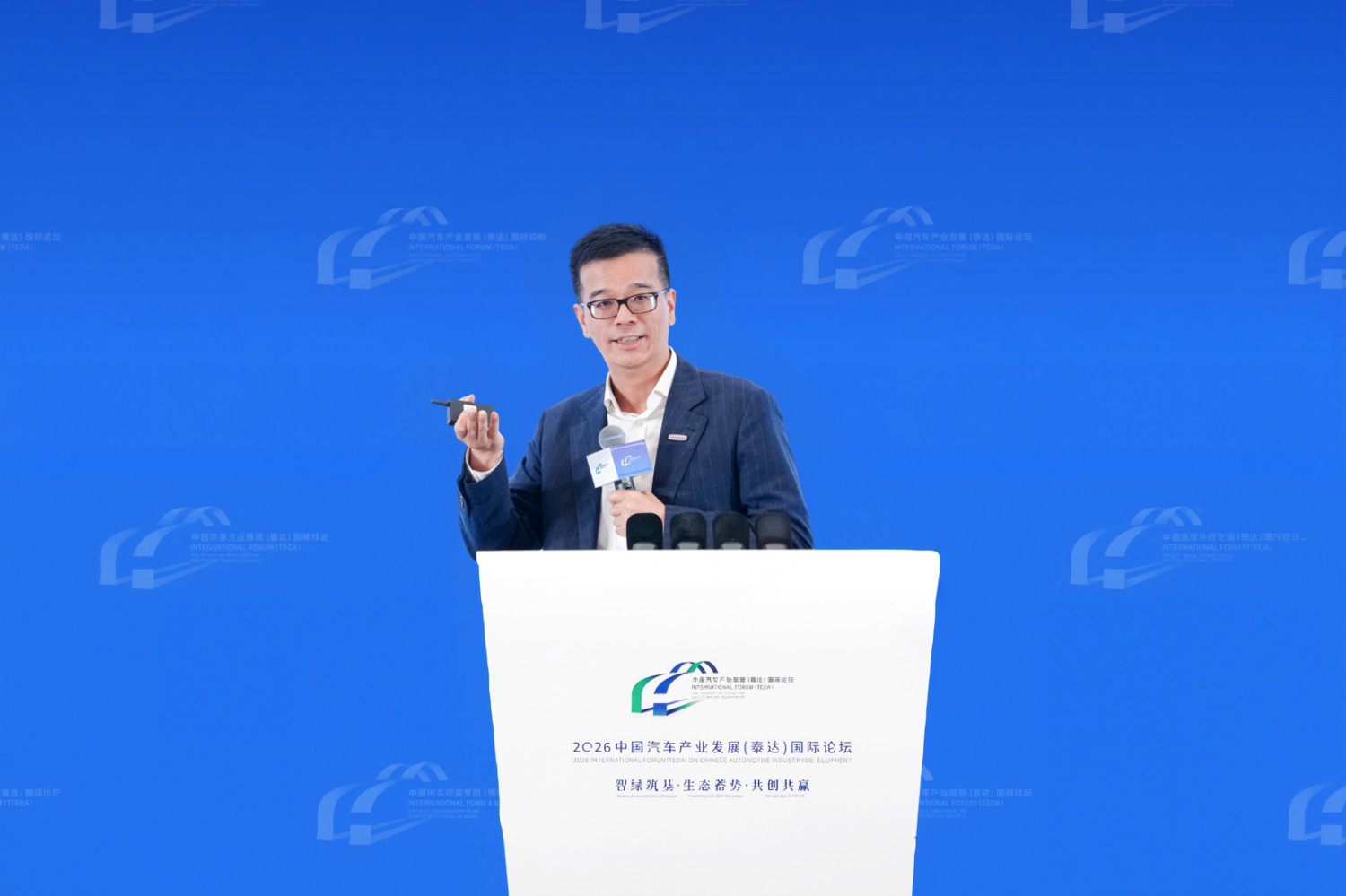
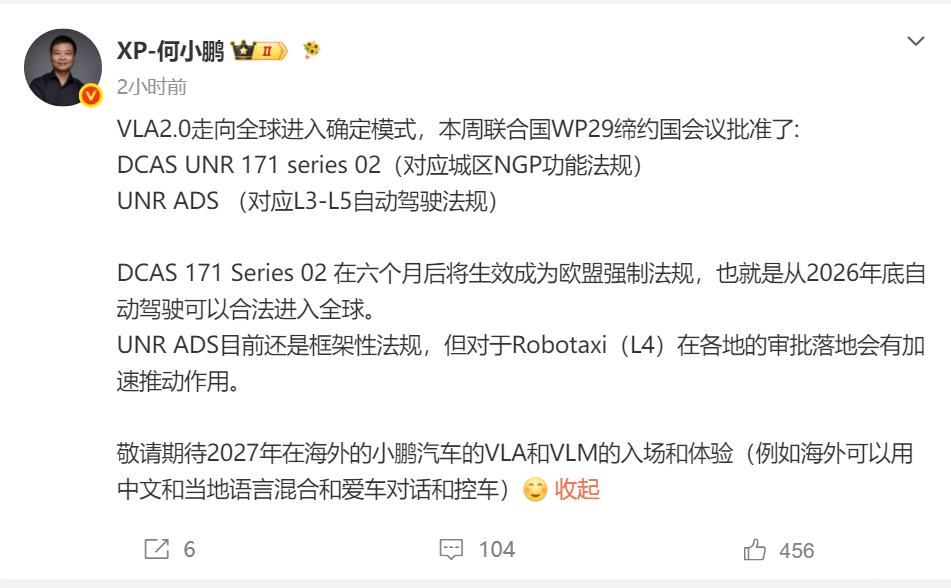
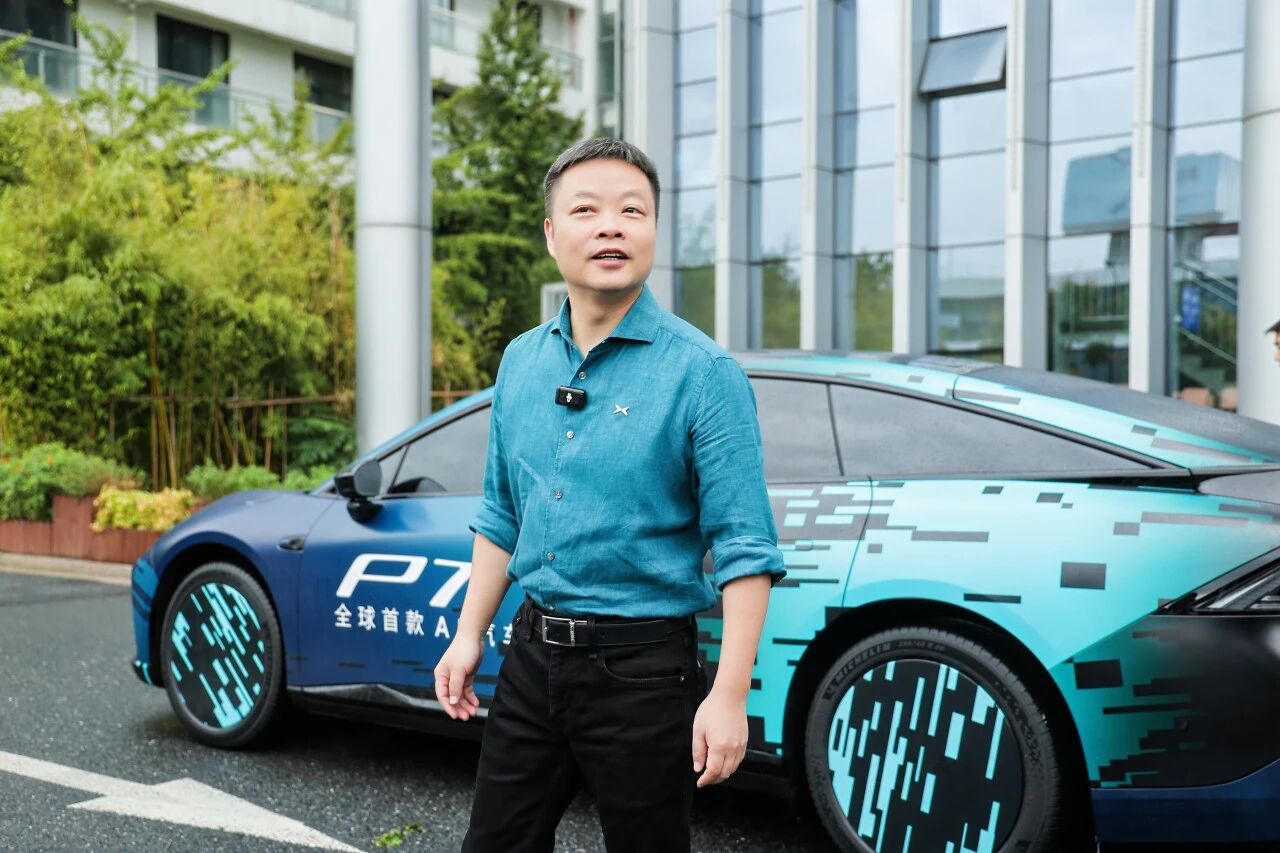
Gasgoo Munich- He Xiaopeng, chairman and CEO of XPENG, addressed the recent industry debate over autonomous driving technology routes in an interview with media outlets on April 16. He noted that market diversification is a positive sign and welcomes the exploration of different technological paths. Yet the ultimate goal should focus on safety—specifically, extending the distance between driver interventions from once every 100 km to 1,000 or even 10,000 km to genuinely optimize the user experience.Image source: XPENGPreviously, Jin Yuzhi, senior vice president of Huawei and CEO of Yinwang, argued that the L3 stage is an unavoidable bridge to L4 and L5 autonomous driving. In contrast, XPENG, Tesla, Baidu, and academic Ouyang Minggao advocate for pushing directly toward L4 technology. Consequently, the question of whether to skip L3 has once again become a focal point of industry debate.He Xiaopeng stated bluntly in the interview that L3 and L4 are not strictly commercial classifications; they were originally technical divisions that did not fully consider commercial implementation. He believes the most prudent evolution path for intelligent driving is to iterate directly from L2 to L4. This process involves continuously accumulating data, prioritizing safety above all else, and simultaneously driving the improvement of relevant policies and regulations.Separately, news came on April 15 that the mandatory national standard "Intelligent Connected Vehicles — Safety Requirements for Combined Driving Assistance Systems" (draft for approval), proposed and managed by the Ministry of Industry and Information Technology, has completed compilation. The standard applies to Class M and N vehicles equipped with combined driving assistance systems, providing a unified basis for safety design, test verification, and conformity of production assessment.The standard categorizes combined driving assistance systems into three types: basic single-lane, basic multi-lane, and pilot, specifying corresponding safety requirements for each. On a functional level, it sets technical indicators for capabilities such as lane cruise control, lane change control, obstacle avoidance across lanes, and passage through intersections and roundabouts. It also sets requirements for the intervention strategies of risk mitigation functions and the selection of target stopping areas.



















 +12 others