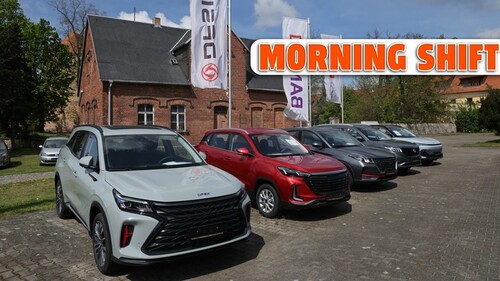
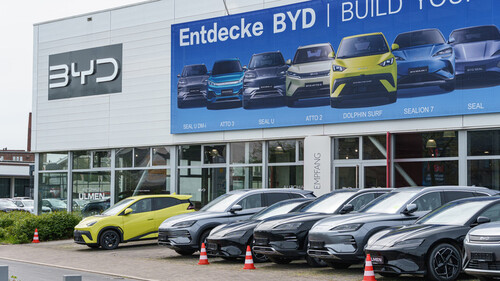
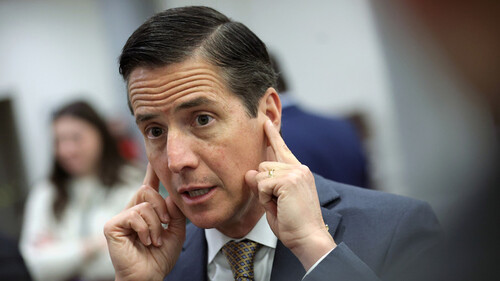
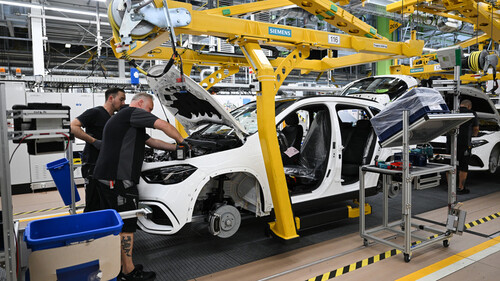
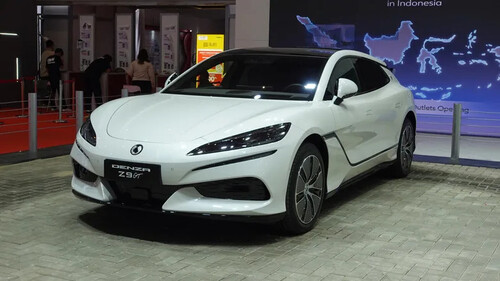
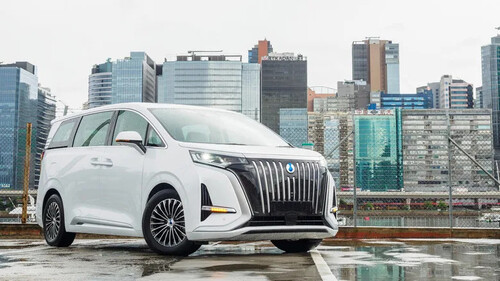
Jackson Côté · 4 months ago@jacksoncote29Germany Pushes to Block EU Tariffs on Chinese EVs Ahead of July 4 Launch Liked by+13 othersBYDMGMercedes-Benzbmwcherymercedes-benzPost commentRelated PostsA One-Off Turbocharged Mercedes-Benz 190E Just Sold For $31,750 After A $100,000 RestorationBenjamin Turner · 5 days agoChinese-Made Cars Are Already Here. We’ve Even Tested a Few. 29 · Mason Green · 1 years agoParis Motor Show 2026 preview: the key cars set to steal the show 46 · Ella Pelletier · 17 days agoIIHS Launches New Attack In War To Make Heavy-Duty Trucks And Cargo Vans Less DeadlyEmma Lewis · 5 days agoVFACTS: Australia’s best-selling brands and models in the first half of 2025 24 · Amélie Brown · 1 years agoNew BMW i3 gets a huge £10k price cut with arrival of 40 xDrive model 75 · Oliver Rogers · 17 days agoMercedes Recalls Over 30,000 S-Class Cars Over Brake Fluid Leak RiskVictoria Green · 5 days agoThe 10 best Tesla alternatives 2025: Our favourite rivals to Elon Musk’s EVs 48 · Connor Macdonald · 1 years agoNew BMW i3 gets a huge £10k price cut as entry-level 40 xDrive model arrives 27 · Noah Turner · 17 days ago459 hp, 0-60 in 3.9 sec, and AWD – meet Mitsubishi's new-age electric EVO [video]Ethan Brown · 6 days agoAugust 2026 Passenger-Vehicle Domestic-Brand Sales Ranking: BYD Holds a Commanding Lead with 368,323 Units | Gasgoo Research InstituteAiden Leblanc · 5 days agoBYD tests ultra-luxury EV with coach doors and a solid-state battery 23 · Nicole Côté · 17 days agoGenesis G90 Resale Value: How Much Has The Luxury Sedan Depreciated?Jackson Hill · 6 days agoSporty Cars Overshadow Subcompacts At Beijing Auto ShowMia Harris · 5 days agoChinese EV maker enters Australian market, with 3 new cars to rival BMW and Range Rover 88 · Alexander Turner · 20 days agoJay Leno Drives The Original BMW M5 And Falls In Love With Its Silky-Smooth Straight-SixZoë Green · 6 days agoAustralian Plugin Vehicle Sales, September Update — Are Mainstream Media Finally Waking Up?Jackson Labelle · 5 days agoChinese Car Sales Are Surging In Europe And U.S. Senators Want To Make Sure That Can't Happen Here 90 · Liam Green · 22 days agoBig Trucks And Vans Struggle To Avoid Crashes, Says IIHSChloé Wilson · 6 days agoFrance Passenger Car Market in September 2026: BYD Surges, Chinese Brands Reach 8.1% ShareAdam Pelletier · 7 days ago




 +13 others









![459 hp, 0-60 in 3.9 sec, and AWD – meet Mitsubishi's new-age electric EVO [video]](https://cdn.topcarnews.net/en/69622/thumb/id/aHR0cHM6Ly9pMC53cC5jb20vZWxlY3RyZWsuY28vd3AtY29udGVudC91cGxvYWRzL3NpdGVzLzMvMjAyNi8xMC9taXRzdWJpc2hpX2FzeF92cmUuanBnP3c9MTUwMCZhbXA7cXVhbGl0eT04MiZhbXA7c3RyaXA9YWxsJmFtcDtzc2w9MQ/df09dac7018f01bb4b02a95fa8fc92c8.jpg)
![459 hp, 0-60 in 3.9 sec, and AWD – meet Mitsubishi's new-age electric EVO [video]](https://cdn.topcarnews.net/en/69622/thumb/id/aHR0cHM6Ly9lbGVjdHJlay5jby93cC1jb250ZW50L3VwbG9hZHMvc2l0ZXMvMy8yMDI2LzEwL2V2b19tYWluLnBuZw/84f4bbd77b3e2b45aae88e7c860675d8.jpg)
![459 hp, 0-60 in 3.9 sec, and AWD – meet Mitsubishi's new-age electric EVO [video]](https://cdn.topcarnews.net/en/69622/thumb/id/aHR0cHM6Ly9lbGVjdHJlay5jby93cC1jb250ZW50L3VwbG9hZHMvc2l0ZXMvMy8yMDI1LzAzL0RFUy0xMDM4X0VsZWN0cmVrLUJhbm5lcnNfRVZzXzA3OTdjMi5wbmc/e850e929e3168f8c7ff73cd888e54add.jpg)