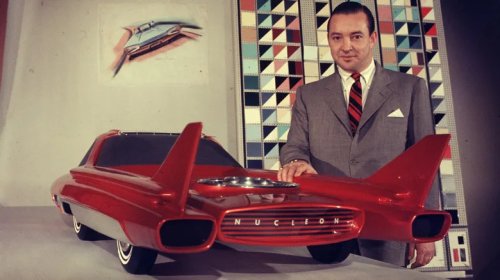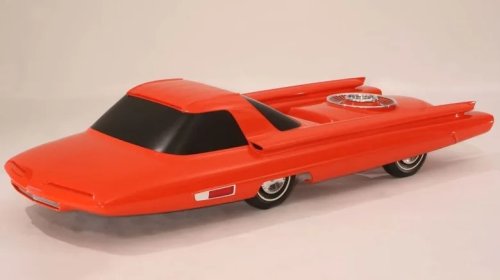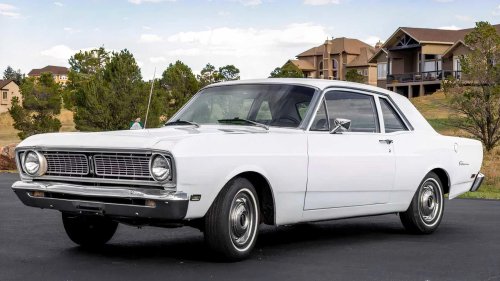
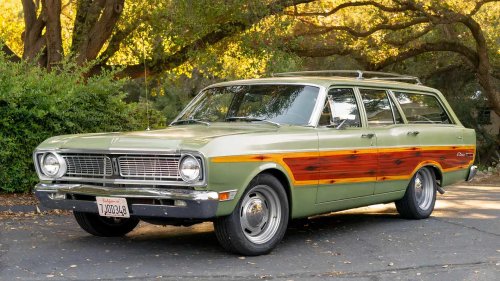
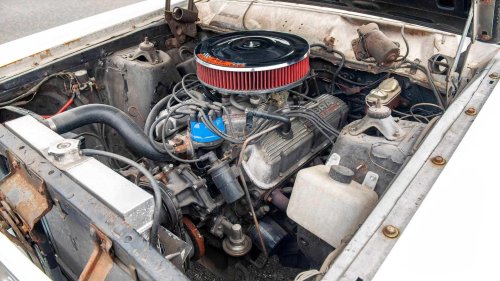
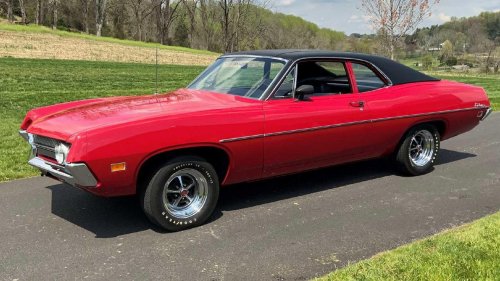
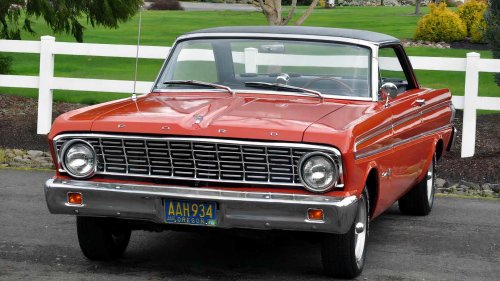
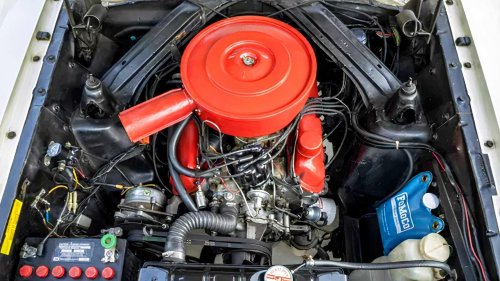
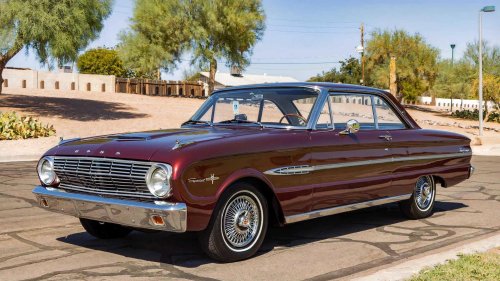
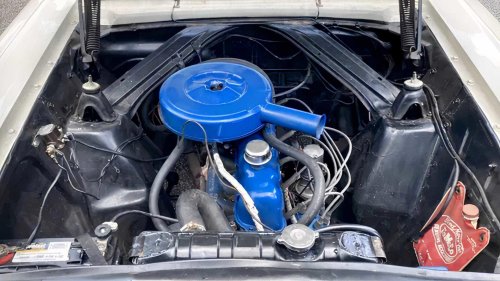
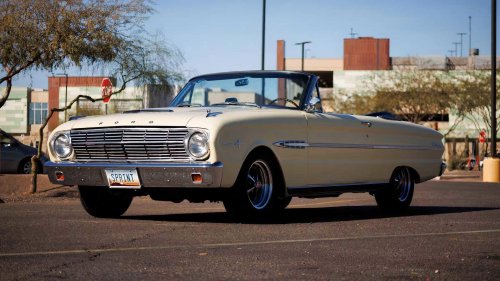



















Jump LinksAll Ford Falcon Models – Body Styles by YearEngine Options and PerformanceThird Generation Ford Falcon Production YearsThird Generation Ford Falcon Special Trims/Editions/ModelsThird Generation Ford Falcon Prices and Value Over the YearsEngine Options and PerformanceSecond Generation Ford Falcon Production YearsSecond Generation Ford Falcon Prices and Value Over the YearsEngine Options and PerformanceFirst Generation Ford Falcon Production YearsFirst Generation Ford Falcon Prices and Value Over the YearsTheFord Falcon may not attract the same oohs and aahs as other popular Ford muscle cars from the ‘60s, but without it, the Blue Oval brand may not have enjoyed the success it has today. The Falcon was the first-ever compact car built by Detroit's Big Three when it debuted in 1960, kicking off a wave that defined the era. Although it was only in production for a decade, the Falcon left a permanent mark on the muscle car industry and will go down in history as an underrated icon. Let's dive deeper into the humble Falcon's history. Information About Every Ford Falcon Generation 1970_ford_falconIn 1935, Edsel Ford designed a new luxurious concept car and slapped the “Falcon” name on it. However, he later decided the new car couldn't fit in with other Ford models, so the design eventually became the Mercury.More than two decades later, the Falcon name made a comeback, but this time as a Ford production model. The Ford Falcon marked a major shift in the American auto market. Before its debut in 1960, Detroit's Big Three focused purely on larger and more profitable cars in the US market. However, towards the mid-50s, they realized this strategy would no longer work since rising prices for large cars had made smaller cars like Fiats, Toyotas, Volkswagens, and Renaults increasingly attractive, shrinking their sales. Research also showed that many US buyers would prefer to buy domestic if the manufacturers made smaller and more affordable cars. Furthermore, many American families wanted to buy a second car, and research showed women thought that full-size cars had grown too large and cumbersome.As such, there was a rush to enter and dominate the compact car market, and Ford beat Chrysler and Chevrolet to the punch when it launched the Falcon in 1960. Chrysler launched the Plymouth Valiant a few months later while the Chevrolet Corvair followed suit, giving American buyers enough compact car options from their favorite manufacturers.When developing the Falcon, Ford's main goal was to create what would be a small car by American standards but would be considered mid-sized elsewhere in the world. Robert S. McNamara, who served as Ford's General Manager at the time, insisted on keeping the costs and weight of the car as low as possible. Thus, Ford employed a unibody chassis, mounted it on a standard suspension setup, and raided the parts bin to create the Falcon.The Falcon became a huge hit, selling over 500,000 units in the first year alone in multiple body styles. Ford later used the Falcon architecture as the basis for the legendary Mustang. Ford produced three distinct Ford Falcon generations until 1970 when declining sales and its inability to meet changing safety standards forced its discontinuation in the US market, with production continuing in other markets. All Ford Falcon Models – Body Styles by Year Ford wanted to cast a wide net for the Falcon platform, so it ensured buyers had multiple body styles to choose from, including a two-door coupe, two-door hardtop, two-door convertible, two-door coupe utility (Ranchero), two-door sedan delivery, four-door sedan, three-door station wagon, and five-door station wagon. The available body styles evolved throughout the Falcon generations. Third Generation Ford Falcon (1966-1970) 1968_ford_falcon_wagonThe third-generation Ford Falcon started life in 1966 with an identity crisis. With Ford shifting its focus to the Mustang, the Falcon abandoned its original focus on compact affordability and became a slightly larger family car with a completely new body, a more upright and formal design, and a larger interior. The Falcon gained more weight and refinement and was now styled closer to a smaller Fairlane. Ford dropped the two-door hardtop and convertible body styles, then moved the Ranchero and station wagon to a larger platform shared with the Fairlane. Trim levels included Base, Futura, and Deluxe, with the Sprint discontinued.Other changes to the third-generation Falcon included:1967: The Falcon had minor changes in the grille design and adopted various safety-mandated updates, including an energy-absorbing steering column, side marker reflectors, dual master cylinder brakes, and optional shoulder belts. 1968: The grille was revised again to the “crosshair” look while the Falcon gained new taillights. Ford revised the side marker lights and gave the Falcon new door panels. The 289 CID V8 was replaced by a larger 302 CID V8. 1969: The Falcon line grew even thinner with all sporty models phased out. 1970: Ford produced a short run of 1970 Falcon models that were identical to the 1969 models. While this marked the end of the Falcon, Ford brought the name back later in the year as the stripped-down, entry-level version of the new Torino. Engine Options and Performance Via BaT In its debut year, the third-generation Falcon had carryover engines from the previous generations, ranging from a 170 cubic-inch inline-six making 105 hp to a 289 cubic-inch four-barrel V8 making 225 hp. In 1968, a 230-hp 302 cubic inch V8 replaced the 289. Third Generation Ford Falcon Production Years 1966-1970: Ford Falcon Base1966-1970: Ford Falcon Futura Third Generation Ford Falcon Special Trims/Editions/Models Barrett-Jackson AuctionsThe third-generation Falcon didn't have any notable special trims/editions, but we feel it's important to explain how it differs from the intermediate-sized Torino that Ford built for the 1970.5 model year. The 1970½ Falcon was essentially a stripped down version of the then-new second-generation Torino and could be distinguished from the other Torinos by its lack of grille badging. It was offered in three body styles — two-door sedan, four-door sedan, and five-door station wagon — and had all engine options available to Ford intermediates, including a monstrous 429 cubic-inch V8 dishing out 370 hp. Third Generation Ford Falcon Prices and Value Over the Years According to Classic.com, the third-generation Falcon has an average price of around $14,500, making it one of the most affordable Ford models from the '60s. Restomods and customs do sell for much more, some reaching nearly triple the average price. However, good-condition original Falcons largely sell for very attainable prices. Second Generation Ford Falcon (1964-1965) 1964 Ford FalconThe second-generation Falcon debuted in 1964 with a revised design featuring a sharper, more squared-off body that made it look more muscular than the rounded-off first-generation model. It had a wider stance, larger chrome grille, flatter hood and trunk, and a more premium interior look. The available body styles stayed the same, as did the initial engine options. Trim levels also stayed the same and included Base, Future, and Sprint. The Sprint package gave the Falcon a 260 cubic-inch V8 engine, a stiffer suspension, and a louder exhaust note. While the Falcon Sprint was a great car, the Mustang debuted a few months later and overshadowed it. The Falcon Sprint never caught on even with the addition of a 289 cubic-inch V8 in late 1964, which is why it was discontinued after 1965.In 1965, Ford only changed the Falcon's grille slightly and added more safety features. Front bench seats became standard while a three-speed Cruise-O-Matic automatic transmission was available. Engine Options and Performance Via BaT The second-gen Falcon used the same engines as the first-generation but added a 200 cubic-inch six-cylinder and a 260 cubic-inch V8 for the Sprint. In late 1964, Ford replaced the Falcon Sprint's 260 with a more powerful 289 cubic-inch V8 making 210 ponies. Second Generation Ford Falcon Production Years 1964-1965: Ford Falcon Base1964-1965: Ford Falcon Futura1964-1964: Ford Falcon Deluxe1964-1965: Ford Falcon Sprint Second Generation Ford Falcon Prices and Value Over the Years With many body styles and engines available, you can find a second-generation Falcon on sale for very low prices. Classic.com gives it an average cost of roughly $27,000, which does factor in some very high-dollar customs factor into that number. The most desirable version of the second-generation Falcon is the 289-powered Sprint, and according to the Hagerty Valuation Tool, it costs around $21,000 in good condition on average. First Generation Ford Falcon (1960-1963) 1963_ford_falconIn the late '50s, Ford hatched a plan to build its first compact car. Before then, Ford and the other two members of Detroit's Big Three mostly focused on building large and more profitable models. However, with buyers demanding more affordability, sales started declining, forcing Ford to rethink its approach. In 1960, the Falcon debuted and made history as the first-ever compact car built by Detroit's Big Three.The first-generation Falcon introduced Ford's compact unibody architecture and featured an extremely simple mechanical layout. It had a coil spring front suspension, drum brakes, and leaf springs rear suspension. It had a simple design featuring a rounded, minimalist body, horizontal grille with slats, simple chrome bumpers, round taillights, and thin pillars. There were multiple body styles on offer—two-door coupe, two-door hardtop, two-door convertible, two-door coupe utility (Ranchero), two-door sedan delivery, four-door sedan, three-door station wagon, and five-door station wagon.Ford only offered a 144 cubic-inch inline-six in 1960 but added two more engine options later. The Falcon's combination of a lightweight body, simplicity, and affordability made it an instant hit and proved that American automakers could build successful compact cars. It sold over 500,000 units in the first year and over a million by the end of the second year, beating its rivals by far.Year-to-year changes included:1961: Ford added Deluxe and Futura trims to the lineup. The Futura had an upgraded interior featuring bucket seats and other goodies. A new 170 cubic-inch six-cylinder engine became available. 1962: Ford revised the Falcon's grille and taillights and added more color options. 1963: this was a key year for the Falcon as it saw the introduction of the Falcon Sprint trim. The Sprint was the Falcon's sportiest trim and featured a 260 cubic-inch V8 for the first time, a floor shifter, and a sport steering wheel, and a tachometer. The 1963 Falcon Sprint is the closest thing to a “pre-Mustang” as it served as the template. Engine Options and Performance Via BaT The first-generation Falcon was all about affordability, which is why Ford initially equipped it with a 144 cubic-inch six-cylinder engine making just 90 hp. Ford added a 101-hp six-cylinder in 1961 and then added a V8 for the first time in 1963 for the sporty Sprint trim. First Generation Ford Falcon Production Years 1960-1963: Ford Falcon Base1961-1963: Ford Falcon Futura1961-1963: Ford Falcon Deluxe1963: Ford Falcon Sprint First Generation Ford Falcon Prices and Value Over the Years While the first-generation Falcon played a key role in Ford's history, its significance isn't reflected in its values, with most models costing well under $10,000. According to Classic.com, this generation of Falcon has an average cost of roughly $15,000. However, the Falcon Sprint's reputation as the Mustang precursor has made it quite valuable today. The Hagerty Valuation Tool pegs a 1963 Falcon Sprint in good condition at $26,500, making it the most valuable Falcon trim ever. Summary: Which Falcon Generations Matter Most? Mecum The Ford Falcon's decade-long run was short, but incredibly impactful. It brought American automakers to the compact car market, bringing Detroit to the world stage. This single move is responsible for keeping them in the conversation as stricter emissions regulations set in and efficiency standards rose in later years. More than that, it paved the way for theFord Mustangthat would not only kickstart the Pony Car segment, but also heat up the muscle car wars. All of that being said, there's no doubt that the first-generation Ford Falcon is a true American treasure that deserves more love.