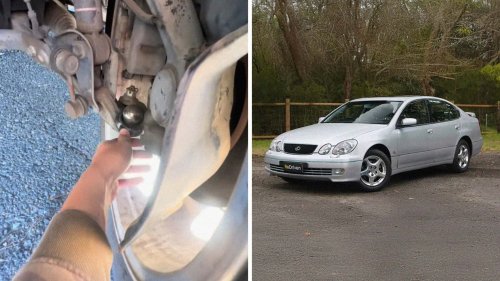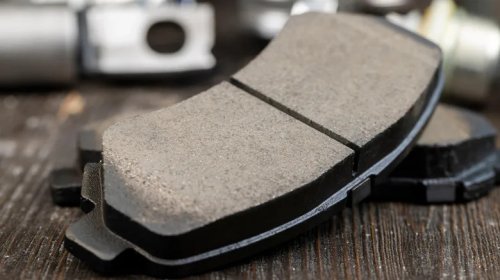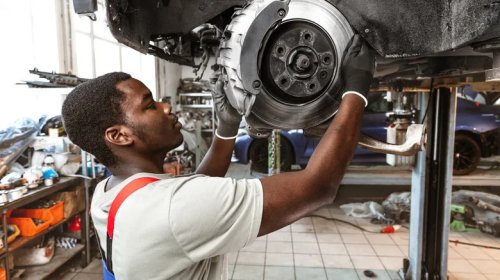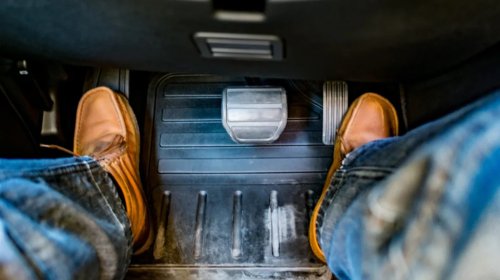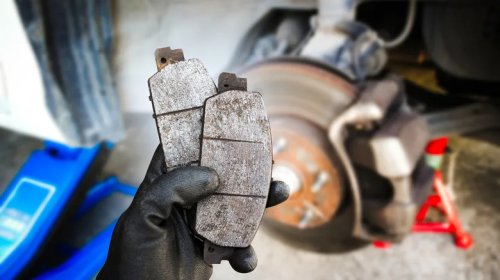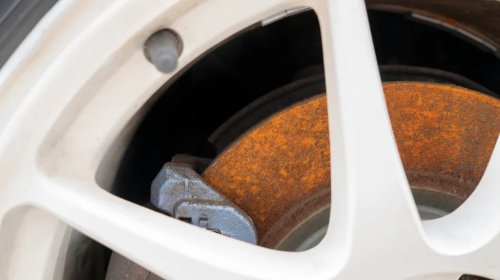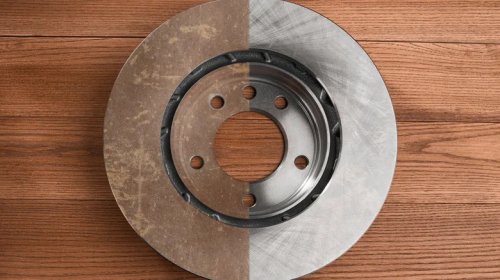



















Europe Just Regulated Brake Dust Like Exhaust — So Bosch Cut the Wire to Your Brake PedalA market research report making the rounds this week claims the global regenerative braking systems business will roughly double by 2035, reaching $14.3 billion. Nobody who owns a car should care about that number. What they should care about is the regulation buried behind why that number exists: for the first time in automotive history, brake dust is being treated as a pollutant, and the industry's answer is already showing up as a brake pedal with nothing mechanical attached to it.That is not hypothetical. In January, a Bosch development team drove a prototype 2,050 miles from southwestern Germany to the Arctic Circle testing a hydraulic brake-by-wire system with zero mechanical link between the pedal and the brakes themselves. Step on it, and the only thing that happens mechanically is a sensor reading. Stopping power comes entirely from an electrical signal telling one of two independent hydraulic units to build pressure. Bosch plans to put the system into production this fall, and expects more than 5.5 million vehicles worldwide running some form of brake-by-wire by 2030.Why now? Because Europe just did something no regulator anywhere has done before. The EU's Euro 7 rule, formally Regulation (EU) 2024/1257, does not just tighten tailpipe limits. For the first time, it caps particulate emissions from brakes themselves, and it applies to every motor vehicle category on sale, including pure electric ones with no tailpipe at all. Brake dust, the black grime that cakes a wheel within a week of driving, is now regulated the same basic way carbon monoxide has been since the 1970s.AdvertisementAdvertisementThat detail should surprise anyone who assumed electric vehicles got a free pass on emissions paperwork. They do not, not anymore. A battery-electric car still carries friction brakes for hard stops, parking, and low-speed maneuvering, and those pads still shed particulate matter every time they clamp down. Regenerative braking's real regulatory value is not range. It is that every mile slowed by the electric motor instead of a caliper is a mile of brake dust a manufacturer never has to certify.That reframes the entire regenerative braking growth story circulating in trade press this month. Reports love to talk about energy recovery and extended range, and those benefits are real. But the more urgent driver, especially for automakers still selling in Europe after the 2026 compliance deadline, is certification. Regenerative braking stopped being just a fuel-economy feature. It is emissions hardware now, and it is being engineered like emissions hardware.Bosch's own numbers hint at a second, less flattering motive: cost. Removing the mechanical rod between pedal and brake system means engineers no longer have to package brake components against the firewall, and it eliminates the need for separate left-hand-drive and right-hand-drive hardware variants. That is not a safety upgrade. It is a manufacturing simplification wrapped in a safety story, and it is the same logic that has already pushed steer-by-wire onto a handful of new EVs.None of that makes it bad engineering. Bosch's system still runs two independent hydraulic actuators on separate electrical channels specifically so a single fault cannot leave a car without brakes, the same redundancy logic that has kept fly-by-wire airliners in the sky for four decades. But the brake pedal was one of the last purely mechanical safety controls left in a car. Once it becomes a data input instead of a lever, everything downstream of it, diagnosis, calibration, repair, becomes a software problem too.AdvertisementAdvertisementThe Auto Wire has already covered where that road leads. Ford CEO Jim Farley has argued publicly that modern cars have gotten too complicated for owners to service themselves, and BMW has patented screw heads shaped specifically to keep standard tools out of its own vehicles. A brake system with no mechanical fallback and no published repair procedure is a far more effective way to keep that work inside a dealership bay than any oddly shaped screw could ever be.There is a second consumer cost worth noticing before it lands on anyone's invoice. Regenerative braking already means friction pads and rotors on hybrids and EVs routinely outlast the vehicles they are bolted to, since the electric motor handles most of the slowing. That is fewer brake jobs for independent shops and dealership service departments, which have quietly leaned on brake work as recurring, low-skill, high-margin revenue for decades. Brake-by-wire adds a wrinkle on top of that: when something does eventually go wrong, the fix is not sanding a rotor, it is diagnosing a redundant electrical system, and that work will be priced accordingly.There is an irony worth sitting with, too. Brakes have been engineered conservatively, almost superstitiously, for more than a century, precisely because a failure is unforgiving in a way a dead infotainment screen never is. BMW's own integrated brake module has failed three separate recall attempts on the same defect, including on a Rolls-Royce Spectre, and that is with a mechanical backup still in the loop. The industry is now removing that backup entirely, at the exact moment regulators decided brakes needed to be treated like an emissions system.Forget the $14.3 billion. That figure will be revised more than once before 2035 gets anywhere close. What will not change is the pattern underneath it: an efficiency feature automakers happily marketed for a decade has quietly become a compliance requirement, and the industry is using that cover to redesign one of the most conservative systems in a car, starting at the pedal. The range number is the part everyone is talking about. The part that actually matters is that your foot may soon be talking to your brakes the same way it talks to a game controller, through a signal, not a rod.Join our Newsletter, follow our Instagram page, and connect with us on Facebook.