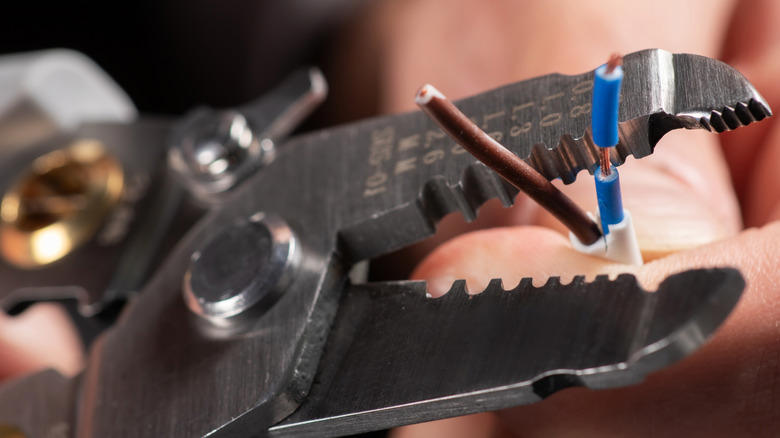
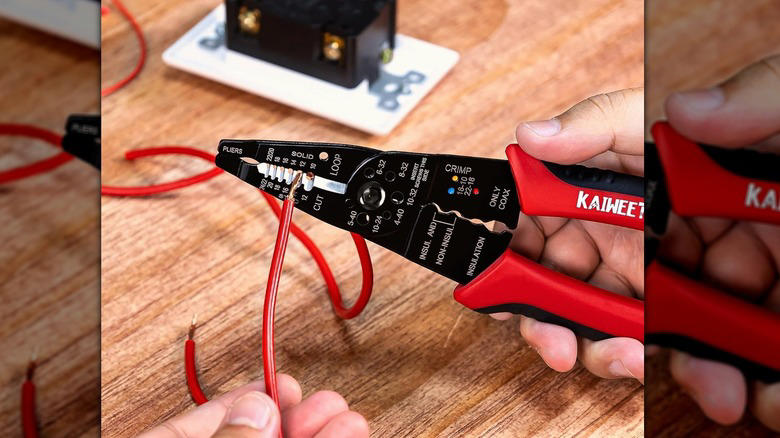
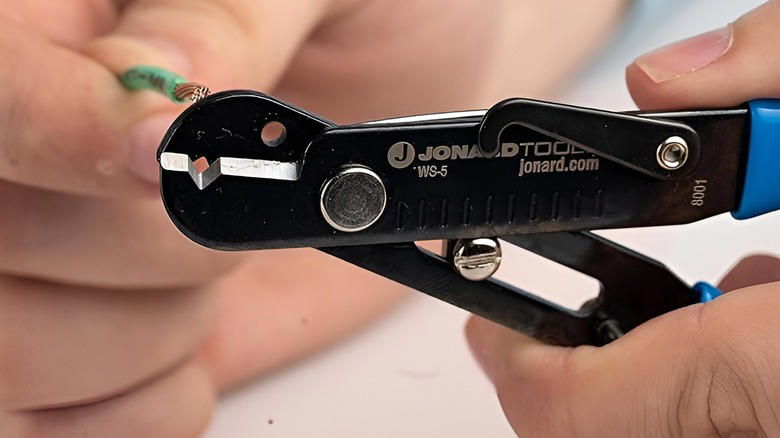
How to use wire strippersThe best tools are those that are seemingly simple in their functionality and design while expertly performing in their intended task. This description accurately fits wire strippers, as these handy gadgets are extremely easy to use while also being versatile thanks to their array of features and hidden capabilities. Depending on the kind of wire stripper you have, there may be some minor differences in how you approach the process, which we will touch upon further down. But for the most part, you can go by a similar series of steps, as follows:Insert the wire into the appropriate slot. Manual wire strippers typically have one or more slots of different gauges, so place your wire in between each until it fits in snuggly. Automatic strippers let you insert the wire from the side, in between the jaws, which will adjust to the wire gauge accordingly. Once you have your wire or cable securely in place, squeeze the handles to get a good grip on the wire. For automatic strippers, this act will prompt the jaws to both clamp down and strip the wire right away.If using a manual stripper, pull on the wire towards the end and remove the outer layer.On top of their namesake stripping capabilities, most wire strippers also come with a clipper located in between the handles and jaws. This can be used to trim your wire before placing it in the stripper, if needed.Gauged wire strippersWire strippers can essentially be split into two categories, with manual and automatic wire strippers. Manual strippers will require you to pull on the casing in order to remove it. Within this category, one of the most widely used is gauged wire strippers. Gauged wire strippers are among the most commonly used stripper types for good reason. Their ease of use, strength, and versatility make them ideal for practically any situation or experience level. The name of these tools comes from their distinctive jaws, which feature a row of slots that look like teeth. However, rather than being used for cutting, these slots are designed to correspond with different wire gauge sizes. When you're ready to strip the wire, you locate the slot that it best fits into and insert it there before squeezing the handles and pulling off the sheath. Gauged wires are easy to use for newcomers and are an overall great choice for most standard wire work. However, it's important to at least have an idea of the size of wire you're working with before getting one. The slots available on your respective tool are all you have to work with, so if the gauge size of your wire or cable doesn't correspond with any of them, you're out of luck as there's no way to adjust them. Adjustable wire strippersThe other commonly used manual type of wire stripper is the adjustable stripper. These are far more simple in their construction than their gauged counterparts, but can nevertheless be a quality choice for the right kind of user and application. Adjustable wire strippers typically have only one small to medium-sized slot to fit wire through. At first glance, it may put them at a disadvantage when compared to gauged strippers. However, what sets these apart is that their opening can, as their name implies, be adjusted to more accurately accommodate your wire. This is accomplished through the implementation of a knob located near the slot that can be used to adjust the slot's opening. While this offers a solid amount of flexibility and convenience for average-scaled projects, these can be somewhat tricky for novices, as it can take time to accurately adjust the tool, especially if you're not used to it. For those comfortable enough with them, they can prove handy when you need to make repeated cuts to wires of the same size, after setting the gauge to the desired thickness. Like gauged wire strippers, these tools are typically far cheaper than more advanced models.



















 +1 others