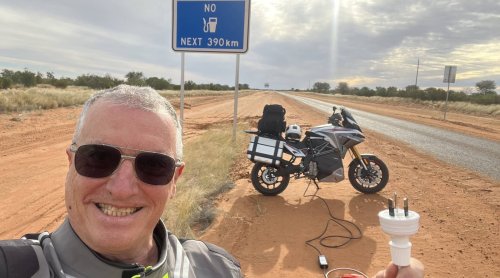
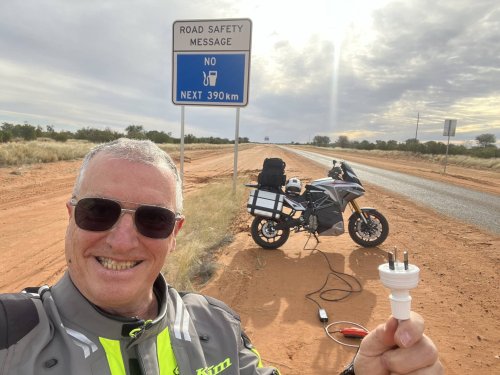
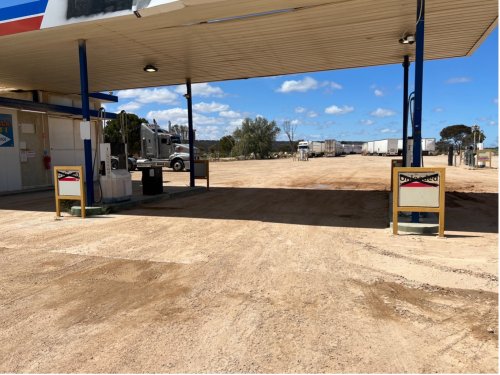
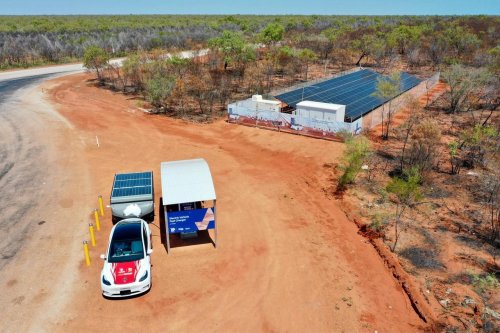
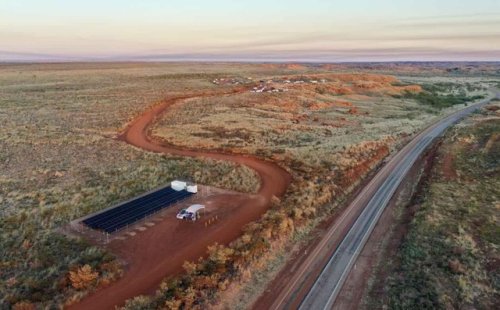
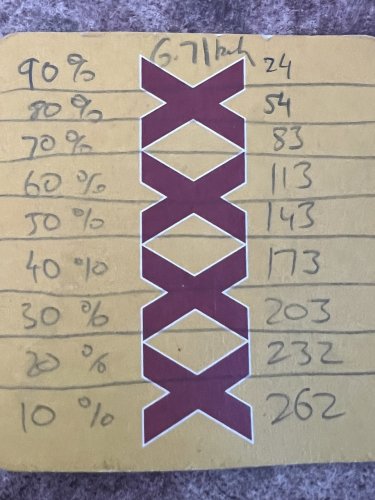
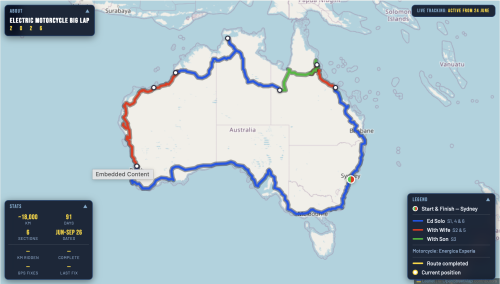
A CleanTechnica exclusive, by Ed Darmanin, as told to David Waterworth. No Fuel, but there is electricity. Photo courtesy Ed Darmanin. Ed Darmanin, a retired electrical engineer from Sydney, is planning to circumnavigate mainland Australia — the world’s largest island continent — on an electric motorcycle. Why? Because no one has ever done it before — and because, as two cardiac stents in two years will remind you, there is no guarantee of a later. CleanTechnica has followed Ed’s challenging, risky, and sometimes humorous adventures before. You can read about his 5,000 km Sydney to Darwin ride on the Energica Experia here. In this latest chapter, Ed has granted CleanTechnica an exclusive look at the planning process. You can follow the journey here, here, and here. In a recent phone interview, Ed told me: “On 24 June 2026, I depart Sydney on the first electric motorcycle circumnavigation of mainland Australia — approximately 18,000 km through every state and territory, in an anti-clockwise loop that takes in the Queensland coast, Cape Tribulation, the Gulf Developmental Road, Darwin, the Kimberley, Broome, the Pilbara, Perth, the Nullarbor, the Eyre Peninsula, Adelaide, Melbourne and back home to Sydney. I expect to arrive home in time for my 67th birthday party in late September.” The route is divided into six sections, with Ed’s wife Sally joining him two-up for the legs from Airlie Beach to Palm Cove and again from Broome to Perth. His son Evan rides with him through the Gulf Country from Palm Cove to Mount Isa via Cape Tribulation and Normanton. The rest is solo. The BMW That Wasn’t “Last year I actually bought a BMW R1300 GS Adventure specifically for this trip — arguably the world’s best long-distance adventure tourer and the obvious choice for an 18,000 km journey. I had used a similar bike on my European Alps tour in 2025. But with petrol supply across remote Australia under serious pressure, the idea of burning up to 900 litres of fuel through the outback during a national fuel supply crisis stopped making sense. It felt irresponsible with Australia already operating under a Level 2 fuel emergency declaration. “As servos dry out in the outback, they prioritise diesel — so potentially no petrol for the bike. Or I could be waiting with everyone else for 24 to 48 hours for a tanker to arrive. Once it became clear that the Middle East conflict was not going to resolve quickly, it became apparent I was better off on the electric motorcycle. The range anxiety had flipped from EV to petrol. If I am stuck waiting for a tanker, it ruins the accommodation and family rendezvous plan. Restrictions are already happening — petrol is being kept for locals and essential services.” Mundrabilla Roadhouse on the Nullabor, “No Unleaded,” during Ed’s 2022 electric ride from Perth to Sydney. Photo courtesy Ed Darmanin. “The Energica Experia, which I know intimately from my Darwin trip, became the right choice for the Big Lap for reasons I hadn’t originally planned. It has a highway range of about 180 km at 100 km/hr which can be increased to 250 km at around 75 km/hr and about 300 km at 60 km/hr. It weighs 260 kg and around 300 kg fully loaded for touring. Add rider and passenger and we are looking at around 460 kg. “Earlier this year I had a second cardiac stent fitted — routine preventative monitoring caught a 90% blockage in my right coronary artery before it caused any damage. No heart attack, no drama. Just the kind of methodical self-maintenance I apply to everything I do, including planning an 18,000 km electric motorcycle journey. I mention it not because it changes anything, but because it is part of who I am and how I approach these rides — with thorough preparation, clear eyes about the risks, and a deep appreciation for not putting things off.” Planning an Expedition, Not a Bike Ride I was struck by the level of planning Ed has applied to this journey — it is not a bike ride, it is an expedition. “The charging plan alone took dozens of manual iterations using GPS route planning and PlugShare to determine charging options on route, building a detailed spreadsheet to itemise charging locations, distances between them to confirm they were within range, and accommodation for each night. I also called or emailed roadhouses and remote hotels across the Kimberley and Gulf Country personally to confirm power point access, and offered to pay for the power used in every case. A petrol rider plans a fuel stop in thirty seconds and can rightly assume fuel will be available in normal times … but not in 2026. I plan each leg of this trip like a short-haul flight. “This meant researching which roadhouses and towns are on the main electricity grid, a micro-grid, or running solely on diesel generators. Most of my stops turned out to be the former. Even for a retired electrical engineer and hardened EV traveller like me, it was a surprise to discover that most of the remote EV charging stations in Western Australia run purely on solar PV and battery storage, with diesel generators only as backup — backup that would rarely, if ever, run. Two of these charging sites are not even located at roadhouses. They sit at rest areas or road junctions in the middle of nowhere.” Photo: Bidyadanga Community Turnoff — EV fast charger. Photo courtesy of PlugShare. Photo: Ngumban Cliffs Rest Area — EV fast charger. Photo courtesy of PlugShare. “The most challenging leg of the entire journey illustrates why this level of planning is necessary. At first glance the Bidyadanga Community turnoff DC fast charger — 190 km from Broome — appears to be the only thing that makes the leg to Sandfire Roadhouse possible. A 339 km ride two-up into likely Indian Ocean headwinds is beyond the Experia’s real-world range without it. But a single critical charger in the middle of nowhere is a single point of failure, and that is not how I plan an expedition. Digging deeper, we found Barn Hill Station — a farm stay just short of the Bidyadanga charger — where an overnight stop and a Level 1 power point charge makes it possible to reach our next destination at 80 Mile Beach caravan park without being absolutely dependent on either the Bidyadanga or Sandfire fast chargers. If both are online we use them and travel at full highway speed. If one or both are offline we have a viable alternative. That is the difference between a plan and a contingency.” “The Ngumban Cliffs rest area presents a different kind of challenge. It sits between Halls Creek and Fitzroy Crossing on a 288 km stretch of the Great Northern Highway — 192 km from one end and 96 km from the other. There are no towns, no roadhouses and no overnight options anywhere along this stretch. Unlike the Broome leg, there is no workaround if the charger is offline — so the plan is built around assuming it won’t be there. “I depart Halls Creek riding as though the Ngumban Cliffs charger does not exist — settling into 60 to 70 km/h for the full 288 km to Fitzroy Crossing if necessary. At 192 km I arrive at Ngumban Cliffs and check the charger. If it is online I plug in, top up, and cover the final 96 km at full highway speed. If it is offline I press on at the same conservative pace and complete the leg on the original charge. The Chargefox app and PlugShare allow me to check charger status before departure — but in remote Australia, online does not always mean operational when you arrive. The plan accounts for that.” The Fuel Crisis Advantage “I can plan around the fact that in all but a few cases where I am totally reliant on a remote DC fast charger, I have the option of a Level 1 power point as a backup if the fast charger is offline. Australia is already operating under a Level 2 fuel emergency declaration — the framework is active but no public purchase restrictions have yet been imposed. Under the Government’s Liquid Fuel Emergency Act, Level 3 brings a documented $40 purchase limit at the bowser — a mechanism first drawn up by officials in 2019 and confirmed through FOI documents released in March 2026. This is not a rushed emergency measure. It is a pre-planned, pre-documented government response that has been sitting ready to activate for seven years. The evidence suggests it will be implemented by late July— exactly when I will be riding through the Kimberley. At that point servos in the outback may run dry for 48 hours or more between tanker deliveries, and at $3 to $4 a litre or more, $40 won’t get you far. You cannot realistically plan for that scenario on a petrol bike or car, other than to hope for the best or accept that you may become stranded for days waiting for a tanker to arrive. Or worse, if Level 4 restrictions are imposed mid-trip you absolutely become stranded indefinitely.” The Role of AI in Planning Ed used AI extensively as a planning tool throughout the preparation for this trip — and he believes this is the first time AI has been used in this way for planning a long-distance electric motorcycle journey. Photo: Back of a beer coaster — SOC, Distance, and energy consumption targets to make it to a destination during Ed’s 2024 Sydney to Darwin trip. “I used Claude AI to assess prevailing weather conditions along the route for the specific date ranges I would be in each part of the country — average temperatures, cold morning starts and their effect on battery range, and prevailing wind conditions for each section. I also used it to model tyre selection and inflation pressures, and to calculate target speeds for each leg based on the actual battery capacity of the Experia and the real-world variables I would face. “To give you a practical example: I ‘showed’ Claude a photo of the beer-coaster range calculation we did on the Darwin trip for the longest leg of 262 km from Camooweal to Barkley Homestead, and told it the Experia has 19.6 kWh of usable stored energy and to use this information as the base case. I then asked it to factor in the new Pirelli road touring tyres, higher tyre pressures, solo versus two-up configurations for different sections, morning departure temperatures and prevailing wind conditions — then produce a guideline for target speeds along each leg of each section for me to work with on the road. That is considerably easier than working it out on the back of a beer coaster. “AI initially told me that the Big Lap could not be done on an electric motorcycle because the distances between fast chargers were too large — and it was correct, initially. Raw parameters without context produced an impossible result based on the manufacturer’s quoted highway cycle range. Once I fed in my actual Level 1 and 3 charging plan data, my hypermiling speeds and the real-world range figures from my Darwin trip, the AI assessed the route as achievable with four high-risk legs. I had already reached the same conclusion from experience using my detailed spreadsheet, but the AI allowed me to factor in additional variables — tyre choices, new efficient drive chain, solo versus two-up, weather conditions — at a level of precision that would have taken weeks to calculate manually. AI estimates that the combination selected tyres, chain and sprockets should improve efficiency by about 5%. “I quickly found that you have to ask the right question with tight parameters, otherwise you get an answer based on limited information — not necessarily the correct one. The old adage holds: garbage in, garbage out. Developing the interactive map took about ten iterations before the AI properly matched GPS coordinates from my destination spreadsheet with the actual highway routes on the map.” CleanTechnica readers — have you used AI tools in planning your own EV adventures? We’d love to hear your experiences in the comments. The Tyres One of Ed’s more unexpected planning discoveries was the impact of tyre selection on range. He found that purpose-built road-touring tyres — rather than the crossover adventure tyres typically fitted to bikes like the Experia — offered meaningful efficiency gains, with the improvement becoming more pronounced as the tyres wear below 50% of their tread life. On a journey of this distance with long remote sections, every kilometre of improved range counts. The Interactive Map Ed’s website is now live and the interactive map is worth a look. As Ed explains: “The site covers all six sections in detail including the charging challenges, the BMW backstory, past journeys and the interactive map. You can zoom in and out, collapse the legend and stats panels if you need more screen space, and if you hold your cursor over the coloured lines it tells you which section it is and whether it is solo or two-up. When I commence the trip, a yellow line will overlay the route showing the distance travelled so far, with a pulsing yellow dot showing my current GPS location in real time. Anyone can watch the dot cross the Nullarbor.” The map was built using AI to generate the code from Ed’s specifications — another example of the technology being applied in a practical rather than theoretical way. What Lies Ahead Ed departs Sydney on 24 June 2026. I expect to meet with him in Brisbane on the 28th. He has planned thoroughly and leaves with genuine confidence in his preparation. But just in case — a light tent, sleeping bag, and tools are coming along for the ride. Ed plans to share the journey with CleanTechnica readers through a series of articles. In our next instalment, we will catch up with Ed at the halfway point to find out how the planning has held up against reality, and what the road has thrown at him along the way. In the meantime, from 24 June, you can follow the yellow dot in real time at electromotoadventures.com.au — and watch history being made, one charging stop at a time.

















 +2 others