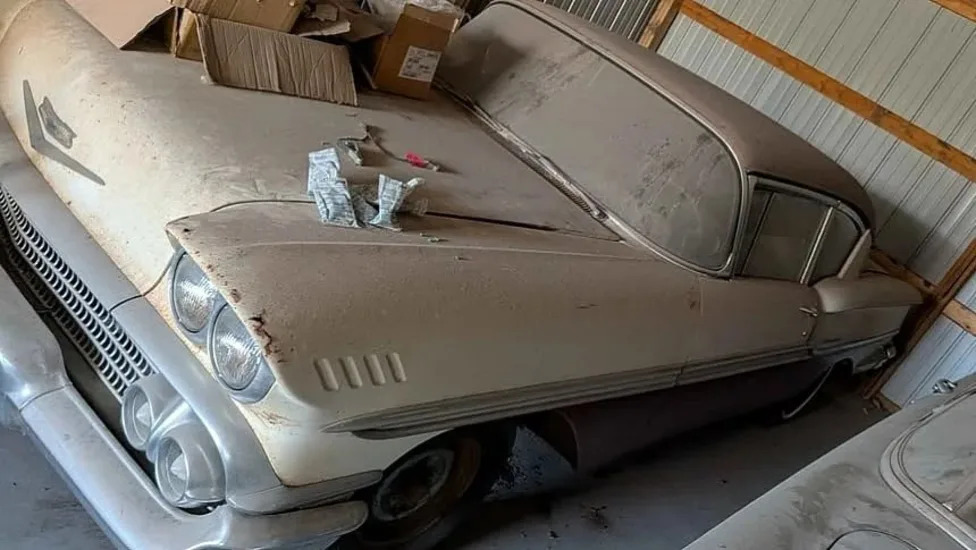
Dust-Caked 1958 Chevrolet Biscayne Sits in Storage as a Possible Survivor With a Mystery EngineSome of the most satisfying classic-car discoveries aren't the polished show winners—they're the dust-blanketed survivors that have quietly waited out the decades in a closed-up garage. A two-door 1958 Chevrolet Biscayne recently surfaced doing exactly that, and while it's far from pristine, it carries the kind of honest, untouched character collectors chase. The catch? Its seller never lifted the hood for photos, leaving the most important detail—what's powering it—a complete unknown.A One-Year-Only Chapter in Chevrolet History1958 was a turning point for Chevrolet's full-size lineup. The brand walked away from the beloved Tri-Five era and rolled out an all-new, larger, more contemporary body, along with a shuffled roster of names. The familiar 150 and 210 models disappeared, the Bel Air slid down from its perch as the new Impala took over the flagship role, and fresh nameplates like the Brookwood and the Biscayne joined the family.The Biscayne landed just above the entry-level Delray, positioned as a modestly upscale full-size offered only as a two- or four-door sedan. Buyers could still order any engine in Chevy's catalog, which is part of what makes these cars interesting today. Because the 1958 styling lasted just a single model year before everything changed again, that one-year-only body gives the Biscayne a distinct appeal—even though it usually lives in the shadow of its flashier Impala and Bel Air relatives. By 1959, the Biscayne had been demoted to base-model duty.Honest Wear, and Signs of a SurvivorThis particular sedan looks like it was tucked away and forgotten long ago. It wears a heavy coat of dust, shows some rust, and has clearly been sitting for years—possibly decades. Yet the body trim appears intact, which is exactly the sort of completeness that gives a car survivor potential rather than parts-car status.AdvertisementAdvertisementThe two-tone white-and-brown finish looks like it could be the factory combination, quite possibly Arctic White over Cay Coral Poly, and the weathering pattern reads as original paint rather than a respray—though only a hands-on inspection would confirm that. Inside, the cabin is similarly complete but tired, with seat upholstery that appears factory-correct. Beyond a damaged bench seat and headliner (and what looks like some rodent activity over the years), it seems like it could clean up respectably. If you're weighing whether a find like this deserves a careful preservation or a full teardown, our breakdown of barn find vs. restomod vs. survivor is a useful place to start.The Engine MysteryHere's where the guessing game begins. With no engine photos provided, there's no telling what sits between the fenders. In 1958, Chevrolet offered three choices: the dependable 235-cubic-inch Blue Flame inline-six, the 283-cubic-inch small-block V8, and the then-new 348-cubic-inch W-series big-block. Both V8s came in multiple states of tune, and the 348 could even be had with a Tri-Power triple-carburetor setup—a configuration that would dramatically raise this car's desirability.Realistically, the odds favor the humble inline-six being under there. But until someone pops the hood and checks the casting numbers, it's anyone's bet. This is precisely why originality documentation matters so much, and why understanding matching numbers can be the difference between a bargain and a disappointment when valuing a car like this.Worth the Rescue?The Biscayne is reportedly located in Sterling, Nebraska, wearing an $8,000 asking price. Whether that's fair money depends almost entirely on what's hiding under the hood—and on how the body and floors look once the dust is wiped away. For anyone seriously considering a car in this condition, walking through a proper step-by-step barn-find inspection before committing any cash is essential.AdvertisementAdvertisementIf the dream is to actually drive it again rather than part it out, the next challenge is mechanical revival. A car that's sat this long shouldn't simply be cranked over; our guide to safely recommissioning a long-parked classic explains how to wake a sleeping engine without causing expensive damage on that first start.Forgotten Chevys like this one are still out there waiting to be uncovered, and knowing where to look for hidden classics is half the adventure. So, is this dusty 1958 Biscayne worth saving? With a one-year-only body and genuine survivor potential, it just might be—mystery engine and all.Source



















 +16 others