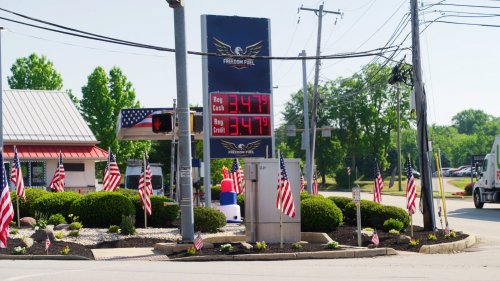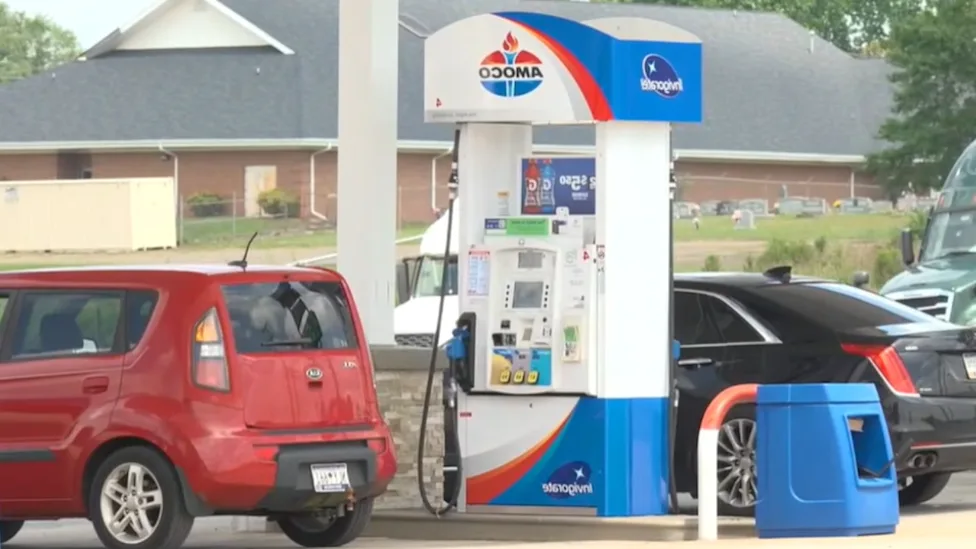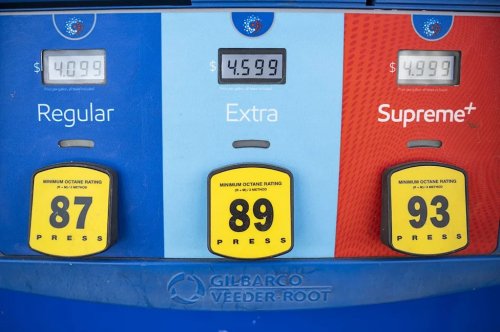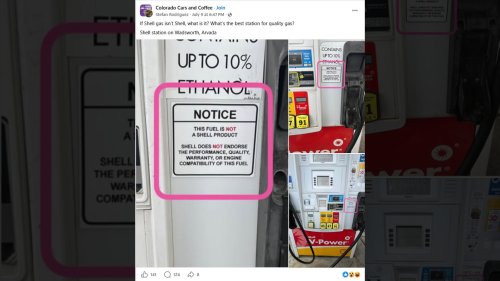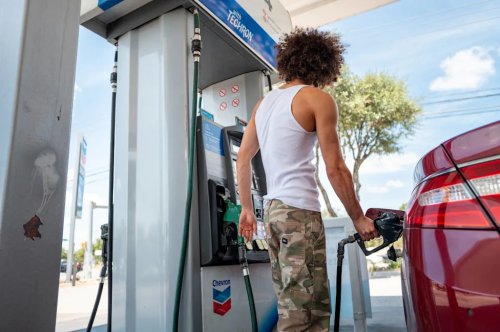
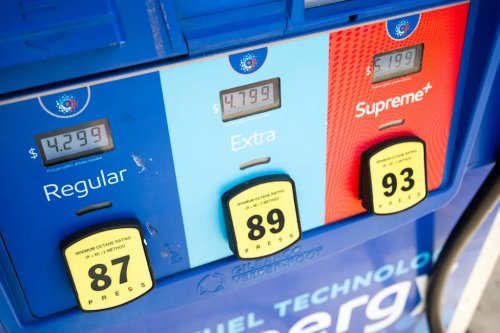
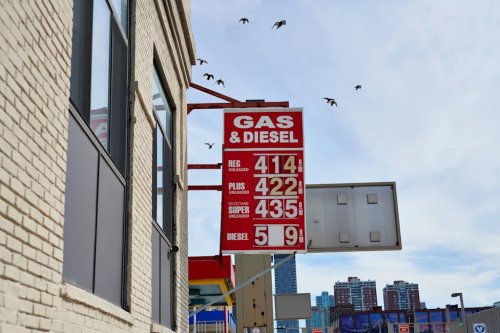
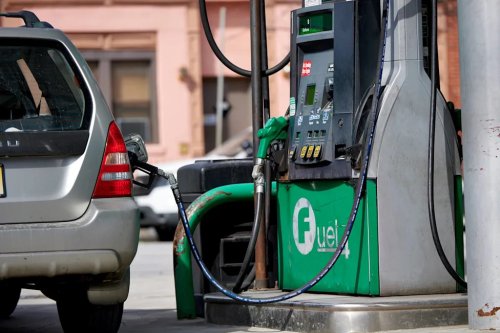



















Autoblog and Yahoo may earn commission from links in this article.The Dice Roll with Your Gas Tank You have provably experienced a situation exactly like this before. The fuel light just kicked on in your car and up ahead you have two distinct options dictated by price. You could either fill up at the Shell or at the station further away. It's got a sign so faded you can't tell if it's actually a brand or just the ghost of one. There's barely any canopy lighting, they don't have a rewards app, and it's cash only. However, its prices undercut Shell by nearly thirty cents a gallon. You do the math in your head, a full tank times thirty cents and suddenly that no-name pump doesn't look so sketchy anymore.Let's face it, gas is expensive. Rising fuel costs make every penny saved at the pump feel like a major victory. Because of this, it's completely understandable why so many drivers are tempted to pull into non-brand or independent stations offering lower prices. Even if it means sacrificing peace of mind, the lower price tag is hard to resist.AdvertisementAdvertisementEvery driver has taken the bait. But just as often, they have had someone in their life — a dad, uncle, or a trusted mechanic who's seen too much warn them not to do just that. "Don't buy gas from those places," they say, without ever quite explaining why. But is skipping the brand-name stations a genuine gamble with your car, or is it a marketing-driven superstition that's cost American drivers billions of unnecessary dollars over the decades? The answer sits somewhere in the additive package, and it starts with three words most drivers have seen on a pump sticker without ever registering: Top Tier gasoline.Brandon Bell/Getty ImagesWhat "Top Tier" Actually MeansIt should be addressed right from the jump that every gallon of gasoline sold in the United States, no matter the brand, is required by the EPA to contain a minimum level of detergent additives. Enacted by Congress in 1990, Section 211(l) of the Clean Air Act required the U.S. Environmental Protection Agency (EPA) to establish regulations ensuring all consumer gasoline sold in the United States contains deposit control additives (DCAs) to help protect engine performance and lower emissions. Since 1995, it has been federal law for gasoline retailers to sell gas with these detergents. In that narrow sense, there's no such thing as "bad gas" at a legally operating station in this country; that gas from station to station is chemically similar, no matter the name on the sign.However, the EPA minimum is a minimum, and a fairly low bar at that. By 2004, industry research eventually showed that these federally-mandated minimums allowed detergent levels to drop too low for optimal long-term engine cleanliness. In response, a coalition of automakers including General Motors, Toyota, Honda, and BMW got together and created a voluntary standard called Top Tier, which requires roughly twice the detergent additive concentration of the federal minimum.SAUL LOEB / AFP via Getty ImagesRetailers that meet the standard can advertise themselves as Top Tier certified, and the list is published and updated on their website. Most familiar gas station brands, including Shell, Chevron, Exxon, Mobil, as well as other familiar chains like Costco are on it. The no-name station at the end of the highway almost certainly is not, because certification costs money and requires a supply contract most independent operators don't bother with.AdvertisementAdvertisementThe automakers didn't create this standard out of goodwill. They created it because they were fielding warranty claims tied to carbon buildup on intake valves and fuel injectors, particularly in direct-injection engines, which are more sensitive to this kind of deposit than older port-injection designs. Modern engines run tighter tolerances and higher pressures, and a fouled injector doesn't just hurt performance — it can throw off the air-fuel ratio enough to trigger a check engine light and, over years, contribute to real mechanical wear.In a 2018 statement to AutoGuide, Honda spokesperson Chris Martin says that the company has supported the Top Tier gas initiative because it has "seen a benefit from it for our consumers in the long run," adding that the higher detergent requirements are a net benefit for its drivers. "We don't require that our vehicle owners use Top Tier gas" he said, though it helps "make sure the engines are going to last as long as they could."Gabby Jones/Bloomberg via Getty ImagesDon't Make it a HabitHere's where it gets less alarming than the warnings suggest. The detergent difference between minimum-standard gas and Top Tier gas is a slow-accumulation problem, not an immediate one. You aren't going to send your precious little commuter to car purgatory by filling it with a tank of non-Top-Tier fuel that was the only thing for about 500 miles. Nobody's engine seizes up because they bought gas from the cash-only station once on a road trip. However, the real problem occurs when drivers make it a habit. If you go years of consistently buying tank after tank of the cheapest, least-additized fuel available without ever filling up at a brand-name, top-tier station, it can be a much bigger problem.In a study conducted by AAA's Automotive Research Center, they found that engines that ran exclusively on non-Top-Tier fuel accumulated significantly more carbon deposits than those that ran on Top Tier fuel over the same mileage. On average, non-Top Tier fuels left 660 milligrams of deposits on each intake, compared to an average of just 34 milligrams for Top Tier fuels — a 95% reduction, as well as fewer overall deposits throughout the engine.AdvertisementAdvertisement"Fortunately, consumers can reverse some engine deposits simply by switching gasoline brands," said Greg Brannon, AAA's director of Automotive Engineering. "After a few thousand miles with TOP TIER gasoline, performance issues like rough idling or hesitation during acceleration can often be resolved."A Tiny History LessonIt's worth remembering that "cheap gas at a sketchy station" is a genuinely old American anxiety, one that predates Top Tier by decades. Independent and off-brand stations have existed since the earliest days of the interstate highway system, often undercutting name-brand competitors by buying fuel wherever it was cheapest that week rather than sourcing exclusively from one major refiner. That practice, called "brand-switching" or buying on the spot market, is still legal and still common, meaning that a station with no name on the sign might be selling fuel refined by the exact same company as the BP or Shell, just without the licensing fee and marketing overhead that comes with putting the logo on the canopy.In most cases, unbranded gas isn't some inferior product cooked up by fly-by-night operators. It's frequently the same base gasoline sold to major brands, minus the proprietary additive package those brands pay to blend in afterward. You're not risking contaminated fuel. You only risk getting something just as important; a thinner detergent package, and only if you make a habit of it.Gabby Jones/Bloomberg via Getty ImagesWhat Should You Do?The honest case against always chasing the cheapest pump isn't about instant engine damage, it's about long-term maintenance costs against small savings in the other direction. Thirty cents a gallon on a fifteen-gallon tank is four and a half dollars, which means that you could save a couple hundred dollars a year. But, if you weigh that against the cost of a professional fuel system cleaning or, in a worst-case scenario, injector replacement, the math starts to look less favorable for the bargain station, especially in the sensitive direct-injection engines in modern cars. AdvertisementAdvertisementHowever, it must be noted that most drivers aren't buying exclusively from unbranded stations for the life of their car. They'd mix it in occasionally, which shouldn't hurt unless they'd make it a habit. If you're driving something relatively new with a direct injection system, or you're planning to keep your current car well past the extended warranty, it's worth making Top Tier fuel your default and treating the unbranded, cash-only station as an occasional place for special situations.This story was originally published by Autoblog on Aug 25, 2026, where it first appeared in the Features section. Add Autoblog as a Preferred Source by clicking here.