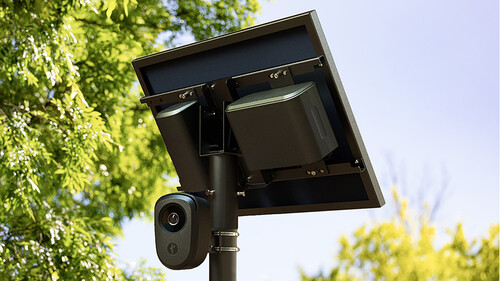
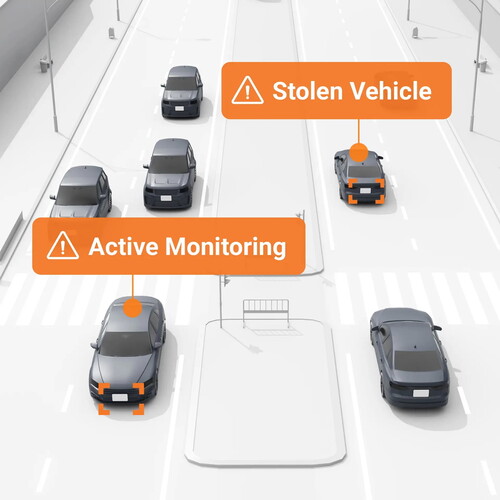
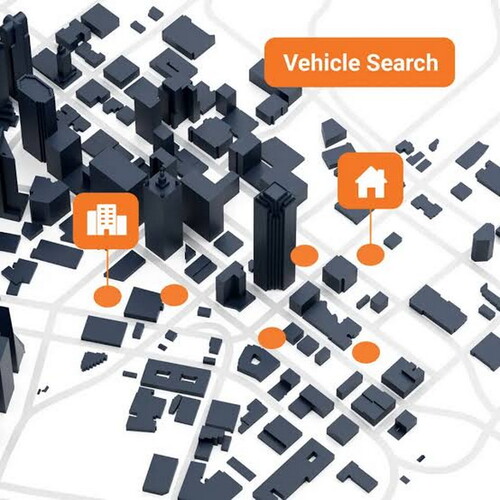
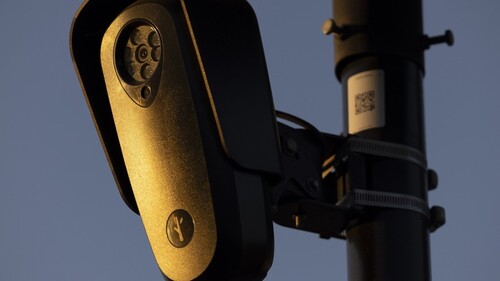
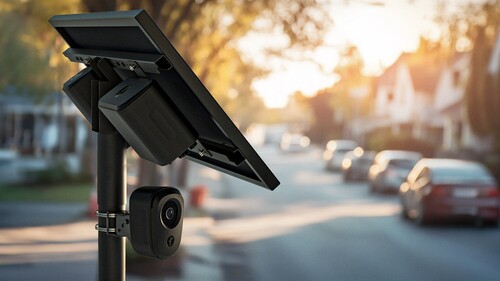
Chip Somodevilla/Getty Images Add Jalopnik on Google: Google Discover There's been a great deal of backlash against Flock cameras, with constant vandalism and numerous reports of crooked cops misusing them, leading to more and more communities to cancel their contracts. While Flock has received the most backlash, there are other ALPR companies out there. Rather than ending their use of technology that spies on you, and in a move that doesn't really solve the problems associated with mass surveillance, some departments that have dropped Flock have simply switched to other companies that do the same thing, reports NPR. One of those competitors is Axon. If that name sounds familiar, it's probably because you've seen it displayed on body cam videos, since Axon is the leading supplier of body cams to law enforcement, according to The Intercept. After a bit of rebranding in 2017 (the same year Flock was founded), many people don't know that Axon is the company formerly known as Taser, the electrical stun gun — another technology that police never, ever misuse. While Flock had to develop not only its technology, but also its law enforcement contacts and clients, Axon already had the clients in its Rolodex thanks to its other products. Law enforcement agencies may be fleeing from Flock contracts like rats from a sinking ship, but they still want ALPR technology. In places like Denver, Colorado, for example, switching ALPR providers is easy when you're getting your new camera tracking access through a supplier you likely already do business with. Potentially more invasive than Flock David Mcnew/Getty Images Flock recently announced a number of band-aids measures, claimed as solutions to remedy the widespread abuse that's hit the news lately. One of these changes to Flock processes was reducing its default data retention period from 30 to seven days, with a maximum retention period of one year. Axon's default period remains 30 days, and there is no limit on how long data can be stored, though some states limit this duration by law. After a brief pilot program, Flock decided not to offer live video feeds from its ALPR cameras. In Flock's YouTube video about its security changes, CEO Garrett Langley explained why: Many of our competitors do offer live video on their ALPR devices. We decided we will not. Every device we sell should do exactly what a community expects it to do. Our ALPR cameras capture still images, our live video cameras capture video. Axon's attitude is the exact opposite. Axon Outpost cameras not only scan license plates and other vehicle recognition attributes like Flock, but also livestream video, all from one device. Axon Lightpost transforms existing streetlights into combined live video and ALPR cameras with no additional wiring, making it easy and affordable to install even more cameras. Integration is one of Axon's main selling points, particularly its AI-based Fusus system that saves and searches all data from all devices in one all-seeing database. (Axon has also pushed AI-generated police reports in its Draft One product.) As Axon describes a hypothetical search for a missing child: Within seconds, Axon Outpost, a compact, solar-powered ALPR camera perched quietly on a nearby pole, flags a match: silver SUV, roof rack, visible bumper sticker. It sends the alert to AxonFusus, which instantly cross-references the livestream with a dozen other nearby feeds, pulls the path of travel, and pushes it straight to officers in the field. Within minutes, the child is found safe. No one would argue against saving an abducted child as quickly as possible. But the same technology can be used for other purposes. Unlike Flock, Axon does contract with the federal government, and supplied $3.5 million worth of tasers and taser supplies to ICE last year. We don't know whether or not ICE uses Axon ALPRs or has access to Fusus, but it's a short, slippery slope to get there. It's the same thing, only different Chip Somodevilla/Getty Images The Electronic Frontier Foundation is quite clear about its position regarding ALPRs: EFF's position is that ALPR mass surveillance—the indiscriminate, continuous collection and retention of location data on every driver, regardless of suspicion—should not exist. Because it nonetheless does, EFF also urges courts and state legislatures to impose strict, enforceable restrictions, such as warrant requirements and deletion deadlines. EFF does not single out Flock, Axon, or any other ALPR manufacturer. It recognizes that the technology enables mass surveillance, regardless of whose name is on it. While Flock has caught a great deal of criticism lately, that does not absolve Axon and other ALPR manufacturers of being part of the problem as well. The American Civil Liberties Union agrees: ...with Flock rightly receiving most of the heat, it's important to realize that its competitors aren't so great either, and that simply replacing Flock surveillance with another company's surveillance won't necessarily solve any of the privacy and other civil liberties problems posed by this mass surveillance technology. The main issues with Flock cameras, like that they are going to get drivers killed, are just as true with these other systems — Axon included. The technology isn't perfect, and in many cases, it's got such a terrible track record that using the cameras creates entirely new problems rather than solving the intended ones.