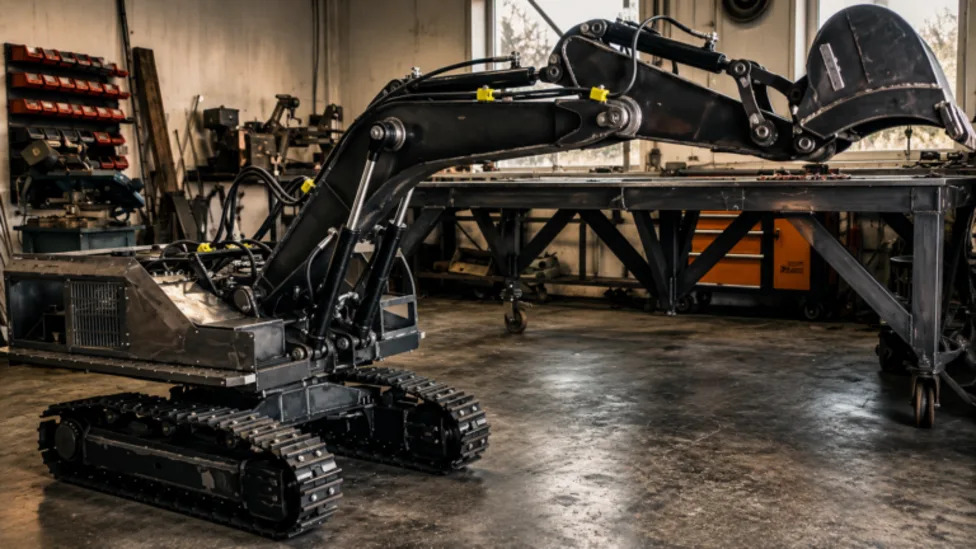



















Dad Spends 360 Hours Building a Half-Tonne RC Volvo Excavator for His 6-Year-Old SonMost kids get a LEGO set. One lucky six-year-old is getting a 500-kilogram, gasoline-powered, fully hydraulic RC excavator that required an engine hoist just to move across the shop floor.The builder behind the Spawer Workshop YouTube channel has spent the better part of a year designing and fabricating a 1:6 scale replica of the Volvo EC950F – the largest crawler excavator in Volvo's lineup, a machine that weighs roughly 93 tonnes in full-size form and carries a price tag somewhere between $850,000 and $1.2 million depending on configuration. The RC version cost an estimated $9,000 to build and runs on a 7.5 HP gasoline engine driving a 120-bar hydraulic pump through a custom sprocket-and-chain drivetrain. It is, in short, not a toy in any conventional sense of the word.The full build was documented by the Gear Tech HD YouTube channel, and the scale of the undertaking is difficult to take in. Over 100 hours went into 3D CAD design before a single piece of steel was cut. The physical construction that followed consumed more than 260 hours of labour, with CNC plasma cutting, extensive MIG welding, and a considerable amount of angle grinding turning raw steel sheet into the boom, stick, bucket, chassis, and bodywork. "This is how more than 100 hours of design and 260 hours of work look in action, materialized in a project that is still far from over," the Gear Tech HD video narrated.What It Actually Took to Build This ThingEvery major system was fabricated from scratch. The hydraulic oil tank includes an internal filter, an external sight glass with thermostat, and sealed access ports. The slewing ring – the large-diameter bearing assembly that lets the upper carriage rotate a full 360 degrees – was custom-machined and drilled. The track system required building individual steel shoes using a high-tonnage press, and once assembled, each completed track chain came in at roughly 79 kg. Both of them together weigh more than some small cars.AdvertisementAdvertisementBodywork panels were fabricated from thinner-gauge steel to keep mass manageable, with fiberglass and resin lining the interior of certain covers for further weight reduction."For some components, mainly of the bodywork, materials such as fiberglass were used in order to reduce the weight," per the Gear Tech HD narrator. Even with those concessions, the finished machine demanded hydraulic lifting equipment just to join the upper carriage to the track base during final assembly.RC control works through servo motors mounted to a custom bracket, each one physically moving a valve on a hydraulic distribution block. That means the radio controller isn't driving motors directly – it's commanding servos that command hydraulics, which is exactly how the full-size machine operates. The attention to functional authenticity here is not subtle. A custom-cut Volvo logo was even welded onto the bucket.The finished dimensions – 730 mm wide, 700 mm tall, with a hydraulic arm reach exceeding two metres – don't fully communicate what the machine looks like in person, but the Gear Tech HD narrator manages it: "Its 730 mm width and 700 mm height are imposing, along with its reach of more than 2 meters thanks to this extremely strong hydraulic arm. Undoubtedly a great toy for a 6-year-old."AdvertisementAdvertisementAt the time of filming, the project was still ongoing, with additional refinements and components pending."After installing some details, a hydraulic lift was needed to move this machine of literally 500 kilos, manufactured entirely with the effort of one man as a gift for his young son."