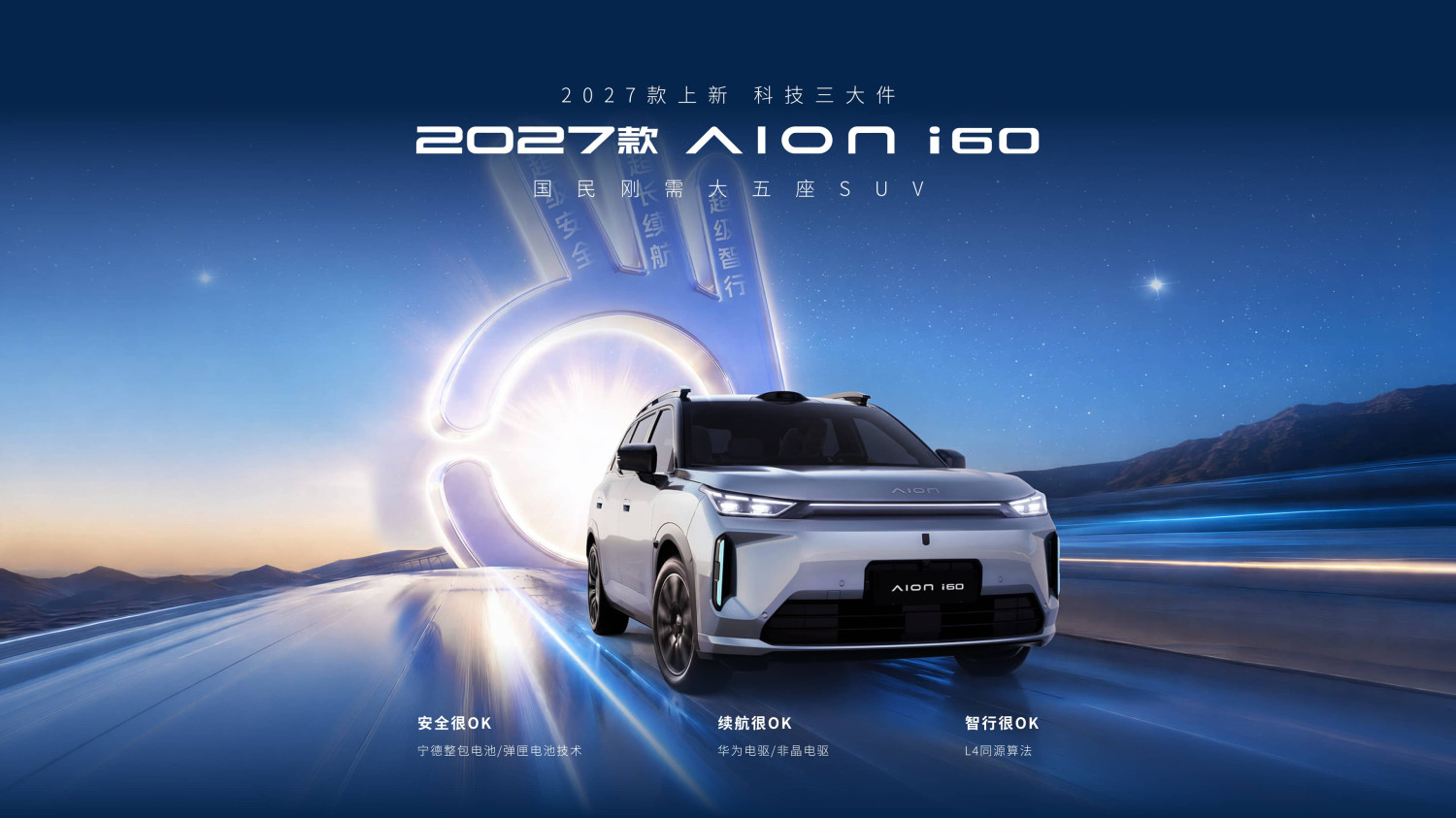
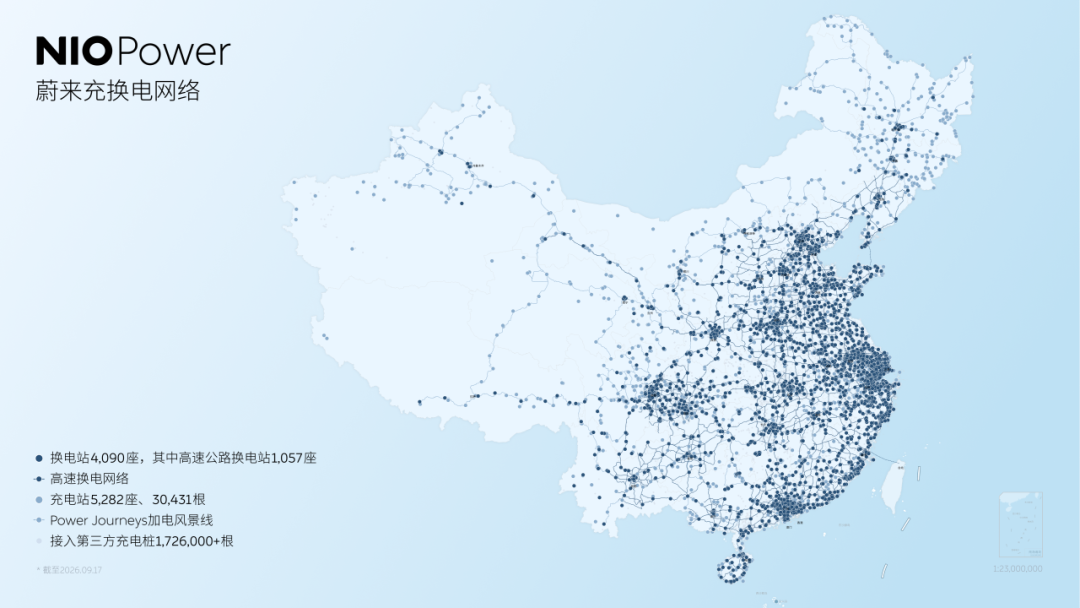
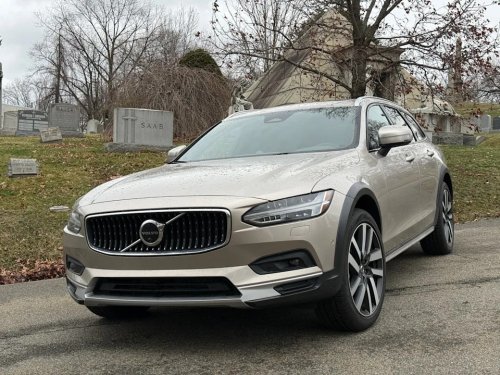
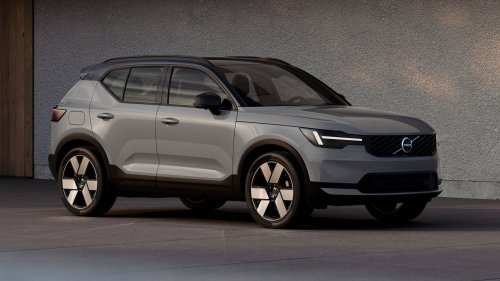
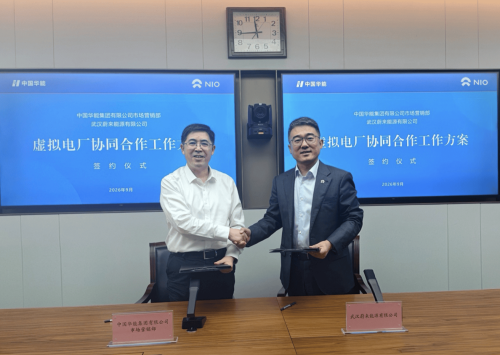
OEM TrendIT Home: On July 19, XPENG released a video announcing its Turing Second-Generation VLA model, marking a new phase in the globalization of advanced intelligent driving. The world model and VLA function as two sides of the same coin, jointly enhancing the model's understanding and agency in the real world. Even in overseas markets lacking training data, the model can accelerate generalization by autonomously generating training data. Currently, XPENG's second-generation VLA model has achieved a unified system bridging China and Europe. The company is fast-tracking mass production adaptation for the European market, with a target to begin delivering to overseas users by 2027.Global Times: Volvo Cars Chief Executive Håkan Samuelsson has publicly pushed back against accusations by White House trade adviser Peter Navarro targeting Chinese automakers. Samuelson argued that the success of Chinese firms stems from effective strategies, not unfair competition. Addressing Navarro's claim that Chinese companies are "plundering the global auto market," Samuelson told reporters following the company's second-quarter earnings: "We are in a completely new competitive landscape and must respect those who have succeeded in the electric vehicle field." "Chinese manufacturers have done a lot of things right," Samuelson added. He highlighted their deep vertical integration across batteries, software, and the broader automotive value chain, adding, "You have to put them on the list of a new generation of industry leaders, right alongside the traditional incumbents."Jiemian News: The legal department of Shangjie Auto has released a statement refuting recent online rumors claiming the brand is "leaving the HarmonyOS Intelligent Mobility Alliance." A preliminary investigation found that accounts such as "Cheguluhua" fabricated or published misleading information, infringing on Shangjie Auto's legitimate rights. The statement clarifies that Shangjie Auto is a member of the HarmonyOS ecosystem, deeply empowered by SAIC Motor and Huawei. The partnership remains stable, market performance is solid, and there have been no changes to brand operations.Fast Tech: Xiaomi recently posted a listing for a Government Relations Manager for its Malaysian automotive business on LinkedIn, drawing more than 100 applicants. The role requires serving as the primary liaison with government and regulatory bodies to support Xiaomi Auto's local operations. Candidates need at least five years of experience and familiarity with Malaysian automotive regulations, import-export procedures, and trade compliance. Xiaomi's roadmap targets the official launch of its overseas car business in the third or fourth quarter of 2027. The strategy prioritizes developed nations over developing ones, high-end over mid-range segments, and right-hand drive markets before left-hand drive markets. Preparations are currently proceeding on schedule.Cailian Press: Honda is set to end production of the Prologue, its only electric vehicle sold in the United States, as it shifts its focus back to hybrid models. The automaker won't halt sales immediately; instead, it expects to continue selling off existing inventory into early 2027.Supply Chain NewsIT Home: CALB (China Aviation Lithium Battery) issued a notice acknowledging that certain GAC AION AION S vehicles equipped with its batteries have experienced system faults under specific operating conditions. The company stated that affected owners can visit its service outlets for free inspections. Depending on the diagnostic results, customers will receive free battery system repairs and exclusive maintenance services in accordance with established standards.IT Home: Autonomous driving technology company WeRide has unveiled WeRide WITT, a proprietary foundational model for physical AI cognition. Leveraging Vision Language Model (VLM) capabilities, WITT introduces the concept of "minimal physical fact units" for the first time. By integrating multi-modal information across video, images, and text, the model breaks down continuous real-world scenarios into identifiable and verifiable fact units, establishing a new AI understanding framework anchored in physical reality.Industrial EconomyCCTV Finance: At the 2026 World Artificial Intelligence Conference, Galaxy General Robotics founder and Chief Technology Officer Wang He predicted that embodied intelligence foundation models, trained on massive datasets, could achieve a 70% to 80% success rate on tasks without specific training—rivaling the conversational capabilities of early digital models. He argued that powerful pre-training models combined with efficient post-training paradigms are the keys to unlocking this milestone. Judging by current data accumulation speeds and model convergence trends, Wang expects the industry to witness a "ChatGPT moment" for embodied intelligence before the end of 2028.Cailian Press: According to analysis by the China Association of Automobile Manufacturers (CAAM), the top 10 automotive groups sold a combined 12.65 million vehicles in the first half of 2026, capturing 84.2% of total sales. Among these ten, Geely Holding, Chery Holding, GAC Group, and Great Wall Motor posted year-on-year growth, while the remaining groups saw declines.Fast Tech: Since the start of 2026, Mercedes-Benz, BMW, and Audi have seen their price defenses steadily erode, with competition shifting from hidden dealer discounts to official price adjustments. Audi has been the most aggressive. In early July, SAIC Audi slashed entry prices for three internal combustion models, offering discounts of up to 160,000 yuan to clear inventory. Simultaneously, FAW-Audi implemented significant price cuts across multiple models, including the new A6L—launched in March 2026—which saw its price threshold actively lowered. Audi Group's operating margin and financial returns from China slumped in 2025, as sales in the region remain heavily reliant on combustion engine vehicles while its new energy offerings have yet to gain sufficient traction. SAIC Audi's recent promotion also includes lifetime benefits for customers trading in combustion vehicles for Audi electric models, aiming to facilitate the transition to new energy.Fast Tech: In June, battery electric vehicles (BEVs) became Germany's most popular powertrain type for the first time. Monthly registrations hit 84,057 units—a 78.2% year-on-year surge—giving BEVs a 28.4% market share and pushing them ahead of hybrids, gasoline, and diesel vehicles. Overall new car sales in Germany reached 296,000 units, up 15.7%. Tesla sales skyrocketed 317%, while BYD cracked the top 15 brands by sales volume. This tipping point in Germany, Europe's largest auto market, signals an accelerating reshaping of the global automotive landscape. Despite the monthly surge, BEVs and plug-in hybrids still account for only about 6% of vehicles on German roads, with the majority of sales continuing to come from combustion engines.Anhui Daily: "Auto exports from Anhui province surpassed 1 million units in the first half of this year—hitting that milestone five months earlier than last year," said Jiang Kaiyuan, Deputy Director of Hefei Customs. Last year, Anhui became the first province in China to top 1 million annual vehicle exports. In just six months this year, the province's exports reached 1.01 million units, a 120% increase year-on-year. Nationally, China's auto exports totaled 5.10 million units in the first half, up 65.3%, marking the first time half-year exports have exceeded the 5 million mark.Gasgoo: Yimu Tech has recently closed an E-round financing exceeding 1 billion yuan, pushing its valuation past the 10 billion yuan mark. The round was jointly participated in by top-tier RMB funds, leading USD funds, and prominent industry players. Proceeds will be allocated to the research and development of embodied intelligent tactile perception materials, chips, algorithms, and models, as well as scaling up production line orders and ensuring high-quality delivery.Policy Dynamics | Policy SituationCailian Press: The head of the State Administration for Market Regulation (SAMR) published an article in the People's Daily calling for an improved institutional framework to regulate "involution"—or excessive internal competition. The piece urged accelerating revisions to the Price Law and strengthening supporting rules, such as industry cost surveys and measures to stop low-price dumping. It also called for amendments to the E-commerce Law to clarify platform responsibilities and improve governance for emerging sectors and new types of monopolistic behavior. Furthermore, the administration aims to bolster systems for quality risk management, spot checks, and defect recalls. This includes revising mandatory certification rules for key products like automobiles and power banks, while expanding policy measures for quality branding and product grading to elevate service quality in critical industries.Gasgoo: The Ministry of Finance, the General Administration of Customs, and the State Taxation Administration jointly announced a phased adjustment to consumption tax policies for certain battery products, effective September 1, 2026. The adjustment follows a "classified, stepwise, and transitional" approach. Starting September 1, 2026, a 2% tax rate will apply to mercury-free primary batteries, nickel-metal hydride batteries, lithium primary batteries, lithium-ion batteries, and all-vanadium flow batteries. One year later, on September 1, 2027, the rate will revert to 4%. The timeline for photovoltaic (solar) cells is slightly delayed: a 2% rate will take effect on April 1, 2027, followed by a return to 4% on April 1, 2028.