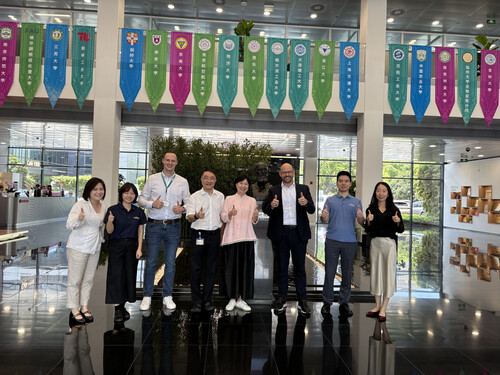
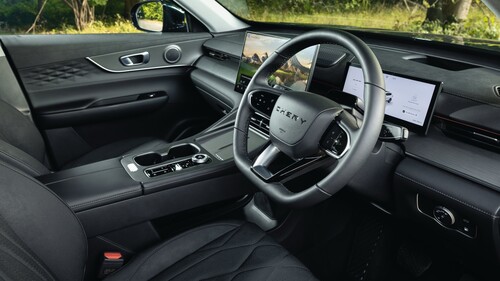
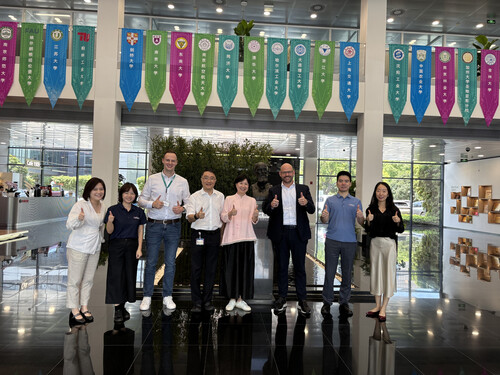
Mr Ibele, Bosch is exceptionally well positioned in electromobility, offering customers complete powertrain systems as well as individual components such as semiconductors or software on request. This is done globally, meaning you face a diverse array of requirements. How do you manage this complexity and bring global developments under one roof as efficiently as possible?The key lies in combining global strength with local flexibility. We develop worldwide and manufacture close to the customer. This gives us decisive advantages: on the one hand, we create resilient supply chains that remain reliable even in volatile environments. On the other, we benefit from close collaboration with China as the leading market for electromobility. There, particularly fast, innovative and flexible solutions emerge, which we develop together with the local ecosystem. At the same time, we ensure globally consistent, high quality through standardised components and global platforms. These standards also enable economies of scale, which boost our efficiency and competitiveness while delivering real added value to our customers – in China, for China and worldwide.Let’s take a closer look at China, where Bosch has been active for some time. What matters most to Chinese end customers when it comes to electric powertrains, and what is in demand?In China, most customers are extremely tech-savvy and expect bespoke models with tangible features enabled by connectivity and digital functions. The in-vehicle user experience is clearly the top priority. At the same time, there is significant price pressure in the Chinese market for electric powertrains. Chinese car manufacturers therefore aim to achieve attractive end-customer prices and use software functions as their primary means of differentiation. At Bosch, we support this by driving standardisation in electric powertrains, reducing costs through innovative approaches and simultaneously increasing efficiency. In parallel, we offer our customers software and digital services that allow them to stand out in the competitive landscape.In Germany, the discussion revolves around technological openness. What is the focus of conversations in China?While China has established itself as the leading market for battery-electric vehicles, technological openness remains a topic there too. Beyond pure electric cars, hybrid and range-extender concepts play an important role. A look at China’s recent export figures clearly illustrates this: in 2025, plug-in hybrids recorded enormous growth of 225 per cent. The internal combustion engine, supported by electrification, remains a key part of the powertrain mix globally and especially in China. Nevertheless, I am convinced that electrification will be the dominant propulsion technology in the future. Image: Bosch Image: CARIAD Image: Bosch Image: Audi Image: Bosch Image: BoschMy impression over the past few years is that many Chinese electric vehicle manufacturers view electric powertrains as a ‘commodity‘ and, for example, simply purchase whatever CATL or BYD currently offer for the battery. Market differentiation for customers then happens through connectivity, digital services and seamless integration of smartphones and apps. What does this mean for suppliers like Bosch?We indeed see that manufacturers pursue very different strategies in terms of value creation. However, for us, the electric powertrain is clearly not a commodity – quite the opposite: we see significant untapped potential, particularly in cost innovations.Our approach is twofold: on the one hand, we maintain a strong focus on costs through standardisation and economies of scale. On the other, we leverage our innovation capabilities to set new benchmarks in efficiency, performance and range, further strengthening our technological leadership.To achieve this, we offer our customers both optimised system solutions and individual components across the entire value chain – from power electronics and electric motors to silicon carbide chips. This enables our customers to focus on differentiation through software, connectivity and digital features, while we continuously advance efficiency, integration and quality in the powertrain.Is there a willingness among OEMs or end customers in China to pay more for an electric motor from a European supplier compared to a Chinese product? Or must you offer European quality and features at Chinese prices?We develop our products globally and manufacture them locally for each market – whether in China, Europe, North America or India. This allows us to offer competitive prices. Additional cost advantages are generated through global platforms, which we develop worldwide while leveraging the strong ecosystem of the leading market, China.However, our most important lever is our system expertise: the biggest cost driver in electric vehicles remains the battery, which accounts for around one-third of the total costs. If we increase the electric range through more efficient Bosch technology – such as silicon carbide chips in power electronics – the manufacturer can install a smaller and thus more affordable battery. This significantly reduces the vehicle’s overall costs. In this way, we deliver technological added value that directly benefits the customer.Western OEMs dominated the Chinese automotive market for years, achieving dream margins. Nowadays, especially among younger customers in China, Chinese products are ‘i‘n, and a car from a European manufacturer is no longer the status symbol it once was. Are these trends also visible in the supplier market? Or do the new partnerships with Chinese OEMs outweigh the declines in Bosch’s China business with Western brands?We are well positioned in this regard: Chinese providers are launching attractive vehicles, and many of these models incorporate Bosch technology. As a brand-independent global supplier, we equip manufacturers worldwide and therefore benefit from the growth of both new and established players. Globally, Bosch currently supplies more than 50 customers, and in the Chinese market, we work with over 30 national and international manufacturers.Innovation in China moves at an enormous pace, with countless new developments emerging around the annual motor show in April. How do Bosch and its partners plan to stand out from the competition?We stand out by combining Chinese speed with our global system expertise and enormous scaling power. Our figures and innovations speak for themselves: we have already produced over 25 million components for electrified driving worldwide. In 2026, we will supply more than seven million components and systems globally.Our differentiation lies in our technological depth and comprehensive system integration, achieving top values in efficiency and performance. A few concrete examples: we provide the right electric powertrain for every vehicle segment – from compact city cars to high-performance sports cars. We have succeeded in reducing the efficiency losses of our electric motors by 30 percent, primarily through advancements in electrical steel, winding and cooling. For small cars, we use aluminium stator windings instead of copper, which reduces costs and weight. In the high-performance segment, we increase the power density of the electric motor by up to 50 per cent, reaching 16 kilowatts per kilogramme. At the same time, we are driving integration forward to save space, weight and costs. After introducing an e-axle with a magnesium alloy in 2025, which reduces housing weight by one-fifth, we are now launching our 6-in-1 e-axle. It combines the electric motor, transmission, inverter, on-board charger, DC/DC converter and the power distribution unit in a single housing and will go into series production with Chinese customers this year.For a long time, China was primarily seen as a low-cost production location for European developments but has since caught up technologically. For example, Renault had the electric Twingo developed in record time in China but builds the car in Europe. Is this also a working model for Bosch?We are currently significantly expanding our global platform activities to make new product developments even more efficient and scalable. Our goal is to leverage China’s innovation speed, short development cycles and high-performance local supplier network – and combine these strengths with our system expertise rooted in Germany and our global customer access.At the same time, we use our global development and production network to manufacture these developments locally for our worldwide customers, for example in Europe. This allows us to combine speed and innovation with global scaling, resilient supply chains and customer proximity.You currently serve as a member of the divisional board and are responsible for development in the Electrified Motion business unit. How much do your experiences from your time in China shape your current work?My time in China continues to strongly influence my work today. What impressed me most was the radical customer focus – developments there are consistently designed with the end user in mind. This is accompanied by an enormous curiosity and openness among customers towards new technologies. Their willingness to take risks leads to significantly faster learning cycles and a very pragmatic problem-solving culture.A concrete example that encapsulates all of this is the speed at which new functions or vehicle concepts are brought to market maturity – often in much shorter cycles than we traditionally see in Europe. We are increasingly applying this combination of high speed and strong customer focus to Bosch’s global development work.What priorities do you want to set in Europe?We want to help make electromobility affordable for the mass market. The range of models from German manufacturers is currently growing primarily in the mid to upper segments, but in my view, there is a lack of offerings in the lower price segment. The European automotive industry should not lose sight of the small and compact car segment to avoid ceding this field to new competitors. At Bosch, we contribute to the solution with efficient technology and innovative products that enable smaller and thus more affordable batteries. Several important series projects for electric powertrain solutions are already underway with major European customers in 2025. And the signs for 2026 are also pointing to growth: we have other major projects in the pipeline that will significantly increase volumes once again. Europe remains a central market for us, and we continue to consistently invest in it.Which three key trends will dominate your work over the next five years?We continue to see dynamic growth in electromobility, albeit with significant regional differences. While some markets are accelerating rapidly, others are developing more slowly. This divergence increases the demands on the scalability and adaptability of technologies.At the same time, we observe a clear trend towards cost optimisation. Electromobility must become affordable for the mass market. Key factors here are efficient powertrains, greater system integration and standardisation – which in turn enable smaller, more cost-effective batteries and thus more economical vehicles.Additionally, multi-energy platforms are gaining importance. Manufacturers are increasingly relying on flexible vehicle architectures to efficiently integrate different propulsion concepts, from battery-electric to hybrid, in order to quickly respond to regional market requirements. Our task is to provide them with precisely this technological flexibility.Mr Ibele, thank you for the conversation!