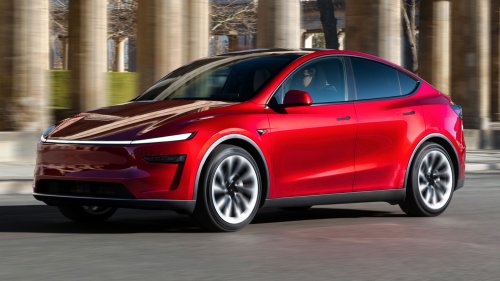
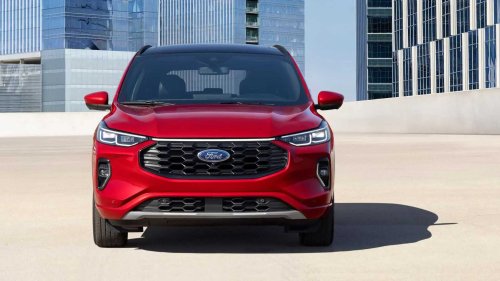
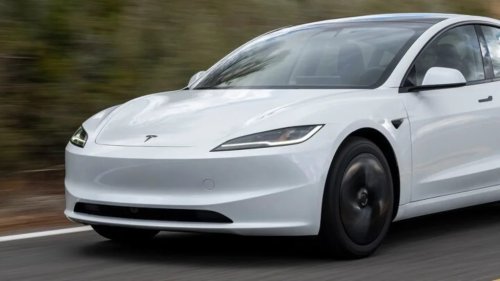
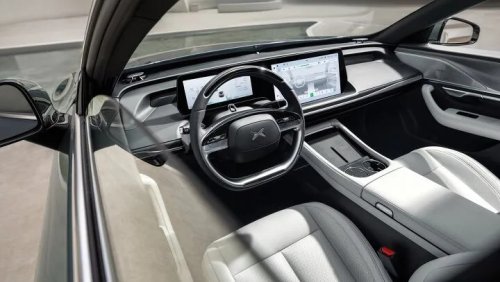
chinas largest ever recall should be a warning to automakersChina's recent decision to recall millions of vehicles not only highlights safety concerns about recessed door handles but also problems associated with replacing any traditional mechanical system with electronically dependent alternatives.If you've been vacationing on another planet this week, China just issued the largest automotive recall in the nation's history. The regulatory action targets an estimated 4.3 million cars and focuses around concerns that electronic door handles can malfunction during an accident, potentially trapping occupants inside a burning or sinking vehicle. The decision comes after numerous reports where emergency crews claimed that fatal accidents could have been prevented if manufacturers had provided a better way for the victims to exit the vehicle.The concern was that electronic doors can malfunction due to being reliant on some form of battery power. Electrical shorts can take place when a vehicle drives into a body of water, effectively trapping a person inside the vehicle. Wiring connections can likewise become disconnected as a result of a severe crash or sudden fire.AdvertisementAdvertisementHowever, the Chinese government also expressed concerns about recessed door handles being a recurring problem for emergency crews. Updated regulations would effectively ban flush-mounted door handles in China, starting in 2027, unless they featured a reliable and easily accessible mechanical backup system. The same goes for the vehicle interior, as there were likewise worries that a dazed or panicked individual would have difficulty with fine motor skills. Whether inside or outside, China wants conspicuous and simple ways of entering/exiting an automobile.chinas largest ever recall should be a warning to automakersWhile the recall hits electric vehicle manufacturers the hardest, it's certainly not limited to them. Brands like Tesla, Xiaomi, Geely, Leapmotor, and Xpeng (among others) will all need to take back vehicles to address updated regulations as China becomes the first nation to restrict non-mechanical door handles. But this brings into question other mechanical systems that have been abandoned for electronic alternatives.In order for manufacturers to field the latest round of Advanced Driver Assistance Systems (ADAS) and implement novel interior designs, they've needed to make a majority of vehicle controls electrified. On older cars, most controls were directly attached to the relevant components. Brake pedals physically modulated the hydraulic cylinders, gas pedals pulled a cable that opened the throttle, and steering wheels were connected to a gear that ran across the steering rack. But modern vehicles overwhelmingly utilize electronic connections between control modules and what they're controlling.There are advantages to doing this. For example, having a steering wheel that lacks an intermediate shaft running down the front of the car means there's no chance that it can come up and hit you in the chest during a head-on collision. Electronic controls are also essential for implementing modern features like assisted lane keeping, hands-free driving, parking assist, and the most advanced versions of electronic stability control (ESC). Automakers similarly like them because they provide more leeway in terms of design and vehicle customization.AdvertisementAdvertisementThere are disadvantages, too. Electronic controls arguably don't have the longevity of their older counterparts, provided they've been properly maintained. Repairing the myriad of sensors these systems are reliant upon is also extremely expensive and often requires specialized tools shade-tree mechanics simply won't have. In most cases, professional mechanics will be required to replace an entire module of the afflicted component before it needs to be properly calibrated.chinas largest ever recall should be a warning to automakersBut the biggest issue is that they're dependent upon electricity to operate, allowing them to mirror some of the problems of the electronic door handles now being banned in China.Granted, most of these have safety redundancies to help mitigate this. Modern steering systems often have twin electrical networks to ensure that they can continue to operate should one fail. Fully electronic brakes have reserve actuators to make sure a vehicle can still stop should something happen. However, they're not infallible and a few lines of corrupted code can compromise the associated safety nets - whether accidental or intentional.Vehicle hacking has sadly become a legitimate concern in recent years. In the early days of connected vehicles, the premise was frequently mocked as being totally ridiculous. However, similar to AI-assisted roadway surveillance, it quickly went from being treated as an unhinged conspiracy theory to a very real prospect. Leaked documents from 2017 proved that the United States already had a program wholly devoted to remotely hacking connected vehicles for the purpose of targeted associations.AdvertisementAdvertisementResearchers from the University of Washington and University of California-San Diego likewise showcased that car hacking (including disabling braking systems) was possible by 2010. Subsequent testing, done by Charlie Miller and Chris Valasek in 2015, proved that the essential systems of some vehicles could be remotely hacked miles away from the source. There have also been suspicious accidents where high-profile individuals had perished after their automobile behaved erratically (e.g. Michael Hastings), creating rampant speculation that they may have been hacked. While the odds of you personally being the victim of such an action seems overwhelmingly unlikely, it's not quite zero.The important point is that connecting vehicles that are reliant upon electronic controls to wireless signals creates an inherent vulnerability. It's another weak point in a system that has already wrangled a staggering amount of control away from the driver. Someone with a vendetta against you doesn't need to be involved for remote access points and software reliance to be a problem. There have been instances where manufacturers issued over-the-air updates that gave bad code which crippled vehicles and countless examples where connected cars helped facilitate criminal identity theft.chinas largest ever recall should be a warning to automakersWhile enthusiasts continue to bemoan that drive-by-wire offers limited, artificial feedback and more maintenance headaches as the vehicle they want to keep ages into maturity, there are also underlying safety issues that continue to go largely unnoticed. The drawbacks of connectivity are not limited to the manufacturer being able to monitor your every move while also trying to sell you on vehicle subscriptions.Automakers say they are doing what they can to mitigate safety risks wherever possible. But they've arguably created just as many by pivoting to these novel vehicle designs at the start of this century.AdvertisementAdvertisementGetting back to China, it's almost unimaginable that it took the world this long to realize that electronic doors posed a potential safety risk. There are plenty of vehicles that have needlessly unintuitive ways of entering or exiting the cabin. Passengers should not need to ask the driver how to use the door and drivers shouldn't be forced to become accustomed to fiddly interfaces that are proven to require a surplus of their attention.Automakers will always tell us that they're handling things. Hacking vulnerabilities have allegedly been dealt with, even though the entire concept of connected vehicles casts an extremely long shadow over the premise. But the same is true of many other shortcomings associated with modern technology. It doesn't matter that you can hardly see out of a modern vehicle if it can basically drive itself. And it doesn't matter if it can't actually drive itself because the driver will ultimately be the person held accountable should that system fail in a way that results in a collision. It often feels like we've been issued a daisy chain of excuses where you're still the person that's liable when something the automaker installed goes wrong.As much as your author dislikes heavy handed regulations, there are instances where OEMs simply won't do the right thing until they've been forced. The trick is determining where the line is. The mandatory inclusion of OBDII ports was a clear victory for consumers. But emission regulations, many of which were later gamified to advantage automakers, feel a little more complicated.chinas largest ever recall should be a warning to automakersChina's banning of recessed door handles and subsequent requirements for mechanical backups seems like a pretty clear victory for its drivers. They don't make ejection handles difficult to use for fighter pilots because their lives may be dependent upon it and the same should certainly be true for motorists who may suddenly find themselves in danger.AdvertisementAdvertisementHowever, this begs the question of why the National Highway Traffic Safety Administration (NHTSA) lags China on this issue. This is despite vehicle ownership being borderline unheard of in the country less than 30 years ago.We know that there have been incidents where recessed handles and electronic doors prevented rescue crews from accessing a vehicle. The same has been true for occupants needing to leave a vehicle after it had caught fire. But it wasn't until this summer that NHTSA investigations led to the agency suggesting that it might be time to consider a rule change.While we can understand that a governing body can and should take its time before tasking regulatory agencies to make any changes as a way to mitigate bad decisions. It feels odds that functional door handles took a back seat to U.S. legislators and regulators pushing things like mandatory reverse cameras and the forthcoming in-car surveillance. It feels as though their priorities are severely misguided, with the emphasis being placed on invasive technologies and supporting environmentalism rather than common sense safety.Today's drivers are living in a world where modern vehicles seem to be creating as many safety risks as they're solving. Upgraded headlights are blinding oncoming traffic while distracted drivers hunt and peck at their new multimedia screens. Dependable mechanical systems are being supplanted by fiddly substitutes requiring a permanent connection to electricity (and sometimes even the internet) to function properly. Identity theft is being facilitated by people networking their phone to connected vehicles. The entire premise sometimes borders on bewildering.chinas largest ever recall should be a warning to automakersAt the risk of sounding like a crotchety old man, we're reinventing the wheel in a way that seems to offer few practical improvements and a staggering amount of drawbacks. It's hard to see what legitimate advantages using a smartphone or keycard offers over a traditional key and keyfob. But the same could be said for a multitude of other vehicle systems that we've complicated for no apparent reason. Sure, you get a few more features in some instances. But it's often hard to argue that the juice is truly worth the squeeze.AdvertisementAdvertisementThere are some systems where the safety risks very clearly outweigh the associated benefits. Recessed door handles are simply the most-obvious example. Customers are essentially getting a novelty bauble on their door in exchange for higher repair costs and an increased likelihood of perishing in a car fire. But there are plenty of other modern features that could do with a similar risk analysis. Automakers just don't seem all that interested in doing anything that might endanger the status quo until the public outcry becomes so deafening that it cannot be ignored - proving that OEMs can still adhere to some industry traditions.While it should have taken regulatory action from China to address these issues, one hopes Western drivers will still be able to benefit.chinas largest ever recall should be a warning to automakers[Images: Tesla; Xpeng; Xiaomi; Leapmotor]Become a TTAC insider. Get the latest news, features, TTAC takes, and everything else that gets to the truth about cars first by subscribing to our newsletter.



















 +55 others